West Virginia Certificates Accepted Elsewhere
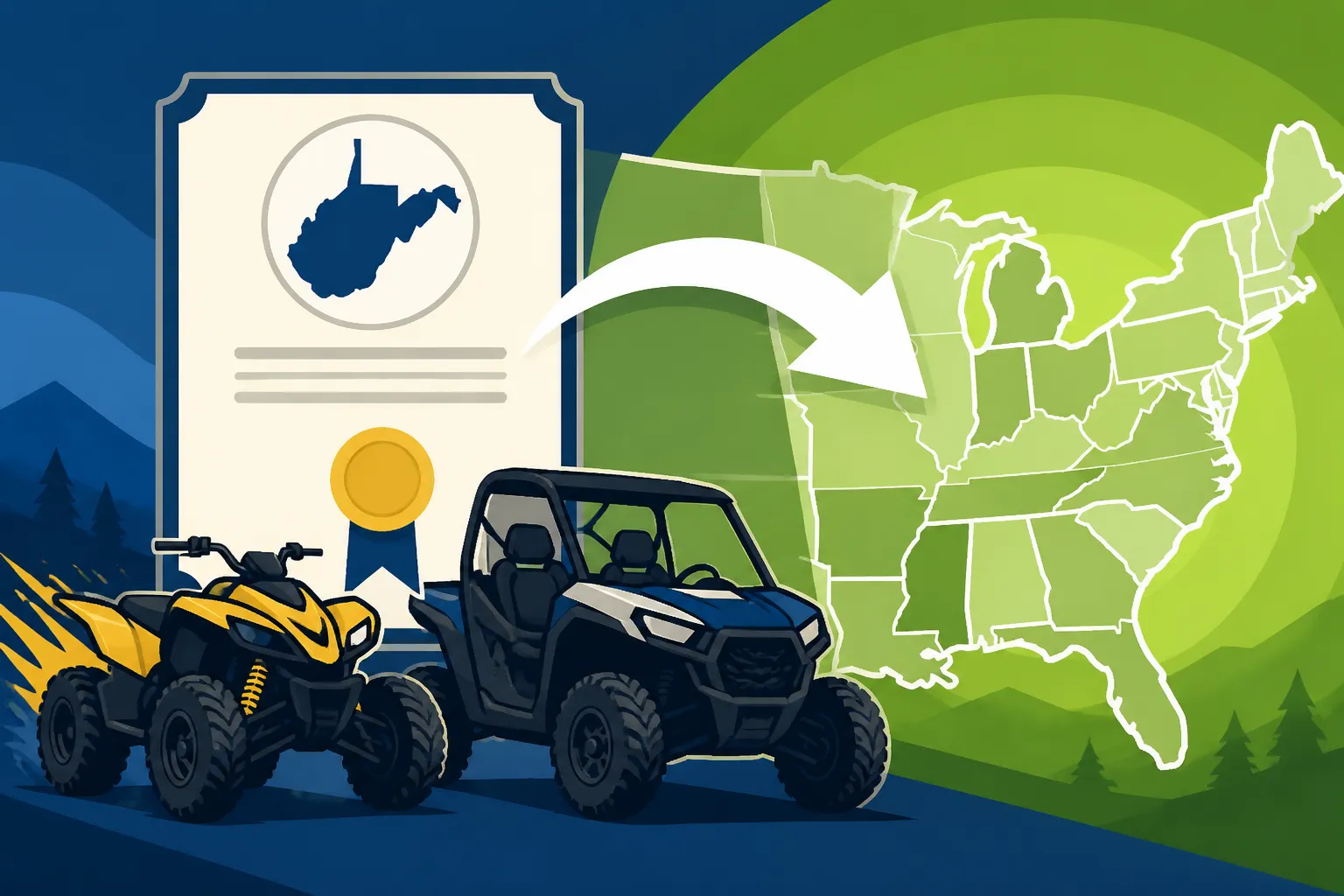
A West Virginia ATV safety certificate may help show that a rider completed safety training, but it does not automatically satisfy every other state’s rules. Acceptance depends on the destination, the rider’s age, the type of land or trail, and what document the course issued. Check those details before traveling so you know whether you need another course, card, permit, or proof of identity.
What a West Virginia ATV certificate proves
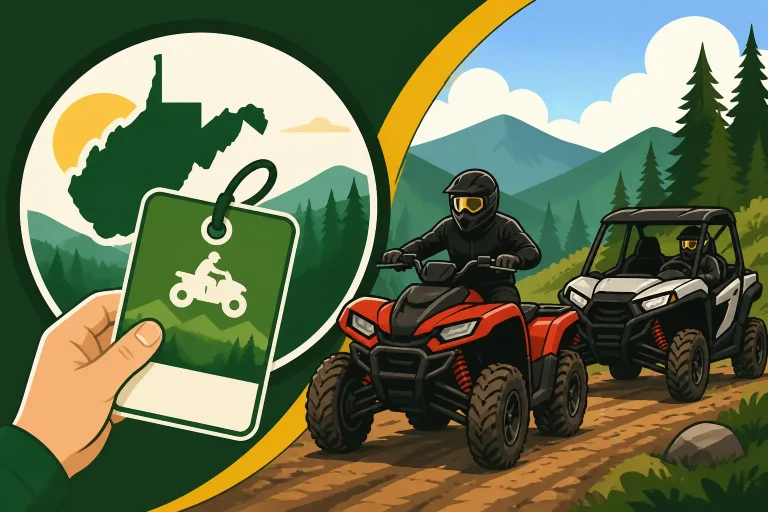
The first step is to identify exactly what you have. Riders may use “certificate” to mean a course-completion document, a safety card, or another record showing that training was completed. Those documents are not necessarily interchangeable. Read the document for its official name, issuing organization, rider name, and any identifying number or completion details.
West Virginia’s ATV safety training is separate from other types of paperwork. A safety certificate is not, by itself, a trail permit, vehicle title, registration, insurance policy, or authorization to ride on a particular property. A destination may require several of these things at once.
If you are unsure what your document is called or whether you need a replacement, start with the information for West Virginia’s ATV Safety Awareness Course. Requirements for taking the course and receiving its proof of completion are different questions from whether another state recognizes it.
It also helps to separate three questions:
- Was the rider required to complete safety training? This can depend on age and the place where the machine will be used.
- Does the destination accept this particular certificate? A state, trail operator, or land manager may set its own policy.
- Is the machine allowed to ride there? That may involve a permit, vehicle requirements, insurance, or land-access rules unrelated to training.
A certificate can answer the training question without answering the other two. For example, a rider may have completed a course but still need a destination-specific trail permit. A machine can have the required paperwork but still be barred from a route because of its size or type.
Course completion and a safety card are not the same as a permit
A course record is evidence of training. A permit is permission to use a specific trail system or riding area under that operator’s rules. Carrying one does not replace the other.
This distinction matters when planning a trip to a managed trail system. West Virginia has course rules and trail rules that apply in particular circumstances; they should not be treated as a blanket approval for riding elsewhere. Review Who Needs the West Virginia Safety Course and Permits West Virginia Riders Actually Need separately, then check the destination’s own requirements.
Whether another state accepts it depends on the destination
There is no safe assumption that an ATV safety certificate issued in West Virginia is accepted everywhere. States and individual riding areas can differ in the way they define an approved course, the age groups covered, the document they require, and whether they accept training completed elsewhere.
Even when a destination recognizes an out-of-state course, its policy may be limited. It might accept a certificate only for a certain age group, require a particular provider or course format, or ask to see a card rather than a printout. A trail operator may also have rules that are separate from state law.
Use this comparison as a planning checklist, not as a statement that a particular destination accepts a West Virginia certificate:
| What to confirm | Why it matters | What to ask |
|---|---|---|
| Document type | A course certificate, safety card, and permit serve different purposes | Does this destination accept my specific West Virginia document? |
| Rider age | Training rules may change with the rider’s age | Does the rule apply to this rider, and are there age-specific conditions? |
| Course provider | A destination may recognize some courses but not others | Must the course be approved by a named state or provider? |
| Riding location | State law, public land rules, and private trail rules may differ | Does the requirement change between public roads, trails, and private property? |
| Proof format | A digital record may not be treated like a physical card | Is a phone image or printed copy acceptable? |
| Additional requirements | Training does not replace permits or machine paperwork | Is a separate permit, registration, or inspection required? |
For the destination’s rule, look to the authority responsible for the riding area. That could be a state agency, public-land manager, private trail operator, or local authority, depending on where you plan to ride. A general statement from a retailer, online discussion, or another rider may not cover the exact property or rider category involved.
Ask about the document you actually hold rather than asking only, “Do you accept West Virginia certificates?” Give the issuing organization and the name printed on the document. If the destination asks for a card, for example, a course-completion email may not be enough even if it refers to the same training.
Age deserves particular attention. A certificate does not necessarily remove supervision requirements or other rules for a young rider. Check destination rules for the rider’s age, the machine’s size, and who must accompany the rider. West Virginia’s own rules are covered in West Virginia Age Rules on the Trails, but a destination state’s age rules may be different.
How to verify acceptance before you travel
A quick check before departure can prevent a wasted trip or a problem at the trailhead. Use the destination’s official information and, when wording is unclear, contact the agency or operator directly. Keep a record of the response, including the date and the name or office of the person who answered.
Follow these steps:
- Identify the riding area. “Riding in another state” is too broad. Name the trail system, park, forest, or property you plan to use.
- Read the rules for that location. Look for safety-course, age, supervision, permit, and machine requirements. Check any separate state rules the operator refers you to.
- Describe your certificate precisely. Provide its official title, issuing organization, and whether you have a printed certificate, safety card, or digital record.
- Give the rider’s age and riding role. Requirements may differ for an operator and a passenger, or between age groups.
- Ask whether any additional proof is needed. Find out if the destination requires a permit, identification, a parent or guardian, or another document.
- Save the answer and bring the proof. Keep an email or written response if available, and carry the certificate in the format the destination accepts.
If a destination says it accepts an out-of-state course, confirm whether that means the course itself is accepted or whether you must present a particular card or record. Also ask whether acceptance applies to every trail in the area. A park may have multiple land managers or route types with different conditions.
Do not rely on a West Virginia exception as proof that another state has the same exception. Rules for managed trails, organized rides, or supervised youth riders may be specific to a particular program or place. Check Why Managed Trails Are Exempt From the Course for the West Virginia context, then ask the destination how its own rule works.
Likewise, do not assume that a title, registration, or permit settles the training question. These documents serve different purposes. If you are crossing state lines with a machine, Do Other States’ Registrations Work in West Virginia? explains the related distinction from the opposite direction: vehicle paperwork and rider training are separate issues.
What to carry and what to do if acceptance is unclear
Once you have verified the requirements, pack the documents in a form that is easy to show. A physical card or certificate is useful if the trailhead has limited cell service. A digital copy can serve as a backup, but only rely on it as your main proof if the operator confirms that format is acceptable.
A practical document folder can include:
- The West Virginia course certificate or safety card
- Any destination-specific permit or pass
- Identification for the rider, if required
- Machine ownership or registration paperwork, if required
- Written confirmation from the trail operator, if the rule needed clarification
- A parent or guardian document, if the destination requires one for a young rider
Keep a copy separate from the original. Avoid leaving the only copy where it could be damaged by rain, mud, or fuel. If the certificate includes personal information, carry it securely and show it only to the authority responsible for checking compliance.
If the destination’s website is vague, ask a direct question and avoid treating silence as approval. A useful message includes the destination name, the rider’s age, the certificate’s official name, and the planned riding dates. Ask for a clear answer about whether that document satisfies the safety-training requirement and whether anything else is needed.
If you cannot confirm acceptance, the cautious choice is to contact the destination before loading the machine or to complete any additional training the destination identifies as necessary. Do not assume that taking a second course is always required; first find out whether the existing certificate qualifies. The destination’s exact policy is what matters.
Finally, remember that acceptance of a safety certificate does not make every ride legal or safe. Riders still need to follow local rules for helmets, eye protection, supervision, passengers, trail boundaries, and alcohol. For West Virginia riding, see Trail Rules Every West Virginia Rider Signs Up To. When you travel, check the corresponding rules where you will actually ride.
A West Virginia certificate can be useful proof of training, but its value across state lines depends on the receiving authority. Verify the exact document, location, and rider requirements in advance, and keep training proof separate from permits and vehicle paperwork.
Disclaimer
This article is for general informational purposes only and does not constitute professional advice. Laws, prices and regulations vary by location and change over time. Consult a qualified professional for guidance on your specific situation.