Bringing an Ohio Machine to Hatfield-McCoy
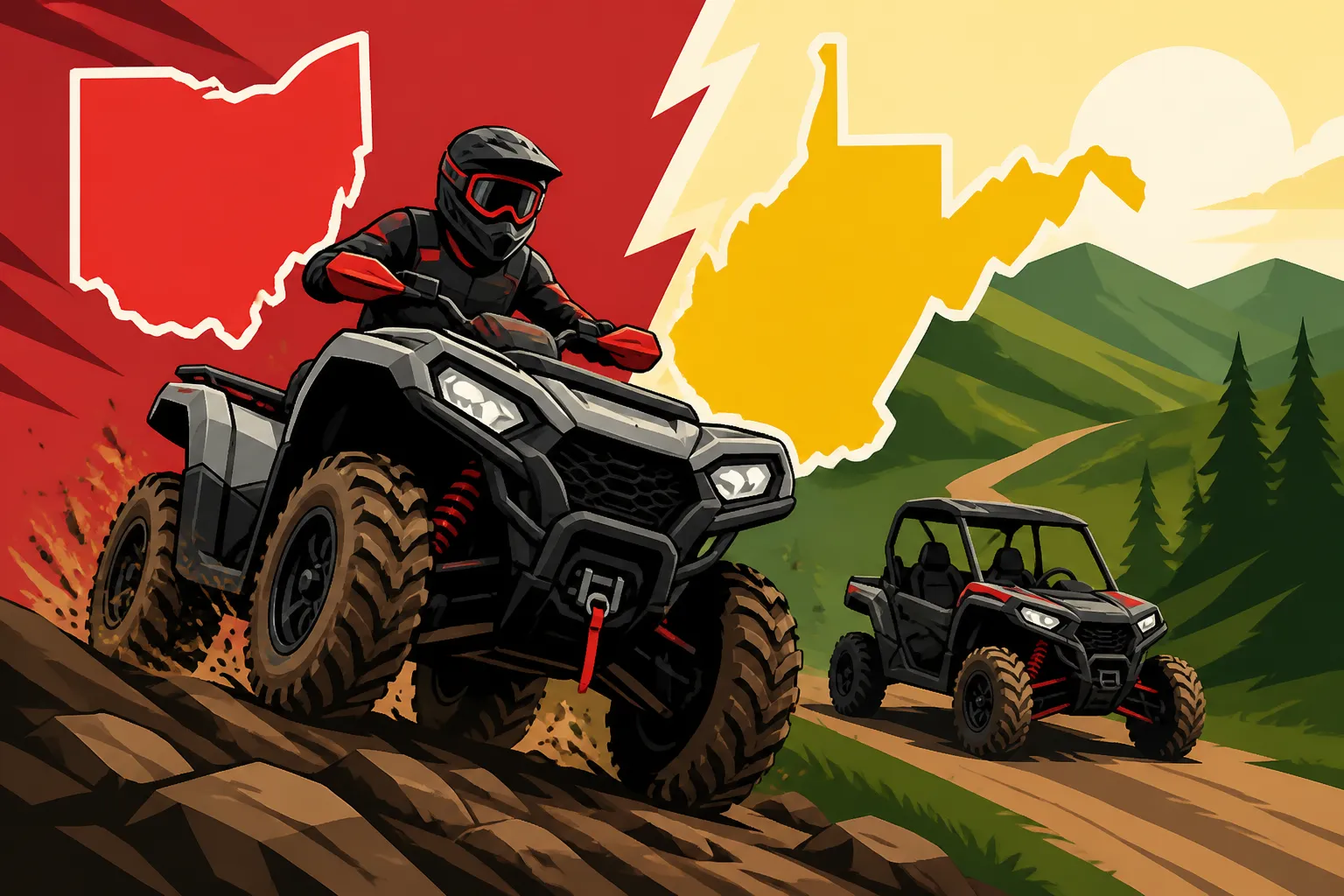
Bringing an Ohio ATV or UTV to Hatfield-McCoy raises two separate questions: what you need to ride the trails, and what you need if your trip includes public roads or ATV-friendly towns. An Ohio plate or registration should not be treated as a substitute for West Virginia trail access or road-use requirements. Here’s how to plan around those distinctions.
What an Ohio machine needs for Hatfield-McCoy trails
The core requirement for trail riding is straightforward: every rider needs an individual Hatfield-McCoy Trails User Permit. The West Virginia Division of Motor Vehicles also says riders on any Hatfield-McCoy Trail System must wear a DOT- or SNELL-approved helmet. The permit requirement is for each rider, not simply each machine, so plan for the people riding as well as the vehicles.
An Ohio title, registration, or plate does not replace the trail permit. The facts available from the West Virginia Division of Motor Vehicles do not establish that an Ohio registration grants trail access or replaces any West Virginia requirement. For the clearest overview of the trail credential, see West Virginia’s Hatfield-McCoy Trail Permit Explained. If you are comparing what an out-of-state visitor needs, Out-of-State Riders on West Virginia Trails is also relevant.
The permit and helmet are trail-specific requirements, not a complete answer to every part of the trip. Local rules can be stricter: county commissions and other local governments are permitted to create additional ATV restrictions under West Virginia law, according to the West Virginia Division of Motor Vehicles. If your route leaves the managed trail or passes through a town, check the rules for that location rather than assuming the trail permit authorizes every road connection.
| Where you plan to ride | What to plan for |
|---|---|
| Hatfield-McCoy trail system | Each rider needs an individual Hatfield-McCoy Trails User Permit, and riders must wear a DOT- or SNELL-approved helmet, according to the West Virginia Division of Motor Vehicles. |
| Approved roads, highways, or ATV-friendly towns | A permit, helmet, and liability insurance are required, according to the West Virginia Division of Motor Vehicles. Road use also involves West Virginia’s SPV registration rules. |
| A road or town outside the intended route | Check the applicable local restrictions. County commissions and other local governments may impose additional ATV rules, according to the West Virginia Division of Motor Vehicles. |
The trail authority’s permit is not a blanket authorization to ride anywhere in West Virginia. The West Virginia Division of Motor Vehicles says ATVs may be ridden on roadways only if the operator has gone through the Special Purpose Vehicle registration process. It also says an ATV may not be operated on a road or highway with a center line or more than two lanes, except to cross it. Where a crossing is allowed, the crossing must be made at a 90-degree angle where no obstruction prevents a quick and safe crossing.
That distinction matters when planning a ride from lodging to a trailhead, or when a map appears to show a public-road connection. A route shown on a map does not by itself establish that your machine can legally use the road. Check the current trail information and road restrictions before you head out. West Virginia Trail Maps and Signage can help with route planning, while What a Trail Permit Does Not Cover is useful for understanding why a permit alone may not settle every access question.
When an Ohio machine needs West Virginia road authorization
If you plan to ride only within the Hatfield-McCoy trail system, do not assume you need a road registration simply because the machine came from Ohio. But if you intend to operate it on approved roads, highways, or ATV-friendly connecting towns, treat that as a separate road-use issue. The West Virginia Division of Motor Vehicles says non-residents can obtain an Out-of-State Special Purpose Vehicle Temporary Registration online for a 14-day period.
That temporary registration is for a different purpose from the Hatfield-McCoy Trails User Permit. You may need to plan for both: the trail permit for the trail system and the temporary SPV registration if your intended road riding requires it. The West Virginia Division of Motor Vehicles also says road use on Hatfield-McCoy-approved roads, highways, or ATV-friendly towns requires a permit, helmet, and liability insurance.
Do not assume that every road near a trail is an approved connector, or that every Ohio plate gives the machine West Virginia SPV road status. Confirm that the road is permitted for the intended use and that your machine and paperwork meet the DMV’s requirements. The DMV describes street-legal special purpose vehicles as including ATVs and UTVs, along with several other vehicle types, but that category does not mean every machine automatically qualifies for road use.
The West Virginia DMV’s SPV information also lists equipment conditions. An SPV must have a windshield unless the operator wears compliant eye protection, and its tires must have at least 2/32 inches of tread depth, according to the West Virginia Division of Motor Vehicles. Those are not details to guess at from a seller’s description or a photo. Check the machine itself and verify the current requirements with the DMV before relying on a road route.
Street-legal status still has limits. The West Virginia Division of Motor Vehicles says street-legal SPVs cannot be driven on controlled-access highways, including interstate systems, or on roads where the county, municipality, or Division of Natural Resources prohibits them. Local restrictions therefore matter even after you arrange the SPV registration.
If you’re weighing whether a road connection is worth the extra preparation, use Riding an ATV on the Road in West Virginia and West Virginia’s Street-Legal Special Purpose Vehicle Plate as related reading. For the broader distinction between state title questions and out-of-state machines, see West Virginia Title Rules for Out-of-State Machines. None of those questions changes the basic trail rule: the individual trail permit and required helmet remain necessary for Hatfield-McCoy riding.
Safety instruction, helmets, and preparation
Safety-course rules require a little care because the general requirement and the managed-trail exception appear together in the West Virginia DMV information. The West Virginia Division of Motor Vehicles says no person under 18 may operate an ATV without a certificate of completion for a vehicle rider safety awareness course. It also says all ATV operators aged 18 and under must obtain safety instruction to receive an ATV safety card and helmet sticker.
The DMV says riding on Hatfield-McCoy Trails does not require the safety course if the area is operated by an entity with its own safety program. That is a specific exception tied to the managed area. Families should confirm the applicable program requirements before travelling, particularly if a young rider may ride somewhere outside that area. Do not assume the managed-trail exception automatically covers public-road riding or other places on the trip.
The West Virginia DMV offers a free ATV rider safety awareness course, and ATV safety instructions can also be obtained through WVU Extension Offices, according to the West Virginia Division of Motor Vehicles. The related page West Virginia ATV Safety Awareness Course is a useful place to begin checking the course process.
Helmet approval is another detail worth verifying before departure. The West Virginia Division of Motor Vehicles requires a DOT- or SNELL-approved helmet for riding on the Hatfield-McCoy Trail System. It separately says a DOT-approved helmet is required for anyone under 18 when riding an ATV. When choosing a helmet, check that the certification marking matches the applicable requirement rather than relying only on a product title or a seller’s wording. If you shop on Amazon, verify the specific helmet’s certification and labeling before buying; a general “off-road” description is not proof of approval.
Before loading an Ohio machine, it helps to sort the trip into separate checks:
- Trail access: Identify the trail system and make sure each intended rider has the required individual User Permit.
- Route: Decide whether you will stay within the trail system or use approved public roads or ATV-friendly towns. If road use is planned, check the Out-of-State SPV Temporary Registration process and confirm the route is allowed.
- Insurance: Arrange liability insurance for road use where required. Confirm with your insurer what coverage applies to the machine and the planned use; do not infer road coverage from trail access or an Ohio registration.
- Equipment: Check the helmet approval, eye protection or windshield arrangement, and tire tread if the machine will be used as an SPV.
- Young riders: Confirm safety-instruction requirements and the relevant managed-trail program before travel.
- Local restrictions: Check the rules for any town or road on your route, because local governments may impose additional ATV restrictions.
These steps are planning checks, not a substitute for confirming requirements with the West Virginia DMV, the trail authority, and the local jurisdiction. Requirements can depend on where and how you intend to ride.
A practical plan before you leave Ohio
The easiest way to avoid a paperwork surprise is to decide what “riding at Hatfield-McCoy” means for your trip. If you are trailering the machine to the trailhead and riding only on the managed trails, focus on the trail permit, helmets, safety instructions where applicable, and trail access rules. If your plan includes a public-road connector or an ATV-friendly town, add the SPV registration and insurance checks before you travel.
Use this sequence:
- Choose the trail system and review its current access information.
- Arrange an individual Hatfield-McCoy Trails User Permit for every rider who will ride.
- Confirm helmet approval for each rider, taking particular care with the DOT requirement for riders under 18.
- Decide whether the machine will be ridden on any public road or ATV-friendly town route.
- If road use is planned, confirm that the specific road is approved and check the non-resident Out-of-State SPV Temporary Registration process with the West Virginia DMV.
- Confirm liability insurance and required SPV equipment for the planned road use.
- Check local rules for towns and roads along the route, including any restrictions that may be stricter than the general state rules.
The distinction between trail access and road access is the main thing to keep straight. An Ohio machine can be brought for a Hatfield-McCoy trip, but its home-state paperwork should not be treated as the trail permit or as automatic West Virginia road authorization. For a deeper look at the out-of-state title question, see Do Out-of-State Riders Need a West Virginia Title?. If you plan to use public roads, Do Other States’ Registrations Work in West Virginia? may help frame the separate reciprocity question, but verify your specific situation with the DMV.
Before departure, check the details directly with the West Virginia Division of Motor Vehicles and Hatfield-McCoy Trails. Confirm any local road restrictions with the relevant local government, and make sure your planned route matches the permissions you actually have. That preparation helps keep a trail permit from being mistaken for permission to ride every road along the way.
Sources
- WV Division of Motor Vehicles — ATV | WV Division of Motor Vehicles (checked November 3, 2026)
- West Virginia Division of Motor Vehicles — Special Purpose Vehicles | WV Division of Motor Vehicles (checked November 3, 2026)
Disclaimer
This article is for general informational purposes only and does not constitute professional advice. Laws, prices and regulations vary by location and change over time. Consult a qualified professional for guidance on your specific situation.