Does a West Virginia Bill of Sale Need a Notary?
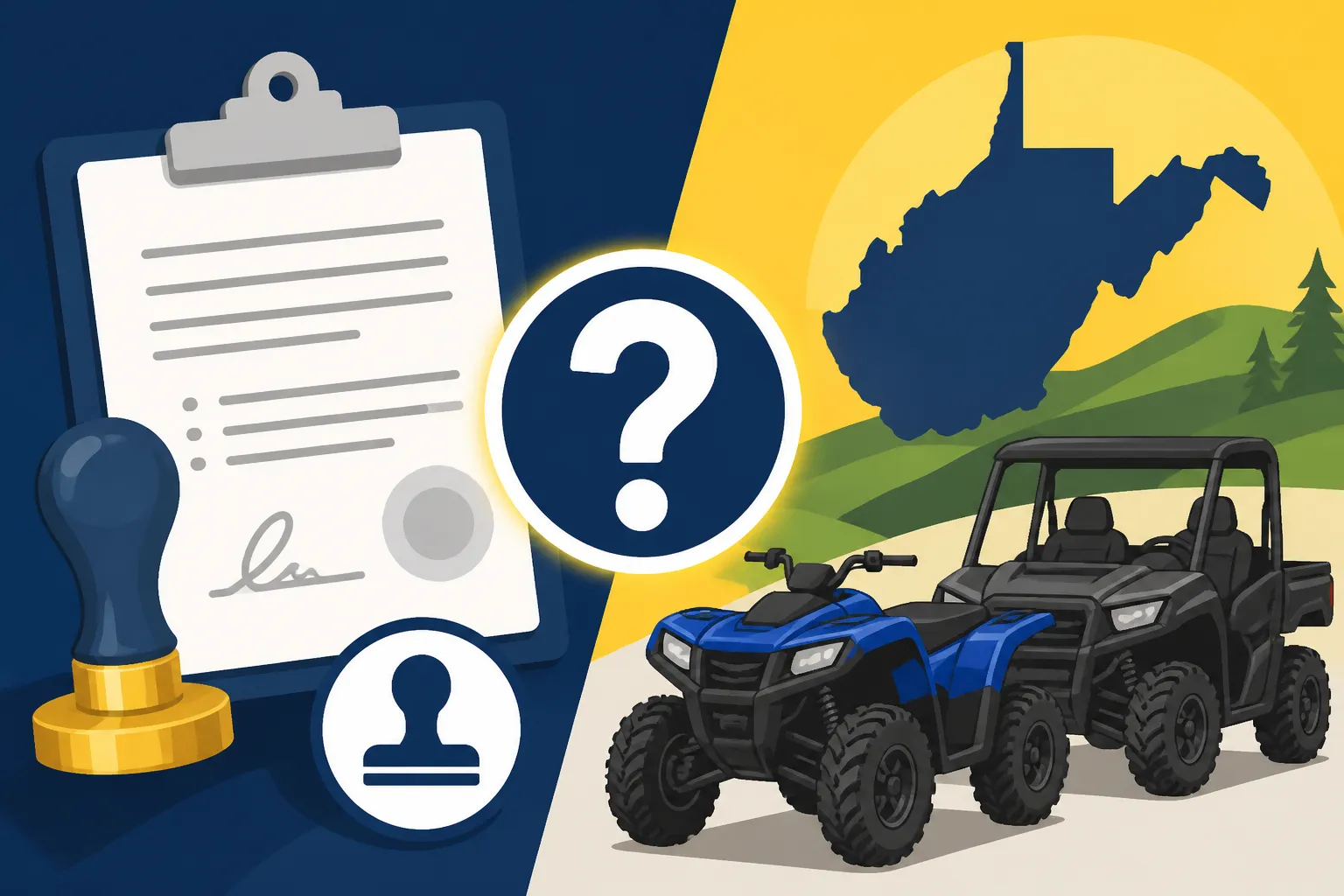
When you're buying or selling an ATV or UTV in West Virginia through a private sale, one of the documents that always comes up is the bill of sale. It's easy to get caught up in questions about what needs to be on it, and a huge point of confusion for many folks is whether a notary public needs to stamp it. This guide will cut through the noise and explain the notarization requirements, or lack thereof, for a West Virginia ATV bill of sale, and why you might consider one anyway for peace of mind.
The Core Question: Is a Notary Required for an ATV Bill of Sale in West Virginia?
Let's get straight to the point: In most private sales scenarios for ATVs and UTVs in West Virginia, a bill of sale does not legally require notarization to be considered valid. This often comes as a surprise to buyers and sellers who might be used to other states' rules or simply want to cover all their bases. While it's certainly a good practice for certain legal documents, for a simple transfer of an off-road vehicle, the West Virginia Department of Motor Vehicles (DMV) typically focuses on the actual title being correctly signed over.
What West Virginia Law Says (or Doesn't Say)
West Virginia law is quite clear on the need for a title for ATVs and UTVs sold after 1989. However, when it comes to the bill of sale itself, the statutes don't explicitly mandate a notary's seal for it to be a legal instrument between a buyer and seller. The bill of sale primarily serves as a receipt and a record of the transaction's details: who bought what, from whom, for how much, and on what date. It acts as a supporting document for the title transfer, but it's not the primary document of ownership in the same way the title is. This means that if you and the seller (or buyer) both sign a clear, detailed bill of sale, it's generally considered legally binding for that transaction in West Virginia, even without a notary present.
The key really lies in the transfer of the actual vehicle title. That's the document that the DMV relies on most heavily to officially change ownership. While a bill of sale provides crucial context and proof of the transaction, the title is the legal document that confers ownership. So, if you're stressing over finding a notary for just the bill of sale, you can usually relax a bit on that specific point.
The Difference Between a Bill of Sale and a Title Transfer Form
It's really important to understand that a bill of sale and the vehicle's title (or the transfer section on it) are two distinct documents with different purposes. A bill of sale is a simple contract between the buyer and seller. It details the specifics of the transaction, such as the vehicle's make, model, VIN, purchase price, and the names and addresses of both parties. It proves that money changed hands and that the vehicle was sold. For a comprehensive list of what to include, check out [West Virginia ATV Bill of Sale: What Belongs in It].
The title, on the other hand, is the official government document that proves legal ownership of the ATV or UTV. When you sell a machine, you, as the seller, will sign over the existing title to the new owner. The specific section on the title for transferring ownership often requires signatures from both the seller and the buyer. This is where notarization can come into play for certain vehicles or in specific situations, especially if the DMV wants extra assurance of the signatures' authenticity. For ATVs in West Virginia, the signature on the title typically does not need to be notarized, though some states do require it. The West Virginia DMV largely trusts the signatures on the title, provided they appear legitimate and are accompanied by valid identification from both parties during the titling process. This distinction is crucial for understanding what the DMV truly needs when you go to file your paperwork.
Why You Might Still Want a Notarized Bill of Sale (Even if Not Required)
While notarization isn't typically a legal requirement for an ATV bill of sale in West Virginia, that doesn't mean it's without its benefits. In many situations, having a notary present can save you a lot of potential headaches down the road, acting as an extra layer of protection for both the buyer and the seller. It's like having a witness to a handshake deal, but with official documentation.
Adding a Layer of Security and Authenticity
Imagine this scenario: you've sold your ATV, and a few months later, the buyer comes back claiming you never sold it to them, or that the signature on the bill of sale isn't theirs. Without a notary, it can become a "he said, she said" situation, which nobody wants. A notary public verifies the identity of the signers and witnesses their signatures. This means that if a dispute ever arises about the validity of a signature or whether the person actually signed the document, the notary's seal provides undeniable proof. It confirms that the people signing the bill of sale are who they say they are, and that they willingly signed the document on that specific date. This can be invaluable if the transaction ever goes south, offering both parties a strong defense against claims of fraud or misrepresentation. When you're looking for reliable documents, templates from services like LawDepot often include sections for notarization, allowing you to easily add this layer of security even if it's not strictly mandatory. This foresight can make a huge difference in protecting your interests.
Preventing Future Headaches at the DMV
Even if the letter of the law doesn't explicitly require a notarized bill of sale, sometimes human factors at the DMV can make things smoother. You're dealing with individual clerks who might interpret rules slightly differently or simply prefer to see as much verifiable documentation as possible. If there are any ambiguities in your documentation, a notarized bill of sale can act as a solid, unquestionable piece of evidence for your transaction. This can be particularly helpful in complex situations, such as when you're trying to title an ATV without the previous owner present, or if there's any question about the chain of ownership.
For example, if you're titling an out-of-state machine or if the previous title has some irregularities, a DMV clerk might scrutinize your documents more closely. A notarized bill of sale can expedite the process by providing an extra layer of credibility. While it might not be listed on the official "documents to bring" list, having it can simplify things and prevent delays. Think of it as being over-prepared rather than under-prepared. The goal is to get your new title issued as quickly and painlessly as possible, and sometimes a notary's stamp is the magic touch that ensures a smooth ride through the administrative hurdles. Remember, getting your [West Virginia ATV Title Application at the DMV] approved means meeting all their requirements, and extra authenticated documentation never hurts.
What a West Virginia ATV Bill of Sale Must Include
Regardless of whether it's notarized, a bill of sale is a foundational document in any private ATV or UTV transaction. Its primary purpose is to clearly outline the terms of the sale, providing a legal record for both the buyer and the seller. Skipping crucial details can lead to misunderstandings or complications down the line, which is the last thing you want when transferring ownership of a valuable machine.
Essential Information for a Valid Bill of Sale
To ensure your West Virginia ATV bill of sale is legally sound and useful for future reference, it must contain several key pieces of information. This isn't just about formality; it's about protecting both parties and providing a clear record for the DMV. Here's what needs to be on it:
- Date of Sale: The exact date the transaction occurred. This is critical for calculating sales tax and establishing the precise moment of ownership transfer.
- Buyer's Full Name and Address: Legal name and current residential address of the person buying the ATV.
- Seller's Full Name and Address: Legal name and current residential address of the person selling the ATV.
- Detailed Vehicle Description: This includes the ATV's make (e.g., Polaris, Honda, Can-Am), model (e.g., RZR, Foreman, Outlander), year, and color. Be as specific as possible.
- Vehicle Identification Number (VIN): This is perhaps the most critical piece of information. The VIN uniquely identifies the ATV. Make sure it matches the VIN on the title exactly. If you're unsure where to find it, it's usually stamped on the frame.
- Purchase Price: The agreed-upon selling price of the ATV. It should be clearly stated in both numerical and written form (e.g., "$5,000.00 – Five Thousand Dollars and Zero Cents").
- Payment Method: How the payment was made (e.g., cash, cashier's check).
- Signatures of Both Parties: Both the buyer and the seller must sign and date the bill of sale. This signifies their agreement to the terms.
- Disclaimer (Optional but Recommended): Language stating the ATV is sold "as-is," without warranties. This protects the seller from post-sale mechanical claims.
Accuracy is paramount. Double-check all spellings, addresses, the VIN, and the sale price before signing. Many people find that using a professional, pre-made template, such as those available from LawDepot, helps ensure all these essential fields are included, reducing the chance of missing a critical detail. This structured approach helps prevent those common "oops, I forgot that" moments that can lead to a trip back to the seller or the DMV.
Other Documentation You'll Need for Titling
While the bill of sale provides a transaction record, it's typically not enough on its own to secure a new title. The West Virginia DMV requires a packet of documents to complete a title transfer. The most important, of course, is the original certificate of title, properly signed over by the seller. Without the original title, titling can become significantly more complicated, sometimes requiring a [Bonded Title for an ATV in West Virginia] or other special procedures.
In addition to the signed title and a detailed bill of sale, you'll generally need:
- Proof of Identity: A valid government-issued photo ID (like a driver's license) for the person applying for the title.
- Proof of West Virginia Residency: If your address on your ID isn't current, you might need an additional document like a utility bill.
- Completed Title Application Form: Often Form DMV-1-TR, which you can usually get at the DMV office or online.
- Payment for Fees and Taxes: This includes the titling fee and West Virginia sales tax. If you're wondering about the sales tax, be sure to read up on [West Virginia Sales Tax on an ATV Purchase].
- Proof of Insurance: For certain special purpose vehicles (SPVs) that are street-legal, you'll need proof of liability insurance. For typical off-road ATVs, insurance is generally not required for titling alone, though it's always a good idea to have it for riding.
Always check with your local [West Virginia DMV Offices That Handle ATV Titles] or their website for the most current list of required documents, as regulations can sometimes change. Having all your ducks in a row for [What the West Virginia DMV Needs to Title an ATV] before you visit will ensure a much smoother process.
Practical Tips for a Smooth ATV Sale in West Virginia
Navigating a private ATV or UTV sale can feel a bit like crossing a rocky creek—you want to make sure every step is secure. From agreeing on a price to handing over the keys, there are several practical steps you can take to make the entire process as smooth as possible, minimizing risks and ensuring everything is legitimate.
Preparing for a Private Transaction
When engaging in a private sale, whether you're the buyer or the seller, preparation is your best friend. For sellers, this means cleaning up your machine, gathering all maintenance records, and having the title in hand, free of any liens. For buyers, it means doing your homework on the machine's value, inspecting it thoroughly, and being ready with secure payment.
Here are some tips:
- Meet in a Safe, Public Location: Especially for the initial viewing and transaction. A police station parking lot or a busy retail parking lot is often recommended.
- Vehicle Inspection: As a buyer, always perform a pre-purchase inspection. Test ride the ATV (if safe and legal to do so), check all fluids, tires, lights, and listen for any unusual noises. Consider having a trusted mechanic look it over if it's a significant investment.
- Verify the VIN: Ensure the VIN on the ATV matches the VIN on the title and the bill of sale. Discrepancies can be a huge red flag and prevent you from titling the machine.
- Secure Payment: For sellers, insist on secure forms of payment like a cashier's check from a local bank or cash. Avoid personal checks or payment apps that can be reversed. For buyers, protect yourself by not handing over payment until you have the signed title and bill of sale in your hands.
- Use a Comprehensive Bill of Sale: Even if not notarized, a detailed bill of sale is crucial. It should clearly list all the information discussed earlier. Tools like LawDepot offer excellent templates that guide you through creating a legally sound document, ensuring nothing is missed. This clarity helps with [West Virginia Title Transfer After a Private Sale].
- Take Photos: Take photos of the ATV at the time of sale, including the VIN, and even a picture of both parties with the ATV if you're comfortable. This provides visual evidence of the condition and the transaction itself.
The Importance of a Complete and Signed Title
While the bill of sale records the transaction, the actual certificate of title is the legal document that transfers ownership. This is where most of the DMV's attention will be focused. Without a properly executed title transfer, you simply won't be able to get a new title in your name, regardless of how perfect your bill of sale is.
- The Original is Key: Always ensure you receive the original physical title from the seller. Copies are not acceptable for titling purposes.
- Seller's Signature: The seller must sign the title in the designated area. This is a critical step. If you end up with [A West Virginia ATV Title With a Missing Seller Signature], you're in for a significant challenge at the DMV. Ensure their signature matches the name printed on the title.
- Buyer's Information: The buyer's name and address are usually written into a specific section on the title. Make sure this is clear and legible.
- Lien Release: If there was a lien on the title (meaning the seller still owed money on the ATV), ensure the lienholder has properly signed off or provided a separate lien release document. Without this, the DMV won't issue a clean title.
- No Alterations: Avoid any erasures, white-out, or alterations on the title. Any changes can void the title and require a lengthy process to correct. If a mistake is made, it's often better to start with a duplicate title application if the mistake is on the seller's end.
Taking care to ensure the title is correctly signed over is paramount for [Buying a Used ATV in West Virginia: The Title Steps] and getting your new title hassle-free. The bill of sale is your receipt, but the title is your deed. Ensure you understand [Who Signs a West Virginia ATV Title] and that those signatures are properly executed before you leave the seller. Having all your ducks in a row regarding [Proof of Ownership for a West Virginia ATV Title] will save you countless headaches.
| Feature | Notarized Bill of Sale | Non-Notarized Bill of Sale |
|---|---|---|
| Legal Requirement | Generally not required in West Virginia | Generally not required in West Virginia |
| Authenticity Proof | High: Notary verifies identity and witnesses signature | Moderate: Relies on original signatures |
| Fraud Protection | Strong: Deters false claims, provides legal backing | Moderate: Can be disputed without third-party witness |
| DMV Acceptance | Always accepted, can smooth complex transfers | Usually accepted, but may face scrutiny if other issues arise |
| Cost | Small fee for notary services | Free (assuming you print your own form) |
| Convenience | Requires finding and visiting a notary | Can be signed anywhere, anytime |
| Peace of Mind | High for both buyer and seller | Moderate, depends on trust and clarity |
Disclaimer
This article is for general informational purposes only and does not constitute professional advice. Laws, prices and regulations vary by location and change over time. Consult a qualified professional for guidance on your specific situation.