Where the VIN Sits on a Can-Am Commander
It's a common scenario: you've got your Can-Am Commander ready for a West Virginia trail adventure, or maybe you're just trying to get your paperwork in order, and suddenly you realize you need that all-important Vehicle Identification Number (VIN). But where in the world is it hiding on your side-by-side? Don't worry, many riders face this head-scratching moment. This guide is here to walk you through exactly where to find the VIN on your Can-Am Commander and why it's so incredibly important for every West Virginia owner.
Why Finding Your Can-Am Commander's VIN is So Important in West Virginia
Before we dive into the nitty-gritty of hunting down that VIN, let's talk about why this little string of numbers and letters holds so much power, especially here in West Virginia. It's more than just a serial number; it's your machine's unique fingerprint, and it's absolutely vital for countless reasons, from legal compliance to protecting your investment.
Titling and Registration Requirements
In West Virginia, getting your ATV or UTV titled is a non-negotiable step for almost every machine sold after 1989. Without a clear, readable VIN, you simply cannot complete this process at the Department of Motor Vehicles. The VIN is the core identifier that links your machine to its legal ownership documents. Imagine trying to buy a used Commander and finding out the seller can't produce a clean title because the VIN is illegible or doesn't match the paperwork. That's a headache you want to avoid, both as a buyer and a seller.
The DMV uses the VIN to record your ownership, track any liens against the machine, and ensure it hasn't been reported stolen. Whether you're a new resident moving to the Mountain State with an out-of-state UTV or you just picked up a machine from a private seller, the VIN will be the first thing the folks at the DMV look for when you're trying to get a [West Virginia ATV Title Application at the DMV] processed. They need to verify that the numbers on your application match the numbers physically stamped on the machine itself. Without this crucial match, you'll hit a brick wall, potentially delaying your ability to legally ride or sell your side-by-side. This is especially true if you're bringing a machine from another state, like when [Titling an Ohio ATV in West Virginia]; the VIN is the universal identifier.
Sales, Insurance, and Recovery
Beyond initial titling, your Commander's VIN plays a critical role throughout its lifespan. If you ever decide to sell your machine, the VIN must be clearly recorded on the bill of sale and accurately reflect the number on the title. A robust document like a [West Virginia ATV Bill of Sale: What Belongs in It] will always prominently feature the VIN. Discrepancies here can lead to serious legal issues for both parties involved, potentially even making the sale invalid. Many online resources, like LawDepot, offer templates for these kinds of documents that specifically highlight the importance of accurate VIN recording.
When it comes to insurance, your VIN is how your provider identifies your specific Can-Am Commander. Without it, they can't accurately quote or issue a policy. Should the worst happen and your machine is damaged or stolen, the VIN is paramount for filing a claim and for authorities to even begin the process of [Recovering a Stolen ATV Through Its Title]. Law enforcement relies on this unique identifier to trace ownership and track down stolen property. Imagine the frustration of having your beloved Commander disappear, only to find that an incorrect or unreadable VIN on your records hinders recovery efforts. It's a small detail with huge implications for protecting your investment. And if you ever find a VIN that just doesn't seem right on your title, you'll quickly realize how important it is to address it, as highlighted in situations like [Fixing a Wrong VIN on a West Virginia Title].
Common Locations for the VIN on a Can-Am Commander
Now for the treasure hunt! Can-Am, like other manufacturers, typically has a few standard places where they stamp or affix the VIN on their UTVs. While exact placement can sometimes vary slightly by model year or specific trim, these are the most common areas you'll want to check first on your Commander.
The Primary Frame Stamping Location
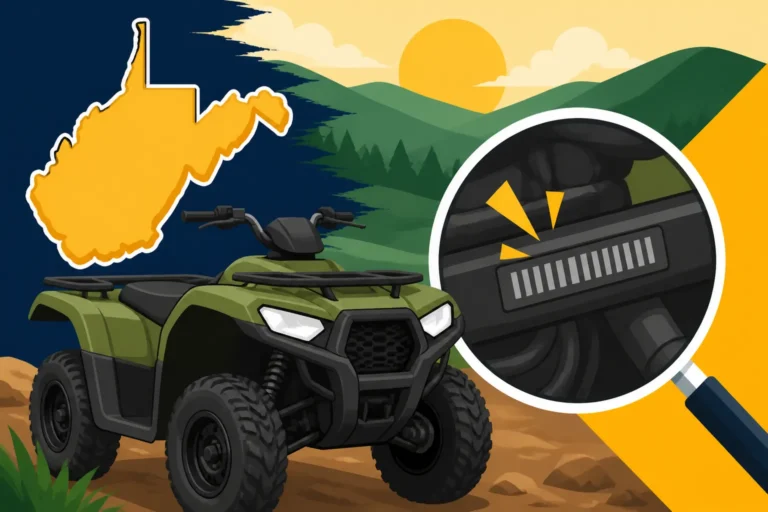
For most Can-Am Commander models, the primary, and most legally recognized, VIN stamping will be found directly on the frame. This isn't a sticker or a plate, but rather characters physically impressed into the metal itself. You'll typically find this crucial stamping in one of two main areas:
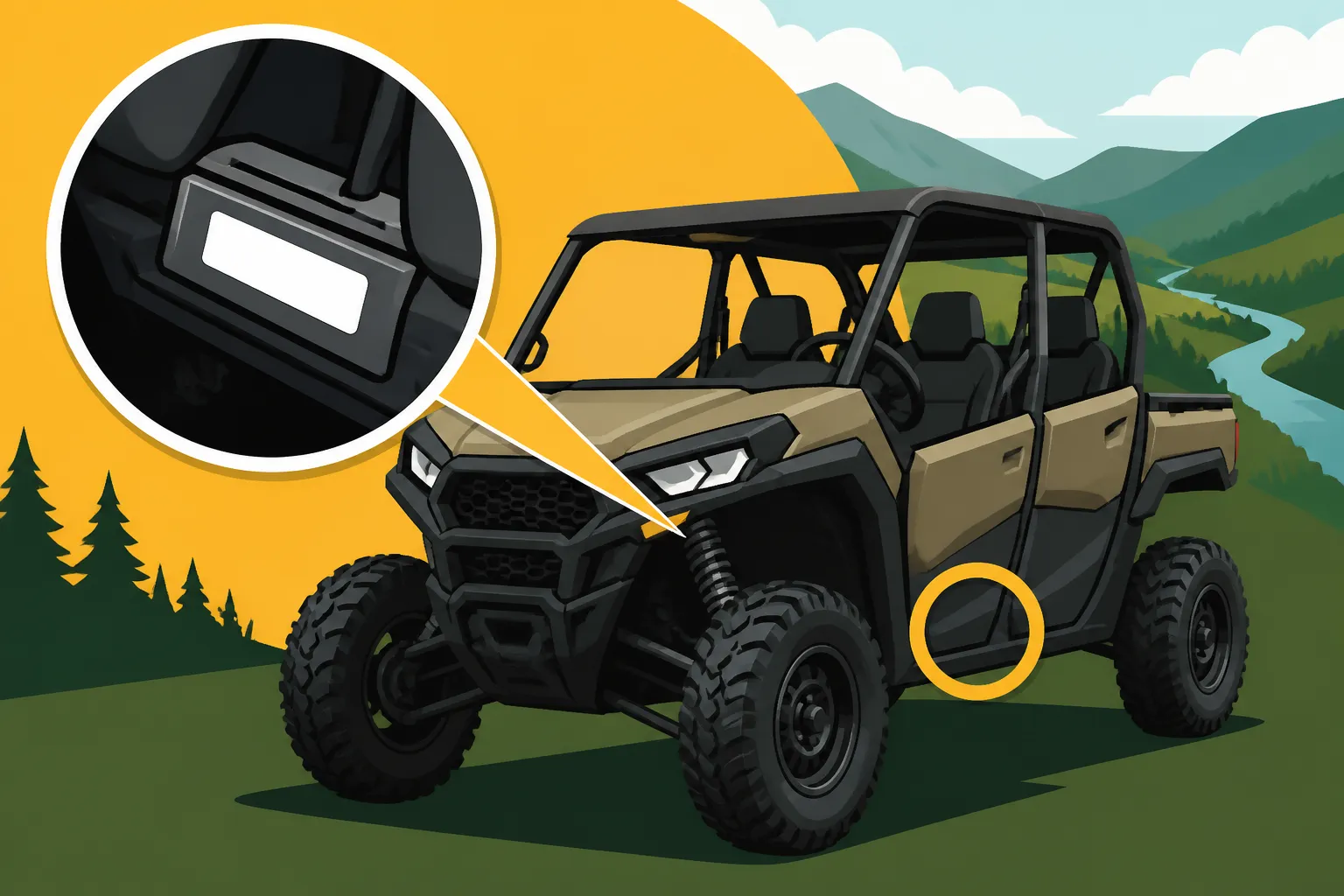
- Front Passenger-Side Frame Rail: This is arguably the most common spot. Get down low and look at the frame rail just behind or slightly above the front passenger-side wheel. It might be on the top surface of the frame, or sometimes on the outside vertical face. You might need to turn the steering wheel to full lock in one direction to give yourself more room to see.
- Under the Driver's Seat: Another frequent location is on the frame rail directly underneath the driver's seat. You might need to lift or remove the seat to get a clear view. This area is often exposed when the seat is up, making it accessible but also prone to getting covered in mud or debris, depending on your riding habits.
When you're searching, remember that this isn't always polished chrome. It's often just raw frame metal, which can accumulate dirt, mud, or even surface rust over time. Don't be surprised if you need to do a little cleaning to reveal the numbers clearly. Sometimes, aftermarket accessories like rock sliders, fender flares, or even custom exhaust routing can unintentionally obscure the VIN, requiring a bit of careful inspection to get around them. Take your time and use good lighting.
Other Potential Locations and Labels
While the stamped VIN on the frame is the authoritative source, Can-Am often places VIN decals or plates in other, more easily accessible spots. These are incredibly useful for quick reference, but always double-check against the stamped VIN if there's any doubt, especially for official paperwork.
Common secondary locations for a VIN sticker or plate on a Can-Am Commander include:
- Under the Hood/Front Storage Compartment: Open the front hood (if your Commander has one) or the front storage compartment. There might be a VIN sticker affixed to the interior plastic or frame structure within this area.
- Glove Box Interior: Sometimes, a VIN sticker is placed inside the glove box or another small storage compartment within the cab.
- Driver's Side Door Jamb (if applicable): For Commanders with full or half doors, occasionally a VIN label can be found on the door jamb area, similar to how cars are set up.
It's important to understand the difference between a stamped VIN and a decal. The stamped VIN is literally etched into the vehicle's core structure and is much harder to alter or remove, making it the definitive identifier for legal purposes. Decals, while convenient, can sometimes fade, peel, or be replaced, so they should always be corroborated with the primary stamped VIN on the frame for any official transaction or DMV interaction. Your owner's manual will also often have diagrams showing the exact location for your specific model and year, making it an invaluable resource in your search.
Step-by-Step Guide to Locating and Verifying Your Commander's VIN
Alright, let's get practical. Finding your VIN shouldn't be a frustrating ordeal. With a systematic approach, you can locate it efficiently and confirm its accuracy. Here’s how to do it.
Preparation and Safety First
Before you start poking around your Commander, take a few moments for preparation and safety. This will make the process smoother and prevent any mishaps.
First, park your Commander on a flat, level surface. Make sure the parking brake is engaged, and for an extra layer of safety, turn the engine off and remove the key. You don't want the machine accidentally shifting or starting while you're under or around it. Next, gather your tools. A good flashlight is absolutely essential, even in broad daylight, to illuminate those shadowy corners. A sturdy rag or an old toothbrush/wire brush might be needed to clean off dirt, mud, or grime that could be obscuring the numbers. You might also want your smartphone handy to take photos once you find it.
Consider wearing gloves if you're going to be digging into muddy or greasy areas. Once you're set up, you can approach the search with confidence, knowing you've minimized potential risks and have the right gear to get the job done.
The Search Process
Now, let's start the actual search. Begin by focusing on the most common areas we discussed:
- Front Passenger-Side Wheel Well: Crouch down by the front passenger tire. Look at the frame rail that runs horizontally behind the wheel. Trace it inward towards the center of the machine. The VIN is often stamped on the top or outer side of this rail. If the tire is in the way, you might need to turn the steering wheel all the way to the left to create more clearance. Use your flashlight to peer into every crevice.
- Under the Driver's Seat: If you didn't find it on the front frame, move to the driver's side. Lift the driver's seat up (or remove it if necessary). Look at the frame directly beneath where the seat cushion sits. It might be on a crossmember or the main frame rail running front to back. Again, a good light source is key here.
Once you spot a series of numbers and letters, congratulations, you've likely found it! Now, the crucial step is to carefully clean the area. Use your rag, or if necessary, a small wire brush, to gently remove any dirt or rust. Be careful not to damage the stamped numbers. The VIN is a 17-character alpha-numeric code, with no 'O', 'I', or 'Q' characters (to avoid confusion with 0, 1, or 9). Once clean, write it down carefully. It's a good practice to [Running a VIN Check Before You Buy] if you're inspecting a used machine; this way, you can cross-reference it with official databases.
Decoding and Documentation
After you've located and clearly read the VIN, the next step is to document it meticulously. Take a clear photograph of the stamped VIN with your smartphone. This visual record can be incredibly useful for future reference, insurance claims, or if you ever need to sell your machine.
Next, compare the VIN you found on the frame to any existing paperwork you have, such as the machine's title, bill of sale, or insurance documents. Every character must match exactly. If there's any discrepancy, no matter how small, it's a red flag that needs immediate attention. An incorrect VIN on your title can lead to significant headaches down the road. For accurate documentation, especially when buying or selling, using a reliable template from a service like LawDepot can ensure all necessary details, including the VIN, are properly recorded and legally binding. This double-checking is important not just for titling but also for confirming the year and model of your Commander, as detailed in [Reading the Model Year From Your ATV VIN].
What to Do If You Can't Find or Read the VIN
Sometimes, despite your best efforts, the VIN on your Can-Am Commander might be elusive or simply unreadable. This can be a frustrating and potentially serious issue, but there are steps you can take to address it.
When the VIN is Illegible or Missing
An illegible or missing VIN presents a significant hurdle for any West Virginia ATV or UTV owner. Without a clear VIN, you won't be able to title the machine, which means you can't legally register it or sell it. If you discover that the VIN on your Commander is heavily corroded, too worn to read, or appears to be entirely missing, here's what you should consider:
First, re-inspect thoroughly. Sometimes what looks like a missing VIN is just one buried under layers of accumulated dirt, paint, or even minor damage. Use a stiff brush, some degreaser, and good lighting to clean the area again. If you're still coming up empty or can only make out a few characters, the situation becomes more complex.
Next, contact a Can-Am dealership. They may be able to help identify alternative VIN locations, or perhaps even have records associated with the machine's engine number or other internal identifiers if you are the original owner or have a strong paper trail. However, if the stamped frame VIN is truly gone, this route might have limitations.
The most important step, especially in West Virginia, will be to contact your local DMV or state police barracks. They are the authorities who can guide you on the process for a vehicle with an unreadable VIN. This typically involves a physical inspection of the machine. A missing or altered VIN is a serious red flag, as it can indicate a stolen vehicle or an attempt to conceal its history. Be prepared for a thorough investigation. A common challenge for buyers, for instance, is [A West Virginia ATV Title With a Missing Seller Signature], which is compounded if the VIN is also unclear.
Seeking Professional Help and Alternatives
If the VIN on your Can-Am Commander is genuinely unreadable or missing, you'll almost certainly need official intervention. This is where a VIN inspection by the West Virginia State Police or a certified DMV official comes into play. This inspection, as detailed in guides like [VIN Inspection Before a West Virginia Title], is a critical step to verify the machine's legitimacy and determine if a new VIN can be assigned or if further action is required. They will examine the machine for any signs of tampering and try to locate any hidden factory identifiers.
In some rare cases, if you can prove legitimate ownership but the VIN is irretrievably lost or unreadable, West Virginia might allow for a bonded title. This is a complex legal process where you essentially obtain an insurance bond to protect previous owners or future claimants in case the machine turns out to be stolen. A bonded title is not a simple fix, but it can be a last resort for legitimate owners facing this difficult issue. Consulting with legal resources, including those that provide document templates like LawDepot, can help you understand the specific affidavits or forms you might need in such a situation. The process for a [Bonded Title for an ATV in West Virginia] can be arduous, but it exists for a reason. Always remember, the goal is to ensure your machine is legally recognized and that you can ride the beautiful trails of West Virginia without worry.
| VIN Location | Visibility | Common Obstacles | Recommended Tools |
|---|---|---|---|
| Front Passenger Frame Rail | Can be low to the ground | Mud, dirt, rust, accessories | Flashlight, wire brush |
| Under Driver's Seat | Requires seat lift/removal | Mud, dirt, engine components | Flashlight, rag |
| Under Front Hood/Storage | Often on a sticker/plate | Interior plastic, other labels | None (easily visible) |
| Glove Box Interior | Usually a sticker/label | Papers, small items | None (easily visible) |
| Door Jamb (if equipped) | Sticker/label on door frame | Door open/closed, weather | None (easily visible) |
Disclaimer
This article is for general informational purposes only and does not constitute professional advice. Laws, prices and regulations vary by location and change over time. Consult a qualified professional for guidance on your specific situation.