Putting a West Virginia ATV Title in Two Names
Buying an ATV or UTV with a partner, spouse, or even a close friend here in West Virginia often sparks a flurry of questions, especially when it comes to the official paperwork. One common point of confusion is whether to put both names on the vehicle's title, and what that actually means for shared ownership and future plans. This guide will walk you through the ins and outs of joint titling an ATV or UTV in the Mountain State, ensuring you understand the process and its implications.
Why Consider Putting Two Names on Your West Virginia ATV Title?
It's a common scenario: you and your spouse decide to invest in a shiny new side-by-side to hit the Hatfield-McCoy trails, or perhaps you and a buddy are going halves on a quad for hunting season. Naturally, you want both your names reflected in the ownership documents. Putting two names on an ATV or UTV title in West Virginia isn't just about sharing the fun; it has significant legal and financial implications that are worth understanding from the outset.
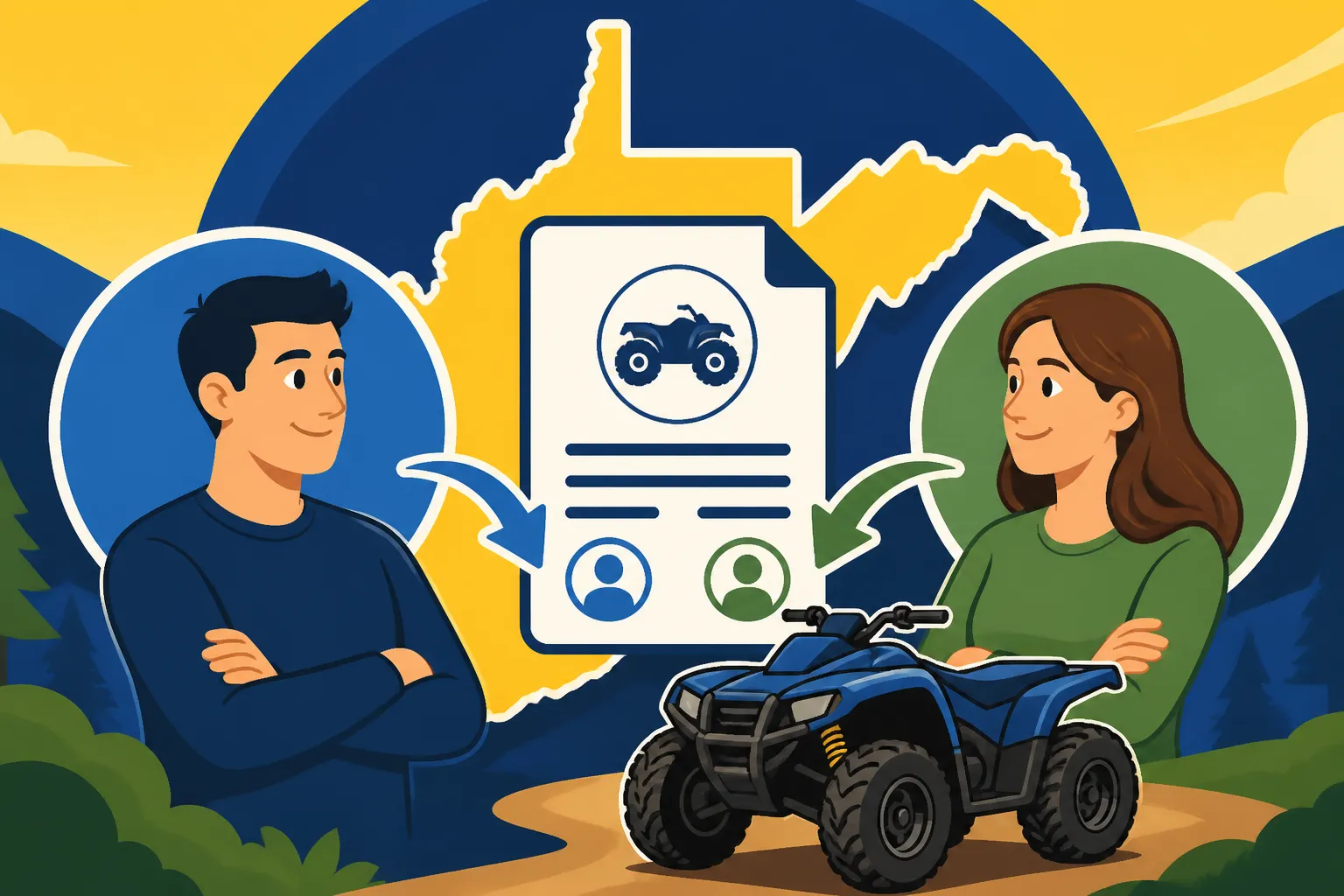
The primary reason many people opt for joint titling is to clearly establish shared legal ownership. This can be especially important for married couples who view their off-road vehicles as joint assets, or for partners who contribute equally to the purchase and maintenance. It removes ambiguity and can simplify matters down the road, acting as clear proof of ownership for both parties. Without both names on the title, one person holds all the legal power over the machine, even if another contributed financially.
Another benefit comes into play with liability and property rights. While an ATV title doesn't necessarily dictate who is responsible for accidents (that's usually tied to the operator and insurance), it does solidify who has a legal claim to the property itself. For instance, if you and a friend both put money down on a machine, and only one name is on the title, the person whose name is not on the title would have a much harder time proving their ownership stake if a dispute arose or if the titled owner decided to sell the machine without their consent.
Finally, joint titling can streamline certain processes, like selling the ATV in the future. If both owners agree to sell, both signatures will be required on the title, ensuring mutual consent. It's a layer of protection and clarity that many find invaluable when sharing such a significant investment. However, this also means that if one owner disagrees, selling becomes much more complicated, requiring legal intervention to force a sale.
Legal Definitions of Joint Ownership in West Virginia
When you put two names on a West Virginia ATV title, you're generally establishing either "joint tenancy with right of survivorship" or "tenancy in common." The specific language on the title document matters a great deal, especially for how the property is handled if one owner passes away. It's not just a simple matter of slapping two names on a line; these legal distinctions have real-world consequences that every owner should be aware of.
"Joint tenancy with right of survivorship" is most common between spouses. If an ATV is titled this way, and one owner dies, the surviving owner automatically receives full ownership of the ATV without the need for probate. This can be a huge relief during an already difficult time, ensuring that the machine stays with the remaining owner without lengthy legal battles. It simplifies estate planning for that specific asset, and many married couples prefer this method for shared vehicles.
"Tenancy in common," on the other hand, means each owner holds a distinct, separate share of the property. If one owner dies, their share typically passes to their heirs as determined by their will or state intestacy laws, rather than automatically to the co-owner. This form of ownership is more common among non-spouses, like friends or business partners, who might want their share to go to their family or estate. It means the surviving co-owner could end up owning the ATV with someone they didn't intend to, such as their friend's cousin, which can lead to complications.
It's crucial to understand which form of ownership is being established when you title the ATV. The West Virginia DMV might use specific phrasing or abbreviations (like "and/or" or "JT TEN") that denote these distinctions. If you're unsure, or if you have specific wishes about survivorship, it's wise to consult with an attorney to ensure the title is worded exactly as you intend. Misunderstanding this can lead to serious headaches for your loved ones later on.
Scenarios Where Joint Titling Makes Sense
Joint titling isn't a one-size-fits-all solution, but it's particularly well-suited for specific situations where shared investment and continuous access are paramount. Understanding these common scenarios can help you decide if it's the right path for your specific situation here in the Mountain State. It's about protecting everyone's investment and ensuring smooth sailing down the road.
The most obvious scenario is for married couples. When a husband and wife purchase an ATV together, often using joint funds, titling it in both names reflects their shared marital property. This not only provides equal legal standing but also simplifies the process of transferring ownership if one spouse passes away, especially if the title specifies "joint tenancy with right of survivorship." It’s a common and practical approach to managing family assets like your favorite side-by-side.
Another prime example involves close family members, such as a parent and an adult child, or siblings, who are pooling resources to buy a machine they intend to share equally. Perhaps an aging parent wants to ensure their child has easy access to the quad, or two siblings plan to split the cost and usage for hunting trips. Titling in both names establishes clear co-ownership, making it harder for one party to make unilateral decisions about the ATV, such as selling it, without the other's consent. This mutual accountability can prevent misunderstandings later.
Finally, business partners or close friends who are investing in an ATV or UTV for a shared venture (like a small trail guiding service or just for recreational use together) often benefit from joint titling. While a more formal business entity might be better for commercial operations, for recreational partners, it creates a clear paper trail of shared ownership. In such cases, it's highly recommended to also create a separate co-ownership agreement using resources like those from LawDepot, outlining responsibilities for maintenance, storage, and usage, as the title itself won't cover these practical details.
The Process of Adding a Second Name to a West Virginia ATV Title
Once you’ve decided that joint titling is the right move for your West Virginia ATV or UTV, the next step is navigating the actual process at the Division of Motor Vehicles (DMV). While it might seem daunting, especially if you're picturing long lines and confusing forms, it’s a fairly straightforward procedure as long as you come prepared with the right documents and information. Understanding the steps in advance can save you a lot of hassle.
The exact steps can vary slightly depending on whether you're purchasing a new ATV from a dealer, buying a used one from a private seller, or adding a second name to a machine you already solely own. For a new purchase from a dealership, they will typically handle much of the initial paperwork, including submitting the title application with both names. If you're buying used, you and the seller will fill out the existing title or a [West Virginia ATV Bill of Sale: What Belongs in It], ensuring both buyers' names are clearly listed on the assignment of title. In all cases, the goal is to get both names correctly submitted to the DMV for the new title issuance.
If you already own an ATV solely and wish to add another name (like a new spouse), you’ll need to essentially "transfer" the title to both of you. This involves you, as the current owner, signing over the title to yourself and the new co-owner. This is similar to a sale, but often categorized as a gift or transfer between family members, which can impact sales tax implications. You'll need to complete a new [West Virginia ATV Title Application Form] with both names listed as owners, and potentially provide a notarized affidavit stating the nature of the transfer.
Required Documents for Joint Titling
Getting your paperwork in order before you head to the West Virginia DMV office is paramount. There’s nothing more frustrating than waiting in line only to find you're missing a critical document and have to reschedule. For joint titling an ATV, the DMV requires specific forms and proofs to ensure legal and accurate ownership transfer to both parties. Being meticulous here will ensure a smooth transaction.
First and foremost, you’ll need the original Certificate of Title for the ATV. If you're buying from a private seller, they will sign this over to both of you as the new owners. If you're adding a name to an existing title you hold, you'll be signing it over to yourself and the new co-owner. This title must be completely filled out on the assignment section, including the printed names and signatures of both new owners. Make sure to check for the correct sections for buyer and seller.
Next, you'll both need valid forms of identification. The West Virginia DMV will require both individuals listed on the title to present their current, unexpired driver's license, state ID card, or other acceptable form of identification. This verifies your identities and ensures you are legally capable of owning the vehicle. It’s always a good idea to bring an additional form of ID, just in case, like a passport or birth certificate.
Additionally, you'll need a completed [West Virginia ATV Title Application Form] (Form DMV-1-TR). Both parties applying for the title must sign this form. If sales tax is applicable (which it often is, even in transfers between individuals unless specifically exempted, like in certain family transfers or gifts), you'll also need documentation for that, often collected at the time of titling. Finally, be prepared to pay the West Virginia ATV Title Fee and any applicable sales tax. Always check the West Virginia DMV website or call ahead for the most current forms and fees before your visit.
Filling Out the Title Application for Two Owners
The [West Virginia ATV Title Application Form] (DMV-1-TR) is the central document for getting your ATV or UTV titled in the Mountain State, and filling it out correctly when there are two owners is critical. Any errors or omissions can cause delays, sending you back to the drawing board. It's a precise process that demands attention to detail, so take your time and review everything thoroughly before submission.
When you reach the "Owner Information" section, this is where you’ll list both individuals. You'll typically find lines for "Owner 1" and "Owner 2" or similar phrasing. Ensure you clearly print the full legal name of the first owner on the designated line, along with their address. Immediately following, you'll do the same for the second owner. Pay close attention to spelling and ensure it matches the names on both individuals' identification documents exactly. Even a minor discrepancy can hold up the process.
Crucially, the form will also ask for how the title should be issued. This is where the distinction between "joint tenancy with right of survivorship" (often indicated by "AND/OR" or "JT TEN") and "tenancy in common" ("AND") becomes important. If you are spouses and want the right of survivorship, make sure the box or option for "AND/OR" is selected or clearly written. If you are friends or family members who want separate ownership shares, "AND" is usually the correct choice. If you're unsure, ask a DMV representative for clarification before completing this section. Putting a West Virginia ATV Title in Two Names requires careful selection here.
Both owners must sign the application where indicated. This signifies that both parties agree to the terms of ownership as stated on the form. If one owner cannot be present at the DMV, they may be able to sign in advance and have their signature notarized, but it's always best for both parties to attend if possible to prevent any issues or questions from the DMV staff. Bring any supporting documents like a bill of sale or previous title, as well as your payment for fees and taxes.
Important Considerations for Joint Ownership
While titling an ATV or UTV in two names offers clear advantages in establishing shared ownership, it also introduces certain complexities that every co-owner should understand from the outset. Joint ownership means shared responsibilities and shared risks, and anticipating these factors can help prevent future disputes or difficult situations. It's about more than just who gets to ride when; it’s about legal and financial ties that bind you to the machine and to each other.
One major aspect is decision-making. With two names on the title, significant decisions about the ATV—such as selling it, making major modifications that affect its value, or using it as collateral for a loan—typically require the consent and signature of both owners. This is great for preventing one owner from acting unilaterally, but it can also lead to stalemates if owners disagree. Imagine one owner wanting to upgrade to a new model while the other insists on keeping the current machine; without mutual agreement, the ATV is stuck.
Another critical consideration is insurance. While the title establishes who legally owns the machine, both owners should ensure they are properly covered by the ATV insurance policy. If only one owner is listed on the policy, the other might not be covered in the event of an accident, even if they are legally a co-owner of the machine. It’s vital to discuss [Insuring an ATV in West Virginia] with your insurance provider to make sure both parties have adequate coverage for liability and physical damage. This protects everyone involved in case of an incident on the trails.
Finally, think about unforeseen circumstances. What happens if one owner moves out of state, or if the relationship between the co-owners sours? These situations, while hopefully rare, are much easier to navigate if a clear understanding or even a written agreement is in place. It's about preparing for the worst while hoping for the best.
Implications for Selling or Transferring Ownership
When an ATV or UTV is jointly titled in West Virginia, the process of selling or otherwise transferring its ownership becomes a two-person job. This is both a safeguard and a potential hurdle, depending on the circumstances. Unlike a single owner who can make all decisions independently, joint ownership requires consensus, ensuring that neither party can dispose of the asset without the other's knowledge and agreement.
If you decide to sell the jointly owned ATV, both owners must sign the Certificate of Title in the seller's assignment section. This applies whether you're selling it to a private party or trading it in at a dealership. Without both signatures, the transfer of ownership cannot be legally completed, and the new buyer will be unable to title the machine in their name. This mutual signature requirement is a key protection built into the joint titling system. Trying to sell an [Selling an ATV in West Virginia Without Trouble] becomes much smoother when both owners are on the same page.
What if one owner wants to transfer their share to the other, perhaps due to a divorce or simply deciding they no longer want to be a co-owner? This is essentially a title transfer from two names to one. The owner giving up their share will sign off on the title, assigning their interest to the remaining owner. A new [West Virginia ATV Title Application Form] will need to be completed by the sole remaining owner, and any applicable sales tax might still be due, depending on whether it's considered a gift or a transfer for consideration. [Removing a Name From a West Virginia Title After a Divorce] is a specific scenario that would follow this process.
Consider also the scenario of gifting the ATV. If both owners wish to [Gifting an ATV in West Virginia and the Title That Follows] to a family member, both must sign the title as sellers/donors. If only one owner wants to gift their half of the ATV, it becomes more complex, requiring a clear transfer of that partial interest. These situations underscore the importance of clear communication and mutual agreement when it comes to any disposition of a jointly titled machine.
What Happens in Case of Death or Divorce
Joint ownership of an ATV or UTV, while beneficial in many ways, can become complicated during major life events like a death or divorce. These are often emotionally charged times, and having a clear understanding of how joint titles are handled in West Virginia can help alleviate some of the legal burden during these difficult transitions. The specific type of joint ownership (joint tenancy vs. tenancy in common) will play a crucial role here.
In the unfortunate event of one co-owner's death, the survivorship clause on the title becomes paramount. If the ATV was titled as "joint tenancy with right of survivorship" (often indicated by "AND/OR"), the surviving owner automatically becomes the sole owner of the ATV. They would typically need to present a death certificate to the West Virginia DMV along with the existing title to have a new title issued in their name alone. This avoids the lengthy and often costly probate process for that particular asset, making things simpler for the bereaved.
However, if the ATV was titled as "tenancy in common" (indicated by "AND"), the deceased owner's share of the ATV does not automatically transfer to the surviving co-owner. Instead, their share becomes part of their estate and will be distributed according to their will or West Virginia's laws of intestacy. This means the surviving co-owner could find themselves jointly owning the ATV with an heir they may not know or wish to co-own with. Navigating [Transferring a West Virginia ATV Title After a Death] in this scenario can be much more complex, potentially requiring probate court involvement to determine the disposition of the deceased's share.
For divorce, the ATV, like other jointly owned assets, typically becomes part of the marital estate to be divided. The divorce decree will usually specify how the ATV is to be distributed – whether one spouse buys out the other's share, or if the ATV is sold and the proceeds divided. Regardless of the decision, the actual title transfer will require the spouse relinquishing ownership to sign over their interest on the existing title to the remaining spouse. A new title application will then be submitted to the DMV. In cases of significant shared assets, a formal co-ownership agreement drafted with tools from LawDepot, outlining these eventualities, can be incredibly helpful.
Alternatives and Best Practices for Shared ATV Use
Jointly titling an ATV is a solid option for establishing clear co-ownership, but it's not the only way to manage shared use or investment in an off-road machine in West Virginia. Sometimes, a simpler approach or a different legal structure might be more appropriate, especially for informal arrangements or complex partnerships. Exploring these alternatives and best practices ensures you pick the path that best suits your unique circumstances and avoids potential headaches down the line.
One common alternative, especially among friends or informal riding groups, is for one person to hold the title solely, while a separate written agreement outlines the terms of shared use and financial contributions. This keeps the official DMV paperwork simple, with only one name on the title, which can streamline processes like selling or replacing a lost title. However, the non-titled party has no legal ownership claim to the ATV itself, which is a significant drawback if the relationship sours.
For those who choose this route, a comprehensive co-ownership agreement is absolutely essential. This document, which can be drafted using legal templates from resources like LawDepot, should explicitly detail who owns what percentage, how expenses (purchase price, maintenance, insurance, storage) will be split, who has priority for use, and what happens if one party wants to sell or if the partnership dissolves. While not a substitute for legal title, it provides a contractual framework to protect everyone's interests.
Another option for businesses or formal partnerships is to title the ATV under a legal entity, such as an LLC. [Titling an ATV Under a Business in West Virginia] means the business, not an individual, owns the machine. This provides liability protection for the individuals involved and can simplify accounting if the ATV is used for commercial purposes. However, forming an LLC involves more administrative steps and costs than simply titling an machine in individual names.
The Role of a Co-Ownership Agreement
Regardless of whether you choose to jointly title your ATV or have a single owner, a well-drafted co-ownership agreement is a powerfully proactive tool for preventing disputes among partners. The title document itself is primarily concerned with legal ownership and transfer, but it doesn't delve into the day-to-day practicalities of shared use. This is where a separate agreement truly shines, laying out the ground rules and expectations in black and white.
A robust co-ownership agreement should cover a multitude of potential issues. Think about how the ATV's purchase price was funded – was it 50/50, or did one party contribute more? How will ongoing expenses like fuel, routine maintenance, repairs, upgrades, and annual [Hatfield-McCoy Trail Permit Explained] fees be divided? Will there be a shared fund, or will expenses be reimbursed? Spelled out clearly, these details avoid arguments about money down the road.
Beyond finances, the agreement should address usage. Will there be a scheduling system for who gets to use the ATV when? What are the rules for lending it to others, or for where it can be ridden (e.g., only on designated trails, no road riding without specific consent)? Who is responsible for cleaning and pre-ride checks? These seemingly minor details can become major points of contention without prior agreement. While [West Virginia ATV Bill of Sale Template Requirements] are important for the sale, this agreement is for the use.
Crucially, the agreement should also outline procedures for resolving disagreements, for buying out a partner's share, or for selling the ATV if the partnership ends. What if one owner wants out, but the other can't afford to buy them out? What if the machine is damaged beyond repair? Having these scenarios addressed in writing, perhaps drafted with templates from LawDepot, provides a roadmap for fair resolution, saving both time and potential legal fees later on. It’s about building a strong foundation for your shared riding adventures.
Tax Implications for Transfers Between Co-Owners
When you're dealing with transferring an ATV title between co-owners in West Virginia, whether adding a name, removing one, or re-titling after a death, understanding the potential tax implications is absolutely critical. It's a common misconception that transfers between family members or co-owners are automatically exempt from sales tax. While exemptions exist, they are specific and not universal, and getting it wrong can lead to unexpected bills from the state.
The standard [West Virginia Sales Tax on an ATV Purchase] applies to the full purchase price whenever an ATV changes hands for consideration (money or value exchanged). Even if one co-owner buys out the other's share, sales tax may be due on the value of the portion being transferred. For example, if a spouse pays half the current market value to take sole ownership, that half could be subject to sales tax. It’s not just about the initial purchase; subsequent transfers can also trigger tax obligations.
However, West Virginia does offer exemptions for certain transfers. Transfers between immediate family members (spouse, parent, child, grandparent, grandchild, sibling) are often exempt if there's no money or value exchanged, effectively a gift. For instance, if you add your spouse to your existing ATV title as a gift, or if you remove your name and gift your share to your child, this might qualify as a tax-exempt transfer. The key is that it truly must be a gift, without any payment or exchange of goods/services. This also applies to inheriting an ATV. [West Virginia Title Transfer Between Family Members] outlines such scenarios.
To claim a tax exemption, you'll typically need to complete an affidavit or a specific form provided by the West Virginia DMV, attesting to the nature of the transfer (e.g., "Gift of Motor Vehicle" form). It’s essential to be honest and accurate, as the DMV has mechanisms to verify these claims. Always consult the most current West Virginia DMV guidelines or speak with a tax professional to confirm your specific situation, as tax laws can be complex and change over time. Being prepared for these financial aspects ensures there are no unwelcome surprises.
Disclaimer
This article is for general informational purposes only and does not constitute professional advice. Laws, prices and regulations vary by location and change over time. Consult a qualified professional for guidance on your specific situation.