Engine Size Limits for West Virginia Riders Under 16
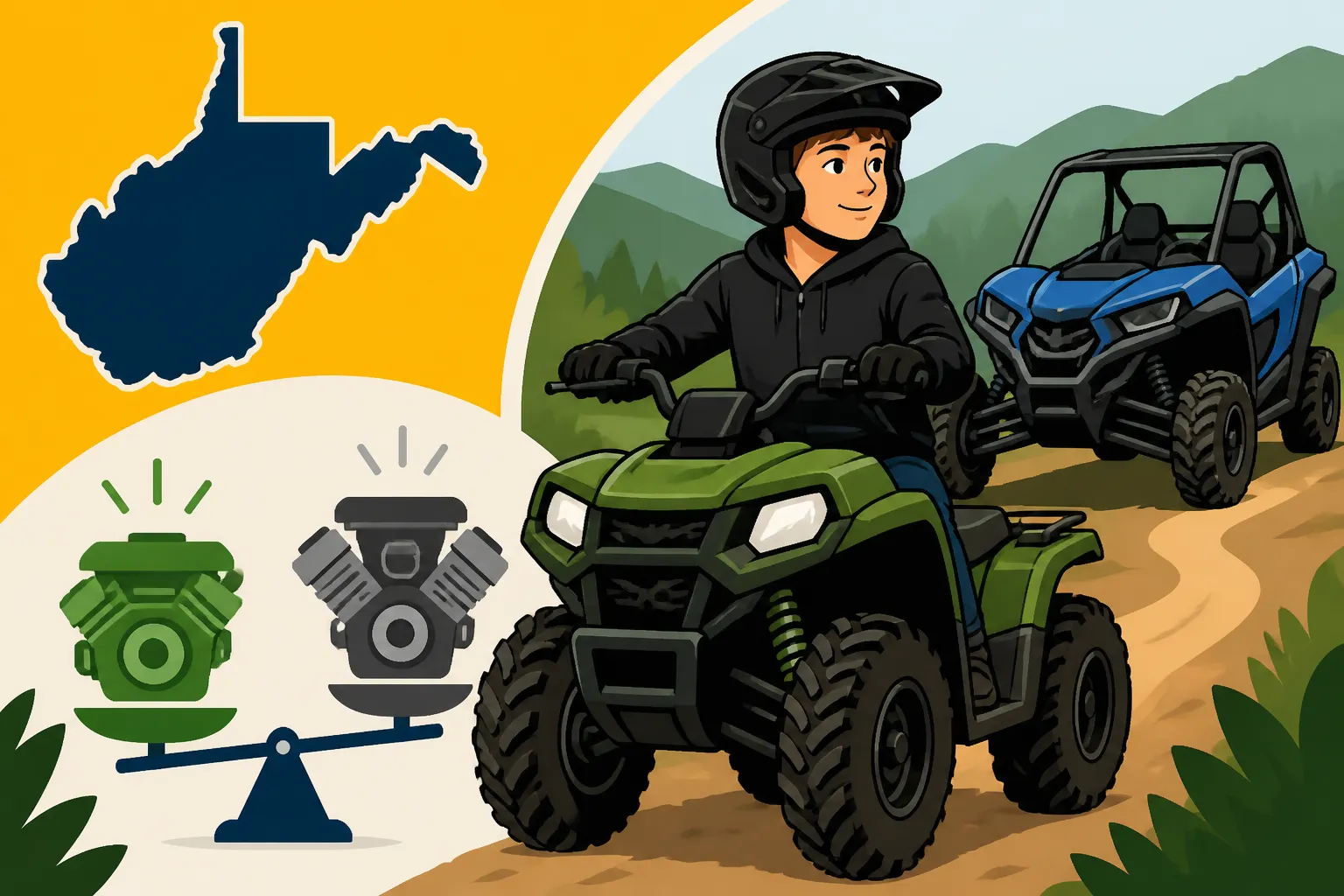
Getting your child into the thrilling world of ATV and UTV riding here in West Virginia can be an incredibly rewarding experience, offering countless hours of outdoor fun and skill development. But for many parents, the excitement is quickly met with a wave of questions and a touch of understandable anxiety, particularly around what machines are actually safe, appropriate, and most importantly, legal for young riders. It’s easy to feel overwhelmed by the various engine sizes, age recommendations, and state regulations. This comprehensive guide aims to cut through that confusion, giving you a clear picture of West Virginia's engine size limits for riders under 16, so you can make informed decisions and ensure your child rides safely and lawfully.
Understanding West Virginia's Youth ATV Regulations
West Virginia takes the safety of its youngest riders very seriously, and that's reflected in the specific regulations concerning ATV and UTV use by minors. These aren't just arbitrary rules; they're designed to protect children from operating machines that are too powerful, too heavy, or simply too much for their developing physical and cognitive abilities to handle safely. Ignoring these rules doesn't just put your child at risk; it can also lead to significant penalties, spoiling what should be a fantastic family activity.
Why Age and Engine Size Limits Exist
Imagine a small child trying to control a full-sized adult ATV with a powerful 500cc engine. The sheer weight, the responsive throttle, the braking demands, and the physical strength required to turn the handlebars or shift body weight in a corner would be completely beyond their capabilities. This isn't just about strength, though. It's also about reaction time, judgment, and the ability to anticipate hazards—skills that develop over time. West Virginia's laws are in place precisely to prevent these dangerous mismatches. The limits ensure that as a child grows, they gradually move up to more powerful machines, allowing their skills to evolve alongside the demands of the vehicle. It's a progressive learning curve, built right into the law, to minimize the risk of accidents and serious injuries.
For instance, a young child might struggle to reach the brake levers comfortably or apply enough force to stop quickly, especially in an emergency situation. Their shorter arms might make steering difficult, leading to loss of control on uneven terrain. A machine too large could also tip more easily with an inexperienced rider who can't shift their weight properly. These regulations are a crucial layer of protection, designed to give children the best chance to learn and enjoy the sport without unnecessary danger.
The Specifics of West Virginia's Rules
West Virginia law clearly defines the age and engine size restrictions for youth ATVs, primarily focusing on all-terrain vehicles. Side-by-sides (UTVs) have slightly different considerations because they are multi-passenger vehicles with seatbelts, but the spirit of ensuring an appropriate machine for a young operator remains the same.
For ATVs, the rules are generally structured into tiers:
- Under 12 Years Old: Riders under the age of 12 are restricted to ATVs with an engine displacement of 70 cubic centimeters (cc) or less. These machines are typically designed with lower top speeds, lighter frames, and simplified controls to be manageable for very young riders. Think of models like a Polaris Outlaw 50 or a Yamaha Raptor 90 (though even a 90cc is pushing the limit here, as it technically exceeds the 70cc rule for those under 12, so always double-check the exact engine displacement). It’s critical that even with these smaller machines, a parent or guardian is actively supervising and teaching the child.
- 12 to 15 Years Old: Riders in this age bracket can operate ATVs with an engine displacement of up to 90 cubic centimeters (cc). This slight increase in power and size allows for progression as the child gains experience and physical capability. Many manufacturers offer models specifically designed for this age group, balancing a bit more performance with continued safety features like speed limiters. A common example might be a Polaris Outlaw 90 or a similar machine from another brand.
- 16 Years and Older: At 16, a rider can operate any ATV size, provided they meet other requirements like holding a valid driver's license if riding on roads where a license is required, or completing a safety course.
It's important to remember that these are maximums. Just because a 12-year-old can ride a 90cc machine doesn't mean they should if their skill level isn't there yet. Always prioritize the individual child's maturity, experience, and physical ability over simply meeting the minimum legal age for a larger machine. Parents often find themselves navigating this exact question, wondering if their fast-growing 10-year-old is truly ready for a 90cc machine or if a 70cc is still the [Best First Quad Size for a Ten-Year-Old].
West Virginia law also specifies that youth operators (under 16) must wear an approved helmet and eye protection at all times when riding. Additionally, they must be supervised by an adult at least 18 years old when riding on designated trails or public lands. You'll want to ensure you're familiar with these additional safety rules, which are often covered in the [West Virginia ATV Safety Awareness Course].
Navigating Manufacturer Guidelines and Recommendations
Beyond the state laws, manufacturers also provide their own age and size recommendations for their ATV and UTV models. While West Virginia's laws are the ultimate authority for legal operation, understanding manufacturer guidelines is crucial for selecting a machine that is inherently designed for a child's developmental stage. This can often be a source of confusion for parents because a manufacturer's suggested age might not perfectly align with West Virginia's strict engine size limits.
How Manufacturers Classify Youth ATVs
ATV and UTV manufacturers, like Polaris, Can-Am, Honda, and Yamaha, typically categorize their youth models based on a combination of engine size, physical dimensions, and features. They often label them as "youth," "mini," or "beginner" models. These categories are usually tied to an age range and a general riding skill level.
For instance, you might see categories like:
- Entry-Level (6-9 years old): These usually align with the lower end of the West Virginia 70cc limit, often featuring 50cc to 70cc engines, automatic transmissions, and often a parental speed limiter or tether kill switch. The focus is on basic control and confidence building.
- Intermediate (10-13 years old): Machines in this class might range from 70cc to 90cc, sometimes with slightly larger frames but still designed to be manageable. These often have a bit more suspension travel and might introduce features like reverse.
- Advanced Youth (14-16 years old): While West Virginia caps the engine size at 90cc for under-16s, some manufacturers produce larger "youth" models (e.g., 125cc-250cc) that are intended for older, more experienced teenagers approaching or just past the 16-year mark. It's crucial for parents to understand that while a manufacturer might market a 125cc ATV as a "youth" model, it cannot be legally operated by a 12-15 year old in West Virginia due to the 90cc engine size restriction.
Manufacturers put a lot of research into these classifications, considering factors like reach to controls, seating position, vehicle weight, and the amount of power delivery. They understand that a machine designed for a 10-year-old needs to be fundamentally different from one for an adult. It's not just about engine power; it's about the entire ergonomic and dynamic package.
The Discrepancy Between State Law and Manufacturer Ages
Here’s where a common pitfall occurs for parents. You might walk into a dealership or browse online and see a fantastic new ATV advertised as "perfect for ages 10+," but it boasts a 110cc engine. If your child is 10, 11, or even 15 years old, West Virginia law still restricts them to a 90cc ATV or smaller. This means that despite the manufacturer's general recommendation, that 110cc machine would be illegal for your child to operate in West Virginia until they turn 16.
This discrepancy arises because manufacturers often design their products for a broad national or even international market, where state or country-specific regulations can vary widely. West Virginia has opted for more conservative and specific engine size limits for minors than some other states.
Therefore, when you're looking at machines, your first priority must always be to cross-reference the manufacturer's specifications with West Virginia's legal requirements. Don't rely solely on the "recommended age" sticker. Always look at the actual engine displacement (cc) and compare it directly to the West Virginia age tiers. It can be frustrating to find a great deal on a machine only to realize it's technically too big for your child under state law, but adherence here is non-negotiable for safety and legality. When dealing with private sellers, be extra diligent about checking these specifications, as they may not be aware of the precise local laws.
Practical Considerations for Parents and Guardians
Beyond simply knowing the rules, actually implementing them and fostering a safe riding environment requires thoughtful action from parents and guardians. It’s about more than just buying the right size machine; it’s about preparation, supervision, and ongoing education.
Matching the Machine to the Rider's Skill and Maturity
While West Virginia law sets the maximum engine size based on age, it's really a starting point, not an end-all-be-all. The reality is that every child develops at a different pace. One 12-year-old might be incredibly coordinated, mature, and experienced, having ridden a 70cc machine for years. Another 12-year-old might be completely new to riding, easily distracted, and less physically developed. For the latter, even a 70cc machine might initially be too much, and a 50cc would be a safer starting point.
Consider these factors:
- Physical Stature: Can your child comfortably reach the handlebars, footpegs, and brake levers? Can they easily shift their weight to control the ATV in a turn or over bumps? A machine that's too tall or too wide will be harder to control.
- Strength: Can they pull the brake levers effectively? Can they maneuver the machine at slow speeds?
- Maturity and Judgment: Does your child understand the risks involved? Are they prone to reckless behavior, or do they follow instructions and exercise caution? Can they make quick, safe decisions when facing unexpected obstacles on the trail?
- Experience: Has your child ridden before? What kind of terrain have they ridden on? Starting with simpler, flatter trails is always wise before moving to more challenging terrain, regardless of the machine size.
Sometimes, keeping a child on a smaller machine for longer, even if they're legally allowed a larger one, is the wisest choice. It builds confidence and hones skills without the added risk of excessive power or weight. Many experienced riders will tell you that a skilled rider on a smaller machine is always safer than an unskilled rider struggling with something too powerful.
Essential Safety Gear and Training
No matter the engine size, proper safety gear is non-negotiable. This isn't just a recommendation; it's often a legal requirement in West Virginia, especially for youth riders.
Here's what every young rider needs:
- DOT-Approved Helmet: This is mandatory for youth riders in West Virginia. Make sure it fits snugly and is worn correctly. A helmet that's too big can shift and obstruct vision, while one that's too small will be uncomfortable and ineffective.
- Eye Protection: Goggles or a full-face helmet with a shield are essential to protect against dust, debris, and branches.
- Over-the-Ankle Boots: Sturdy boots protect feet and ankles from impacts and scrapes.
- Gloves: Protect hands from blisters and improve grip.
- Long Pants and Long-Sleeved Shirt: Durable material like denim or thick canvas provides protection from scrapes and minor impacts.
Beyond gear, hands-on training is paramount. The [West Virginia DMV ATV Safety Awareness Course] is an excellent resource for both children and parents. It teaches fundamental riding techniques, safe operating procedures, and an understanding of the risks. Even if your child has some experience, a formal safety course can reinforce good habits and introduce advanced safety concepts. Many parents choose to take the course with their children to model safe behavior and ensure they're both on the same page regarding rules and techniques. This training can be the difference between a minor mishap and a serious accident.
Legal Documentation and Ownership for Youth Machines
When you purchase an ATV or UTV for your child, even a small youth model, it still needs to be titled in West Virginia. While the child themselves cannot legally enter into a contract, the title will typically be in the parent or legal guardian's name. This establishes legal ownership and is crucial for many reasons, including proof of purchase, preventing theft, and if you ever need to sell the machine.
You'll need certain documents for this process:
- Proof of Ownership: This could be a manufacturer's certificate of origin (MCO) for a new machine or a properly signed-over title from a previous owner for a used one.
- Bill of Sale: Especially for private sales, a detailed [West Virginia ATV Bill of Sale: What Belongs in It] is vital. It acts as a record of the transaction. You might even find templates on reputable sites like LawDepot, which can help ensure all necessary information is included, protecting both buyer and seller.
- Application for Certificate of Title: This form is submitted to the West Virginia DMV.
If you are buying a used machine, always ensure the seller has a clear title to sign over. Attempting to title an ATV without the previous owner's title or proper documentation can be a significant headache and is covered in guides like [Titling an ATV in West Virginia Without the Previous Owner]. For parents who wish to put the machine in their child's name, or perhaps in two names (parent and child), there are specific procedures, but generally, a minor cannot be the sole titled owner. Consulting resources on [Buying an ATV for a Child: Whose Name Goes On It] can provide further clarity.
Having proper documentation is not just about state requirements; it’s about protecting your investment and ensuring a smooth process should you ever need to interact with law enforcement, deal with insurance, or eventually upgrade your child's machine. LawDepot can be a useful tool for generating customized legal forms, which can provide peace of mind in these situations.
| Age Group (Years) | Maximum Engine Size (ATV, cc) | General Characteristics |
|---|---|---|
| Under 12 | 70cc | Automatic, lower speed, light frame, simple controls. Focus on basic skill development. |
| 12-15 | 90cc | Automatic, moderate speed, slightly larger frame, more features possible. Progression from beginner. |
| 16 and Older | Any size (no restriction) | Can operate any size ATV, subject to other licensing/safety requirements. |
This table provides a quick reference, but always remember to cross-reference with the specific text of West Virginia statutes and consider your child's individual abilities.
Investing in your child's passion for riding ATVs and UTVs in West Virginia is a wonderful thing, creating lasting memories and teaching valuable skills. By diligently adhering to West Virginia's engine size limits, prioritizing safety gear, enrolling them in proper training, and handling all the necessary documentation, you’re not just following the law; you’re setting them up for a lifetime of safe and enjoyable adventures on the trails. Remember, the goal is not just to ride, but to ride safely and responsibly.
Disclaimer
This article is for general informational purposes only and does not constitute professional advice. Laws, prices and regulations vary by location and change over time. Consult a qualified professional for guidance on your specific situation.