Strapping a Side-by-Side Down for the Highway
Hitting the open road with your side-by-side or ATV in tow is a huge part of the West Virginia outdoor experience. But nothing can put a damper on your excitement – or worse, create a dangerous situation – faster than realizing your precious machine isn't properly secured. This guide will walk you through everything you need to know about strapping down your off-road vehicle for highway travel, ensuring it arrives safely and without incident, protecting both your investment and everyone else on the road.
Why Proper Tie-Down is Non-Negotiable for Highway Travel
We've all seen it: someone flying down the highway with a quad barely clinging to a flimsy trailer, bouncing and swaying with every bump. It's enough to make any experienced rider cringe. This isn't just about avoiding a scratched fender; it's about serious safety and legal implications. Your side-by-side is a heavy, powerful machine, and an unsecured load on the highway is a significant hazard to yourself and everyone around you.
The Dangers of Insecure Loads
Imagine you’re cruising down I-79, headed for a weekend on the Hatfield-McCoy Trails, and suddenly, your UTV shifts violently on the trailer. Even a small shift can cause your trailer to sway uncontrollably, leading to a loss of control for your tow vehicle. At highway speeds, this can quickly escalate into a catastrophic accident. Your UTV could fall off the trailer, becoming a massive projectile that can cause severe damage, injury, or even death to other drivers.
Beyond the immediate danger, an unsecured load can also cause significant damage to your side-by-side itself. Bouncing and scraping against the trailer bed, bending tie-down points, or even suffering structural damage from excessive movement are all real possibilities. You've invested good money in your machine, and seeing it damaged before you even get to ride it is a terrible feeling. Plus, dealing with insurance claims and repairs from such an incident can be a huge headache, often costing you valuable riding time and money. Always remember, the peace of mind that comes from a securely strapped machine is priceless.
Legal Requirements and Liability
It's not just common sense; it's the law. In West Virginia, as in most states, drivers are legally responsible for ensuring their loads are properly secured. If your side-by-side comes loose and causes an accident, you, as the operator of the tow vehicle, will be held liable for any damages or injuries. This isn't just a minor traffic ticket; it could lead to substantial fines, points on your license, and even criminal charges depending on the severity of the incident.
Think about the financial hit: property damage to other vehicles, medical bills for injured parties, and potential lawsuits can quickly add up to hundreds of thousands of dollars. Even if your insurance covers some of it, your premiums will skyrocket. Beyond that, the emotional toll of knowing you caused harm because of negligence is something no one wants to carry. Before you embark on any journey, especially a long highway haul, always prioritize checking and double-checking your tie-downs. It’s a small investment of time that prevents potentially life-altering consequences. Remember, having your documentation in order, such as a well-drafted bill of sale that you might create using a platform like LawDepot, is crucial not just for ownership transfer but also for proving the value of your asset should an unfortunate incident occur during transport.
Choosing the Right Gear for the Job
Securing your side-by-side isn't a "one-size-fits-all" situation. The type of straps, their strength, and where you anchor them all play a critical role in safe transport. Don't skimp on quality here; these items are your first line of defense against disaster.
Types of Tie-Down Straps and Their Uses
When it comes to strapping down your valuable UTV, you'll primarily encounter a few types of straps, each with its own strengths and ideal uses:
- Ratchet Straps: These are the workhorses of cargo securing. They consist of a long strap with a hook on one end and a ratchet mechanism with another hook on the other. The ratchet allows you to apply significant tension, cinching your machine down tightly. They are excellent for heavy loads like side-by-sides because they provide superior holding power and reduce slack over bumpy roads. However, it's crucial not to overtighten them, as this can damage your machine's suspension or frame. You also need to be careful with the ratchet mechanism itself, as it can scratch paint if not positioned correctly. Always ensure the strap is laid flat and not twisted for maximum strength and to prevent fraying.
- Cam Buckle Straps: Lighter duty than ratchet straps, cam buckle straps use a simple cam mechanism to secure the webbing. While easier to use and quicker to release, they don't offer the same level of tensioning as ratchet straps. They are generally better suited for lighter ATVs or securing accessories, rather than the primary hold-down for a heavy side-by-side on the highway. Using them for a UTV could lead to too much slack developing over rough terrain or during sudden stops.
- Soft Ties or Axle Straps: These are often overlooked but are incredibly important for protecting your machine. Soft ties are loops of durable webbing designed to wrap around axles, A-arms, or other suspension components. They provide a safe, non-abrasive attachment point for your ratchet straps, preventing the metal hooks of the ratchet straps from scratching or damaging your UTV's frame or paint. By using soft ties, you're transferring the stress of the tie-down to a strong, resilient part of the machine, rather than risking damage to more delicate areas. Always connect your main ratchet straps to the soft ties, not directly to your UTV's frame, whenever possible.
When you're preparing to transport your machine, especially if it's a new purchase, ensure all your legal documentation is in order before even thinking about hitting the road. A comprehensive bill of sale, perhaps drafted using a reliable online service like LawDepot, can be invaluable for proving ownership and facilitating any necessary [West Virginia ATV Title Application at the DMV] or insurance claims if something unexpected happens during transit.
The Importance of Weight Ratings and Durability
Never, ever use a strap that isn't rated for the weight you're hauling. Straps have two key ratings:
- Working Load Limit (WLL): This is the maximum weight a strap is safely designed to hold in real-world conditions. For your UTV, you'll want to choose straps with a WLL that is at least half the weight of your machine. Ideally, if you're using four straps, the combined WLL should exceed the total weight of your side-by-side by a comfortable margin.
- Breaking Strength: This is the point at which a strap will completely fail. While it's always higher than the WLL, you should never rely on breaking strength. It's a measure of catastrophic failure, not safe operation.
Most quality tie-down straps are made from polyester webbing, which is strong, resistant to stretching, and holds up well against UV exposure and moisture. Inspect the stitching, hooks, and ratchet mechanisms for any signs of wear, fraying, cuts, or corrosion before each use. A compromised strap is a dangerous strap. Spending a little extra on heavy-duty, properly rated straps is a small price to pay for the safety of your machine and others on the road.
Anchoring Points: Trailer and Machine
The best straps in the world are useless if they aren't anchored correctly. Both your trailer and your side-by-side need strong, designated points for attachment.
On your trailer, look for:
- D-rings or E-track/L-track systems: These are ideal, purpose-built anchor points that are designed to handle significant stress. Make sure they are securely bolted to the trailer frame, not just the deck.
- Sturdy frame members: If D-rings aren't available, wrap straps around robust parts of the trailer's frame. Avoid attaching to flimsy fender mounts or wooden deck boards.
On your side-by-side, focus on structural components:
- Frame: The main chassis or frame rails are the strongest points. Use soft ties around these.
- Axles or A-arms: These are excellent for securing the suspension and preventing bounce. Again, soft ties are your friend here to prevent scratching or crushing.
- Never use steering components, plastic body panels, exhaust pipes, or fuel lines as tie-down points. These are either too fragile, not designed to bear weight, or could be damaged, leading to costly repairs.
Before you load up, take a moment to perform a [Pre-Purchase Inspection Before You Sign] if you just acquired the machine, looking for any existing damage or weak points on the frame or suspension that might affect safe transport.
Step-by-Step Guide to Securing Your Side-by-Side
Alright, let's get down to the nitty-gritty. This isn't just about throwing a few straps over your UTV; it's a methodical process that ensures maximum safety.
Positioning the Machine on the Trailer
How you position your side-by-side on the trailer is just as important as how you strap it down. The primary concern here is weight distribution, which directly impacts your tow vehicle's stability.
- Tongue Weight is Key: For most trailers, you want about 10-15% of the total loaded weight (trailer plus UTV) to be resting on your tow vehicle's hitch (tongue weight). Too little tongue weight, and your trailer will sway uncontrollably. Too much, and it will push down heavily on your tow vehicle, affecting steering and braking. To achieve this, generally, position your UTV so that its heaviest part (often the engine) is slightly forward of the trailer's axle(s).
- Centering: Always center your side-by-side from side to side on the trailer. An off-center load will create unequal pressure on the trailer's suspension and tires, potentially leading to instability or even a blowout.
- Clearance: Ensure your UTV has adequate clearance from the front of the trailer and any railings. You don't want it bumping into anything during hard braking. Once you've got the machine in place, engage the parking brake on your UTV, if it has one, for an extra layer of temporary security while you get your straps ready. This is also a good moment to review your paperwork; if you're hauling a machine you've just sold, a clear [West Virginia ATV Bill of Sale: What Belongs in It] and other documents you might have drafted with LawDepot will confirm ownership and transfer details.
The "X" Pattern and Other Techniques
Now for the strapping itself. The goal is to create tension that pulls the machine down and forward/backward, preventing any movement.
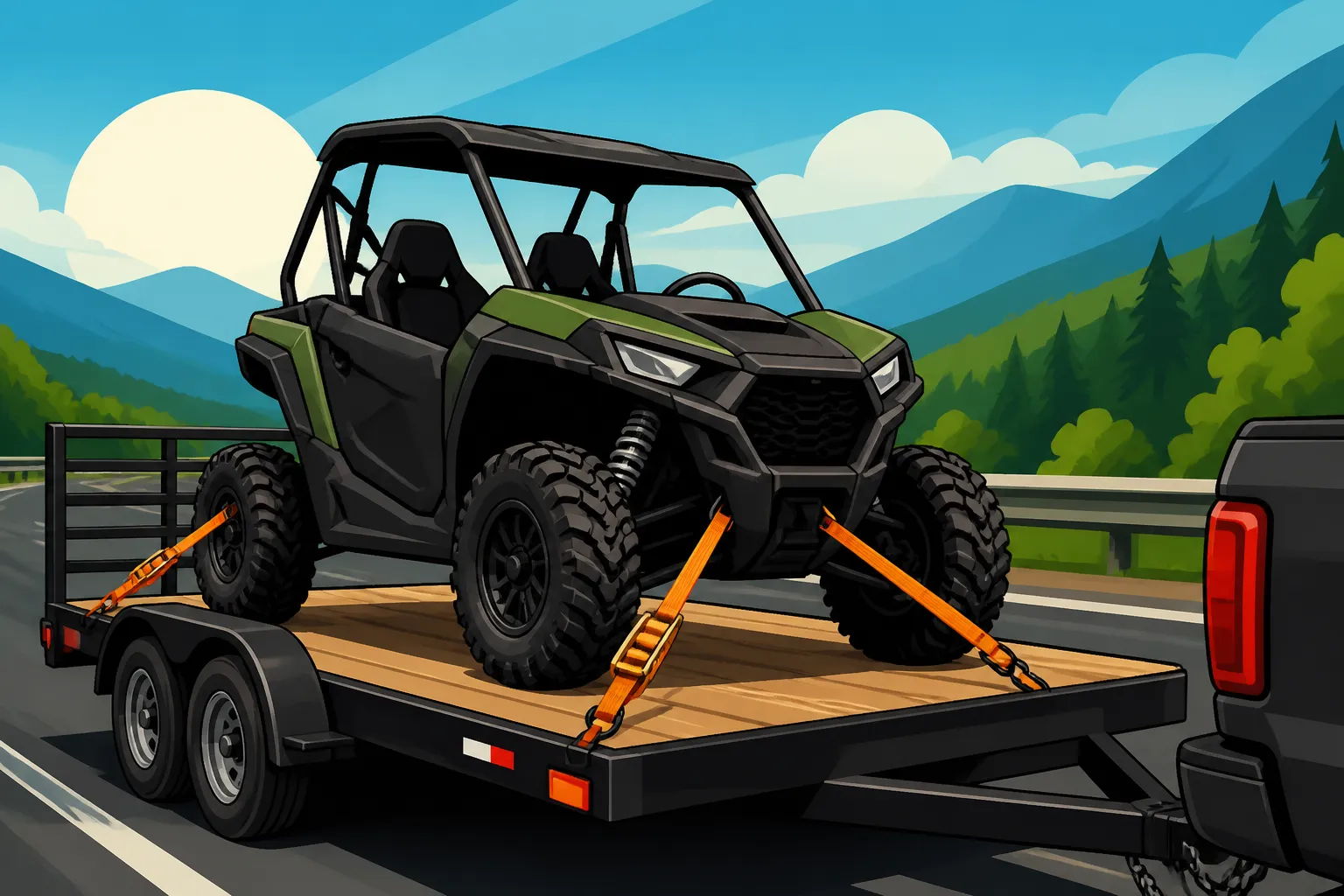
- The "X" Pattern (Front and Rear): This is the gold standard for securing vehicles.
- Front: Run one strap from the front-left side of your UTV (using a soft tie around the A-arm or frame) to the front-right anchor point on your trailer. Run a second strap from the front-right of your UTV to the front-left anchor point on your trailer. This creates an "X" pattern, pulling the UTV both down and inward, resisting side-to-side and forward movement.
- Rear: Repeat the "X" pattern at the rear of the UTV, running straps from the rear-left of your machine to the rear-right trailer anchor, and vice versa. This prevents backward and side-to-side movement.
- Compressing the Suspension vs. Letting it Float: There are two schools of thought here:
- Compressing the Suspension: Many experienced haulers prefer to compress the UTV's suspension slightly by tightening the straps more firmly. The idea is that this makes the UTV and trailer act as one unit, reducing bounce. Be careful not to overtighten to the point of damaging shocks or springs.
- Letting it Float: Others argue that allowing the UTV's suspension to absorb road bumps, rather than transferring all that shock to the trailer and straps, is better. With this method, you tighten the straps firmly enough to prevent movement but not so much that you completely compress the suspension.
- For highway travel with a heavy side-by-side, a slight compression is often preferred to minimize bounce, but avoid overdoing it.
- Additional Straps (Optional but Recommended): For extra peace of mind, especially on longer trips or rough roads, consider a fifth straight strap directly over the machine's frame, or additional straps running straight forward and straight backward from the main frame to robust trailer points. This provides redundancy and extra resistance against movement.
When securing your machine, envision how it might try to move in a sudden stop or swerve. Your straps should counteract all those potential forces.
Final Checks Before Hitting the Road
You're almost there! Before you pull out of the driveway, take a few crucial minutes for a final inspection.
- The Wiggle Test: Give your UTV a good shake. Try to push and pull it from different angles. It should feel absolutely solid on the trailer, with no discernible movement. If it wiggles, tighten your straps or reassess your attachment points.
- Check Straps for Twists and Fraying: Ensure all straps are lying flat against the UTV and trailer, without any twists or kinks, which can reduce their strength. Look for any new fraying, cuts, or wear.
- Verify Hooks and Ratchets: Confirm that all hooks are fully engaged in their anchor points and that the ratchet mechanisms are locked and secure. No loose ends flapping in the wind!
- Clearance Check: Double-check that your UTV isn't making contact with any part of the trailer, especially fenders or side rails, which could lead to damage during turns or bumps.
- Trailer Lights and Connections: Beyond your UTV, ensure your trailer lights are working, the hitch connection is secure, and the safety chains are crossed and attached. This is often an afterthought, but absolutely vital for highway safety.
- First Stop Recheck: After you've driven a few miles at a slower speed, pull over in a safe location. Recheck all your straps. It's common for them to loosen slightly as the load settles, especially if the suspension wasn't fully compressed initially. This quick recheck can prevent major problems down the road.
This meticulous approach not only safeguards your investment but also fulfills your legal obligation to transport your vehicle safely. Should any issues arise during transport, having a clear [Wording a Private ATV Sale Agreement] or other relevant legal forms from LawDepot readily available can streamline the resolution process.
Common Mistakes and How to Avoid Them
Even experienced riders can make mistakes when strapping down their machines. Being aware of these common pitfalls can help you avoid them and ensure a safer journey.
Over-Tightening vs. Under-Tightening
This is a delicate balance, and getting it wrong can lead to problems on either end of the spectrum.
- Under-tightening: This is the more obvious danger. If your straps aren't tight enough, your side-by-side will bounce and shift, leading to all the hazards we've already discussed: damage to the machine, trailer sway, and potential accidents. The straps might also rub and chafe, wearing through faster if there's constant movement. Always aim for a firm, taut hold where the machine feels integrated with the trailer.
- Over-tightening: While less intuitive, overtightening can also cause significant damage. Ratchet straps are powerful, and if you crank them down too hard, you risk:
- Damaging your UTV's suspension: You can permanently deform or damage springs, shocks, or A-arms by putting excessive downward pressure on them for extended periods. This is especially true if you tie down only to suspension components and not the main frame.
- Bending or cracking the frame: Extreme tension can stress the chassis of your side-by-side, potentially causing cracks or deformation over time, especially at the tie-down points.
- Deforming the trailer: Less common, but possible with lighter trailers, excessive force can bend trailer rails or deck boards.
The key is to apply enough tension so that the UTV is firmly held, with no movement, but without using brute force that visibly stresses the machine's components. A "snug" feeling is what you're after, not a "strained" one.
Neglecting Wear and Tear on Straps
Tie-down straps don't last forever. They are constantly exposed to the elements, abrasion, and tension, which takes a toll. Many riders make the mistake of assuming their straps are fine until they fail.
- Inspect Before Every Use: Make it a habit to thoroughly inspect every strap before every trip. Look for:
- Fraying or cuts: Even small nicks can compromise a strap's integrity.
- Sun damage: UV rays can degrade polyester webbing, making it brittle and weak over time. Look for faded areas or a rough texture.
- Stretched spots: If a section of the strap looks thinner or more elastic than the rest, it's likely compromised.
- Damaged hardware: Check the hooks for bending, cracking, or corrosion. Ensure the ratchet mechanism operates smoothly and locks securely.
- When to Replace: If you see any significant signs of wear, fraying, or damage, don't risk it. Replace the strap immediately. A few dollars for a new strap is a minuscule cost compared to the potential damage or liability of a strap failure on the highway. It's also a good practice to keep a spare set of straps in your tow vehicle for emergencies.
Improper Use of Recovery Points
Many side-by-sides come equipped with recovery points, often sturdy hooks or loops designed for winching or being pulled out of a sticky situation. While these look robust, they are generally not ideal tie-down points for highway transport.
- Designed for Pulling, Not Downward Pressure: Recovery points are typically engineered to handle horizontal pulling forces. Using them for prolonged downward pressure from tie-down straps can put stress on them in ways they weren't designed for, potentially leading to bending or even tearing them from the frame.
- Focus on the Frame: As mentioned earlier, the main chassis or solid frame members of your UTV, often with the use of soft ties, are the safest and most effective points for securing your machine. These areas are designed to withstand the varying stresses of off-road riding and are therefore better equipped to handle the sustained forces of highway tie-down.
By being diligent in your strap selection, careful in your application, and mindful of their condition, you significantly reduce the risks associated with transporting your valuable side-by-side. This careful approach to securing your machine reflects a commitment to safety and protection of your investment, much like ensuring you have all your proper [West Virginia ATV Bill of Sale Template Requirements] in place for ownership transfer, which can be easily generated using services like LawDepot.
| Strap Type | Pros | Cons | Ideal Use Case |
|---|---|---|---|
| Ratchet Straps | Strongest hold, high tension, durable | Can overtighten, slower to use, metal hooks can scratch | Primary tie-down for UTVs and heavy ATVs on highways, long hauls |
| Cam Buckle Straps | Quick to use, easy release, less chance of overtightening | Lower tension, can slacken, less secure for heavy loads | Securing lighter ATVs, accessories, short local hauls |
| Soft Ties / Axle Straps | Protects machine from metal hooks, creates secure loop | Not load-bearing on their own, need to be paired with other straps | Protecting paint/frame, creating attachment points on suspension components |
This article is for general informational purposes only and does not constitute professional advice. Laws, prices and regulations vary by location and change over time. Consult a qualified professional for guidance on your specific situation.