Mirror Requirements on a West Virginia Street-Legal Machine
You've decided to make your ATV or UTV street legal here in West Virginia, and you're quickly discovering that it's a journey filled with specific requirements that aren't always crystal clear. One of the most common points of confusion and frustration centers around what kind of mirrors your machine actually needs to pass muster. It's not just about slapping on any old mirror; the law has specific expectations. This guide will cut through the ambiguity, helping you understand precisely what's required for proper rear visibility on your street-legal machine so you can ride confidently and compliantly on our beautiful mountain roads.
Why Mirrors Are More Than Just a Suggestion for Street-Legal ATVs in West Virginia
When you're out on the trails, a quick glance over your shoulder or through the dust of your buddy in front might be enough. But the moment you put rubber to pavement, the rules change drastically, and your machine transforms into a vehicle that shares the road with cars, trucks, and motorcycles. This shift in environment brings a whole new set of responsibilities, and mirrors are right at the top of that list for a very good reason.
The Law's Clear Expectations
Let's be real: deciphering vehicle laws can feel like reading ancient scrolls. For many ATV and UTV owners, the thought of navigating state regulations for street legality is enough to make them want to stick to private land forever. But for those aiming for a [West Virginia's Street-Legal Special Purpose Vehicle Plate], the mirror requirement isn't just a suggestion—it's a specific component of what [Equipment a West Virginia SPV Must Carry]. West Virginia law mandates that any vehicle operating on public roads must provide the operator with "adequate rear visibility." This phrase, while seemingly simple, carries the weight of ensuring you can safely perceive traffic approaching from behind, merge lanes if applicable, and react to situations without turning your head completely away from the road ahead. It's about safety first, but it's also about fulfilling a non-negotiable legal obligation.
Trying to guess what "adequate" means can lead to headaches and, worse, a ticket. The state isn't looking for a minimalist approach; they want you to be as aware of your surroundings as any other driver on the road. This means moving beyond the basic needs of trail riding and embracing the full spectrum of road safety. It can feel like an extra hassle, an added expense to an already growing list of modifications, but it's a foundational element of making your machine truly street-legal.
Safety First: Beyond Just Avoiding a Ticket
While nobody wants a citation, the real reason behind mirror requirements runs much deeper than just legality. Think about it: when you're on a multi-lane highway or even a busy two-lane county route, how often do you need to know what's behind you? Merging onto a road from a trail connector, changing lanes, or simply having a clear picture of other vehicles around you is paramount. Unlike the controlled environment of a private trail system, public roads are unpredictable.
Blind spots in a side-by-side or ATV can be substantial, and the ability to quickly check your mirrors offers a crucial layer of protection. This is especially true when you consider the difference in speed and size between your off-road machine and the typical road vehicles you'll be sharing space with. A quick glance can prevent an accident, allowing you to react to an aggressive driver or a sudden stop ahead. It's a proactive measure that mitigates risk, making your street-legal journey a safer one for you, your passengers, and everyone else on the road.
What "Adequate Rear Visibility" Means for Your Machine
Now that we understand why mirrors are so important, let's dive into the specifics of what West Virginia considers "adequate." This isn't just about having a mirror; it's about having the right mirror(s) positioned correctly to provide that crucial rearward view. Many riders worry they'll spend money on parts only to find out they don't meet the precise local requirements. We want to help you avoid that frustration.
Minimum Mirror Requirements: One or Two?
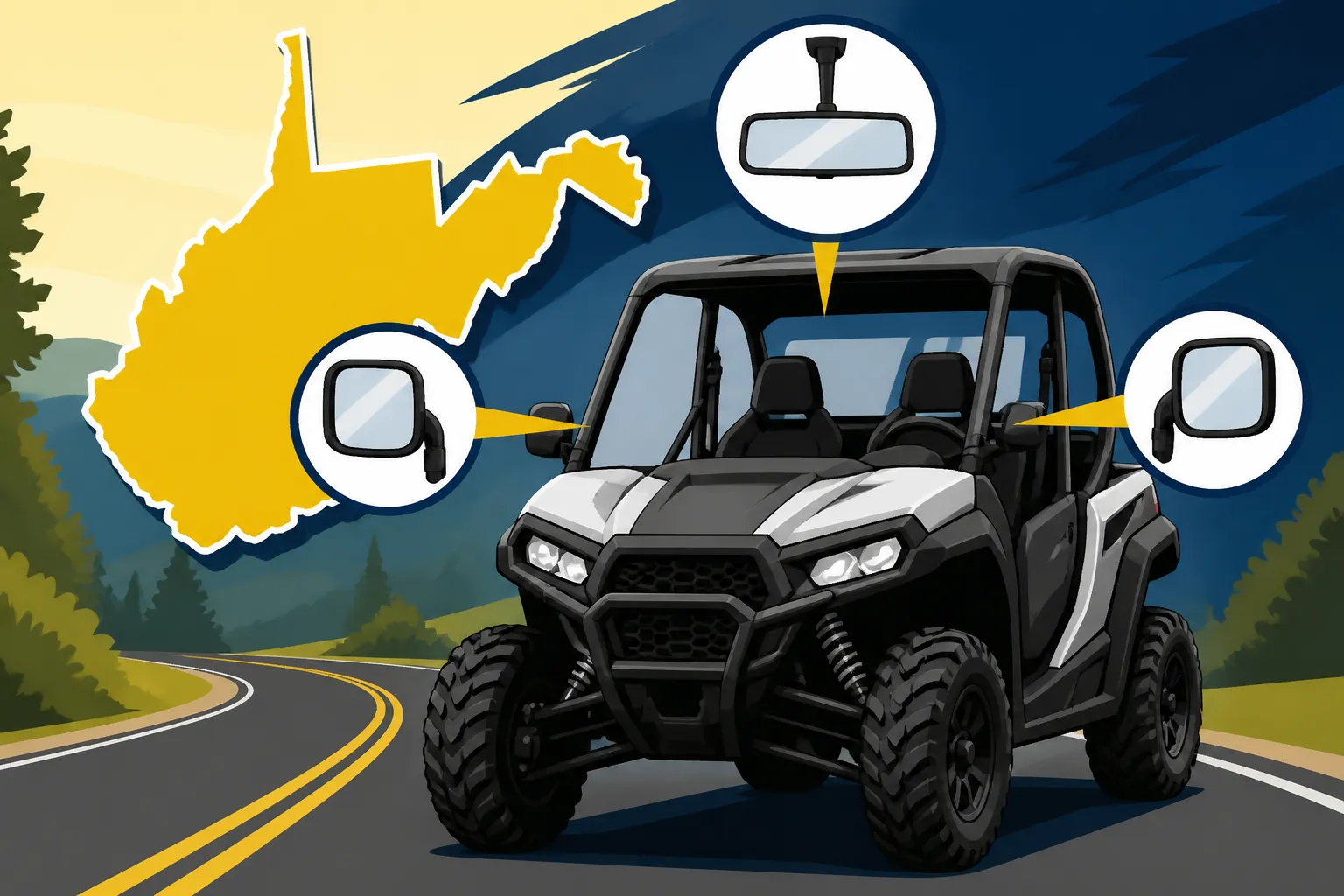
This is often the first question on everyone's mind: do I need just one mirror, like on some motorcycles, or do I need two, like a car? For most street-legal ATVs and UTVs in West Virginia, the general interpretation of "adequate rear visibility" usually means at least one rearview mirror mounted to provide a clear view of the highway to the rear for a distance of at least 200 feet. However, many experienced riders and even some enforcement officers will tell you that having two side mirrors is the safest and most compliant route for a UTV, mimicking the setup of a traditional vehicle. For an ATV, a single bar-end or handlebar-mounted mirror might suffice if it offers that 200-foot clear view, but two side mirrors (one on each side) are generally a safer bet for comprehensive visibility.
When you're [Making a UTV Street Legal in West Virginia], think about the practical application. A UTV often has a wider stance and potentially more blind spots than a single-rider ATV. Adding a mirror to each side of the roll cage provides a much broader field of vision, significantly reducing blind spots and enhancing safety. While the letter of the law might be interpreted as "at least one," going above the absolute minimum often ensures a smoother experience with enforcement and, more importantly, genuinely enhances your safety. It's a small investment that offers a huge return in peace of mind.
Placement and Field of View
Once you've decided on the number of mirrors, where do they go? This isn't just an aesthetic choice; it's critical for functionality. Mirrors must be securely mounted and positioned so that you, the operator, have a clear, unobstructed view behind your machine. For ATVs, handlebar-mounted mirrors are common. They need to be robust enough to withstand vibrations and stay put. For UTVs, mirrors can be mounted to the roll cage, the windshield frame, or even internally as a rearview mirror. The key is to ensure they don't block your forward vision but also aren't obscured by passengers, cargo, or other accessories.
Consider the angles and adjustability. You need to be able to easily adjust your mirrors to cover your blind spots, especially when you're seated in the normal operating position. Imagine yourself on a busy road. Can you quickly glance at your mirrors and see what's happening behind you without straining or moving your head excessively? If not, the placement isn't ideal. Brands like SuperATV offer a range of robust, adjustable mirrors specifically designed for off-road machines that can handle the bumps and vibrations while still providing clear rear visibility. Proper placement ensures that the mirror isn't just there for show, but is a functional safety device that serves its purpose every time you hit the pavement.
Choosing the Right Mirrors for Your West Virginia Street-Legal Build
With so many options on the market, picking the right mirrors can feel overwhelming. You want something durable, effective, and compliant, without breaking the bank. Let's explore the types commonly used for street-legal conversions and what you should consider for your West Virginia adventures. Remember, the goal is not just to check a box, but to genuinely improve your awareness on public roads.
Types of Mirrors and Their Pros & Cons
Different machines and riding styles might benefit from different mirror setups. Understanding the strengths and weaknesses of each type will help you make an informed decision:
-
Side Mirrors (Cage/Bar Mounted): These are perhaps the most common choice for UTVs and increasingly popular for ATVs. They mount to your roll cage (for UTVs) or handlebars (for ATVs), extending outward.
- Pros: They offer a wide field of view, excellent for spotting vehicles in adjacent lanes or coming up from behind. Many are adjustable and some feature breakaway designs, allowing them to fold in if they hit a tree or obstacle on the trail, reducing damage. SuperATV offers several robust side mirror options that are designed to take a beating.
- Cons: Their exposed position means they are more susceptible to damage from trail riding or tight squeezes. They can also add to the overall width of your machine. You'll need to make sure they're mounted securely to minimize vibration at speed.
-
Rearview Mirrors (Internal/Dash Mounted): These are typically mounted inside the cab of a UTV, similar to a car's rearview mirror, or sometimes on the dash of an ATV.
- Pros: They provide a central view directly behind you, which can be useful for seeing what's directly in your wake. They are generally protected from trail damage since they are inside the vehicle.
- Cons: The view can be obstructed by passengers, cargo in the bed, or even a dusty rear window. On their own, they often don't provide sufficient peripheral vision to meet "adequate rear visibility" standards, especially for judging traffic in adjacent lanes. They are usually best used in conjunction with side mirrors for a comprehensive setup.
-
Breakaway Mirrors: While a feature found on many mirror types, it's worth highlighting. Breakaway mirrors are designed with a hinge or a ball joint that allows them to pivot or fold upon impact.
- Pros: This feature is invaluable if you plan to still ride trails. Instead of snapping off completely, they simply fold, significantly reducing the risk of permanent damage. This saves you money and the hassle of constant replacements. Many aftermarket brands, including SuperATV, prioritize this design for the dual-purpose rider.
- Cons: While durable, they might require readjustment after a hard hit, which can be a minor inconvenience. Some cheaper versions might not hold their position well, leading to constant sagging or vibration.
When selecting your mirrors, think about your primary use. If your machine will mostly be on roads, a sturdy, non-breakaway option might be fine. But if you're hitting the [The Hatfield-McCoy Trails, West Virginia's 1,200-Mile Network] during the week and commuting on the roads on the weekend, investing in high-quality breakaway mirrors makes a lot of sense.
Installation Tips and Common Pitfalls
Even with the best mirrors, poor installation can render them useless or even lead to safety hazards. Here are some tips to ensure your mirrors are properly installed and effective:
- Secure Mounting: Vibrations are the enemy of clear mirror vision. Use sturdy clamps or bolts, making sure everything is tightened down correctly. Check bolts regularly, especially after a few rides, as vibrations can loosen them over time. Many [Street-Legal Conversion Kit Prices] often include sturdy mirror options, or you can find high-quality standalone mirrors designed for ATVs and UTVs.
- Optimal Angle: Sit in your normal riding position and have someone help you adjust the mirrors. You should be able to see a significant portion of the road behind you and, for side mirrors, directly adjacent to your machine. Avoid positioning them so close to your body that your shoulder fills half the view, or so far out that you can't see the edges of your own machine for reference.
- Clear View: Ensure your mirrors aren't blocked by your arms, shoulders, helmet, or any part of the machine's frame. If you have a windshield, make sure side mirrors aren't positioned where they reflect glare or obscure your primary forward vision. If you have a cage, check that the bars don't cut off crucial parts of your view.
- Consider Auxiliary Lighting: While not directly mirror-related, think about how [Lights Required After Dark in West Virginia] might interact with your mirror placement. You don't want glaring reflections from your own auxiliary lights interfering with your rear view at night.
- Professional Help: If you're unsure about the best way to mount your mirrors, especially if it involves drilling or custom fabrication, consider consulting with a professional ATV/UTV accessories shop. They often have experience with street-legal conversions and can offer guidance or perform the installation for you. This is especially true for items like [Horn Placement on a Side-by-Side] or turn signals, which also require careful integration.
By carefully selecting and properly installing your mirrors, you're not just complying with West Virginia law; you're significantly enhancing your safety and enjoyment of your street-legal machine.
Beyond the Basics: Maintaining Your Mirrors and Staying Compliant
Getting your mirrors installed correctly is a huge step, but the job isn't completely done. Just like any other component on your ATV or UTV, mirrors require a little ongoing attention to ensure they remain effective and keep you on the right side of the law. This is especially true given the rugged nature of off-road machines and the environments they often operate in, even if they spend some time on pavement.
Regular Checks and Adjustments
Your mirrors take a beating. From dust and mud on the trails to vibrations on the road, they endure a lot. It’s a good practice to include a quick mirror check in your pre-ride routine.
- Cleanliness: Mud splatter, dust, and water spots can quickly render a mirror useless. A dirty mirror provides no "adequate rear visibility." Always wipe your mirrors clean before heading out, especially if you're transitioning from the trails to a public road.
- Tightness: Vibrations from riding can loosen mounting bolts over time. Give your mirrors a firm wiggle before each ride. If anything feels loose, tighten it immediately. A mirror that constantly shifts out of position is not only annoying but also dangerous and non-compliant.
- Adjustment: What might have been the perfect angle yesterday might not be today, especially if you've had a passenger, adjusted your seat, or carried cargo. Always sit in your normal riding position and quickly adjust your mirrors to ensure you have that clear, expansive view behind you. This is crucial for navigating any public road, whether you're sticking to the [West Virginia's 20-Mile Centerline Limit for an SPV] or simply crossing a [West Virginia Rules for Riding a County Route].
Thinking of your mirrors as an "install-it-and-forget-it" item is a common pitfall. For a street-legal machine, they're an active safety feature that needs your ongoing attention, just like your tires or brakes.
What Happens If Your Mirrors Aren't Up to Snuff
Ignoring mirror requirements can lead to more than just inconvenience. West Virginia law enforcement takes street-legal equipment seriously, and missing or non-compliant mirrors can land you in hot water.
- Warnings and Citations: At best, a friendly deputy might give you a warning and tell you to fix it. At worst, you could receive a citation. This can mean [West Virginia ATV Ticket Costs] that add up, and the hassle of appearing in court if you choose to fight it. It's often far cheaper and less stressful to simply ensure your mirrors are correct from the start.
- Impaired Street-Legal Status: Your mirrors are a required part of your vehicle's street-legal equipment. If they are missing, broken, or don't provide adequate visibility, your machine might technically not be considered street-legal at that moment. This could lead to further complications, especially if you're involved in an accident. An officer performing a spot check might even scrutinize other aspects of your machine, like your [West Virginia Inspection Rules for a Street-Legal Machine], if they find an issue with something as basic as mirrors.
- Increased Risk of Accidents: Beyond legal trouble, the primary consequence of inadequate mirrors is a heightened risk of an accident. Not seeing a vehicle approaching from behind or being unable to judge a safe merge can have severe repercussions. No amount of money saved on cheap mirrors or time saved by skipping a pre-ride check is worth the risk of an injury or property damage.
Making your ATV or UTV street legal is about embracing a higher standard of safety and compliance. Don't let something as fundamental as mirrors compromise your ability to enjoy West Virginia's roads and trails legally and safely.
Here's a quick comparison of mirror options to help you decide:
| Mirror Type | Mounting Location | Pros | Cons | WV Street-Legal Suitability |
|---|---|---|---|---|
| Handlebar Mirrors | ATV handlebars | Clear view to sides/rear, common for ATVs | Can vibrate, exposed to damage, might not provide full peripheral view | Good for ATVs (often two needed) |
| Side Mirrors (Cage) | UTV roll cage (pair) | Wide field of view, excellent for blind spots, robust designs available | Exposed to trail damage, adds width, may require specific clamps | Highly Recommended for UTVs |
| Rearview Mirror | UTV interior, dash | Central view, protected from trail damage, familiar to car drivers | View can be obstructed (passengers, cargo), limited peripheral vision, not enough on its own | Good supplemental to side mirrors |
| Breakaway Feature | Integrated into side/bar | Folds on impact, reduces damage on trails, saves replacement costs | Can loosen over time, may require readjustment after folding | Excellent for dual-purpose riders |
Disclaimer
This article is for general informational purposes only and does not constitute professional advice. Laws, prices and regulations vary by location and change over time. Consult a qualified professional for guidance on your specific situation.