Burning Rock: 10,000 Acres in Southern West Virginia
A ride at Burning Rock can shift from easy cruising to steep, rocky terrain faster than many first-time visitors expect. This guide explains how to plan a safer, smoother trip to the off-road park near Sophia, West Virginia, including choosing trails, preparing your machine, understanding permits and park rules, and deciding what to bring.
What to Expect at Burning Rock Offroad Park
Getting oriented near Sophia
Burning Rock Offroad Park is in Raleigh County, near Sophia and within reach of Beckley. Its large riding area and varied terrain make it a destination for ATV, UTV, and other off-road riders. The headline figure often associated with the park is about 10,000 acres, but the size of the property alone does not tell you what a day on the trails will feel like. Route difficulty, weather, machine width, and your group’s experience all matter.
The terrain is part of the appeal: expect wooded routes, elevation changes, uneven ground, and sections where rocks or mud may affect your pace. A route that looks straightforward on a map can feel very different when you reach a steep grade or a slick turn. Give yourself extra time between trail junctions, and avoid planning a ride that depends on maintaining a fast pace all day.
Burning Rock is a park, not an invitation to ride anywhere that looks open. Stay on marked, permitted routes and follow posted signs or instructions from staff. The park’s layout, access arrangements, and operating rules can change, so check its official information before loading up. For a wider look at nearby riding options, see [West Virginia Offroad Parks Outside Hatfield-McCoy](West Virginia Offroad Parks Outside Hatfield-McCoy).
Who may enjoy the park
Burning Rock can suit riders who want more than a flat, predictable loop. Experienced visitors may enjoy the chance to tackle changing terrain and link sections into a longer day. Riders who like exploring can also appreciate the way a large trail area invites careful route planning rather than repeated laps on a single path.
Newer riders can still have a good time, but should be selective. Start with routes that match your ability and machine, and treat a trail’s posted difficulty as a practical warning, not a challenge to prove yourself. If your group includes a first-time rider, keep the ride conservative until you have seen how they manage hills, loose surfaces, and tight turns. A smaller, easier outing is usually more fun than a long route that leaves someone anxious or exhausted.
The park may also work for families and mixed-ability groups, provided the adults plan around the least experienced rider and confirm the rules for young operators. Children need an appropriately sized machine, protective gear, and close supervision. Before choosing a route, review [West Virginia Trail Difficulty and How It Is Marked](West Virginia Trail Difficulty and How It Is Marked) and [Riding West Virginia Trails With Kids](Riding West Virginia Trails With Kids).
Planning Your Burning Rock Riding Day
Confirm access, rules, and trail conditions
Before leaving home, confirm the park’s current opening information, access requirements, permitted vehicle types, and any fees or reservation details. Do not assume that a previous visit, an old online discussion, or a friend’s memory reflects today’s arrangements. Ask whether there are restrictions based on machine width, whether passengers are allowed on particular vehicles, and what documents or equipment riders need.
Check for temporary closures and weather-related changes as well. Heavy rain can make some surfaces slippery, deepen mud, and increase the risk of erosion. A route that was manageable in dry conditions may demand better judgment after a storm. If a section is closed, respect the closure rather than trying to find a way around it; barriers and signs often protect riders as well as the trail itself.
Build a backup plan into the day. If weather or a closure limits the route you intended to ride, you may need to shorten the outing or choose another permitted area. A quick check of [Trail Closures on West Virginia's Trail System](Trail Closures on West Virginia's Trail System) and [West Virginia Trail Conditions After Rain](West Virginia Trail Conditions After Rain) can help you think through what to ask before setting off.
Choose a route that fits your group
Start by agreeing on the ride’s limits: how long you want to be out, how much technical terrain the group is comfortable with, and who will make the final call if conditions become challenging. A family group with young riders has different needs from a crew of experienced adults, even if both groups arrive with capable machines. Plan around the least experienced person, not the most confident one.
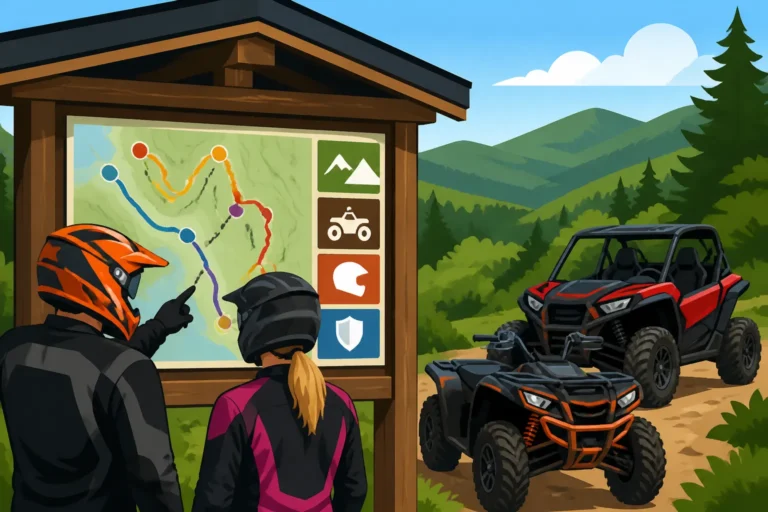
Use the park’s current map and markings to choose routes, and pause at junctions to confirm where you are going. If you use a digital map, download the information you need before entering areas where cell service may be unreliable. onX Offroad can help riders review routes and keep track of their position, but it should supplement—not replace—official park maps, signs, and sound judgment. Do not rely on a phone signal to find your way back.
For your first visit, resist the temptation to cover as much ground as possible. A shorter route lets you learn how the park’s surfaces and grades feel, check your machine, and see how the group handles the terrain. If the ride is going well and everyone remains comfortable, you can make a thoughtful decision about extending it. Planning a broader trip? [Planning a West Virginia Riding Weekend](Planning a West Virginia Riding Weekend) offers ideas for building a trip around time on the trails.
| Planning question | What to check before riding | Why it matters |
|---|---|---|
| Is the park open? | Current operating information and any access instructions | Prevents a wasted drive and helps you arrive prepared |
| Can your machine ride there? | Vehicle type, dimensions, and any restrictions | A machine that does not fit the park’s rules can disrupt the trip |
| Which routes suit your group? | Current trail map, markings, and posted difficulty | Helps match terrain to rider ability and machine capability |
| What gear is required? | Helmet, eye protection, and other park rules | Reduces the chance of being turned away or riding unprepared |
| What are conditions like? | Recent rain, closures, and surface warnings | Mud and slick slopes can change the risk of a route |
| How will you navigate? | Official map, downloaded route information, and backup plan | Cell service may not be dependable throughout the riding area |
Matching Trails and Machines to Your Ability
Read difficulty as a safety tool
Trail ratings are there to help you make decisions, not to rank riders. A difficult route may involve steep grades, rough rock, tight turns, or obstacles that require more control than a beginner has developed. Even if you have handled similar ground elsewhere, conditions at Burning Rock may differ with rain, maintenance, traffic, or seasonal change.
Talk through the route before you enter it. If a trail becomes more demanding than expected, stop in a safe place and consider turning back or choosing another marked route. There is no shame in changing plans. A rider who continues because the group is watching may make a poor decision, particularly when tired or worried about holding everyone up.
Machine capability matters too. A UTV may offer stability and passenger space, while a smaller ATV may be easier to maneuver in tighter sections. Neither is automatically the right choice for every route. Confirm any width or vehicle restrictions with the park, then consider your machine’s ground clearance, tires, braking, and the driver’s experience. For help interpreting ratings across the region, see [Hatfield-McCoy Trail Ratings Explained](Hatfield-McCoy Trail Ratings Explained).
Adjust expectations for weather and fatigue
Rain can make roots, rocks, and slopes more difficult to manage. Mud may conceal ruts or soft spots, while water can obscure the shape of a crossing. If the ground is slick, reduce speed, leave extra space between machines, and avoid sudden steering or braking. A rider who is comfortable on dry gravel may need to slow down considerably when the surface changes.
Fatigue can be just as important as terrain. After hours of concentrating on bumps and turns, riders may react more slowly or make riskier choices. Schedule breaks before everyone is worn out. Drink water, eat something, and use a break to check that no machine has developed a loose component, soft tire, or other issue. If someone seems uncomfortable, shortening the route is a sensible choice—not a failure to finish.
Keep the group together without crowding. Agree on a lead rider and a sweep rider, and decide what everyone should do if the group becomes separated. Leave enough distance for the rider ahead to stop without creating a collision risk. For more on managing rough surfaces, read [Mud, Rock and Creek Crossings in West Virginia](Mud, Rock and Creek Crossings in West Virginia).
Preparing Your Machine and Riding Gear
Check the machine before unloading
A basic pre-ride inspection can catch small problems before they become trail problems. Check tires for visible damage and proper condition, look for loose parts, and confirm that the brakes and controls respond as expected. Inspect the lights and fuel level, and make sure the machine is appropriate for the number of riders it will carry. If something feels wrong in the driveway, do not assume the trail will make it better.
Carry the tools and supplies that match your vehicle and the length of your ride. A compact repair kit, tire-inflation equipment, and a way to secure loose cargo may be useful, but avoid carrying so much that items can shift or interfere with controls. Follow the machine manufacturer’s guidance for maintenance and load limits. For an older or unfamiliar vehicle, a more thorough inspection before the trip can help reveal problems that are easy to miss in a quick walk-around.
If you are arriving with a rented or borrowed machine, learn its controls before starting the ride. Ask how to operate the brakes, lights, gear selector, and any safety features, and find out what to do if the machine gets stuck or develops a fault. Do not assume every ATV or UTV handles the same way. For a checklist to use before purchasing a used machine, see [Pre-Purchase Inspection Before You Sign](Pre-Purchase Inspection Before You Sign).
Wear protective gear and pack for delays
Wear a properly fitted helmet and eye protection, and dress for contact with branches, dust, and changing weather. Long sleeves, sturdy pants, gloves, and over-the-ankle footwear can make a bumpy day more comfortable and offer practical protection. Pack layers so you can adjust if conditions change, and keep spare clothing protected from mud and rain.
Bring water, snacks, basic first-aid supplies, and a charged phone. A small portable power source can be helpful, but it does not solve the problem of weak signal. Tell someone outside the riding group where you are going and when you expect to be back. Keep your map or navigation method accessible, and know how to contact the park or emergency services if needed.
Secure everything before moving. A loose bottle, tool, or bag can fall off, distract the driver, or create a hazard for someone behind you. Keep essential items in a closed, stable compartment and avoid overloading the vehicle. If you are still building your packing list, [What to Carry on a Remote West Virginia Ride](What to Carry on a Remote West Virginia Ride) and [Helmet and Eye Protection Rules in West Virginia](Helmet and Eye Protection Rules in West Virginia) are useful next reads.
Staying Safe and Respecting the Park
Ride predictably and leave room for others
Follow posted rules and stay on marked routes. Cutting across vegetation or entering a closed section can damage the area and put you outside the park’s intended riding network. At blind turns and hill crests, slow down and keep to the route’s marked side. You should be able to stop within the distance you can see clearly.
Pass other riders only when there is enough room and visibility to do so safely. If you meet an oncoming machine on a narrow section, communicate clearly and move carefully to a safe place rather than forcing a pass. Keep dust and noise in mind around other visitors. A courteous pace and a little patience help everyone enjoy the day, especially when groups meet at junctions or trailheads.
A park ride is different from a public-road ride. Do not assume that a machine’s trail equipment or park access makes it legal to ride on nearby roads. Public-road use has separate rules and may require different equipment, registration, or authorization. If you are considering connecting to roads beyond the park, review [Riding an ATV on the Road in West Virginia](Riding an ATV on the Road in West Virginia) before making plans.
Know when to stop or turn back
Turn back if the trail is beyond your ability, your vehicle is behaving unpredictably, or weather is making the route unsafe. Stop in a safe location if a rider is injured, distressed, or too tired to continue. A group should agree in advance that anyone can call for a break without being pressured to keep up. That small bit of planning can prevent a minor concern from becoming a serious one.
If a machine becomes stuck or disabled, avoid putting people in unsafe positions to recover it. Keep the group visible, move out of the travel line where possible, and contact the park for guidance if the situation cannot be managed safely. Do not attempt a recovery that exceeds your equipment or experience. A winch, tow strap, or another machine can create additional hazards when used carelessly.
Finally, leave the area as you found it. Pack out trash, respect property boundaries, and follow instructions about noise, parking, and access. A considerate visit supports continued riding opportunities and makes the experience better for the next group. For more detail on trail etiquette, see [West Virginia Trail Etiquette on Shared Routes](West Virginia Trail Etiquette on Shared Routes).
Disclaimer
This article is for general informational purposes only and does not constitute professional advice. Laws, prices and regulations vary by location and change over time. Consult a qualified professional for guidance on your specific situation.