Wide Machine Restrictions on West Virginia Trails
A wide side-by-side can look trail-ready in the driveway and still be too large for a route once you reach a narrow cut, tight turn, or posted width limit. West Virginia trail access depends on the specific system and trail, not just the machine’s name. This guide explains how to check restrictions, measure your UTV, and plan a ride that avoids dead ends.
How wide machine restrictions work in West Virginia
There is no single width rule for every trail
A machine that fits on one route may be prohibited on another. West Virginia’s trail networks can include wide, open routes alongside narrow sections where a larger UTV may not fit or may be restricted. Rules can differ by trail system, trail segment, and the conditions or closures in effect when you ride.
That is why a machine’s general category—such as ATV, side-by-side, or UTV—is not enough to determine access. A model marketed as a trail machine does not automatically qualify for every trail. The route’s posted signs and official system information matter more than the label in the brochure.
Before you travel, check the trail system’s current map and access information, then confirm any width limits that apply to the routes you plan to use. If a restriction is unclear, contact the trail authority or the local trailhead before setting out. A quick confirmation can save you from hauling a machine to a trail network only to discover that your planned ride is off-limits.
For a useful overview of width-related access questions, see West Virginia Trails Too Tight for a 64-Inch Machine. Trail size limits are only one part of route planning, so also review [Hatfield-McCoy Trail Maps and Signage] before you head out.
What the posted width limit means for your machine
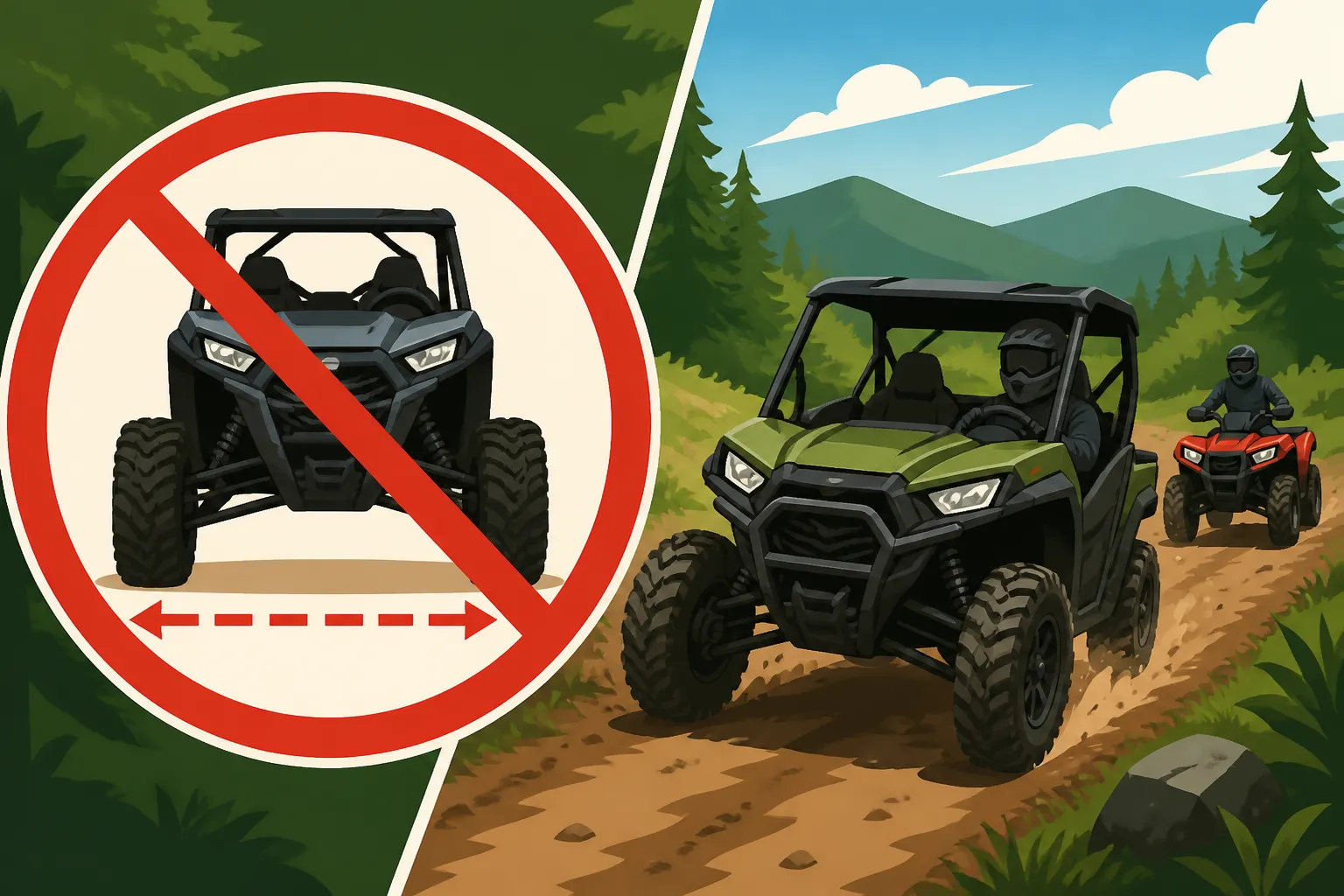
A posted width limit describes the maximum allowed width for a machine on that route. Do not assume a limit applies only to the body panels or that a machine is allowed simply because its tires appear to fit between the trail edges. The trail authority’s definition and posted rules control.
A manufacturer’s published width can help you start, but it may not tell the whole story for a modified machine. Wheel spacers, aftermarket suspension components, different wheels, or other changes can affect the machine’s actual outside width. If you are close to a posted limit, measure the machine rather than relying on a model name or a remembered specification.
Also keep in mind that a route’s physical appearance is not permission to ride it. A broad-looking approach may lead to a restricted or narrower section, and a narrow-looking trail may have rules that are different from what you expect. Follow signs at junctions and do not ride past a width-restriction notice because the trail seems passable.
Why fit is about more than the number
A machine can meet a width requirement and still be difficult to handle on a tight trail. Turning radius, wheelbase, ground clearance, tires, and the driver’s experience all affect how comfortably it navigates narrow corridors and sharp bends.
For example, a long, wide UTV may have enough clearance to travel down a straight section but struggle to turn around if the route narrows farther ahead. A rider who is unfamiliar with the machine may also need more room to correct a line, avoid a rut, or pass another group safely.
Trail difficulty descriptions can help you understand terrain, but they do not replace a width check. Learn how the system marks its routes with West Virginia Trail Difficulty and How It Is Marked, and avoid choosing a trail based only on its color or difficulty rating.
How to check whether your UTV is allowed
Measure the machine before loading it
Start with the manufacturer’s specifications, then measure your actual machine if you are near a posted limit or have made modifications. Use a level surface and identify the widest point from one side of the machine to the other. Depending on the configuration and the applicable trail rules, that could include the tires or other components extending beyond the body.
A practical check looks like this:
- Park the machine on level ground with the wheels pointed straight ahead.
- Find the widest points on both sides, checking tires and installed accessories.
- Measure straight across between those points.
- Compare the measurement with the specific trail restriction, not a general estimate of what the system might allow.
- If the measurement is close to the limit, confirm how the trail authority defines machine width before riding.
Take the tape measure with you if you have a removable accessory or adjustable setup that could change the machine’s dimensions. Do not count on removing an item at the trailhead to make a restricted machine eligible unless the rules clearly support that interpretation.
Check the system map, signs, and trail status
Use official trail information to identify which routes are open to your machine. Pay attention to notes or symbols that indicate width restrictions, vehicle limitations, closures, or other access rules. Then check for updates before leaving home, since a route can change status after you have planned your trip.
Mapping tools can help you understand the geography and build a route, but treat them as planning aids rather than proof of access. For instance, onX Offroad may help you review route options and keep track of a planned ride, but you should compare what you see there with the official trail system’s maps, signs, and current notices. Do not rely on an app alone to decide that a wide machine is permitted.
At the trailhead, read the posted rules even if you have ridden the area before. A sign at a junction may apply to the route ahead rather than the entire trail system. If signs and a map appear to conflict, stop and seek clarification instead of guessing.
| Before you ride | What to verify | Why it matters |
|---|---|---|
| Machine dimensions | Actual outside width and any modifications | A model specification may not reflect your setup |
| Route selection | Width limits for each planned segment | Rules can differ within a trail system |
| Map and notices | Official maps, signs, and closure updates | Access information can change |
| Trailhead rules | Posted restrictions and local instructions | The sign at the route entrance may add important details |
| Backup plan | A legal alternate route or another riding area | A restricted trail should not become a last-minute gamble |
Plan the route around the machine you have
If your UTV is wide, choose a system and route that clearly accommodate its dimensions instead of trying to make a narrow trail work. Plan your starting point, fuel and rest stops, and turnaround options before you leave the trailhead. A route that looks straightforward on a screen may become inconvenient if it ends at a restricted connector.
A mapping app such as onX Offroad can be useful for organizing route ideas and spotting junctions, but verify the access rules independently. When reviewing a route, note where you can safely turn around, whether there are alternate paths, and whether each connector is open to your machine.
For a broader comparison of places to ride, review West Virginia Trail Systems Best Suited to Side-by-Sides. If your trip involves connecting more than one area, West Virginia Trail Systems You Can Link in One Day can help you think through the route—but check the width rules for every segment you intend to ride.
What to do if your machine is too wide
Choose an appropriate route or riding area
If your machine exceeds a posted limit, do not enter the restricted trail and hope that the route opens up. Turning around can be difficult, and continuing can create safety problems for you and other riders. A wide vehicle can block a narrow route, damage trail edges, or leave its occupants with no safe way to maneuver.
Instead, look for routes that explicitly allow your machine’s width. If you are unsure which parts of a system are suitable, ask the trail authority or a local trailhead contact for guidance. Give them the machine’s measured width and the routes you are considering; “it’s a side-by-side” may not be specific enough for a useful answer.
Some riders find it simpler to select a different trail system rather than trying to piece together a legal route from restricted and unrestricted segments. That is a sensible choice, especially when you are unfamiliar with the area or riding with a group that includes different machine sizes.
Do not treat a difficult section as permission to squeeze through
A machine that fits between two trees is not necessarily allowed to ride the trail. Physical clearance is not the same thing as authorization, and forcing a large machine through a tight spot can scrape vegetation, damage the trail, or create a hazard for riders coming the other way.
If you reach a restriction unexpectedly, stop in a safe location. Do not block the route while you study a map, and do not attempt a risky turnaround on a steep, soft, or exposed section. If possible, move to a safe passing area, consult the official map, and contact the trail authority or trailhead for instructions.
Trail access may also be affected by temporary closures. Check Trail Closures on West Virginia's Trail System and [Checking West Virginia Trail Status Before You Drive] as part of your pre-trip routine. A familiar route is not guaranteed to be open or suitable on every visit.
Make group rides easier for mixed machine sizes
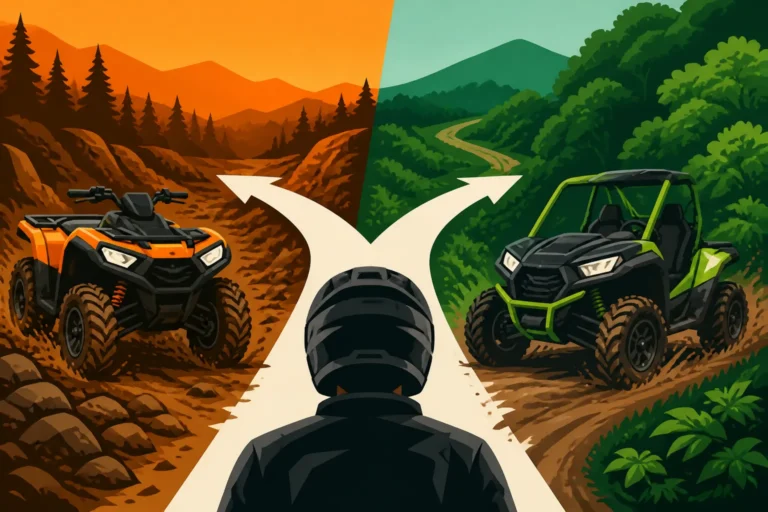
A group may include narrow ATVs, standard side-by-sides, and wider utility machines. Before the ride, compare machine widths and agree on routes that everyone in the group may legally use. It is frustrating to discover at a junction that half the group cannot continue, especially when riders have already separated or are running low on fuel.
Choose a lead rider who knows the planned route and a sweep rider who can help keep the group together. Make sure everyone understands where restrictions may begin and what to do if the group needs to change plans. A map app such as onX Offroad can help riders review the route beforehand, but the group should still follow official signs and current trail information.
When width restrictions separate a group, do not pressure a rider to take a route that is not permitted for their machine. Split into smaller groups only if everyone has a clear, legal route and a way to reunite. Good planning is less exciting than an improvised detour, but it is much better than getting stuck in a narrow section with no safe way out.
A practical pre-ride checklist for wide machines
Before you leave home
Confirm the machine’s actual width, including any modifications or installed accessories that could affect clearance. Pick a trail system with routes that accommodate the machine, then identify the specific segments you intend to ride. Save or download reliable route information where available, but do not mistake a digital route line for confirmation that a segment is open to your vehicle.
If you are visiting an unfamiliar area, check Hatfield-McCoy Trailheads and Where to Start to help plan your arrival and trailhead approach. Also read the system’s rules and posted notices before departure. A little homework is especially helpful when you are towing a large machine from out of town and have limited time to ride.
For a first visit, choose a conservative route rather than planning the longest possible loop. This leaves room to adjust if a connector is restricted, closed, or more difficult than expected. Use onX Offroad to organize your route if it helps, while keeping official information as the authority for access decisions.
At the trailhead and on the trail
Read the signs before unloading or entering the route. Confirm that the machine is allowed on the trail you plan to use, and watch for notices at later junctions. Do not assume that a route remains unrestricted simply because the first section was open to your vehicle.
Ride at a pace that gives you time to notice narrowing trails, gates, signs, and other riders. Keep your machine under control and leave room for others to pass where the trail allows it. West Virginia Trail Etiquette on Shared Routes offers useful guidance for riding responsibly around other trail users.
If your planned route is blocked or restricted, stop and reassess rather than pushing ahead. Check the official trail status, ask for local guidance when available, and choose a legal alternate route. A flexible plan makes it easier to enjoy the ride without turning a width restriction into an avoidable problem.
Disclaimer
This article is for general informational purposes only and does not constitute professional advice. Laws, prices and regulations vary by location and change over time. Consult a qualified professional for guidance on your specific situation.