Winter Riding on the Hatfield-McCoy System
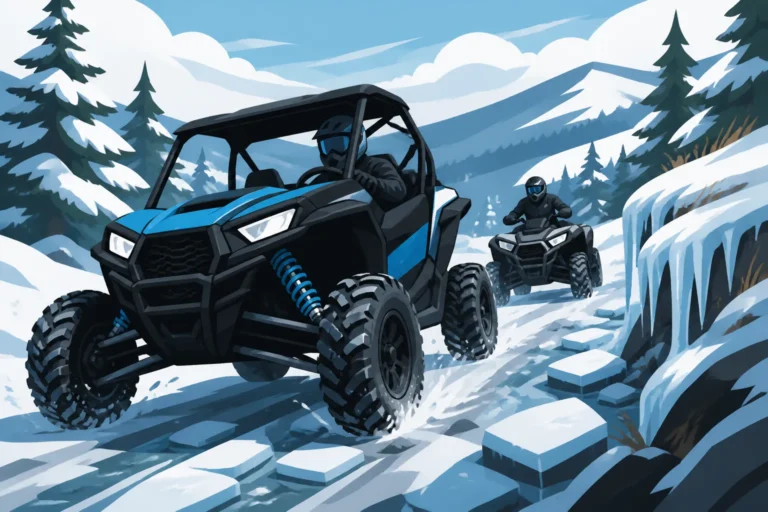
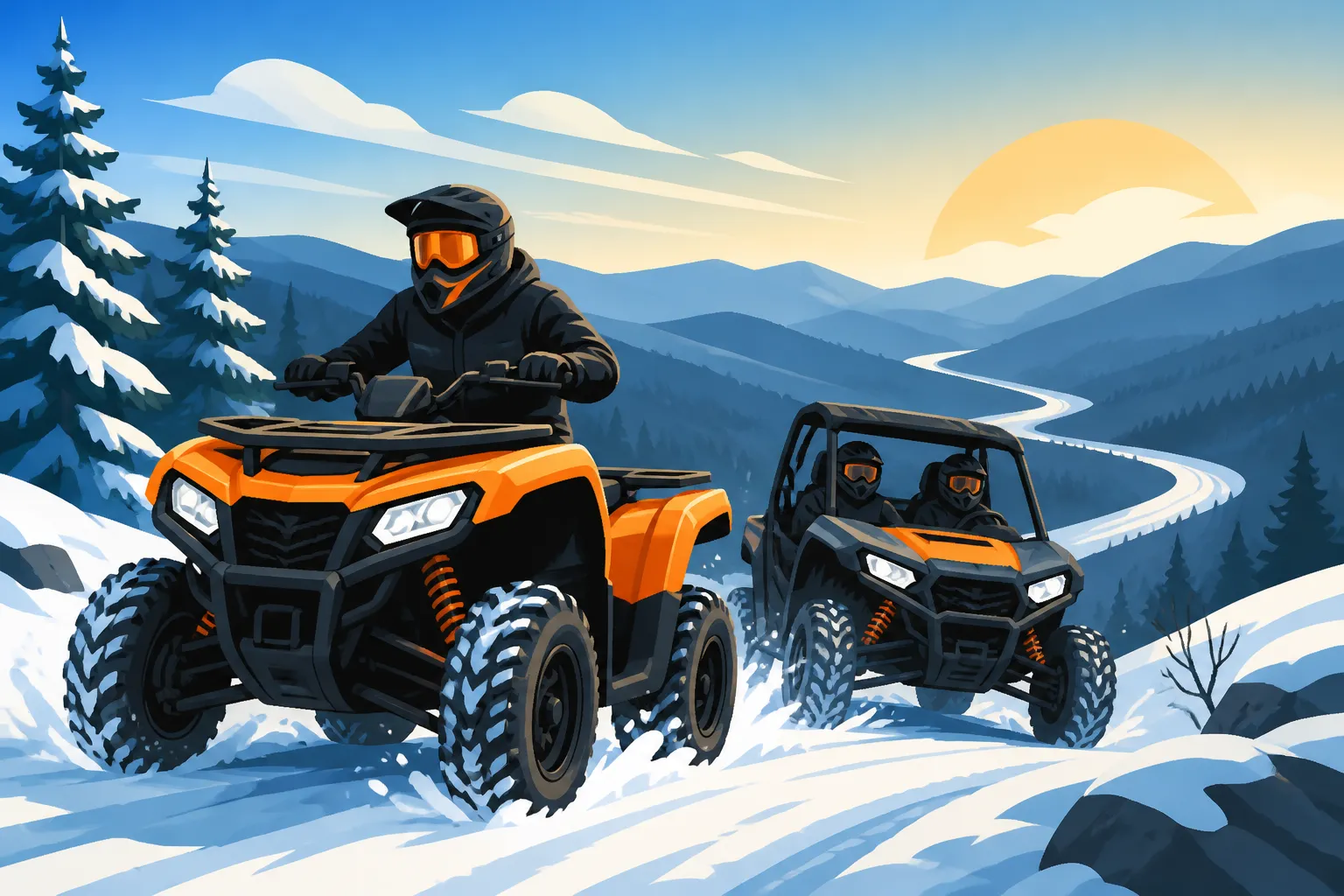
Winter riding on the Hatfield-McCoy Trails can mean frozen ruts in the morning, slick rocks by midday, and a sudden change in mountain weather before you get back to the trailhead. This guide explains how to plan a safer cold-weather ride, choose suitable routes, prepare your machine and gear, and check trail access before leaving home.
Plan a Winter Ride Around Conditions
Check trail status and rules before you travel
A trail that was open on your last visit may be affected by a closure, maintenance work, or conditions that make riding unsafe. Check the official trail status and notices for the system you plan to visit before loading your machine, then check again close to departure. Winter weather can shift quickly in southern West Virginia, and conditions may vary between trailheads and higher elevations.
Confirm the rules that apply to your ride, including permit requirements, hours, age restrictions, and any limits on where your machine can travel. A permit or a lodging reservation does not guarantee that every route will be open. If you are riding more than one system, verify access for each one instead of assuming a single plan covers the whole trip. For a broader overview of permits and rider responsibilities, see [Trail Rules Every West Virginia Rider Signs Up To] and [West Virginia's Daylight-Only Trail Riding Rule].
Build flexibility into the schedule. If a route is closed, visibility is poor, or the surface is too icy for your group, be willing to choose a shorter ride or stay off the trails. That can be frustrating when you have driven several hours or arranged a weekend around riding, but pushing ahead on a hazardous route can turn a fun trip into a recovery or emergency situation.
Look beyond the forecast for your starting point
A forecast for a nearby town may not describe what you will encounter on a shaded ridge or in a narrow hollow. Elevation, wind, shade, and recent precipitation all affect how quickly surfaces freeze and thaw. A sunny afternoon can soften exposed ground while shaded sections remain icy; overnight temperatures can refreeze water that was harmless the day before.
Check the expected temperature range, precipitation, wind, and visibility for the entire riding window. Pay particular attention to conditions early in the day and after sunset. If rain or melting snow is expected, think about how creeks, low spots, and steep slopes might change. A route that was manageable in dry weather can become slick and difficult when wet leaves, mud, or runoff cover rocks and roots.
Keep a conservative backup plan. Choose a turnaround time and a point at which the group will shorten the ride if conditions worsen. Make sure everyone understands that the least experienced rider’s comfort and control should guide the group’s pace. The [Checking West Virginia Trail Status Before You Drive] guide is a useful companion to a winter itinerary, especially when your travel plans depend on a particular trail system.
Choose Routes and Ride at a Winter Pace
Match the route to your group and machine
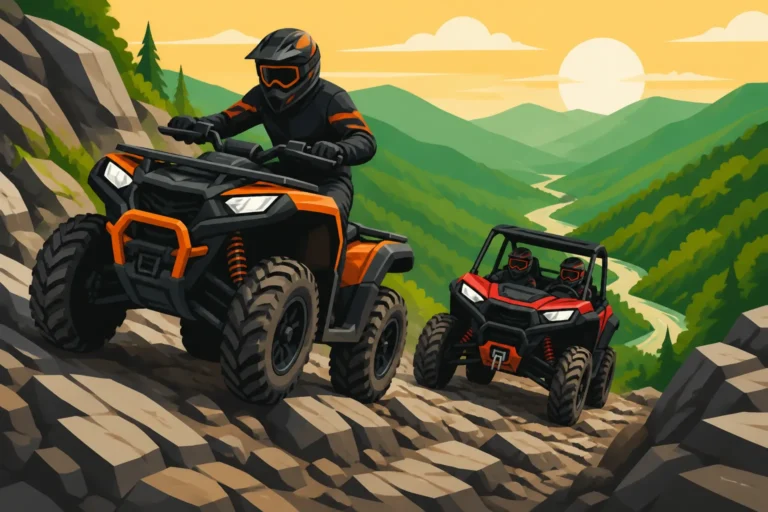
Winter is not the time to choose a trail only because it looks exciting on a map. Consider the route’s difficulty, width, elevation changes, surface, and distance from the trailhead. A steep climb or tight turn can become much harder to manage when the ground is slick. A longer route also leaves less room to adapt if someone gets cold, a machine develops a problem, or daylight fades earlier than expected.
Be honest about the least experienced rider in your group. Someone comfortable on dry ground may have little experience judging traction on frozen mud or wet rock. Select an easier route when conditions are uncertain, and avoid making the group’s first winter ride its most technical one. The [West Virginia Trail Difficulty and How It Is Marked] guide can help you think through how to interpret route difficulty, but posted ratings are not a promise that winter surfaces will feel the same as summer ones.
Machine size matters, too. A wide side-by-side may not fit comfortably on every narrow route, while a smaller ATV may not have the same passenger or cargo capacity. Confirm that your intended machine is allowed on the routes you plan to use. If you need help evaluating access and route options, a trail map app such as onX Offroad may help you review your plan before riding. Check that any map layers or saved information you rely on are available for your route and usable without a signal.
Slow down and make traction the priority
Cold-weather riding rewards smooth control. Sudden acceleration, hard braking, and sharp steering can overwhelm limited traction, particularly on an off-camber section or loose gravel over frozen ground. Leave extra space between machines so each rider can react without being forced into a quick stop. On a steep descent, use a controlled pace and avoid following so closely that you cannot choose a safe line.
Do not assume a puddle is shallow or that a wet-looking patch is free of ice. Water can hide holes, rocks, branches, or a soft edge. If you cannot tell what is underneath, stop at a safe place and assess the crossing before committing. Never enter a crossing if the current, depth, or bottom is uncertain. For practical guidance on rougher surfaces, review [Mud, Rock and Creek Crossings on West Virginia Trails] before your trip.
Set a simple group routine: agree on hand signals, pause at trail junctions, and wait at safe pull-offs so nobody has to rush to catch up. If a rider slips or needs help, stop the group in a location that does not block the route. Share your planned system, expected return time, and emergency contact with someone who is not riding with you. In remote areas, cell coverage may be limited, so do not treat a working phone as your only safety plan.
Prepare Your Machine and Gear for Cold Weather
Inspect the machine before loading it
A pre-ride check is especially worthwhile in winter because cold, moisture, and rough surfaces can expose problems that were easy to overlook in warmer weather. Check tires for damage and suitable pressure, inspect brakes and steering, and make sure lights work. Look for loose fasteners, leaks, cracked belts or hoses where applicable, and any signs that the battery or starting system is struggling. Follow the owner’s manual for maintenance and cold-weather operation rather than improvising a repair in the trailhead parking lot.
Use tires suited to your machine and the conditions, but do not treat a particular tread pattern as a guarantee of grip. No tire can make polished ice, wet roots, or a steep frozen slope safe. Avoid making abrupt changes to tire pressure without understanding the manufacturer’s guidance and how the adjustment affects handling. If you are unsure about a mechanical issue, have it checked before the trip rather than hoping it will hold up on the trail.
Pack basic tools and recovery equipment appropriate for your vehicle and riding area. Secure everything so it cannot shift or interfere with controls. If you carry a winch or tow strap, know how it is designed to be used and choose safe attachment points; improvised pulling can damage a machine or injure someone. A pre-trip checklist can be expanded with [What to Carry on a Remote West Virginia Ride] and [Pre-Purchase Inspection Before You Sign], which also offers a useful way to think about machine condition.
Dress for stops as well as riding
Riding generates wind chill, and a warm machine does not keep a rider comfortable during a long stop. Dress in layers that can be adjusted, with a wind-resistant outer layer and warm, dry clothing underneath. Protect hands, feet, neck, and exposed skin. Avoid clothing that can catch in controls or moving parts, and make sure gloves still let you operate the throttle, brake, and switches confidently.
Wear a properly fitted helmet and suitable eye protection. Cold air, mud, and debris can make a ride uncomfortable quickly, but fogged lenses can also limit visibility. Bring a spare lens or eye-protection option if you have one, and keep it accessible rather than buried beneath luggage. Review [Helmet and Eye Protection Rules in West Virginia] and [What to Wear on a West Virginia Trail Ride] when planning clothing and protective equipment.
Keep a dry change of essentials in a sealed bag, including gloves or socks if your trip is long. Carry water even when the temperature makes you feel less thirsty, along with snacks and any personal medication you may need. Pack a charged phone, a small first-aid kit, and a light source. Let passengers know what to bring, too; a side-by-side’s enclosure does not eliminate cold air, wet clothing, or the need to stay warm when stopped.
| Winter concern | What to check or do | Why it matters |
|---|---|---|
| Trail access | Check the official status and rules before departure and again near the ride | Closures and operating conditions can change |
| Ice and freeze-thaw | Look for overnight freezing, shaded sections, and changing daytime temperatures | A route can have mixed traction even within a short distance |
| Route choice | Match difficulty, width, and length to the group and machine | Winter conditions can make familiar terrain more demanding |
| Machine readiness | Inspect tires, brakes, steering, lights, battery, and visible wear | A small mechanical issue can become harder to handle in remote terrain |
| Clothing | Use layers, wind protection, dry spares, a helmet, and eye protection | Comfort and visibility often decline during cold, wet stops |
| Group plan | Set a turnaround time, share the route, and ride within the least experienced rider’s limits | Clear expectations reduce pressure and make changes easier |
Make a Safer Day-of-Ride Plan
Use maps thoughtfully and expect gaps in connectivity
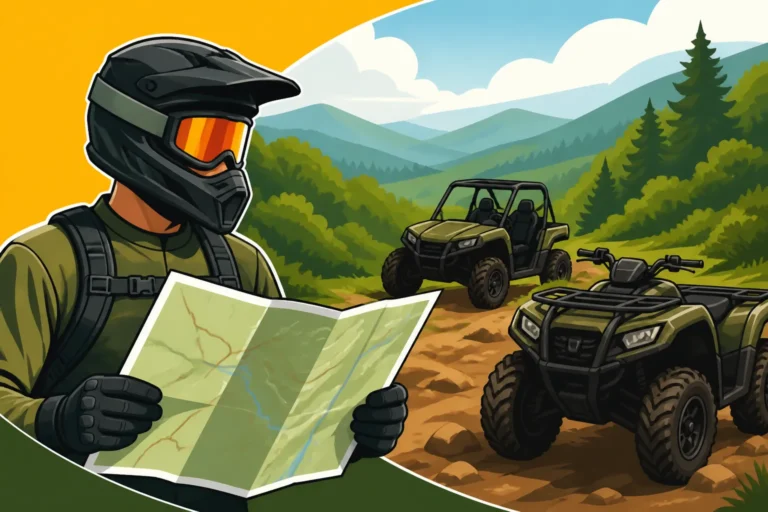
Study your intended route before leaving the staging area. Identify the trailhead, likely junctions, exit points, and places where the group can stop without blocking traffic. Carry a backup map or written route notes in case a device loses power, breaks, or cannot receive a signal. A map is a planning tool, not permission to leave marked trails or cross closed areas.
If you use onX Offroad, consider reviewing the route in advance and saving information for the area if the app offers the offline functionality you need. Do not wait until you are deep in a hollow to discover that a map layer, battery, or signal is unavailable. Keep your phone warm and secured, and bring a power source suited to your trip. In a group, it helps if more than one person understands the route rather than relying on a single rider’s screen.
On the trail, follow signs, gates, and barriers. If a marker is unclear, stop somewhere safe and confirm the route instead of guessing. A wrong turn can add distance, put the group on unsuitable terrain, or lead toward a closed or unauthorized area. For planning and navigation basics, see [West Virginia Trail Maps and Signage] and [Getting Lost on a West Virginia Trail].
Know when to turn around
Choose practical limits before the ride begins. Turn back if a rider is becoming too cold to operate controls, visibility drops, a machine is not behaving normally, or the surface is beyond the group’s ability. Do not let the time already spent getting there dictate the decision. A shorter ride can still be a good day out; an injury or a disabled machine far from the trailhead is a much bigger disruption.
Pay attention to daylight and fatigue. Cold can make people tense and less patient, while repeated jolts and careful riding take energy. Schedule breaks before the group is exhausted, and do not assume that everyone will speak up when they are uncomfortable. Check in with passengers and newer riders privately as well as in the group, since some people may hesitate to slow everyone down.
If someone is hurt, a machine is stuck, or conditions become unsafe, stop and make the scene as safe as possible before trying to solve the problem. Use your planned emergency contacts and share the location as clearly as you can. Avoid risky recovery attempts on steep or slippery ground. Preparedness includes knowing when to leave the machine in place and seek appropriate help rather than adding another person to the hazard.
Frequently Asked Questions About Winter Trail Riding
Are the Hatfield-McCoy Trails suitable for winter riding?
Winter riding may be possible when the relevant trails are open and the conditions suit your group, but access and safety should never be assumed. Check current notices and rules for the system you intend to ride. Snow, ice, rain, freeze-thaw cycles, and maintenance can all affect whether a route is appropriate. Even when a trail is open, a particular section may be beyond your group’s comfort or skill.
What should I do if the trails are icy?
Do not treat ice as a challenge to overcome with speed or aggressive throttle. Slow down, increase following distance, and avoid sudden turns or braking. If a section looks unsafe or you cannot maintain control, stop in a safe place and turn around if possible. A route change or an early end to the ride is a sensible decision, not a failure.
Can I rely on a phone map in the mountains?
Use a phone map as one part of your plan, not as the only navigation method. Terrain and distance can affect service, and cold can drain a phone battery faster. Review the route before you ride, save information for offline use if the app supports it, carry a backup, and make sure more than one person knows the plan. Check onX Offroad’s map settings and available functions before you depend on them.
Is a side-by-side automatically safer than an ATV in winter?
Not automatically. A side-by-side may offer a different seating position and passenger capacity, while an ATV requires the rider to maintain balance and control in a different way. Both can lose traction, slide, or become stuck. The machine must suit the route, fit within any trail restrictions, and be operated within the driver’s experience and the group’s limits. Choose based on the specific conditions, not on a general assumption that one type is safer.
Disclaimer
This article is for general informational purposes only and does not constitute professional advice. Laws, prices and regulations vary by location and change over time. Consult a qualified professional for guidance on your specific situation.