Insuring an ATV in West Virginia
It can feel incredibly confusing trying to figure out what kind of insurance you truly need for your ATV or UTV here in West Virginia. Many folks assume their regular car insurance or even homeowners policy will cover them, only to find out the hard way that off-road machines often fall into a different category entirely. This guide will walk you through the ins and outs of ATV and UTV insurance in our beautiful Mountain State, helping you understand the legal requirements, smart choices, and practical steps to protect yourself and your machine.
Why ATV/UTV Insurance is Such a Head-Scratcher in West Virginia
Let's be honest, the rules for ATVs and UTVs in West Virginia can sometimes feel like a tangled mess of mountain laurel. Unlike cars, which have very clear registration and insurance mandates, off-road vehicles occupy a unique space that leads to a lot of questions. It's not just about what the law says; it's also about what makes good sense when you're out enjoying the trails or even just working on your own property.
The "Titling, Not Registering" Conundrum
One of the biggest sources of confusion stems from West Virginia's specific approach to ATVs and UTVs: we title them, but we don't register them in the traditional sense, unless they're going to be street legal. This means there isn't a direct, blanket requirement for insurance tied to an annual registration sticker like there is for your family sedan. Because there's no state-mandated sticker to put on your machine that proves you're insured for all types of riding, many folks incorrectly assume they don't need any coverage at all. However, while the state might not demand proof of insurance just to own a titled ATV, specific riding situations absolutely do. This distinction between [Titling an ATV in West Virginia] and traditional registration is crucial to understanding your insurance needs. You see the title as proof of ownership, but it doesn't automatically imply insurance coverage.
Imagine you've just bought a shiny new side-by-side. You've gone through the steps to get your title from the DMV, and you're eager to hit the trails. Since there's no "registration" process like a car, you might think you're good to go. But this lack of a direct, annual registration requirement is precisely where many riders get tripped up. They assume no registration means no insurance requirement, which isn't always the case, especially when you consider where and how you plan to ride. It’s a common oversight that can lead to significant financial headaches down the road.
When the Law Steps In: Road Riding & SPVs
While West Virginia largely keeps ATVs off public roads, there are specific instances where the law does mandate insurance. The most prominent example is when you convert your ATV or UTV into a Street-Legal Special Purpose Vehicle (SPV). If you go through the process to get that coveted [West Virginia's Street-Legal Special Purpose Vehicle Plate], then you absolutely, without a doubt, must carry minimum liability insurance, just like any other vehicle on the road. The state wants to ensure that if you're involved in an accident on a public thoroughfare, there's a financial safety net for anyone you might injure or any property you might damage.
Think about it: an SPV is essentially treated as a street-legal vehicle for certain purposes and on certain roads. If you're riding your SPV to the trailhead, or using it on approved sections of county roads, you're sharing that pavement with cars, trucks, and motorcycles. The risk of an accident goes up exponentially compared to riding exclusively on private land or within a managed trail system. This is why the state requires you to have [Insurance Required for a West Virginia SPV Plate] to protect not only other drivers but also yourself from potentially ruinous financial claims. Ignoring this requirement could lead to serious legal and financial consequences if you're involved in an on-road incident.
The Reality of Trail Riding: Permits vs. Protection
For many of us, the heart of West Virginia ATV riding is on the extensive trail systems, like the renowned Hatfield-McCoy Trails. These systems require a permit, which is a great way to support the trails and ensure their continued maintenance. However, a common misconception is that this trail permit somehow acts as a form of insurance or provides you with comprehensive protection in the event of an accident. Nothing could be further from the truth. Your trail permit grants you access; it does not cover property damage, medical bills, or liability if you cause an accident.
Even on a managed trail system, accidents happen. You could collide with another rider, accidentally damage trail property, or even injure yourself. While the permit gets you past the gate, it doesn't offer a shred of financial protection if something goes wrong. This is where personal insurance for your ATV becomes incredibly important. You’re responsible for your actions and the damage your machine might cause, even when you're following all the trail rules. Relying solely on a trail permit for protection is akin to thinking your fishing license covers you if you fall into the river and break a leg – it simply isn't designed for that purpose.
Understanding West Virginia's ATV Insurance Requirements
The rules surrounding ATV and UTV insurance in West Virginia can be a bit of a patchwork, depending heavily on where and how you choose to ride your machine. There isn't a universal "you must always have insurance" law that covers every single scenario, which is why it's so important to understand the specific situations that trigger a requirement. Getting this wrong can leave you vulnerable, both legally and financially, in the event of an accident.
The Mandate for Street-Legal Special Purpose Vehicles (SPVs)
If you've gone through the significant effort and investment to transform your ATV or UTV into a Street-Legal Special Purpose Vehicle (SPV) in West Virginia, then congratulations – you've opened up new avenues for riding! However, with that privilege comes a clear legal obligation: you must carry liability insurance. This isn't optional; it's a non-negotiable requirement to operate your SPV on public roads, even those designated as ATV-friendly. The state views an SPV as a regular motor vehicle when it's on public asphalt, and as such, it must meet the same basic insurance standards that apply to cars and trucks.
The specific minimums for [West Virginia ATV Liability Coverage Limits] are designed to provide a baseline of protection for others. This coverage would pay for damages if you're at fault in an accident that injures another person or damages their property while you're operating your SPV on a public road. Without it, you could face hefty fines, have your SPV plate revoked, and, more importantly, be personally liable for tens or even hundreds of thousands of dollars in medical bills or property repair costs. Before you ever hit the blacktop with your SPV, make absolutely certain you have the necessary policy in place.
When you're dealing with the West Virginia DMV to obtain your [West Virginia's Street-Legal Special Purpose Vehicle Plate], they will explicitly ask for proof of insurance. This usually means presenting an insurance card or declaration page from your provider. It’s not just a formality; it’s a critical step in the process. If you're missing this documentation, your application for an SPV plate will be denied. Moreover, carrying that proof with you whenever you ride on public roads is essential, as law enforcement can and will ask to see it. It's just like driving your car; you wouldn't leave home without your insurance card.
When Riding on Public Roads Demands Coverage
Beyond the formal SPV designation, West Virginia has specific, limited scenarios where regular ATVs and UTVs are permitted to operate on public roads. These typically involve crossing a road to access trails, or riding on specific, designated sections of secondary roads for very short distances, often with strict speed and distance limits, such as [West Virginia's 10-Mile, 25 mph Road Rule]. Even in these brief instances, if you are operating your machine on a public roadway, some form of liability insurance is highly advisable, and in certain jurisdictions or under specific circumstances, it might be implicitly required to protect you from liability.
While the exact letter of the law can be murky for non-SPV machines on public roads, the spirit of the law, and certainly the principle of personal responsibility, dictates that you should be covered. If you accidentally swerve, hit a mailbox, or collide with a passing vehicle while crossing a county road, without insurance, you are on the hook for all damages. This is a huge risk to take for a few minutes of road use. Many standard ATV insurance policies will extend coverage to these limited on-road uses, specifically because the risk of an incident is always present when mingling with traffic, no matter how briefly.
Consider a situation where you're riding with friends on a multi-day trip, linking trails by using authorized road connectors. You've diligently followed all the rules about signaling and staying to the right, but a distracted driver pulls out in front of you. While they might be at fault, having your own liability and medical coverage can help expedite your claims and protect you in less clear-cut situations. Even if you're riding a machine that's technically not street legal, understanding that [West Virginia ATV Insurance and When You Need It] can save you from a catastrophic financial loss if you ever venture onto a public road.
Private Land and Personal Choices: The Gray Area
Now, let's talk about riding on private land. This is where the mandatory insurance requirements largely disappear. If you own a large tract of land and you never take your ATV or UTV off your property, or if you only ride on private land with permission from the owner, the state of West Virginia typically does not require you to carry ATV-specific insurance. This is the "gray area" where personal choice and risk assessment come heavily into play. While not legally mandated, it's a decision that carries significant implications for your financial well-being.
However, just because it's not legally required doesn't mean it's not a smart idea. Accidents can happen anywhere, even on familiar terrain. You could hit a hidden stump, roll your machine, or even accidentally injure a friend or family member who is riding as a passenger or simply observing nearby. Without insurance, all medical costs, repair bills, and potential legal fees associated with these incidents would come directly out of your pocket. Even if you only ride on your own land, having some liability coverage can protect you if a guest gets hurt and decides to pursue a claim against you.
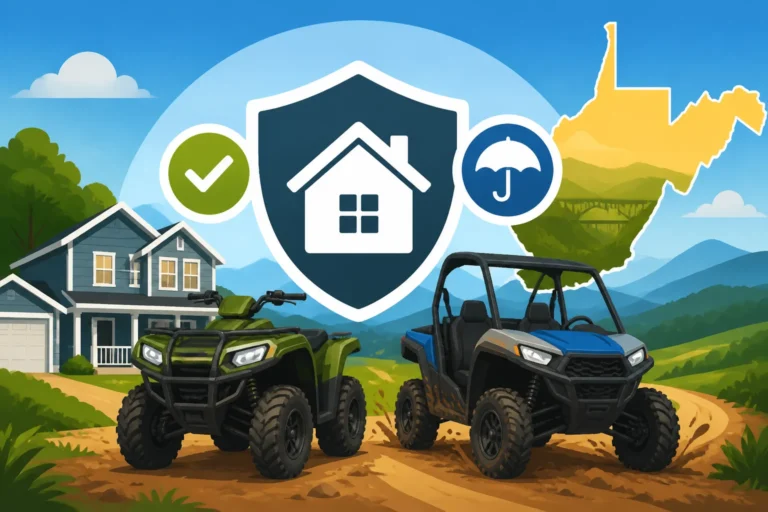
Some riders mistakenly believe their homeowners insurance policy will pick up the slack if an accident occurs on their property. This is a dangerous assumption. While some homeowners policies might offer very limited liability coverage for recreational vehicles used only on the insured property, this coverage is often minimal and rarely extends to damage to the ATV itself, or to incidents that occur off-property. It's critical to verify your specific policy's language, but generally, a dedicated ATV policy offers far more comprehensive protection than a homeowners policy ever could. I've heard too many stories of people finding out [Does Homeowners Insurance Cover an ATV in West Virginia?] the hard way, after an incident has already occurred. Always consult your insurance agent directly to understand the specific nuances of your existing coverage and to explore a dedicated ATV policy.
Types of ATV/UTV Insurance Coverage Available
When you're looking at ATV and UTV insurance, it's not just a single "all-in-one" product. Just like car insurance, there are various components of coverage that protect against different kinds of risks. Understanding these types is key to building a policy that truly fits your riding habits and protects your financial future, whether you're a weekend warrior on the trails or using your side-by-side for chores around the farm.
Liability: Protecting Your Wallet from Others' Damages
Liability coverage is the bedrock of any responsible insurance policy, and it's particularly vital for ATVs and UTVs, especially if you ever ride on public roads or managed trails. Simply put, liability insurance protects you if you are found at fault for an accident that causes injury to another person or damages their property. It doesn't cover your machine or your medical bills; its sole purpose is to pay out to the other party for their losses, up to your policy's limits.
Imagine you're navigating a tight turn on a busy trail, and you misjudge the speed of an oncoming UTV, causing a collision. If you're deemed responsible, your liability coverage would step in to pay for the other driver's medical expenses, their passenger's injuries, and the damage to their UTV. Without this coverage, you could be facing tens of thousands of dollars in medical bills, repair costs, and potential legal fees, all coming directly out of your personal savings. This is why minimum liability coverage is legally mandated for [Insurance Minimums for a West Virginia SPV] and is a smart choice for any rider, regardless of where they primarily ride.
The coverage limits for liability are usually expressed in three numbers, like 25/50/25. This means $25,000 for bodily injury per person, $50,000 for total bodily injury per accident, and $25,000 for property damage per accident. While these might meet minimum legal requirements for SPVs, many riders opt for higher limits to provide greater peace of mind and protection, recognizing that serious accidents can quickly exceed these basic amounts. Choosing robust liability coverage is one of the most proactive steps you can take to safeguard your assets.
Collision and Comprehensive: Covering Your Own Machine
While liability coverage protects others, collision and comprehensive coverage are designed to protect your ATV or UTV. These are the coverages that truly safeguard your investment, whether it's a brand-new machine or a well-loved workhorse. Unlike liability, collision and comprehensive are typically optional unless you have a loan on your machine, in which case the lender will almost certainly require them.
Collision coverage will pay for damages to your ATV or UTV if it collides with another vehicle (including another ATV), an object (like a tree or a rock), or if it rolls over. Think about accidentally hitting a culvert you didn't see, or misjudging a steep descent and tumbling down a hill. These are all scenarios where collision coverage would kick in, minus your deductible, to help repair or replace your machine. This is especially important for the avid trail rider who frequently encounters challenging terrain where a minor mishap could lead to significant damage.
Comprehensive coverage, on the other hand, covers damages to your ATV or UTV that are not caused by a collision. This is where protection from things like theft, vandalism, fire, flood, falling objects (like a tree branch), or even animal strikes comes into play. If your UTV is stolen from your garage, or if a storm causes a tree to fall on it, comprehensive coverage would cover the costs. Given the value of modern ATVs and UTVs, and the unfortunate reality of theft in some areas, having comprehensive coverage is a very wise investment. Consider the peace of mind knowing that if you need to [Filing an ATV Theft Claim After a Break-In], your policy is there to help you recover your losses.
Uninsured/Underinsured Motorist and Medical Payments
Beyond the core liability, collision, and comprehensive coverages, there are a couple of other important options to consider that can provide an extra layer of protection for you and your passengers. These are Uninsured/Underinsured Motorist (UM/UIM) coverage and Medical Payments (MedPay) coverage.
Uninsured/Underinsured Motorist (UM/UIM) coverage is crucial, especially if you ever ride your SPV on public roads where it shares space with other vehicles. This coverage protects you if you're involved in an accident with another driver who is at fault but doesn't have any insurance (uninsured) or doesn't have enough insurance to cover your damages (underinsured). While not always mandatory for ATVs, it's a vital safeguard. In a real-world scenario, if an uninsured driver hits your SPV on a public road and causes you significant injury, your UM/UIM policy would step in to cover your medical bills and other related expenses, preventing you from having to pursue a long, often fruitless, legal battle against an individual with no assets.
Medical Payments (MedPay) coverage is designed to cover medical expenses for you and any passengers on your ATV or UTV, regardless of who was at fault in an accident. This coverage typically has lower limits than comprehensive health insurance, but it can quickly cover emergency room visits, ambulance fees, or initial doctor consultations right after an incident. This can be especially helpful if you have a high-deductible health plan or if you want to ensure immediate medical costs are covered without delay. While it might seem redundant if you have good health insurance, MedPay can fill in gaps, cover deductibles, or simply ensure that initial care is paid for without you having to navigate complex health insurance claims while recovering. It's an affordable add-on that provides immediate support when you need it most.
Factors That Influence Your ATV/UTV Insurance Costs
Just like with car insurance, the cost of insuring your ATV or UTV in West Virginia isn't a one-size-fits-all number. Several factors come into play that insurance companies use to assess risk and calculate your premium. Understanding these influences can help you make informed decisions about your coverage and potentially find ways to manage your costs without sacrificing essential protection. It's a balance between comprehensive coverage and your budget.
Your Machine: Make, Model, Year, and Modifications
The specific ATV or UTV you own plays a significant role in determining your insurance premium. Newer, more powerful, or higher-value machines typically cost more to insure because they are more expensive to repair or replace if they're damaged or stolen. A brand-new Polaris RZR, for example, will almost certainly have a higher premium than a vintage three-wheeler from the 1980s, simply due to its market value and the cost of parts and labor.
The make and model also factor in. Some brands or models might have higher theft rates, or their parts might be harder to come by, increasing repair costs. Insurance companies track this data closely. Furthermore, any significant modifications you've made to your machine can impact your premium. If you've added expensive aftermarket parts like a lift kit, custom wheels, a turbocharger, or a high-end sound system, these upgrades increase the value of your machine and thus the cost to insure it, especially if you want these specific modifications covered. Make sure to discuss any modifications with your insurer to ensure they are properly accounted for in your policy.
Consider two riders: one with a dependable, older Honda Foreman used primarily for hunting and light trail riding, and another with a top-of-the-line Can-Am Maverick X3 designed for high-performance sport riding. The latter, being a newer, more powerful, and significantly more expensive machine, will naturally command a higher insurance premium for similar coverage. The cost of replacing that high-tech engine or specialized suspension parts is far greater than for a more basic, older model. This is a primary driver of how your monthly or annual premium is calculated.
Your Rider Profile: Age, Experience, and Driving Record
Your personal history and characteristics as a rider also weigh heavily on your insurance rates. Generally, younger, less experienced riders are considered a higher risk, which often translates to higher premiums. An 18-year-old with a brand-new side-by-side will likely pay more for insurance than a seasoned 45-year-old rider with decades of experience under their belt. This is because statistics show that younger drivers and riders tend to be involved in more accidents.
Your driving record for other vehicles, like your car or truck, can also influence your ATV/UTV insurance rates. If you have a history of speeding tickets, DUIs, or at-fault accidents, insurers might view you as a higher risk across all types of vehicles you operate, including your off-road machine. A clean driving record, on the other hand, can help you qualify for lower rates and potential good driver discounts. Showing that you're a responsible operator on the road can signal to an insurer that you'll likely be responsible on the trail as well.
Some insurers might even offer discounts for completing an approved ATV safety course, such as the [West Virginia DMV ATV Safety Awareness Course]. This demonstrates a commitment to safe riding practices and can reflect positively on your risk profile. While not every insurer offers this specific discount, it's always worth asking about, as it benefits both your skills and your wallet. These courses equip riders with better judgment and techniques, reducing the likelihood of accidents.
Where and How You Ride: Location and Usage
The environment in which you typically ride your ATV or UTV also affects your insurance costs. If you live in an area with a high rate of vehicle theft, your comprehensive coverage premium might be higher. Similarly, if you primarily ride in very remote, rugged terrain where recovery costs after a breakdown or accident are significant, this might be factored into your rates. Urban versus rural settings can present different risk profiles.
The intended usage of your machine is another key differentiator. Do you use your UTV strictly for farm work on your private property? Or do you take your sport ATV out every weekend for aggressive trail riding on challenging terrain? An insurer will view a machine used for light utility tasks on private land as a lower risk than one frequently pushed to its limits on the Black Diamond trails of the Hatfield-McCoy system. Be honest with your insurance provider about your primary usage, as misrepresenting it could lead to denied claims.
If you specifically use your ATV or UTV as a [West Virginia's Street-Legal Special Purpose Vehicle Plate] and regularly operate it on public roads, your premium will naturally be higher than for a machine that never sees pavement. This is due to the increased exposure to road hazards and other vehicles. Even if you only ride your machine at a private off-road park, an insurer will consider the risks associated with that type of riding, which could include the likelihood of collision or mechanical damage. Providing accurate information about where and how you ride is essential for getting an accurate quote and ensuring proper coverage.
Navigating the Insurance Landscape: Finding the Right Policy
The search for the perfect ATV or UTV insurance policy in West Virginia can feel a bit like navigating a new trail system without a map. There are numerous providers, different policy types, and a dizzying array of coverage options. The goal is to find a policy that offers robust protection without breaking the bank, tailored specifically to your riding habits and your machine. It requires a bit of research and asking the right questions.
Dedicated ATV/UTV Policies vs. Adding to Homeowners
One of the first decisions you'll face is whether to seek a dedicated ATV/UTV insurance policy or attempt to add your machine to an existing homeowners or auto policy. While adding it to an existing policy might seem convenient and potentially cheaper, it's crucial to understand the limitations and potential pitfalls. As mentioned earlier, [Does Homeowners Insurance Cover an ATV in West Virginia?] is a common question with an often disappointing answer. Homeowners policies generally offer very limited, if any, coverage for off-road vehicles. They might provide minimal liability if the incident occurs on your insured property, but they rarely cover damage to the ATV itself, theft, or any incidents that happen off your land or on public trails.
A dedicated ATV/UTV insurance policy is specifically designed for these types of vehicles and their unique risks. These policies offer a much broader range of coverage options, including liability, collision, comprehensive, uninsured/underinsured motorist, and medical payments, all tailored to off-road use. They understand the nuances of trail riding, the potential for damage, and the specific liability risks associated with these machines. While it might be a separate premium, the peace of mind and comprehensive protection offered by a specialized policy usually far outweigh any perceived savings from trying to squeeze it onto a homeowners policy.
For instance, if your UTV is stolen from a trailhead parking lot while you're enjoying a hike, a dedicated comprehensive policy would likely cover its replacement value. A homeowners policy, even if it had some extension for personal property off-premises, would likely have significant limitations or exclusions for motorized vehicles. Similarly, if you roll your ATV on a challenging section of the Rockhouse Trail System, only a dedicated collision policy is likely to cover the repairs to your machine. It’s about ensuring that the coverage aligns with the specific risks of your passion.
Major Insurers and Specialized Providers
When you're ready to start getting quotes, you have two main avenues: major national insurance companies and specialized providers that focus specifically on recreational vehicles. Many of the big names you already know for car and home insurance, like Progressive, Geico, Allstate, and State Farm, also offer ATV/UTV insurance. It's often convenient to bundle these policies with your existing ones, and you might even qualify for multi-policy discounts. This can simplify your insurance portfolio and potentially save you money.
However, there are also specialized insurance companies that cater specifically to the powersports and recreational vehicle market. These companies might have a deeper understanding of the unique risks associated with ATVs and UTVs, and in some cases, they might offer more flexible policies or niche coverages that a general insurer might not. It's always a good idea to check with both types of providers to get a comprehensive view of your options. Don't limit yourself to just one quote; comparing offers from several companies is the best way to ensure you're getting competitive rates and the right coverage.
When comparing, pay attention not just to the premium, but also to the deductibles, the specific coverage limits, and any exclusions that might apply. Some policies might exclude coverage for racing or certain types of extreme riding, for example. Understanding these details upfront can prevent unpleasant surprises later. You might even use a service to help you compare. While LawDepot focuses on legal documents, similar comparison tools exist for insurance to help you gather quotes efficiently.
What to Look for in a Policy Quote
Once you start receiving quotes, it's easy to get overwhelmed by all the numbers and terms. To make an informed decision, focus on a few key areas to compare policies effectively. First, ensure that the policy meets any legal requirements you have, particularly if you're operating an [West Virginia's Street-Legal Special Purpose Vehicle Law] on public roads. Verify that the liability limits are sufficient for your comfort level, preferably exceeding the state minimums to better protect your assets.
Next, look closely at the deductibles for collision and comprehensive coverage. This is the amount you'll have to pay out of pocket before your insurance kicks in. A higher deductible usually means a lower premium, but it also means you'll pay more upfront if you file a claim. Choose a deductible that you're comfortable paying if an accident occurs. Also, inquire about actual cash value (ACV) versus agreed value or replacement cost coverage. ACV pays out the depreciated value of your machine, which can be significantly less than what it costs to replace a new one. Replacement cost or agreed value coverage will provide more comprehensive protection for newer machines.
Finally, ask about any available discounts. Many insurers offer discounts for bundling policies, completing a safety course, having multiple machines insured, or even for certain safety features on your ATV or UTV. Don't be afraid to ask direct questions about what's covered, what's excluded, and how the claims process works. A good insurance agent should be able to clearly explain all the details and help you tailor a policy that fits your specific needs. Getting a quote is a dialogue, not just a transaction.
| Coverage Type | What It Protects | Who It Benefits Primarily | When It's Often Required (WV) |
|---|---|---|---|
| Liability | Damage/Injury you cause to others or their property | Other people, their property | SPVs on public roads |
| Collision | Damage to your ATV/UTV from a collision or rollover | You (your machine) | Lender requires if financed |
| Comprehensive | Damage to your ATV/UTV from non-collision events (theft, fire, vandalism, etc.) | You (your machine) | Lender requires if financed |
| Uninsured/Underinsured Motorist | Your injuries/damages if hit by an uninsured/underinsured driver | You and your passengers (your machine) | Often optional, but highly recommended |
| Medical Payments | Medical expenses for you and your passengers after an accident | You and your passengers | Often optional, but good for gaps |
Real-World Scenarios: When Insurance Matters Most
It's easy to think of insurance as just another bill, something you hope you never have to use. But the truth is, accidents happen, and when they do, having the right ATV/UTV insurance can be the difference between a minor inconvenience and a major financial catastrophe. Let's look at some real-world scenarios where your policy truly earns its keep.
The Unforeseen Accident on the Trail
You're out on the trails, maybe exploring the [Buffalo Mountain Trail System] with friends, enjoying the beautiful West Virginia scenery. Suddenly, you hit a patch of loose gravel or a hidden rut, lose control, and your UTV flips. Luckily, you and your passenger are shaken but not seriously hurt, but your side-by-side is now sitting on its side with a bent frame, shattered windshield, and a damaged suspension. This is a classic "collision" event, and without dedicated coverage, you're looking at thousands of dollars in repairs or a total loss, all out of your own pocket.
If you have collision coverage, you can breathe a sigh of relief. After paying your deductible, your insurance company will cover the cost of repairs to get your machine back on the trail, or pay out its actual cash value (or replacement cost, depending on your policy) if it's totaled. This means your hard-earned savings aren't wiped out by an unfortunate mishap. Without this, many riders face the heartbreaking choice of either shelling out a huge sum for repairs or having to junk a valuable machine they love.
Now, let's add another layer to that scenario. What if, during your unexpected flip, your UTV slides into a managed trail sign, destroying it, or strikes a fellow rider who was stopped just off the path? If you're deemed at fault for damaging the sign or injuring the other rider, your liability coverage would kick in. This protects you from the costs associated with repairing the trail property or covering the other person's medical bills and property damage. Even on managed trails, accidents involving multiple parties can occur, and having liability coverage protects you from the significant financial burden of such incidents.
Protecting Your Investment from Theft or Damage
ATVs and UTVs are valuable assets, and unfortunately, they can be targets for theft or suffer damage from events unrelated to riding. Imagine you've parked your pride and joy in your garage after a great day of riding, only to wake up the next morning and find an empty spot where your machine once was. Or perhaps a severe winter storm brings down a massive tree limb onto your parked UTV, crushing the roll cage and damaging the engine. These are the moments when comprehensive coverage proves invaluable.
With comprehensive coverage, if your ATV or UTV is stolen, your insurance company will work with you to cover its replacement cost (or actual cash value), allowing you to get back on a machine without suffering a total financial loss. Similarly, if it's damaged by a non-collision event like a fire, vandalism, or that falling tree limb, comprehensive coverage steps in to cover the repair or replacement costs, minus your deductible. This provides protection against a wide array of potential misfortunes that can befall your machine even when it's not being ridden. LawDepot provides general documents for reporting theft, but your insurance policy is what actually recovers your loss.
Think about the sheer value of these machines. A new side-by-side can easily cost as much as a new car. Leaving such an investment unprotected against theft or unforeseen damage is a huge gamble. Comprehensive coverage means that even if you lock it up tight and take every precaution, if a thief is determined or nature strikes, you won't be left with nothing but a financial hole. It's an essential component for any owner who wants to safeguard their investment.
Dealing with Liability Claims After an Incident
Sometimes, even with the best intentions and careful riding, an incident can occur where you are accused of causing harm or damage to another person or their property. Perhaps you're riding a [West Virginia's Street-Legal Special Purpose Vehicle Plate] on an approved road, and you swerve to avoid a deer, accidentally clipping a parked car. Or, you're on private land, and a guest riding with you suffers an injury, and their family decides to pursue a claim against you for negligence. These are complex, stressful situations, and this is where your liability insurance policy truly acts as your legal and financial shield.
Your liability coverage does more than just pay out if you're found at fault; it also typically covers the costs of your legal defense. If someone sues you after an ATV accident, your insurance company will provide an attorney to represent you, handle the negotiations, and pay any judgments or settlements up to your policy limits. Without this coverage, you would be responsible for hiring your own lawyer, paying court costs, and potentially facing massive payouts that could jeopardize your home, savings, and future earnings.
Consider a scenario where a friend is riding as a passenger on your UTV, and despite your careful driving, you hit a pothole causing them to fall out and break an arm. Even if it was an accident, they might face significant medical bills. Your medical payments coverage could help with immediate costs, but if they decide to pursue a claim alleging you were negligent in maintaining your vehicle or operating it safely, your liability insurance would defend you. This is why understanding [West Virginia ATV Liability Coverage Limits] and choosing adequate protection is paramount. It protects you from the unpredictable human element that often follows an accident, even among friends or family.
Steps to Get Your ATV/UTV Insured in West Virginia
Getting your ATV or UTV insured in West Virginia doesn't have to be a complicated ordeal. With a bit of preparation and understanding, you can navigate the process smoothly and secure the protection you need. It's about being organized, asking the right questions, and making an informed choice for your specific riding style.
Gathering Your Machine and Rider Information
Before you even start calling for quotes, take a few minutes to gather all the pertinent information about your ATV or UTV and yourself. This will make the quote process much quicker and more accurate. You'll need the make, model, year, and Vehicle Identification Number (VIN) of your machine. The VIN is like a fingerprint for your ATV, typically found stamped on the frame (often near the front wheel, under the seat, or on the engine casing) and on your title document. Knowing your VIN helps the insurer accurately identify your specific machine and its specifications. If you recently acquired a machine and are working on getting the title, remember that [What the West Virginia DMV Needs to Title an ATV] will also include details like the VIN.
Additionally, have details about any modifications or accessories you've added to your machine, especially if they are high-value items you want specifically covered. Be prepared to discuss how you primarily use your ATV/UTV (recreational trail riding, farm work, hunting, etc.) and where you typically ride (private land, managed trail systems, approved public roads as an SPV). You'll also need your personal information, including your full name, date of birth, address, and driver's license number. Be ready to share information about your driving history, including any accidents or tickets, as this will influence your rates.
Having this information readily available not only speeds up the quoting process but also ensures that the quotes you receive are as accurate as possible. An insurer needs to understand exactly what they're insuring and who the rider is to provide appropriate coverage and pricing. You might even find forms or checklists online, for example, on a site like LawDepot for various vehicle transactions, which can help you organize the information you need.
Comparing Quotes and Understanding Policy Details
Once you have your information ready, it's time to start getting quotes. As discussed earlier, it's highly recommended to get quotes from multiple providers – both major national insurers and specialized powersports insurers. You can do this by calling insurance agents directly, visiting their websites for online quotes, or using comparison websites that allow you to input your information once and receive multiple quotes. Don't just look at the bottom-line price; delve into the specifics of what each policy offers.
When comparing, pay close attention to the various types of coverage included (liability, collision, comprehensive, etc.) and the specific limits for each. One policy might have a lower premium but also much lower liability limits, which could leave you underinsured in a serious accident. Look at the deductibles – the amount you pay out of pocket before coverage kicks in. A policy with a higher deductible will have a lower premium, but ensure it's an amount you could comfortably afford to pay if you need to file a claim.
Ask about any exclusions or limitations in the policy. For example, some policies might exclude coverage for competitive racing or certain types of extreme modifications. Make sure the policy covers how and where you intend to ride. If you plan to register your machine as an SPV, explicitly confirm that the policy meets the [West Virginia SPV Registration Cost] and insurance requirements for on-road use. Don't hesitate to ask your agent to walk you through the details until you fully understand what you're buying.
What to Expect After You Purchase Coverage
After you've compared quotes, chosen a policy, and made your first payment, what happens next? Your insurance company will typically issue you an insurance card and a declarations page. The insurance card is proof of coverage, similar to your car insurance card, and you should carry it with you whenever you operate your ATV or UTV, especially if you're riding on public roads as an SPV. The declarations page provides a detailed summary of your policy, including your coverage types, limits, deductibles, and premium.
It's a good idea to review your declarations page carefully to ensure everything is accurate and matches what you discussed with your agent. If anything looks incorrect, contact your insurer immediately to get it rectified. You'll also typically receive a full policy document, which is a much longer and more detailed legal contract outlining all the terms and conditions of your coverage. While it's dense, it's important to keep this document accessible, as it contains all the fine print of your agreement.
Remember that insurance is an ongoing relationship. If you make significant modifications to your ATV/UTV, change your primary usage (e.g., start using it for commercial purposes), or move to a new address, you should notify your insurance company. These changes could impact your coverage or premium. Regularly reviewing your policy, perhaps annually, ensures that your coverage remains appropriate for your evolving needs and that you're still getting the best value for your money. Understanding your policy is crucial for peace of mind, especially if you're involved in an accident and need to know [What to Do After an ATV Crash on a West Virginia Road].
Common Myths and Misconceptions About ATV/UTV Insurance in WV
In the world of ATVs and UTVs in West Virginia, there are a lot of old wives' tales and mistaken beliefs floating around, especially when it comes to insurance. These myths can lead riders to make poor decisions, leaving them financially vulnerable when they least expect it. Let's debunk some of the most common misconceptions so you can ride with confidence, knowing you're properly protected.
"My Homeowners Policy Covers Everything"
This is perhaps the most dangerous and widespread myth out there. Many ATV and UTV owners in West Virginia genuinely believe that their existing homeowners insurance policy will fully cover their off-road machine in the event of theft, damage, or an accident. They often think, "It's on my property, so my house insurance must cover it," or "I'm covered for liability everywhere." Unfortunately, this is almost never the case for any significant coverage.
The reality is that most homeowners insurance policies offer extremely limited, if any, coverage for motorized recreational vehicles. While some policies might extend minimal liability coverage if an accident occurs on your insured property, they almost universally exclude coverage for damage to the ATV or UTV itself, and they typically offer no coverage for incidents that happen off your property, such as on public trails, private land, or designated riding parks. They are certainly not designed to cover the unique risks associated with operating an ATV. I've heard countless stories from riders who only learned [Does Homeowners Insurance Cover an ATV in West Virginia?] after a major incident, realizing they had absolutely no protection for their expensive machine or the liability they incurred.
To truly understand your situation, you must contact your homeowners insurance agent and ask them directly about coverage for your specific ATV or UTV. Get it in writing if possible. More often than not, they will advise you that a dedicated ATV/UTV policy is necessary for comprehensive protection. Relying on a homeowners policy for your off-road machine is like trying to use a screwdriver to hammer a nail – it's the wrong tool for the job and won't give you the protection you need.
"I Only Ride Private Land, So I Don't Need It"
Another common belief is that if you only ride your ATV or UTV on private property, whether it's your own land or land you have permission to use, you don't need insurance. The thinking goes: "No public roads, no state requirements, no problem." While it's true that the state of West Virginia typically doesn't mandate insurance for machines ridden exclusively on private land, this perspective overlooks the immense financial risks you're still taking.
Accidents don't magically cease to happen just because you're on private property. You could still crash into a tree and total your machine, incurring massive repair or replacement costs. A fire could start and damage your ATV, or it could be stolen right out of your barn. More importantly, you still face significant liability risks. If a guest, friend, or family member is injured while riding on your property or as a passenger on your machine, they could still pursue a personal injury claim against you. Without liability insurance, you'd be personally responsible for their medical bills, lost wages, and legal fees, which could easily amount to hundreds of thousands of dollars.
Think about it this way: Even a simple bill of sale, often available as a template from services like LawDepot, can protect you during a private transaction. But it offers no protection if someone gets hurt later. A dedicated ATV policy that includes liability, collision, and comprehensive coverage provides a robust safety net, even if you never leave your farm. It protects your investment and your personal assets from the unexpected mishaps that can occur anywhere, at any time. Don't let the lack of a state mandate lull you into a false sense of security.
"The Trail Permit Protects Me"
For riders who frequent West Virginia's incredible managed trail systems, like the Hatfield-McCoy Trails, there's sometimes a misunderstanding that the required trail permit somehow includes insurance coverage. This is a big "no." Your [West Virginia's Hatfield-McCoy Trail Permit Explained] is essential for gaining legal access to the trails and contributes to their maintenance and expansion. It is proof you've paid your user fee, but it offers absolutely no personal insurance coverage.
A trail permit is not liability insurance, nor is it health insurance or collision coverage for your machine. If you crash your ATV on the trail, damaging it or injuring yourself, your permit will do nothing to cover those costs. If you collide with another rider and you're at fault, your permit won't cover their medical bills or the damage to their machine. These are all situations where a dedicated ATV/UTV insurance policy is necessary. The trail permit is a ticket to ride; it's not a financial safety net.
While managed trail systems strive to be safe, they are still dynamic environments where accidents can and do happen. Carrying adequate insurance ensures that you and your machine are protected, regardless of how or where an incident occurs on the trails. It's a crucial distinction that every West Virginia rider needs to understand before hitting the dirt. Riding on the trails is about fun and adventure, but it should also be about responsible preparation.
Disclaimer
This article is for general informational purposes only and does not constitute professional advice. Laws, prices and regulations vary by location and change over time. Consult a qualified professional for guidance on your specific situation.