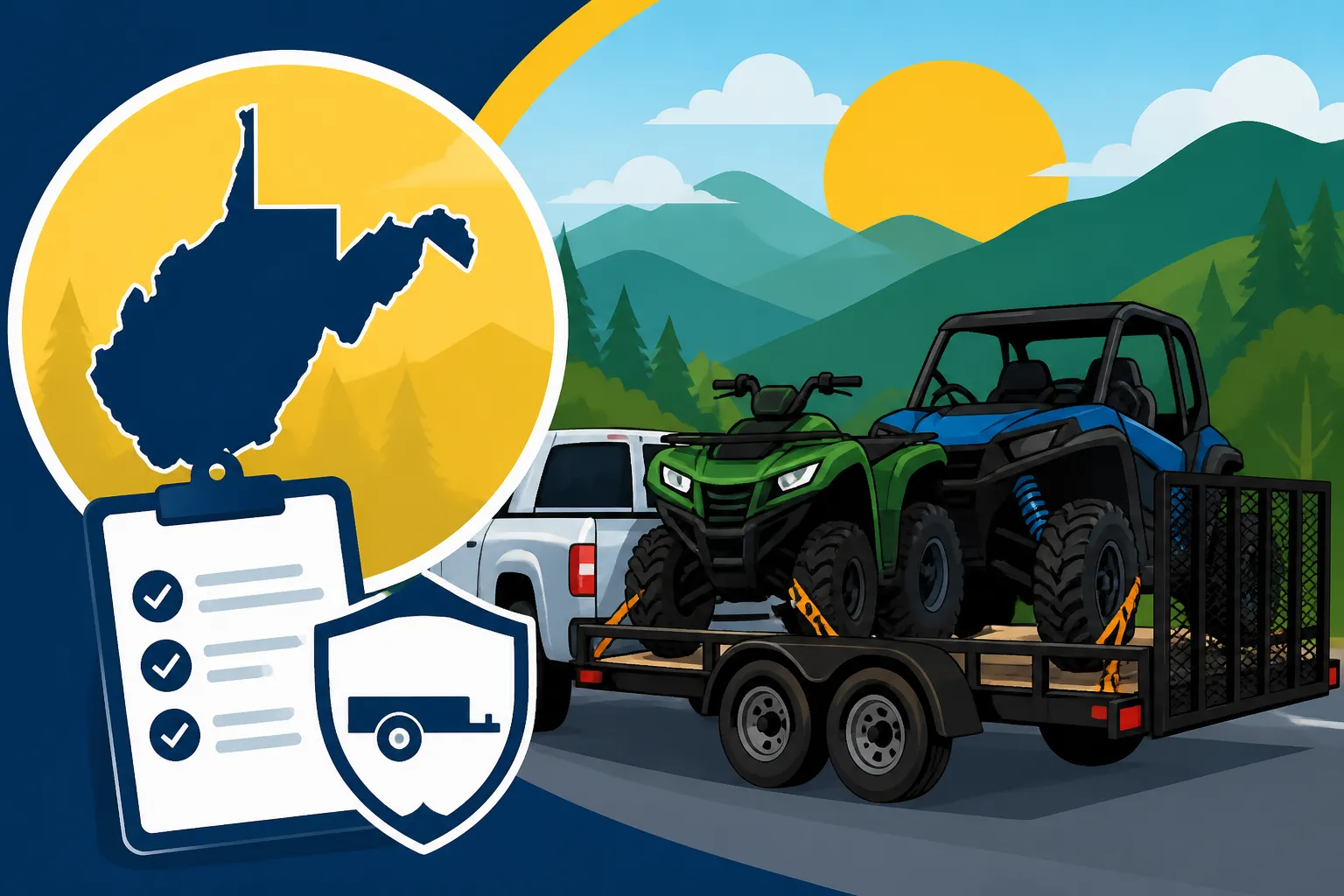
Trailer Registration for Hauling ATVs in West Virginia
Figuring out the ins and outs of trailer registration for hauling your beloved ATV or UTV in West Virginia can feel like a maze, full of conflicting information and confusing forms. Many riders just want to hit the trails without worrying about getting pulled over, but navigating the state's rules for trailers, especially when they're hauling off-road vehicles, can be a real headache. This guide is here to untangle that complexity, walking you through everything you need to know to get your trailer legally registered so you can haul your machines with confidence across the Mountain State.
Understanding West Virginia's Trailer Registration Basics
Before you even think about loading up your quad for a weekend adventure, it’s absolutely essential to understand why your trailer needs to be registered and what the state even considers a "trailer" in the first place. This isn't just bureaucratic red tape; it's about road safety and ensuring that all vehicles, even those being towed, meet certain standards when sharing public highways.
Why Trailers Need Registration in West Virginia
You might think, "It's just a trailer, it doesn't have an engine, why does it need a plate?" That's a common thought, and it stems from the fact that many states have different rules for different types of trailers. However, in West Virginia, if you're using a trailer on public roads, it needs to be registered with the Division of Motor Vehicles (DMV). This isn't just to collect a fee; it's primarily for identification and accountability. Imagine if a trailer detaches from a vehicle on the interstate or is involved in an accident. Without registration, it would be much harder to identify the owner, assess responsibility, and ensure that the trailer was properly maintained and equipped for safe road travel. The registration process ensures that the state has a record of the trailer, its owner, and that it has passed any necessary inspections or met specific requirements. It's a layer of protection for you and for everyone else on the road.
Beyond legal identification, registration also plays a role in taxation and revenue collection for the state's infrastructure. These funds help maintain the very roads you'll be using to get to the trails. Trying to skirt these rules can lead to hefty fines, delays, and even having your trailer impounded, which is the last thing you want when you're just trying to enjoy a riding trip.
Key Definitions: What Counts as a "Trailer" for the DMV
West Virginia's DMV has a clear definition for what constitutes a "trailer" that requires registration. Generally, it refers to any vehicle designed to be pulled by another motor vehicle, which has no motive power of its own. This includes everything from utility trailers, boat trailers, and yes, your ATV or UTV hauling trailer. It doesn't matter if it's a small single-axle trailer carrying one quad or a large tandem-axle utility trailer designed for two side-by-sides; if it’s going on a public road, it generally needs to be registered.
There are usually specific categories for different types of trailers, based on things like their gross vehicle weight rating (GVWR) or how they're used. For most ATV and UTV enthusiasts, you'll likely be dealing with a standard utility trailer classification. The DMV will look at the manufacturer's stated GVWR, which is the maximum loaded weight of the trailer including its own weight and the cargo it's carrying. This rating is critical because it often dictates the type of plate you get, the fees you pay, and even if certain safety equipment like brakes are required. Understanding these definitions upfront will save you a lot of confusion when you visit the DMV or fill out paperwork.
The Documents You'll Need for Trailer Registration
Gathering the correct paperwork is often the biggest hurdle in any DMV transaction, and trailer registration is no exception. Missing even one crucial document can send you home empty-handed, forcing you to make another trip. To avoid that frustrating scenario, let's break down what you'll need to have in hand.
Proof of Ownership: Title, MCO, or Bill of Sale
Just like with your ATV, the state needs proof that you are the rightful owner of the trailer you're trying to register. This is the cornerstone of the entire process. For a brand-new trailer purchased from a dealer, you'll typically receive a Manufacturer's Certificate of Origin (MCO). This document is essentially the trailer's birth certificate and acts as the initial proof of ownership before a state title is issued in your name. The dealer will often help you with the initial title application process, but you'll need to ensure you get that MCO if you're handling it yourself.
If you're buying a used trailer from a private seller, you'll need the existing West Virginia title signed over to you by the previous owner. It's vital that the title is free of any liens, and that all sections are properly filled out, including the odometer disclosure (if applicable, though less common for utility trailers) and the selling price. A common pitfall is a missing signature or an incorrectly filled-out title, which can halt your registration dead in its tracks. In some cases, for very old trailers or those from states that don't issue titles for certain types, you might need a bill of sale as primary proof, especially if the trailer falls below a certain weight threshold or age. However, generally, West Virginia requires a title for trailers just as it does for ATVs. Always make sure to ask [Do You Need a Trailer Title in West Virginia?] when in doubt. A comprehensive [West Virginia ATV Bill of Sale: What Belongs in It] can also serve as an excellent guide for what information to include in a trailer bill of sale, ensuring you don't miss any critical details. Platforms like LawDepot offer templates for bills of sale that can ensure all the necessary legal information is included, protecting both buyer and seller in a private transaction.
Personal Identification and Residency Requirements
Beyond proving ownership of the trailer, you also need to prove who you are and that you are a legal resident of West Virginia. The DMV needs to verify your identity to ensure the registration is issued to the correct person and to prevent fraud. Typically, this means bringing a valid, unexpired driver's license or state-issued identification card. Make sure it's current and that the address on it matches your current West Virginia residence.
If you're a new resident moving to West Virginia, you'll likely need additional documentation to prove residency, such as utility bills, lease agreements, or other official mail showing your name and West Virginia address. It's important to establish your residency clearly to qualify for West Virginia registration rates and processes. Don't forget that if you're bringing a trailer that was previously registered out-of-state, there might be specific steps for [West Virginia Title Rules for Out-of-State Machines] for the trailer itself, similar to what you'd encounter with an ATV. Having your Social Security number handy is also a good idea, as it's often required for tax and identification purposes during the registration process.
The Step-by-Step Process at the DMV
Once you've gathered all your documents, the next step is actually heading to the DMV. While it might seem daunting, breaking down the process into smaller, manageable steps can make it feel a lot less intimidating. Remember, preparedness is key to a smooth visit.
Completing the Application Form
The core of your registration will be the application form itself. The specific form number can vary, but generally, it's a multi-purpose title and registration application. You can often find and even print this form from the West Virginia DMV website before your visit, which can save you time and stress at the office. This form will ask for detailed information about you (the applicant) and the trailer. You'll need to provide the trailer's Vehicle Identification Number (VIN), make, model, year, and its empty weight. It's critical to fill out this form accurately and completely. Any errors could lead to delays or even a rejected application.
When filling it out, pay close attention to sections regarding purchase price and sales tax. If you bought the trailer from a private seller, you'll usually be responsible for paying sales tax on the purchase price unless an exemption applies. If you're unsure about any section, it's often better to leave it blank and ask a DMV clerk rather than guessing and making an error. They've seen it all and can guide you. Having a copy of your [West Virginia ATV Title Application Form] can help you recognize the similar elements you'll need to fill out for your trailer.
Fees, Taxes, and Payment Considerations
Ah, the part nobody loves: paying fees and taxes. West Virginia requires certain fees for trailer registration, which typically include a title fee, a registration fee (for the plate), and any applicable sales tax. The registration fee for trailers often varies based on the trailer's declared gross weight, so a heavier trailer capable of hauling multiple ATVs will likely have a higher annual fee than a small, single-quad trailer. You can find detailed information on these costs, specifically on [West Virginia Trailer Plate Cost], on the DMV's official website or by inquiring directly.
Sales tax is generally due when you title the trailer, whether you bought it new from a dealer or used from a private party. The tax rate is applied to the purchase price. If you received the trailer as a gift, there might be exemptions or requirements to have its value appraised. Be prepared to pay these fees at the DMV office. Most DMV locations accept various payment methods, including cash, checks, and often credit/debit cards, but it's always wise to confirm their accepted payment types beforehand. Having everything calculated and ready to go will make the payment process quick and easy.
What to Expect: Plates, Stickers, and When You're Legal
After successfully submitting your application, paying all fees and taxes, and having your documents verified, the DMV will process your registration. In most cases, you'll receive your new trailer plate and a registration decal (sticker) right there on the spot. This plate needs to be securely attached to the rear of your trailer, typically in the center or on the left side, where it's clearly visible. The decal will need to be affixed to the designated area on the plate.
Once you have your plate and decal, your trailer is legally registered for use on West Virginia public roads for the period indicated on your registration. This means you can now confidently hook up your trailer, load your [Hauling Two Machines on One Trailer] or even just a single quad, and head out to your favorite riding spots like the Hatfield-McCoy Trails. Always keep your registration card (the paper document) in a safe place, preferably with your other vehicle documents, but not necessarily on the trailer itself where it could be exposed to the elements or theft. Carrying a copy of it in your tow vehicle is a good practice. Knowing your trailer is properly registered means one less thing to worry about when you're focusing on getting to the trails safely.
Special Considerations for ATV Hauling Trailers
While the basic registration process applies to most trailers, there are some unique situations that often come up for those hauling ATVs and UTVs. These special scenarios can have their own set of rules and requirements that are important to understand.
Out-of-State Trailers and New Residents
If you're moving to West Virginia and bringing an already-titled or registered trailer from another state, you'll need to transfer its registration and get a West Virginia title. The process is similar to what you'd do for an out-of-state car or even an ATV. You'll generally need to present your out-of-state title, proof of residency in West Virginia, and personal identification. In some cases, an out-of-state trailer might require a VIN inspection to verify that the numbers match the title and that the trailer hasn't been reported stolen. This is a crucial step to prevent fraud and ensure everything is legitimate before a West Virginia title is issued. Make sure you understand the specific requirements for [West Virginia Title Rules for Out-of-State Machines] to avoid any surprises. The goal is to get that West Virginia title and plate so your trailer is fully legal in its new home state.
Homemade or Modified Trailers
For the DIY enthusiasts out there, building your own trailer or heavily modifying an existing one can be a rewarding project. However, registering a homemade trailer comes with its own unique set of challenges. Since there's no Manufacturer's Certificate of Origin, you'll need to provide evidence of ownership of the parts used, such as receipts for the axle, frame materials, and coupler. You'll also likely need to apply for a VIN assignment from the DMV or State Police, which involves an inspection to ensure the trailer is built to safe standards and assigned a unique identification number. This inspection will check things like lighting, tires, and overall construction quality.
The process for a homemade trailer is usually more involved and might take longer than registering a manufactured one, as it requires extra steps to establish its identity and safety. For significant modifications to an existing registered trailer, such as changing its capacity or adding major components, you might need to update your registration information or even undergo a new inspection to reflect these changes. It’s always best to check with the DMV early in your project to understand all the requirements for registering a homemade trailer to avoid costly rework or delays.
Hauling Multiple ATVs and Weight Limits
When you're loading up your trailer with multiple ATVs or UTVs, paying close attention to weight limits is paramount. Every trailer has a Gross Vehicle Weight Rating (GVWR) stamped on its VIN plate, which is the maximum loaded weight the trailer is designed to safely carry. Exceeding this limit is not only incredibly dangerous, increasing your risk of sway, tire blowouts, and brake failure, but it can also lead to fines. Your tow vehicle also has a maximum towing capacity, which you should never exceed.
The registration fees for your trailer in West Virginia are often based on its declared gross weight, so if you've got a heavy-duty trailer designed for two large side-by-sides, your registration might reflect that higher capacity. It's good practice to weigh your loaded trailer, especially if you're close to its GVWR or your vehicle's towing capacity. Many truck stops have scales available for a small fee. Being aware of these limits and adhering to them ensures your safety, the safety of others on the road, and prevents legal trouble. For more specific advice on capacity, you'll find useful information in resources about [Hauling Two Machines on One Trailer].
Common Pitfalls and How to Avoid Them
Even with the best intentions, it's easy to make mistakes during the registration process or overlook ongoing requirements. Being aware of these common pitfalls can help you avoid unnecessary stress and ensure you stay on the right side of the law.
Missing Documentation Headaches
One of the most frequent reasons people get turned away from the DMV is missing or incorrect documentation. This can be anything from forgetting your driver's license, not having the original title for a used trailer, or the previous owner's signature being absent from the transfer section. Sometimes, the issue is simply that a form isn't completely filled out or the VIN on the paperwork doesn't exactly match the VIN on the trailer. A discrepancy in the VIN, even a single digit, can cause major delays.
To avoid this headache, create a checklist of all required documents before you leave for the DMV. Double-check every form for completeness and accuracy. Make sure all necessary signatures are present, especially if you're transferring a title from a private seller. If you're using a bill of sale as supporting documentation, make sure it includes all the details required by the state, such as the buyer and seller's names and addresses, a description of the trailer, the VIN, purchase price, and date of sale. Using a template from a reputable source like LawDepot can help ensure all the necessary fields are covered, reducing the chance of a rejection. A little preparation goes a long way in ensuring a smooth and successful transaction at the DMV. You'll thank yourself for not having to make a second trip!
Avoiding Overload Fines and Safety Risks
It bears repeating: overloading your trailer is a serious risk. Not only can it lead to catastrophic equipment failure like tire blowouts or axle breaks, but it can also severely compromise your ability to steer and brake your tow vehicle effectively. Law enforcement officers, especially those with specialized commercial vehicle enforcement units, are trained to spot overloaded trailers. If you're pulled over and found to be over your trailer's GVWR or your tow vehicle's capacity, you could face significant fines, be forced to offload your cargo, or even have your rig impounded. This would obviously ruin any riding trip.
To steer clear of these problems, always know the weight of your ATVs or UTVs and factor in the weight of the trailer itself. Don't eyeball it. If you're close to the limits, go to a public scale. Beyond weight, ensure your cargo is properly distributed. Too much tongue weight can cause your tow vehicle's front end to lift, reducing steering control, while too little can lead to dangerous trailer sway. Always keep your ATVs centered over the trailer axles for optimal balance. Furthermore, securing your ATVs correctly is critical; [Strapping a Side-by-Side Down for the Highway] is not just about keeping them on the trailer, it's about preventing them from shifting and altering your load balance mid-trip.
Renewing Your Trailer Registration
Trailer registration isn't a one-and-done deal; it needs to be renewed periodically, typically annually or biennially, depending on the state's cycle. Missing your renewal deadline can result in late fees or, worse, riding with an expired plate. If caught, you could face citations similar to those for an expired car registration. This is definitely one of those [Penalties for an Untitled ATV in West Virginia] situations where it's better to be proactive than reactive.
West Virginia's DMV usually sends out renewal notices in the mail a few weeks or months before your expiration date. Pay attention to these notices. You can often renew your trailer registration online, by mail, or in person at a DMV office or authorized agent. The process is usually much simpler than the initial registration, often only requiring your previous registration card and payment of the renewal fees. Keep your contact information updated with the DMV so you don't miss those crucial renewal reminders. Staying on top of your renewals ensures continuous legal operation of your trailer and helps you avoid unexpected hassles on your way to the trails.
Legalities Beyond Registration for Hauling
Getting your trailer registered is a major step, but it's not the only legal consideration when hauling your ATVs or UTVs on West Virginia roads. There are several other laws and safety guidelines designed to protect you and other motorists, ensuring your cargo arrives safely.
Ensuring Proper Securing of Your ATVs
This is a non-negotiable safety item. An improperly secured ATV or UTV can become a deadly projectile on the highway. West Virginia law, like most states, requires that all cargo be securely fastened to prevent it from shifting, falling, or blowing off the vehicle or trailer. For ATVs and UTVs, this means using heavy-duty ratchet straps or similar tie-downs at multiple points. Never rely on bungee cords or thin rope; they are simply not strong enough. You should ideally use four points of contact – one at each corner of the machine – pulling down and slightly outwards to keep it centered and firmly planted on the trailer.
After you've strapped your machines down, give each strap a firm tug to ensure it's tight. It's also a good practice to stop a few miles down the road after you start your trip and re-check all your tie-downs. Straps can loosen slightly due to road vibrations or initial settling of the cargo. A little extra time spent securing your machines is a small price to pay for preventing an accident and potential damage to your valuable off-road vehicles. For more in-depth guidance on securing your machines, consult resources like [Strapping a Side-by-Side Down for the Highway].
Lighting, Brakes, and Other Safety Equipment
Your trailer isn't just a platform on wheels; it's a vehicle in its own right when on the road, and it must comply with specific safety equipment requirements. West Virginia law mandates that trailers meet certain standards for lighting, reflectors, and often, brakes, depending on their weight.
- Lighting: Every trailer must have functioning tail lights, brake lights, and turn signals that are synchronized with your tow vehicle. Side marker lights and reflectors are also typically required, especially for wider or longer trailers, to ensure visibility from all angles.
- Brakes: Trailers exceeding a certain Gross Vehicle Weight (GVW), typically around 3,000 pounds, are legally required to have their own independent braking system. This could be surge brakes or electric brakes, which are often integrated into the trailer's axles. If your trailer has brakes, ensure they are properly maintained and functioning before every trip.
- Safety Chains: All trailers must be connected to the tow vehicle with two independent safety chains that are strong enough to hold the trailer if the primary hitch connection fails. These chains should be crossed under the hitch to cradle the tongue in case of detachment.
- Tires: Ensure your trailer tires are properly inflated to the manufacturer's recommended pressure and are in good condition, free of cracks or excessive wear. Trailer tires are different from passenger car tires and are designed to carry heavy loads.
Regularly inspect all these components. A quick walk-around before each trip to check lights, tire pressure, and chain connections can prevent serious problems down the road.
Insurance for Your Trailer and Its Contents
While separate insurance for your trailer itself isn't always legally mandated in West Virginia (often, the liability of the tow vehicle extends to the trailer when hitched), it's a very wise investment. Your auto insurance policy for your tow vehicle typically covers the trailer for liability if it causes an accident while hitched. However, this usually doesn't cover damage to the trailer itself, or, crucially, the expensive ATVs or UTVs loaded on it.
To protect your investment, consider purchasing a separate physical damage policy for your trailer. This would cover repairs or replacement if the trailer is damaged in an accident, fire, or theft. More importantly, look into coverage for your ATVs and UTVs while they are being transported. Many ATV insurance policies offer "in transit" coverage as an add-on, or you might find it as part of a specialized recreation vehicle policy. This coverage protects your machines from damage or theft while they are on your trailer, whether parked or in motion. Accidents can happen, and the cost of replacing a damaged ATV or UTV can be substantial. Don't find out the hard way that your standard auto policy doesn't cover your prized possessions on the trailer. Discuss your options with your insurance provider to ensure you have comprehensive coverage for both your trailer and its valuable cargo.
| Document/Requirement | Purpose | Where to Get/Verify |
|---|---|---|
| Proof of Ownership | Establishes you as the legal owner (MCO for new, Title for used, Bill of Sale for certain cases) | Seller, Manufacturer, West Virginia DMV |
| Personal ID | Verifies your identity as the applicant | Your Wallet (Driver's License/State ID) |
| Residency Proof | Confirms you are a West Virginia resident (for new residents) | Utility bills, Lease Agreement, Official Mail |
| Application Form | Official request for title & registration | West Virginia DMV website or office |
| Payment for Fees/Taxes | Covers title fees, registration fees, and sales tax | West Virginia DMV office |
| VIN Verification | Confirms VIN matches documentation (for out-of-state/homemade) | West Virginia DMV or State Police |
| Safety Chains | Backup connection to tow vehicle | Trailer supplier, auto parts store |
| Functioning Lights | Ensures visibility on public roads | Trailer (check before each trip) |
| Trailer Brakes | Required for trailers over a certain weight | Trailer (check for functionality) |
| Insurance | Covers liability and physical damage to trailer/cargo | Your Insurance Provider |
Disclaimer
This article is for general informational purposes only and does not constitute professional advice. Laws, prices and regulations vary by location and change over time. Consult a qualified professional for guidance on your specific situation.