How Long a West Virginia ATV Title Takes
It's incredibly frustrating, isn't it? You've just bought that dream ATV or UTV, you're itching to hit the trails, but then you remember: the title. The burning question on every rider's mind is, "How long is this going to actually take?" This guide is here to shed some light on the West Virginia ATV title process, give you a realistic idea of the timeline, and help you navigate those sometimes-baffling waits so you can get out and ride.
Understanding the West Virginia ATV Title Process
Getting a title for your ATV or UTV in West Virginia can feel like stepping into a bureaucratic maze, especially if it's your first time or you're used to the simpler rules of some other states. But it’s a crucial step, not just for legal ownership, but often for getting that all-important trail permit or insurance. The good news is that while there’s a process, it's manageable once you know what to expect.
The Initial Application and Required Documents
Before your title can even begin its journey through the system, you have to initiate the process correctly. This means gathering all the necessary paperwork and submitting it to the West Virginia Division of Motor Vehicles (DMV). For many, this is the most daunting part, and honestly, if you miss even one tiny detail, it can send your application straight back to square one, adding weeks to your wait time.
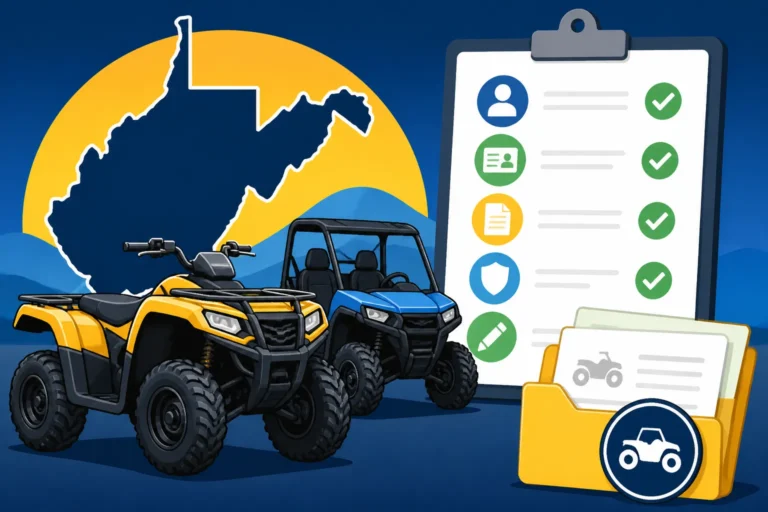
Typically, you'll need the completed title application form – which you can usually find on the DMV's website or at one of the [West Virginia DMV Offices That Handle ATV Titles]. This isn't just a simple name and address; it requires specific details about your machine, the previous owner, and how you acquired it. You'll also need proof of ownership. If you bought from a dealer, this will usually be a manufacturer's certificate of origin (MCO) if it's new, or the previous owner's signed-over title if it's used. For a private sale, the original, properly signed-over title is paramount. A clear and comprehensive [West Virginia ATV Bill of Sale: What Belongs in It] is also usually required, documenting the sale price and details of both parties. Don't forget proof of West Virginia residency, valid identification, and of course, the payment for your title fee and any applicable [West Virginia Sales Tax on an ATV Purchase]. Sometimes people overlook minor things, like the odometer reading (if applicable and required for your machine type) or making sure all signatures are present and correct. Even a smudge or a missing date can trigger a delay, so double-check everything meticulously before you submit. It's often helpful to look at a checklist like the one in [Documents to Bring for a West Virginia ATV Title] to ensure you haven't missed anything.
What Happens After You Submit Your Paperwork?
Once you've submitted your title application and all supporting documents, it enters the DMV's processing queue. This is where the "waiting game" truly begins. At this point, your physical paperwork moves through different stages within the DMV. First, it's typically reviewed for completeness and accuracy. Are all fields filled out? Are all required signatures present? Does the VIN match across all documents? If everything looks good, your application then moves to data entry. This is where the information from your paper forms is input into the DMV's digital system. After data entry, the system generates your new title certificate. This certificate then has to be printed, often on secure, specialized paper, and then mailed out to the address you provided.
The human element is a big part of this. Imagine the sheer volume of title applications the West Virginia DMV receives every single day – for cars, trucks, motorcycles, and yes, ATVs and UTVs. Each one needs individual attention. So, while the steps are straightforward, the backlog or current staffing levels can significantly impact how quickly your application progresses. It's not like ordering something online with instant tracking; it's a governmental process with its own pace. Sometimes, you might even find yourself wishing you had a direct line to someone who could just pull your file, but that's rarely how it works. Patience, unfortunately, is a virtue often needed in these situations.
Factors That Influence Processing Time
The official word from the West Virginia DMV often states a general timeframe for title processing, but in reality, several variables can push that estimate in either direction. It's not a one-size-fits-all duration, and understanding these factors can help you set realistic expectations.
Common Delays and How to Avoid Them
The most frequent culprit for title delays is incomplete or incorrect paperwork. I can't stress this enough: check everything twice. A missing signature from the seller, an incorrect VIN, an illegible entry, or even forgetting to include a crucial document like a lien release can cause your application to be flagged and returned to you, effectively resetting your wait time. Imagine getting a letter in the mail two or three weeks after you thought you were done, only to find out you need to get another signature from the previous owner. That's a real time-sink, especially if the seller is now hard to reach.
Another common issue is improper sales tax payment or calculation. West Virginia has specific rules for sales tax on vehicle purchases, and if the amount you paid or reported is incorrect, it will hold things up. Be sure you understand [West Virginia Sales Tax on an ATV Purchase] to prevent this. Furthermore, if there was a lien on the previous title and it hasn't been properly released or documented, that will also cause a significant delay. The DMV needs clear evidence that any previous loan on the machine has been satisfied before they can issue a new, clean title to you. Make sure the seller provides a lien release if applicable. If you're dealing with a complex situation, like a gifted ATV or an inherited machine, the paperwork can be even more intricate, leading to longer review times. Always verify that you have every single piece of required documentation for your specific situation. This due diligence upfront can save you weeks of anxiety down the road.
Dealer vs. Private Sale: Title Turnaround Differences
The source of your ATV or UTV can significantly impact how long your title takes. Generally, buying from a licensed West Virginia dealer tends to be a smoother and often quicker process for you, the buyer. Why? Because dealers are accustomed to this paperwork, they submit title applications regularly, and they often have established systems for doing so. When you buy from a dealer, they handle most of the title application process for you. They collect all your information, ensure the forms are correctly filled out, process the sales tax, and then submit everything directly to the DMV on your behalf. This expertise reduces the likelihood of errors that could cause delays. You can learn more about this in [Buying From a West Virginia Dealer: What They File]. While the DMV's internal processing time is still a factor, the initial submission is usually much more efficient.
However, a private sale puts the burden squarely on your shoulders. You, as the buyer, are responsible for gathering the necessary documents from the seller, ensuring they are correctly signed, completing your portion of the application, and submitting it to the DMV yourself. This adds a layer of complexity and potential for error, which can extend the overall timeline. For example, if you're working with a template from a site like LawDepot for your bill of sale, it's essential to ensure it covers all the specific West Virginia requirements, not just generic sales language. If you're unsure, it's always a good idea to consult the DMV's official checklist or even speak with a representative before making the trip to submit your application. The good news is that sites like LawDepot can provide standardized forms, but the onus is still on you to verify state-specific compliance.
Here's a quick comparison of potential title processing timelines:
| Factor | Typical Timeframe Expectation | Potential Delays |
|---|---|---|
| Dealer Purchase | 2-4 weeks (dealer handles submission) | Dealer backlog, DMV processing backlog |
| Private Sale | 4-8 weeks (you handle submission) | Missing documents, incorrect info, payment issues |
| Complex Cases | 8+ weeks (e.g., inherited, out-of-state) | Legal review, additional documentation requests |
| Expedited Options | Not typically available for ATVs | Standard mail only |
Note: These are general estimates. Actual times can vary significantly based on DMV volume and specific circumstances.
When to Expect Your Title and What to Do If It's Delayed
Waiting for your title can feel like an eternity, especially when you're ready to explore West Virginia's incredible trails. While there's no way to guarantee an exact date, you can typically expect your title to arrive within a certain window. Knowing this window, and what steps you can take if it passes, is key to managing the process.
Checking Your Application Status
After you've submitted your application, the usual timeframe for receiving a West Virginia ATV title in the mail can range from a few weeks to a couple of months. The DMV is processing countless documents, and while they strive for efficiency, individual applications can sometimes get caught up in the system. If it's been a few weeks and you haven't received anything, or if you just want peace of mind, you can often check the status of your application.
The West Virginia DMV typically offers an online service where you can input certain information, like your VIN or application number, to see if your title has been processed and mailed. It's a convenient way to get an update without having to make a phone call or visit an office in person. You can usually find this service on the official DMV website. Remember, sometimes the online system might lag slightly behind the physical mailing, so if it says "processed," your title is likely on its way. For more detailed instructions, you might find [Checking a Title Status With the West Virginia DMV] helpful. If the online system doesn't provide the answers you need, or if you submitted your application quite some time ago, calling the DMV's title department directly is the next step. Be prepared with all your application details, including the date of submission and the machine's VIN, to help them locate your file quickly.
What to Do If Your Title Doesn't Arrive
So, you've waited the estimated time, you've checked online, and still no title. Don't panic, but it's definitely time to take action. The first step is to contact the West Virginia DMV directly. As mentioned, have all your details ready: the date you submitted your application, the VIN of your ATV or UTV, and any receipt numbers you received. They can often tell you if the title was mailed, if there was an issue with the application, or if it's still pending.
If the DMV confirms your title was mailed but you haven't received it, it might have been lost in transit or misdelivered. In this scenario, you'll likely need to apply for a replacement title. This involves submitting another form and typically paying a small fee. It's an extra step and an added wait, but it's necessary to secure your official proof of ownership. Make sure you follow the specific instructions for a replacement title application carefully, as they can differ slightly from an initial application. Knowing how to deal with situations like [Replacing a Lost West Virginia ATV Title] is good knowledge to have, even if you hope you never need it. Sometimes, if the issue was on the DMV's end (e.g., they sent it to the wrong address despite you providing the correct one), they might waive the replacement fee. It's always worth asking politely!
Planning Your Rides Around Title Waits
The waiting period for a West Virginia ATV title can be frustrating, especially when the weather is perfect for hitting the trails. But an untitled ATV comes with certain restrictions and potential penalties. Understanding these limitations and knowing what your options are can help you plan your riding adventures safely and legally while you wait for that official document.
Temporary Proof of Ownership for the Trails
While you're waiting for your official title to arrive in the mail, you might wonder if there's any temporary proof of ownership that allows you to ride. This is where things can get a little nuanced, as West Virginia law generally requires a title for proper ownership. However, for riding on some managed trail systems, like the Hatfield-McCoy Trails, you generally need a trail permit, which requires proof of ownership. A bill of sale, especially a detailed one using a template from a service like LawDepot, combined with your receipt from the DMV showing you've applied for a title, can sometimes serve as temporary proof of ownership for the purpose of purchasing a trail permit.
It's crucial to understand that this isn't the same as having a full title. While a valid bill of sale, especially one from a reputable source like a dealer, confirms the transaction, it won't suffice for all legal purposes, like selling the machine or taking out a loan against it. When you’re dealing with a private sale, making sure that LawDepot bill of sale is notarized can add an extra layer of legitimacy, though it's not always legally required for the title itself. Always carry the bill of sale, your DMV application receipt, and any other relevant purchase documents with you when you ride. This documentation can be invaluable if you encounter a trail patrol or need to prove ownership in an unexpected situation. Remember, the goal is to show you're taking legitimate steps to get your title.
Riding Legally While You Wait
The biggest concern for many riders during the title wait is whether they can legally operate their ATV or UTV. In West Virginia, operating an ATV or UTV without a proper title can lead to [Penalties for an Untitled ATV in West Virginia]. This is a serious consideration, as nobody wants to face fines or other legal consequences just for enjoying their new machine.
On private property that you own or have explicit permission to ride on, the absence of a title is typically less of an immediate issue for law enforcement, as long as it's not involved in any other illegal activity. However, if you plan to ride on public lands, designated trail systems (like Hatfield-McCoy), or cross public roads (where allowed under specific rules), having applied for your title and carrying proof of that application becomes much more important. Some trail systems or law enforcement personnel might accept your bill of sale and DMV application receipt as sufficient proof that the title process is underway, allowing you to legally purchase a permit and ride. Other authorities might be stricter, especially if you're venturing beyond managed trails onto less regulated public access points.
The safest approach, if you're concerned, is to confirm with the specific trail system authority or local law enforcement in the area you plan to ride what documentation they accept in lieu of a physical title during the waiting period. It's always better to be proactive and understand the local rules than to face an unexpected citation. In the end, the title is coming, but knowing your rights and limitations in the interim is essential for a stress-free riding experience.
Disclaimer
This article is for general informational purposes only and does not constitute professional advice. Laws, prices and regulations vary by location and change over time. Consult a qualified professional for guidance on your specific situation.