Insurance Minimums for a West Virginia SPV
It can feel like a maze trying to figure out all the rules for getting your Special Purpose Vehicle (SPV) street-legal in West Virginia, and one of the biggest head-scratchers for many riders is insurance. You've gone through the effort of getting the right plate, but then suddenly, you're faced with auto insurance requirements for a machine that started life as an off-road beast. This guide is here to untangle the confusion surrounding the mandatory insurance minimums for your West Virginia SPV, helping you understand exactly what the law demands and how to protect yourself on the open road.
Understanding West Virginia's SPV Designation and Why Insurance Matters
For years, the dream of legally cruising a side-by-side or ATV down a public road in West Virginia felt out of reach for many. Then came the Special Purpose Vehicle (SPV) designation, opening up new possibilities for connecting trails or simply running into town for a quick errand. But with the privilege of road use comes a different set of responsibilities, and chief among them is adequate insurance.
What Exactly is a West Virginia SPV?
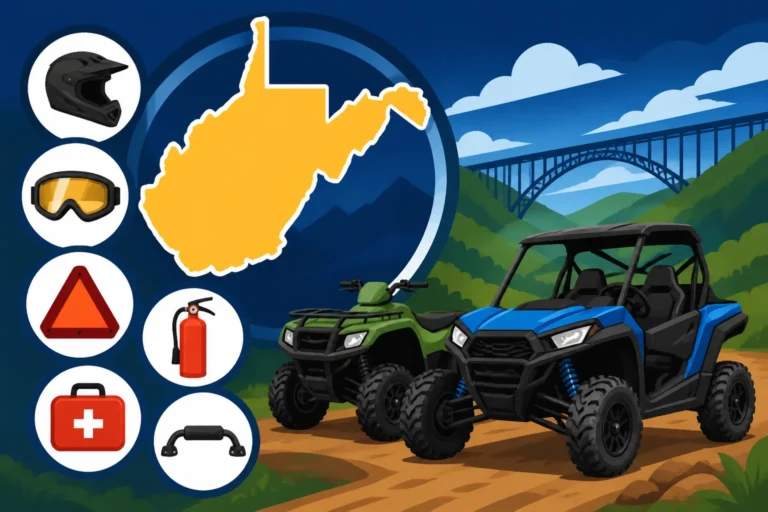
At its core, a West Virginia SPV is an ATV or UTV that has been modified and equipped to meet specific safety standards, allowing it to be legally operated on certain public roads in the state. We're talking about things like headlights, taillights, brake lights, turn signals, mirrors, and a horn – all the bits that make your off-road machine behave more like a traditional street vehicle. This isn't just about having cool accessories; it's about making your machine visible and controllable in traffic, as required by the state's statutes. Getting the [West Virginia's Street-Legal Special Purpose Vehicle Plate] is the first big hurdle, and it signifies that your machine is ready for a different kind of adventure than purely trail riding.
The SPV designation bridges the gap between dedicated off-road machines and street-legal vehicles, giving riders more flexibility in how and where they use their side-by-sides and ATVs. However, this flexibility also means stepping into the world of vehicle registration and insurance, which has its own rules and regulations that can be a bit daunting for those used to just needing a trail permit.
The Critical Link Between Road Use and Insurance
Here’s where a lot of riders hit a wall of confusion: "My ATV insurance covers me off-road, why do I need car insurance for my SPV?" The answer is simple but crucial: once your SPV hits a public road, even for a short stretch, it's considered a motor vehicle operating in traffic. And just like any car, truck, or motorcycle, West Virginia law mandates that it must carry specific liability insurance. This isn't about protecting your machine from damage; it's about protecting other people and their property from damage you might cause in an accident.
Think about it: if you're riding your street-legal UTV on a county road and accidentally swerve, hitting another vehicle, who pays for the repairs to their car or their medical bills? Without proper liability coverage, that financial burden falls squarely on you. It's a significant shift from the kind of insurance you might typically carry for a machine used exclusively on trails, where property damage to other vehicles isn't usually a concern. The state sees your SPV as a potential hazard on public roads, and therefore, requires you to be financially responsible for any harm it might cause. This isn't just a suggestion; it's a legal requirement to [Registering a Street-Legal Special Purpose Vehicle in West Virginia] and drive it on public roads.
The Mandatory Minimums: What West Virginia Law Requires for SPVs
Navigating the specifics of insurance can feel like reading a foreign language, especially when it comes to the numbers. West Virginia, like most states, has set minimum liability coverage amounts that all registered motor vehicles, including your SPV, must carry. These minimums are the absolute lowest amount of coverage you can legally have to operate on public roads.
Decoding West Virginia's Liability Coverage Requirements
When you get an insurance policy for your West Virginia SPV, you'll see a series of numbers that represent your liability coverage. These typically break down into three categories: bodily injury per person, bodily injury per accident, and property damage per accident.
Here's what West Virginia law generally requires for these minimums:
- $25,000 for bodily injury to one person: This means if you're at fault in an accident and someone else is injured, your insurance will pay up to $25,000 for their medical expenses, lost wages, and pain and suffering. This applies to a single individual's injuries.
- $50,000 for bodily injury to two or more persons per accident: If multiple people are injured in an accident you cause, your policy will pay a maximum of $50,000 for all their combined injuries, regardless of how many individuals are hurt. This $50,000 limit applies per accident, even if the total damages exceed this amount across all parties.
- $25,000 for property damage per accident: This covers the cost of repairing or replacing another person's property that you damage in an accident, up to $25,000. This could be their vehicle, a fence, a mailbox, or anything else you hit.
So, if you get into a fender bender on a back road near Pineville while connecting trails, and you rear-end a sedan, your policy would cover the other driver's car repairs up to $25,000 and any medical bills for injuries up to $25,000 for that one person (or $50,000 total if there were multiple injured parties). These are the bare minimums to legally cruise your SPV on West Virginia roads. Remember, it's crucial to have clear documentation for your vehicle, and if you're ever buying or selling, using a reliable service like LawDepot for a bill of sale can help ensure all details are recorded properly, which might include noting the insurance status.
Why "Minimums" Might Not Be Enough for Your Peace of Mind
While meeting the state minimums technically makes your SPV legal for road use, it's often far from enough to provide true financial protection. Imagine this scenario: you're riding your SPV on a main street in Gilbert and, due to a moment of distraction, you clip a luxury SUV, sending it into a ditch. The driver of the SUV sustains serious injuries, requiring extensive hospital stays, and the vehicle itself is totaled.
Here's how those minimums might stack up:
- Luxury SUV damage: Let's say the SUV is worth $60,000. Your $25,000 property damage coverage will only pay a portion. You'd be on the hook for the remaining $35,000 out of your own pocket.
- Medical bills and lost wages: The injured driver's medical bills, physical therapy, and lost income from missing work easily exceed $25,000. You could be facing a lawsuit for tens of thousands, or even hundreds of thousands, of dollars beyond your coverage limit.
These situations are not uncommon, and they can quickly lead to devastating financial consequences, including wage garnishment, asset forfeiture, and even bankruptcy. Many riders, once they understand these risks, opt for higher liability limits (e.g., $100,000/$300,000 bodily injury and $50,000 or $100,000 property damage) for significantly more peace of mind. It’s a small increase in premium for a massive increase in protection. After all, the cost of an accident can far outweigh the [West Virginia SPV Registration Cost] or the extra insurance premium.
Proof of Insurance: Carrying Your SPV Coverage Card
Just like with a regular car, you absolutely must carry proof of insurance whenever you're operating your SPV on a public road in West Virginia. This proof usually comes in the form of an insurance ID card provided by your insurer. It's a small piece of paper (or increasingly, a digital card on your phone) that shows your policy number, effective dates, and the coverage limits.
Think of it like your driver's license: you wouldn't drive without it. If a law enforcement officer pulls you over for any reason – perhaps for exceeding the [West Virginia's 10-Mile, 25 mph Road Rule] – they will ask to see your driver's license, vehicle registration, and proof of insurance. Failing to produce valid proof of insurance can result in fines, and potentially even more serious penalties like having your SPV impounded or your driver's license suspended. It’s not just about having the insurance; it's about being able to prove it on the spot. Make sure you keep it in a secure, waterproof spot on your machine or on your person, especially when you’re out on the trails that connect to public roads.
Beyond the Basics: Other Important SPV Insurance Considerations
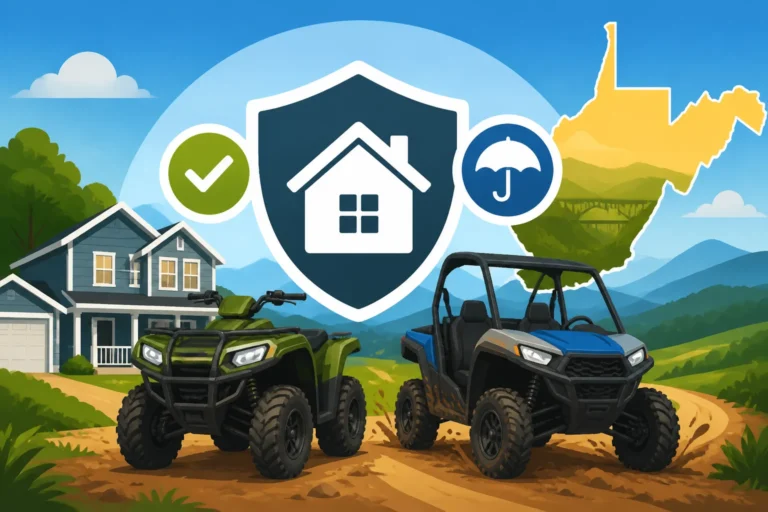
Meeting West Virginia's minimum liability requirements is just the starting point. While it makes your SPV legal for road use, it doesn't protect your machine or you in every scenario. To truly safeguard your investment and your finances, you’ll want to look at additional types of coverage.
Comprehensive and Collision Coverage for Your SPV
These are the coverages that protect your machine itself, much like they would a car.
- Collision Coverage: This pays for damages to your SPV if it collides with another vehicle or object, or if it rolls over, regardless of who is at fault. If you're riding a county road near Man and swerve to avoid a deer, ending up in a ditch and damaging your UTV, collision coverage would help pay for the repairs. This is invaluable for newer, more expensive side-by-sides.
- Comprehensive Coverage: This protects your SPV from non-collision-related incidents. This includes theft, vandalism, fire, natural disasters (like floods or hail), and hitting an animal. Imagine your parked SPV gets damaged by a falling tree branch during a storm, or it's stolen from your driveway in Logan. Comprehensive coverage would kick in to help cover the costs of repair or replacement. Given the investment many riders put into their machines, and the risk of theft, this coverage is often highly recommended.
Deciding whether to add comprehensive and collision coverage often comes down to the value of your SPV and your personal risk tolerance. If you have a brand-new, high-dollar side-by-side, skipping these coverages means you're taking on a huge financial risk if something happens to your machine. For an older, lower-value ATV, you might decide the extra premium isn't worth it.
Uninsured/Underinsured Motorist Coverage
This coverage is often overlooked but can be a lifesaver. Uninsured/Underinsured Motorist (UM/UIM) coverage protects you if you're involved in an accident with another driver who either has no insurance (uninsured) or doesn't have enough insurance to cover your damages (underinsured).
Consider this: you're legally riding your SPV down a state road, and another driver runs a stop sign, crashing into you. If that driver is uninsured, or only carries the absolute minimum liability which doesn't come close to covering your medical bills and SPV repairs, your UM/UIM coverage would step in. It helps pay for your medical expenses and damage to your SPV, essentially acting as their insurance when they don't have enough (or any). In an area where not everyone is perfectly insured, this protection can be incredibly valuable for riders who spend time on public roads.
How Insurance Companies View SPVs
It's important to understand that not all insurance companies treat SPVs the same way they treat cars or even standard ATVs. Because SPVs are a relatively newer category of street-legal machine, some mainstream auto insurers might not offer specific policies for them, or they might classify them under a general "recreational vehicle" category. You might find better options with companies that specialize in powersports or "non-standard" vehicle insurance.
When talking to insurers, be very clear that your machine is titled and registered as an SPV for legal road use in West Virginia. Don't just ask for "ATV insurance" if you plan to ride it on public roads. This clarity helps ensure you get the right kind of policy that meets the state's requirements. Some policies might also have specific clauses about [Equipment a West Virginia SPV Must Carry] or where you can ride.
Comparing Quotes and Choosing the Right Provider
Shopping around is key to finding the best insurance rates and coverage for your SPV. Don't just go with your current auto insurer without checking other options.
Here are some tips:
- Get multiple quotes: Contact several different insurance providers, including those known for powersports coverage. Prices can vary significantly.
- Be precise about your machine: Provide exact details about your make, model, year, and how it's equipped for street-legal use.
- Understand factors influencing premiums: Your driving record, where you live, where you store the SPV, and even your credit score can affect your rates.
- Review policy details carefully: Don't just look at the price. Read the fine print to understand what's covered, what's excluded, and any deductibles you'll be responsible for.
A little research now can save you a lot of headache and money down the road. Some companies might even offer discounts if you bundle your SPV insurance with other policies, like your home or auto insurance.
Legal Documentation and Practical Steps for Your SPV
Beyond just getting the right insurance, there are other crucial legal and practical steps that ensure your SPV experience in West Virginia is smooth and compliant. These include proper documentation, correct titling, and understanding the consequences of non-compliance.
Essential Documents for Buying or Selling an SPV
Whether you're bringing a new SPV into your life or passing one on, having the right paperwork is non-negotiable. A clear and comprehensive bill of sale is paramount, detailing the buyer, seller, machine information (make, model, VIN), purchase price, and date. For an SPV, it’s even more critical because of its street-legal status. It needs to accurately reflect the transfer of ownership to avoid any headaches with the DMV when it comes time for the new owner to get their [West Virginia ATV Title Application at the DMV].
Using a reputable resource for legal forms, such as LawDepot, can simplify this process. They offer templates for bills of sale and other legal documents that ensure all necessary information is included and legally sound. This protects both the buyer and the seller from future disputes and provides the official proof of transaction required for title transfers. A well-prepared bill of sale, especially when accompanied by the properly signed-over title, makes the next steps for registration and insurance much smoother.
Ensuring Your SPV is Properly Titled and Registered
The process of insuring your SPV legally goes hand-in-hand with making sure it's properly titled and registered with the West Virginia Department of Motor Vehicles (DMV). Your insurance company will almost certainly require proof of a valid title and registration before they'll issue a policy that covers road use. Without a legal title, or if your registration isn't up to date, you'll run into significant obstacles.
Remember that an SPV needs a specific license plate. This is different from just having an off-road decal. You'll need to go through the necessary steps to get your [West Virginia's Street-Legal Special Purpose Vehicle Plate], ensuring your machine meets all the equipment requirements. Also, be aware of the [West Virginia SPV Plate Cost] and any ongoing renewal fees. If you're moving to West Virginia with an SPV from another state, there are specific rules for [Moving to West Virginia With an Out-of-State ATV] that you'll need to follow to ensure a smooth transition. Don't let your excitement to hit the road overshadow these critical administrative steps.
What Happens Without Proper SPV Insurance?
Operating your SPV on a public road in West Virginia without the legally required insurance is a serious offense, and the penalties can be severe. It’s not just about getting a ticket; it's about exposing yourself to immense financial risk.
Here’s a glimpse of what could happen:
- Fines: You'll likely face substantial fines for driving uninsured. These can escalate with subsequent offenses.
- Suspension of Driver's License and/or Registration: The DMV can suspend your driver's license and your SPV's registration, meaning you can't legally drive any vehicle on public roads until you rectify the situation.
- SPV Impoundment: Your SPV could be impounded, leading to towing and storage fees that quickly add up.
- Financial Liability: This is the biggest risk. If you cause an accident while uninsured, you are personally responsible for all damages and injuries to the other parties. This means you could be sued for medical bills, vehicle repairs, lost wages, and pain and suffering, potentially leading to bankruptcy. The state might also require you to pay these damages before reinstating your license or registration.
It's simply not worth the gamble. The relatively low cost of SPV insurance pales in comparison to the financial ruin an uninsured accident can bring. Make sure your coverage is always current and meets or exceeds the state minimums.
West Virginia SPV Insurance Requirements At a Glance
To help you visualize the minimum requirements versus recommended coverage, here’s a quick table:
| Coverage Type | West Virginia Minimum Required | Recommended Higher Coverage | What It Covers |
|---|---|---|---|
| Bodily Injury Per Person | $25,000 | $100,000 – $250,000 | Medical bills, lost wages, and pain & suffering for one person injured in an accident you cause. |
| Bodily Injury Per Accident | $50,000 | $300,000 – $500,000 | Total medical bills, lost wages, and pain & suffering for all persons injured in an accident you cause. |
| Property Damage Per Accident | $25,000 | $50,000 – $100,000 | Damage to other people's property (vehicles, structures) in an accident you cause. |
| Uninsured/Underinsured Motorist | Optional (but highly recommended) | Varies, match liability limits | Your medical bills and SPV repairs if hit by an uninsured or underinsured driver. |
| Collision Coverage | Optional (but often wise) | Based on SPV value | Damage to your SPV from hitting another vehicle or object, or rolling over. |
| Comprehensive Coverage | Optional (but often wise) | Based on SPV value | Damage to your SPV from theft, vandalism, fire, natural disasters, or hitting an animal. |
Remember, these are guidelines, and your specific needs may vary. Always discuss your options thoroughly with an insurance professional.
Disclaimer
This article is for general informational purposes only and does not constitute professional advice. Laws, prices and regulations vary by location and change over time. Consult a qualified professional for guidance on your specific situation.