Scrapping a Dead Quad in West Virginia
It's a tough pill to swallow when your beloved ATV or UTV, once a roaring beast conquering West Virginia's rugged trails, finally gives up the ghost. Maybe it was a catastrophic engine failure, a rollover that crumpled the frame beyond repair, or simply decades of hard riding leaving it a rusted, non-functional shell. Whatever the cause, you're now staring at a "dead quad," and the big question looms: what do you do with it? This guide is here to walk you through the often-confusing and sometimes emotionally charged process of scrapping a dead quad in West Virginia, from handling the paperwork to physically getting rid of the remains.
Understanding "Scrapping" for Your West Virginia ATV/UTV
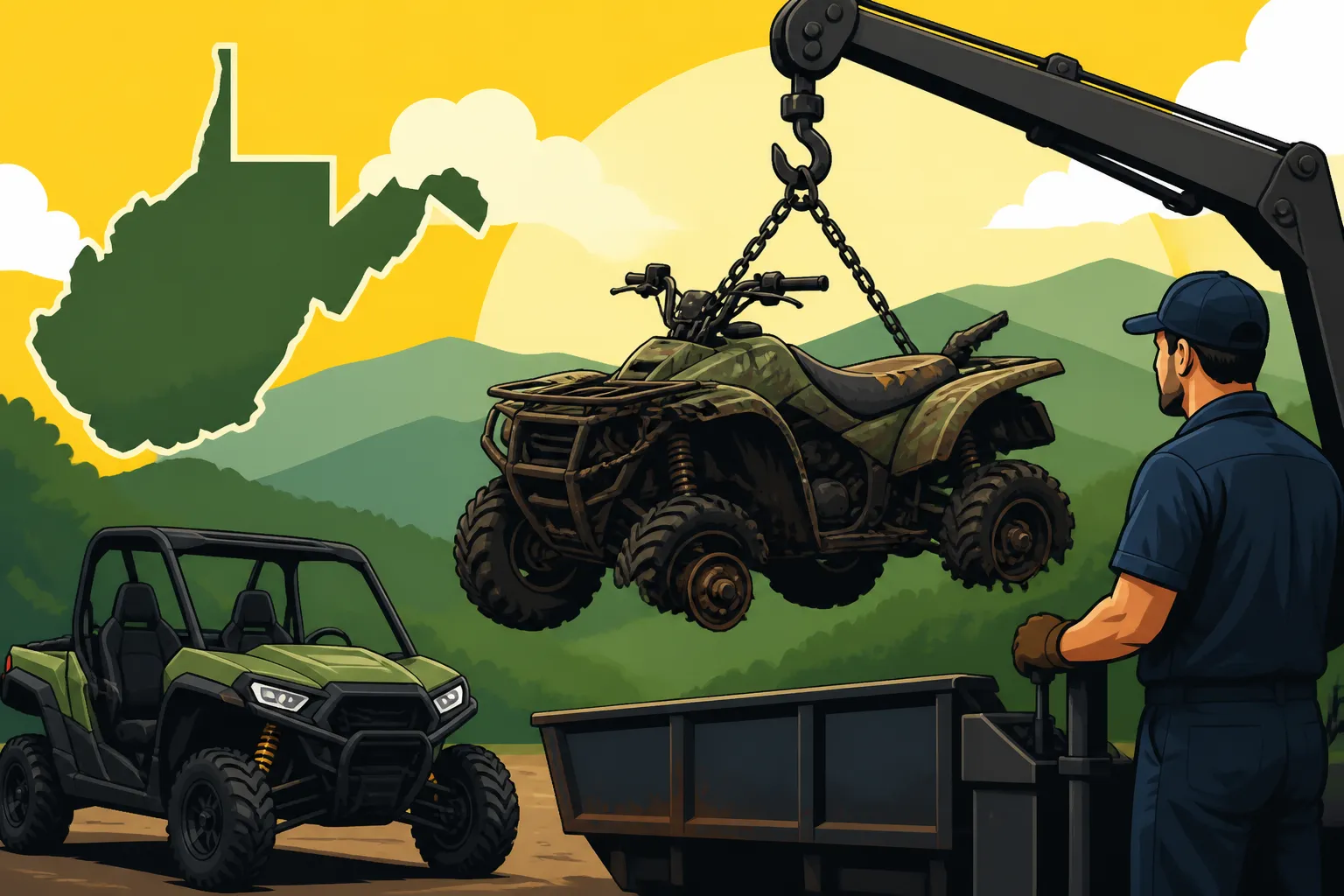
When we talk about "scrapping" an ATV or UTV, it's more than just pushing it out of sight into the back forty. It's the official process of decommissioning a machine that is no longer roadworthy, trail-worthy, or even fixable in an economical sense. This might involve completely dismantling it for parts, recycling its metal components, or simply disposing of the hulk legally and responsibly. It’s a final step, signaling that the machine's life as a functional vehicle has truly ended.
Why a Quad Might Be Destined for the Scrap Pile
There are countless reasons why a West Virginia rider might find themselves with a machine beyond reasonable repair. Often, it's a significant mechanical failure where the cost of parts and labor far outweighs the value of the ATV. Think blown transmissions, cracked engine blocks, or frames that have been twisted in a major accident. Environmental factors play a role too; machines left exposed to the elements for years can rust beyond salvation, becoming nothing more than a tetanus hazard. Sometimes, it's a machine that's simply too old, with discontinued parts making any repair a scavenger hunt that's just not worth the effort or expense. It's a pragmatic decision, acknowledging that some machines have simply run their course and it's time to move on.
When Is It a Total Loss? Beyond Cosmetic Damage
Deciding if your ATV or UTV is a "total loss" usually comes down to economics. If an insurance company is involved after an accident, they'll determine if the repair costs exceed a certain percentage of the vehicle's market value. For older machines or those without comprehensive insurance, you have to be your own appraiser. What might seem like a minor repair can quickly escalate. A bent frame is almost always a total loss, as straightening it rarely restores the machine to its original integrity or safety standards. Major engine or transmission issues often fall into this category as well, especially on older models where a rebuild might cost more than buying a newer, used machine. It's not just about what it looks like; it's about structural integrity, safety, and the cold hard numbers of repair versus replacement. Sometimes, the frustration of sourcing parts for an older model is enough to declare it a total loss, even if theoretically fixable.
The Title Challenge: What to Do with the Paperwork
Even if your ATV or UTV is a mangled heap, the official documentation, especially the title, remains a critical piece of the puzzle in West Virginia. Just because the machine is "dead" doesn't mean its legal identity vanishes. Ignoring the title can lead to headaches down the road, from potential legal issues to lingering property tax concerns. Handling this paperwork correctly ensures a clean break and protects you from any future liability.
What if You Have the West Virginia Title?
If you're lucky enough to still possess the original West Virginia title for your deceased quad, the process is usually more straightforward. The key is to ensure that the machine is officially removed from your name and records, preventing any future confusion. You might not "surrender" a title for a scrap vehicle in the same way you would for a car, but you'll certainly want to ensure that if you sell it for parts, or even just the frame to a scrap yard, you're properly documenting the transfer of ownership of what's left. If you're selling the frame or a significant portion to a scrap dealer, they may require you to sign over the title or at least provide a bill of sale clearly stating its condition as salvage. This protects both you and the scrap yard, showing that the transaction was legitimate and the machine was rightfully yours to scrap. Always keep a copy of any documentation, like a bill of sale, even for a "dead" machine. You can find templates on sites like LawDepot for a clear record. For an overview of basic title handling, check out [Titling an ATV in West Virginia].
Dealing with a Lost or Non-Existent Title
This is where things can get a bit trickier, and it's a common scenario for machines that have sat dormant for years or were purchased informally. If you've lost the title for your ATV or UTV, your first step should generally be to apply for a [Replacing a Lost West Virginia ATV Title] through the West Virginia DMV. While it might seem counterintuitive to get a new title for a machine you plan to scrap, having proof of ownership is essential. Without it, you might struggle to even get a scrap yard to take the frame, as they need to ensure they're not dealing with stolen property. Some scrap yards might accept a notarized statement of ownership along with a VIN check, but having the actual title, even a duplicate, is always preferred. If the machine was never titled in West Virginia to begin with, and it's an older model, the situation can be more complex. For example, [West Virginia Title Rules for a Pre-1989 ATV] outlines specific rules for very old machines, which might apply.
What if you've never had a title and the previous owner is nowhere to be found? This can be a significant hurdle. Selling the machine for parts without a title is generally permissible for individual components, but selling the frame, which carries the VIN, without clear ownership can be problematic. You might be forced to consider extreme measures like getting a [Bonded Title for an ATV in West Virginia] to establish legal ownership, though this is often an over-the-top solution for a machine intended for scrap. In many cases, if you genuinely can't prove ownership of the frame, a legitimate scrap yard might refuse to take it, leaving you with the difficult task of removing the engine and other components and then discretely disposing of the frame as unidentifiable scrap metal, which isn't always ideal. This is why official documentation, even for a non-runner, is always emphasized. Penalties for untitled machines, even those that are "dead," can be an issue if you try to sell the complete unit without proper transfer, so be mindful of [Penalties for an Untitled ATV in West Virginia].
The Importance of a Bill of Sale (Even for Parts)
Even if you're only selling individual components or simply handing the machine over to a scrap metal dealer, a bill of sale is your best friend. This simple document serves as concrete proof that you transferred ownership of the machine (or its parts) on a specific date. It should clearly state the VIN (if applicable to the frame or major parts), the condition of the machine (e.g., "for parts only," "salvage," "non-running"), and that it is being sold "as-is, where-is" with no warranty. Using a template, perhaps from LawDepot, can help ensure all necessary details are included. This protects you from any liability should the scrap yard or new owner do something illicit with the machine or its parts. It's your paper trail, proving you no longer have responsibility for that piece of equipment. Remember, a detailed [West Virginia ATV Bill of Sale: What Belongs in It] can save you headaches later.
Handling Liens on a Dead Quad
Before you even think about scrapping, it's absolutely crucial to check for any outstanding liens on the ATV or UTV. A lien means someone else has a financial claim against your machine, usually a bank or finance company if you took out a loan. Even if the quad is a pile of rust, that lien might still be valid. Scrap yards and parts buyers will often run a VIN check, and if a lien pops up, they'll refuse to deal with the machine until it's cleared. Trying to scrap or sell a machine with an active lien can lead to legal trouble, as you don't fully own it. Your first step should be to contact the lienholder and explain the situation. They might have a process for releasing the lien on a total loss, especially if you have proof of its condition. For paid-off machines, ensure you have the [West Virginia Lien Release on a Paid-Off UTV] document from your finance company. Don't assume that just because the machine is "dead" the financial obligation disappears; always resolve any liens first.
Getting Rid of the Remains: Disposal Options
Once you've navigated the title situation, the next step is the physical removal of the "dead quad." You have a few options, each with its own pros and cons, depending on the condition of your machine and your resources.
Selling for Parts: A Second Life for Components
Even a completely dead quad usually has some valuable components. The engine might be toast, but the wheels, tires, suspension parts, plastic fenders, seats, or even electrical components could still be perfectly functional. Selling these items individually can often recoup more money than selling the entire machine for scrap metal.
- Disassembly: This requires some mechanical know-how and tools, but it allows you to maximize value. Take photos of each part before removal, and list them on online marketplaces or specialized ATV/UTV forums. Be honest about the condition of each part.
- Documentation for Parts Sales: For individual components, especially smaller ones, a title isn't typically needed. However, if you're selling a major component that has its own serial number or could be mistaken for an entire machine (like a frame or engine block), it's wise to provide a simple bill of sale clearly stating it's for parts and referencing the original machine's VIN if known. LawDepot offers customizable bill of sale forms that can be adapted for parts sales.
- Networking: Talk to local ATV repair shops, junkyards specializing in powersports, or even other riders. They might be looking for specific parts and save you the hassle of individual listings.
Selling for parts gives your quad a kind of second life, ensuring its usable components don't go to waste. You might even find someone looking for a [Salvage and Rebuilt ATV Titles in West Virginia] project and sell the whole non-running machine to them, simplifying your process.
Donating Your Deceased Quad
While it might sound unusual, some vocational schools or mechanic programs might accept a non-running ATV or UTV as a donation. It provides students with a real-world project to learn diagnostic and repair skills, or simply how to dismantle a machine. While you won't get cash, you might be eligible for a tax deduction, and it’s a feel-good way to contribute to future mechanics. Always contact the institution first to see if they're interested and if they have any specific requirements for accepting such a donation. They may require specific documentation regarding ownership, so be prepared to present your title or a clear bill of sale if available. Remember that [Gifting an ATV in West Virginia and the Title That Follows] still involves official title transfer if the frame is intact.
Scrap Metal Yards: The Final Destination
For the truly unredeemable frame and whatever non-recyclable parts are left, a scrap metal yard is often the final stop. This is usually the easiest route for disposal, but you need to be prepared.
- Preparation: Before taking your machine to a scrap yard, remove all fluids (gas, oil, coolant, brake fluid) and the battery. These are considered hazardous waste and most scrap yards won't accept a machine with them. Remove any tires if the scrap yard has a separate disposal fee for rubber.
- Proof of Ownership: As mentioned earlier, scrap yards are wary of stolen property. They will almost certainly require proof of ownership, such as the title (even a duplicate or branded as salvage), or a notarized bill of sale along with your ID. Don't expect them to just take it off your hands without this documentation. It's also worth noting that reputable yards will likely run the VIN to ensure it's not a stolen machine, so consider running a [Checking a Used Quad Against Stolen Records] yourself beforehand if you have any doubts.
- Payment: You'll typically be paid by weight for the metal. Don't expect a fortune, but it's better than nothing and ensures responsible recycling. Call ahead to local scrap yards to inquire about their policies, what they accept, and current metal prices.
Hazardous Waste Disposal for Fluids and Batteries
This is a step that many people overlook, but it's crucial for environmental responsibility. You cannot simply pour engine oil, gasoline, or coolant down the drain or throw batteries in the regular trash.
- Fluids: Collect all fluids in appropriate, sealed containers. Many auto parts stores, service stations, and county solid waste facilities in West Virginia have programs for recycling used motor oil and antifreeze. Check with your local solid waste authority for specific drop-off locations and requirements for these and other hazardous fluids like brake fluid.
- Batteries: ATV/UTV batteries are lead-acid batteries and contain hazardous materials. Most places that sell new batteries (auto parts stores, Walmart, etc.) will accept old batteries for recycling, often for free or a small fee.
Taking the time to properly dispose of these hazardous materials protects our beautiful West Virginia environment and prevents fines.
Important Considerations and Potential Pitfalls
Scrapping your ATV or UTV isn't just about the physical removal; there are several other important factors to keep in mind to ensure a smooth, legal, and responsible process.
Environmental Impact and Responsible Recycling
West Virginia is a state proud of its natural beauty, and as riders, we have a responsibility to protect it. When scrapping a quad, think about the bigger picture. Are you simply abandoning it in the woods, or are you ensuring its components are recycled or disposed of properly?
- Minimizing Waste: Dismantle as much as you can for parts. Any usable part that finds a new home means less material going into a landfill.
- Recycling Metals: Take the stripped-down frame and major metal components to a reputable scrap metal recycling facility. They have the processes in place to responsibly break down and reuse these materials.
- Avoiding Land Pollution: Never abandon a machine, even a "dead" one, on private or public land. Leaking fluids can contaminate soil and water, and the machine itself becomes an eyesore and a hazard. This type of abandonment can also lead to issues like [Abandoned ATV on Your West Virginia Property] for others, and potential legal action against you.
Being mindful of the environmental impact during disposal is an essential part of being a responsible ATV/UTV owner.
Liability After Disposal
Once your quad is scrapped, you want to ensure that all liability associated with it ends. This is where proper documentation, especially a bill of sale, becomes invaluable.
- Transfer of Ownership: If you sell the entire machine for parts, or even just the frame, make sure the bill of sale clearly transfers ownership and states the machine's condition. This way, if anything happens with the machine after it leaves your possession, you have proof that it was no longer yours.
- DMV Records: While the DMV doesn't typically have a "scrapped" status for ATVs in the same way they do for cars, it's good practice to notify them if you're essentially deactivating the title. If you applied for a duplicate title to assist with scrapping, you'll want to ensure that record is clear.
- Avoiding Future Headaches: Imagine if someone found your old VIN on a "scrapped" frame and tried to do something illegal with it. Having clear records of disposal protects you from being implicated. This is also why avoiding [Selling an ATV With No Title in West Virginia] in its entirety is critical, even if it's "dead."
Verifying Legitimate Scrap Dealers and Avoiding Fraud
Unfortunately, not all scrap dealers operate with the highest ethical standards. When choosing where to take your machine, do a little research.
- Reputation: Look for local scrap yards with good reviews or recommendations.
- Documentation: A legitimate scrap yard will always ask for proof of ownership and your ID. Be wary of any place that doesn't, as they might be involved in less-than-above-board activities.
- Transparency: They should be transparent about their pricing structure for metals and any fees for non-metal components.
- Beware of "Free Removal" Scams: Some services offer "free junk removal" but might not be legitimate scrap recyclers. They could strip out valuable parts and then illegally dump the rest, leaving you inadvertently complicit. Always choose a reputable, licensed operation.
By taking these extra steps, you can ensure your "dead quad" is handled legally, responsibly, and without any lingering issues for you. It's the final chapter for your trusty machine, and it deserves a proper send-off.
Disclaimer
This article is for general informational purposes only and does not constitute professional advice. Laws, prices and regulations vary by location and change over time. Consult a qualified professional for guidance on your specific situation.