West Virginia ATV Title Application Form
Navigating the paperwork to title an ATV or UTV in West Virginia can feel like trying to find your way through a dense forest without a map. Many folks get frustrated simply trying to figure out which form they even need, let alone how to fill it out correctly without making a mistake that sends them back to square one. This guide is here to untangle that process, walking you through the ins and outs of the official West Virginia ATV Title Application Form, making sure you understand every box, every signature, and every supporting document required to get your machine legally titled and ready for the trails.
Understanding the Core Document: The West Virginia ATV Title Application Form
When it comes to getting your all-terrain vehicle or utility terrain vehicle officially recognized by the state, there's one document that serves as the cornerstone of the entire process: the West Virginia ATV Title Application Form. This isn't just a piece of paper; it's your formal request to the West Virginia Division of Motor Vehicles (DMV) to establish legal ownership and issue a title in your name. Without it, your machine might as well be invisible to the state, making it difficult to sell, insure, or even prove that it truly belongs to you.
Many riders, especially first-timers, find themselves a bit overwhelmed when they first look at a DMV form. The language can seem overly formal, and the various sections might not immediately make sense in the context of buying or selling an ATV. However, approaching it systematically can make all the difference. Think of this form as telling a complete story about your ATV to the state, from its birth (manufacturer's certificate) to its journey to your garage.
What Form Are We Talking About? The DMV-1-TR
The specific form you'll be looking for is typically the DMV-1-TR Application for Certificate of Title and Registration. Yes, even though ATVs and UTVs in West Virginia aren't registered in the traditional sense for general road use (unless you're going for a Special Purpose Vehicle plate), this is the form that handles the title application aspect. It's a bit of a quirk in the system, but it's important to know the correct form by its name and number. You can usually find this form readily available on the West Virginia DMV website or pick one up in person at any DMV office.
It's easy to get confused with other forms for car registrations or driver's licenses, but the DMV-1-TR is specifically designed to cover a broad range of vehicles, including motorcycles, trailers, and yes, your ATV or UTV. The key is to correctly fill out the sections pertinent to your off-road machine and leave others blank. Don't be intimidated by fields that don't apply; the DMV understands that not every section will be relevant to every type of vehicle.
The purpose of this form is multifaceted. Primarily, it's how the DMV collects all the necessary information about you, the applicant, and your vehicle to legally issue a title. It also serves as the means to collect any applicable sales tax, title fees, and to note any liens on the vehicle. Failing to use the correct form, or using an outdated version, can unfortunately lead to immediate rejection of your application, causing unnecessary delays and frustration.
Key Sections of the Application and What They Ask For
The DMV-1-TR form is broken down into several distinct sections, each requiring specific pieces of information. Understanding what each section is asking for before you even pick up a pen can save you a lot of headaches. Accuracy is absolutely paramount here; even a small typo can cause your application to be flagged and returned.
You'll start with the Applicant Information section. This is where you, the prospective new owner, provide your full legal name, current mailing address, physical address, and contact information. If there's more than one owner, such as a spouse or family member, all names should be listed exactly as they will appear on the title. It's crucial that this information matches your valid photo identification that you'll present at the DMV. Incorrect addresses can lead to your new title being mailed to the wrong place or simply returned to the DMV, further delaying the process.
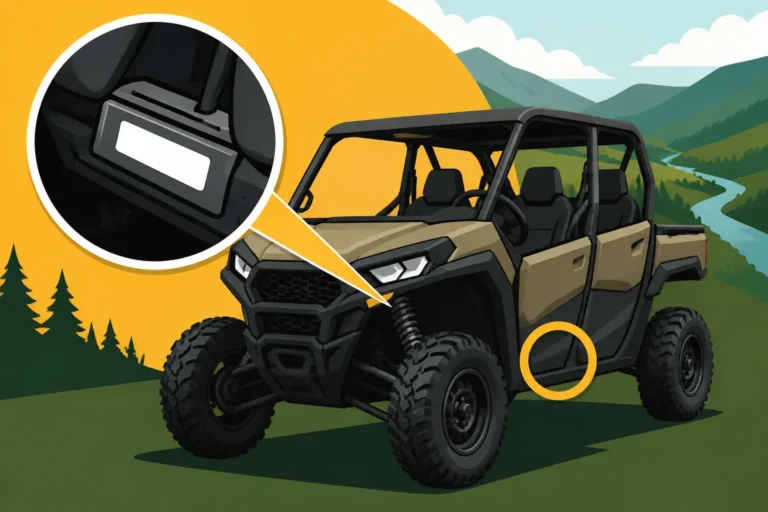
Next, you'll move on to the Vehicle Information section. This is arguably the most critical part, requiring precise details about your ATV or UTV. You'll need the Vehicle Identification Number (VIN), make (e.g., Polaris, Can-Am, Honda), model (e.g., RZR, Outlander, Rancher), year of manufacture, and body style (e.g., ATV, UTV, Off-Highway Motorcycle). The VIN is especially vital as it uniquely identifies your machine; ensure it's copied exactly as it appears on the vehicle's frame. Don't guess if you're unsure where to find it; you might need to consult your owner's manual or look for common VIN locations. [Finding the VIN Stamp on an ATV Frame] can guide you if you're having trouble locating this crucial identifier.
The form will also have sections for Lienholder Information, if you've financed your ATV. This is where the bank or credit union that loaned you the money for your machine will be listed, ensuring their interest in the vehicle is officially recorded on the title. If you paid cash or have paid off your loan, this section will simply be left blank. Proper handling of liens is important; when you pay off a loan, the lienholder needs to release their interest so you can eventually get a clear title. You can read more about this in [Liens on a West Virginia ATV Title]. Following this, there's usually a section for Odometer Reading. For most ATVs and UTVs, which aren't typically driven on public roads in the same way cars are, this reading might be left blank or recorded as "exempt" or "not applicable," depending on the specific form instructions and the vehicle's design.
Finally, there are sections related to the Sale Information and Signatures. This includes the purchase date, the purchase price, and the seller's name and address if you bought the ATV from a private party. This information is essential for calculating the correct West Virginia sales tax on your ATV purchase. The signature section is where you, as the applicant, declare that all information provided is true and accurate to the best of your knowledge. This is not a section to rush through. Pay close attention to who needs to sign and if notarization is required for any part of the application or supporting documents like a bill of sale.
Gathering Your Supporting Documents Before You Fill It Out
You can fill out the DMV-1-TR form perfectly, but without the necessary supporting documents, your application won't go anywhere. Think of these documents as the evidence that backs up every claim you make on the application form. The West Virginia DMV is thorough for a good reason – they want to prevent fraud and ensure that titles are only issued to legitimate owners. Trying to submit your application without everything in order is a common reason for delays and wasted trips to the DMV.
It’s not just about having the documents; it’s about having the right documents, in the right condition, and ensuring they are complete and legible. A smudged signature or an unreadable VIN on a supporting document can be just as problematic as missing a document entirely. It's always a good practice to make copies of everything before you submit it, just in case something gets misplaced or you need to refer back to it.
Essential Papers You'll Need to Back Up Your Application
The most crucial document you'll need is proof of ownership. This can vary depending on how and where you acquired your ATV. If you bought a brand-new machine from a dealership, you'll typically have a Manufacturer's Statement of Origin (MSO) or Manufacturer's Certificate of Origin (MCO). This is essentially the birth certificate for your ATV, proving it's new and has never been titled before. If you bought a used ATV from a private seller, the previous owner's properly assigned title is the gold standard. The back of the title usually has a section for the seller to sign over ownership to you, the buyer. Make sure their signature, printed name, and the sale date are all there. If the previous owner lost their title, you might face additional hurdles, which we address in articles like [Titling an ATV in West Virginia Without the Previous Owner].
In addition to the MSO or previous title, a bill of sale is almost always required, especially for private sales. This document details the transaction between you and the seller, including the buyer's name, seller's name, date of sale, purchase price, and the ATV's VIN. Even if the state-issued title has some of this information, a separate bill of sale often provides more detail and a clear record of the transfer. It's wise to use a comprehensive template for this, and resources like LawDepot can provide professional, customizable bill of sale templates to ensure all necessary information is captured accurately. For specific guidance on what should be in your bill of sale, check out [West Virginia ATV Bill of Sale: What Belongs in It].
You'll also need a valid photo ID, such as your driver's license, to confirm your identity as the applicant. If multiple owners are listed, all owners usually need to be present with their IDs, or at least have their identity verified through other means or by notarized signatures on the application. Proof of West Virginia residency might also be requested if your ID doesn't clearly show a West Virginia address. Lastly, be prepared to provide proof of sales tax payment or to pay the sales tax at the time of application. The DMV needs to see that the applicable 6% West Virginia sales tax on the purchase price has been addressed. Sometimes, this is done by a dealership directly; other times, you pay it at the DMV. You can find more specific details on this in [West Virginia Sales Tax on an ATV Purchase].
Why Each Document Matters to the DMV
Every single document required by the DMV serves a critical purpose in establishing a clear and undisputed chain of ownership for your ATV. The MSO or previous title acts as the primary proof of who legally owned the machine before you. Without it, the DMV has no way to verify that the person selling you the ATV actually had the right to do so. This is a fundamental step in preventing the sale of stolen vehicles and protecting buyers from purchasing machines with murky ownership histories. [Proof of Ownership for a West Virginia ATV Title] further explains the importance of these documents.
The bill of sale, especially for private party transactions, acts as a legally binding contract detailing the specifics of the transaction. It's not just about recording the price; it formalizes the transfer of ownership from seller to buyer. It helps the DMV verify the purchase price for sales tax calculation and serves as a record in case of disputes. Furthermore, a properly executed bill of sale helps protect both the buyer and the seller by clearly stating the terms of the sale, including any "as-is" clauses.
Your photo ID is straightforward: it confirms that the person submitting the application is indeed the person claiming ownership. This prevents identity theft and ensures that titles are issued to the correct individuals. The sales tax documentation or payment is crucial for the state's revenue. West Virginia law requires sales tax on most vehicle purchases, and the DMV is the agency responsible for collecting it for ATVs and UTVs purchased from private parties. Submitting all these documents together, complete and accurate, is paramount to a smooth titling process and adhering to [What the West Virginia DMV Needs to Title an ATV].
Step-by-Step Guide to Completing the DMV-1-TR Form Correctly
Filling out official paperwork can be daunting, but breaking down the DMV-1-TR into manageable steps makes it much less intimidating. It's not a race; take your time, read each prompt carefully, and ensure every piece of information is accurate. Having all your supporting documents organized and easily accessible before you start writing on the form is a strategy that pays dividends. You don't want to be halfway through, only to realize you need to hunt down the VIN or the seller's address.
Many people find it helpful to fill out a draft copy of the form first, or at least review the blank form and gather all information before committing anything to the official document. This allows you to catch errors or omissions without having to cross out or restart. Remember, neatness counts; illegible handwriting can cause delays, as DMV staff might misinterpret what you've written.
Filling Out the Sections: A Detailed Walkthrough
Let's go section by section through what you'll typically find on the DMV-1-TR and how to fill it out:
-
Applicant Information: Start with your full legal name, exactly as it appears on your driver's license or state ID. Then, your current residential address, and if different, your mailing address. Provide your phone number and email. If there are multiple owners, ensure all names and relevant information for each owner are listed. It's common for couples to want a title in both names; ensure both names are present if that's your intention. If you are titling an ATV under a business, the business name and address would go here.
-
Vehicle Description: This is where you transplant the details from your MSO or previous title directly onto the form.
- VIN: This is the 17-character Vehicle Identification Number. Double-check it. Write it clearly. This is the machine's unique fingerprint.
- Make: Honda, Polaris, Can-Am, Kawasaki, Yamaha, etc.
- Model: Ranger, RZR, Foreman, Outlander, Talon, etc.
- Year: The model year of the ATV or UTV.
- Body Style: Often, you'll select "ATV" or "UTV/Side by Side" from a provided list or write it in.
- Fuel Type: Usually "Gasoline."
- Color: The primary color of the machine.
- Mileage/Hours: For ATVs, this might be an hour meter reading rather than mileage. If the machine is new, it's often 0. If used, provide the current reading. Be honest here; this can affect value and condition reporting.
-
Purchase Information:
- Date of Purchase: The exact date you took ownership.
- Purchase Price: The amount you paid for the ATV. This is crucial for sales tax calculation.
- Seller Information: The full legal name and address of the person or dealership from whom you bought the ATV.
-
Lienholder Information: If you obtained a loan to purchase your ATV, the lending institution (bank, credit union) will be listed here. You'll need their full legal name and mailing address. The DMV will then note this lien on your title. If you paid in cash or the loan is paid off, leave this section blank.
-
Sales Tax Calculation: There will be a section to calculate the West Virginia sales tax, which is typically 6% of the purchase price. If you purchased from a dealer, they might have already collected and remitted this. If you bought from a private seller, you are responsible for paying this tax to the DMV. Subtract any trade-in value from the purchase price before calculating tax, if applicable.
-
Signature Section: This is where you, the applicant(s), sign and date the form. Your signature confirms that all the information you've provided is true and accurate.
The Critical Importance of Signatures and Notarization
Signatures are more than just a flourish; they are legal affirmations. On the DMV-1-TR, the buyer's signature is always required. This signifies your acceptance of the terms and the information provided. If there are two owners, both will need to sign. It's essential that the signatures match the names listed in the applicant information section. A mismatch could lead to your application being rejected.
Notarization is another layer of verification that sometimes comes into play, particularly with supporting documents like the bill of sale for private party transactions or specific types of title transfers. While the DMV-1-TR form itself may not always require notarization, the documents accompanying it often do. For example, some bills of sale templates, especially those from reputable sources like LawDepot, may include a notary block to further validate the transaction. If you're buying a used machine through a private sale, ensuring the seller's signature on the title or bill of sale is notarized can add an extra layer of protection and certainty for the DMV.
Failing to obtain required signatures or notarizations is a very common reason for applications to be rejected. Imagine you drive to the DMV, wait in line, and then find out the seller's signature on the title isn't notarized as required, or that a co-owner didn't sign a specific line. This means you have to go back, get the signature, and potentially return to the DMV, wasting valuable time. Always clarify with the DMV or refer to their guidelines whether any of your supporting documents need to be notarized. When it comes to transferring a title after a private sale, these details are paramount. For more on the specifics, consider reviewing [West Virginia Title Transfer After a Private Sale].
Common Pitfalls and How to Avoid Them on Your Application
It's easy to feel rushed when dealing with DMV paperwork, and in that rush, mistakes can happen. Unfortunately, even small errors on your West Virginia ATV title application can lead to significant delays, extra trips to the DMV, and a lot of frustration. The goal is to submit a perfect application the first time, getting your title issued as quickly and smoothly as possible. Knowing the most common pitfalls ahead of time can help you proactively avoid them.
Many of these mistakes stem from a lack of attention to detail or not fully understanding the requirements. It's not about trying to trick the system; it's about making sure the story your paperwork tells is complete, consistent, and accurate. The DMV staff are there to process applications, not to fix errors that could have been prevented with a bit more care during the preparation phase.
Mistakes That Can Delay Your West Virginia ATV Title
One of the most frequent errors is incorrect or incomplete vehicle information. This often comes down to the VIN. People might transpose numbers, miss a character, or not copy it exactly as it appears on the vehicle or previous title. The VIN is the primary identifier for your ATV; if it's wrong, the DMV cannot match your application to the correct machine, and your application will be returned. Similarly, providing an incorrect make, model, or year can also cause problems. Always verify this information from the physical machine or the MSO/previous title.
Another common pitfall is missing or incorrect sales tax payment. If you purchased your ATV from a private seller, you are responsible for paying the 6% West Virginia sales tax directly to the DMV when you submit your title application. Many people forget this or miscalculate the amount. If the sales tax isn't paid or is short, the DMV won't process your title until it's rectified. [West Virginia Sales Tax on an ATV Purchase] provides detailed guidance on this. Furthermore, forgetting to include the correct title fee can also bring the process to a halt. While the fee itself isn't usually high, it's non-negotiable. For a current figure, always check the official DMV website or contact them directly, as these fees can change.
Incomplete or missing supporting documents are another major roadblock. Trying to submit the DMV-1-TR without the original MSO, properly assigned previous title, or a valid bill of sale is a guaranteed way to get your application rejected. The DMV needs to see a clear chain of ownership. Not having your current photo ID, or if your name and address on the ID don't match the application, can also cause issues. It’s a common mistake to assume the DMV has all your information on file; for titling, you need to provide it all upfront. [Documents to Bring for a West Virginia ATV Title] offers a comprehensive checklist to help you stay organized.
Finally, illegible handwriting or excessive corrections can delay your application. If the DMV clerk cannot clearly read what you've written, they may not be able to process it, or worse, they might transcribe incorrect information onto your new title. While minor corrections might be acceptable with an initial and date, extensive cross-outs or use of correction fluid (Wite-Out) can make your form look suspicious or unprofessional, leading to further scrutiny and potential rejection.
Tips for a Smooth Application Process
To ensure a smooth application process and avoid those aggravating delays, preparation is your best friend.
- Read Everything First: Before you fill in a single blank, read the entire DMV-1-TR form and any accompanying instructions. Make sure you understand what each section is asking for. If anything is unclear, call the DMV or check their website for FAQs.
- Gather All Documents: Create a physical folder or checklist for all required documents. This includes your MSO or previous title, bill of sale, valid photo ID, and proof of sales tax payment (if applicable). Double-check that all signatures are present and that any required notarizations are complete on these supporting documents. Using a reputable template from a source like LawDepot for your bill of sale can ensure it contains all the necessary fields for a West Virginia transaction.
- Verify All Information: Cross-reference the VIN, make, model, and year on the application with the actual machine and any supporting documents. Ensure your name and address are identical to your photo ID.
- Write Clearly and Neatly: Use a blue or black ink pen. Print clearly in block letters if your handwriting isn't easily legible. Take your time.
- Make Copies: Before you hand over your original documents and application at the DMV, make photocopies of everything for your records. This is crucial for your peace of mind and provides a backup in case of any issues.
- Visit Prepared: While many DMV offices now offer appointment scheduling, it's still a good idea to arrive early and allow ample time. Bring all your original documents, your completed application form, and your payment method for fees and sales tax. Being organized and polite can go a long way in ensuring a positive experience when you visit one of the [West Virginia DMV Offices That Handle ATV Titles].
By following these tips, you significantly increase your chances of a successful first-time application, leading to a much faster turnaround for your West Virginia ATV title.
| Document Type | Purpose | Relevant Form Sections | Key Details to Check |
|---|---|---|---|
| DMV-1-TR Form | Application for Title & Registration | All Sections | Legibility, completeness, accuracy, applicant signature(s) |
| MSO / Previous Title | Proof of ownership (new/used machine) | Vehicle Information, Seller Information | VIN match, seller's assignment, lien release (if applicable) |
| Bill of Sale | Details of transaction & proof of purchase | Purchase Information, Seller Information | Buyer/seller names, VIN, purchase date/price, signatures |
| Photo ID | Applicant identity verification | Applicant Information | Name & address match application, valid expiration |
| Sales Tax Proof/Payment | Compliance with WV sales tax law | Sales Tax Calculation | Correct calculation (6% of purchase price), payment method |
| Lien Release (if applicable) | Proof previous loan paid off | Lienholder Information | Clear statement of release, notarized if required |
Disclaimer
This article is for general informational purposes only and does not constitute professional advice. Laws, prices and regulations vary by location and change over time. Consult a qualified professional for guidance on your specific situation.