Titling an ATV at a West Virginia DMV Office
Trying to title an ATV in West Virginia can feel like a confusing maze, especially when you're just looking to get your machine legal and enjoy the trails. Many riders face frustration trying to figure out exactly what documents they need, where to go, and what pitfalls to avoid at the DMV. This comprehensive guide will walk you through the entire process of titling your ATV at a West Virginia DMV office, ensuring you have all the information and steps to make it a smooth experience.
Why You Need to Title Your ATV in West Virginia
It might seem like a hassle, another piece of bureaucracy, but titling your ATV in West Virginia isn't just a suggestion; it's a legal requirement that carries significant weight for every machine sold after 1989. Ignoring this step can lead to a heap of trouble down the line, from legal penalties to major headaches when you try to sell or prove ownership. Think of the title as your ATV's birth certificate and deed rolled into one. Without it, your machine is essentially invisible in the eyes of the law, and that's a risk no responsible owner should take.
The Legal Ramifications of an Untitled Machine
Riding an untitled ATV on public lands, designated trail systems like Hatfield-McCoy, or even navigating a sale can land you in hot water. West Virginia has clear laws regarding the titling of ATVs, and law enforcement officers are well aware of them. If you're stopped and your machine isn't properly titled, you could face fines and other penalties. Imagine getting pulled over on a trail connector or a county road where ATVs are permitted, only to discover your lack of a title invalidates your right to be there, or worse, suggests the machine might not even be legally yours. This isn't just about avoiding a ticket; it's about adhering to the rules that keep everyone safe and accountable on West Virginia's vast network of riding areas. Don't let an oversight here spoil your riding adventures.
Beyond a simple citation, an untitled ATV can create a huge mess if it's involved in an accident, even a minor one. Proving you're the rightful owner, especially when dealing with insurance claims or property damage, becomes incredibly difficult without that official document. You might find yourself in a drawn-out legal battle, trying to establish your claim without the one piece of paper that clears everything up instantly. It's a layer of protection that often goes unappreciated until you desperately need it. When you purchase a machine, especially from a private seller, making sure you can get a title for it should be one of your absolute top priorities to prevent these kinds of future complications.
Protecting Your Investment and Proving Ownership
Your ATV is more than just a toy; it's a significant investment, often costing thousands of dollars. The title is the definitive proof of your ownership, securing that investment against theft, disputes, or future sales issues. Without a title, how do you truly prove that the machine belongs to you and not someone else? This becomes critical if your ATV is stolen. Law enforcement agencies rely heavily on title records and the Vehicle Identification Number (VIN) to track down and return stolen property. An untitled machine, even if you have a bill of sale, is much harder to recover because it lacks that official, state-recorded link to you.
Consider a scenario where you decide to sell your ATV down the road. Most reputable buyers, whether private individuals or dealerships, will absolutely require a clear title. Trying to sell an ATV without a title in West Virginia is a huge red flag and severely limits your pool of potential buyers. You'll likely encounter skepticism, lower offers, or buyers who simply walk away. A buyer wants assurance that they aren't purchasing a stolen machine or inheriting someone else's legal problems. A properly titled machine, on the other hand, instills confidence, facilitates a smoother transaction, and generally commands a better resale value. Think of the title as liquidating your investment easily when the time comes.
Essential Documents for Your DMV Visit
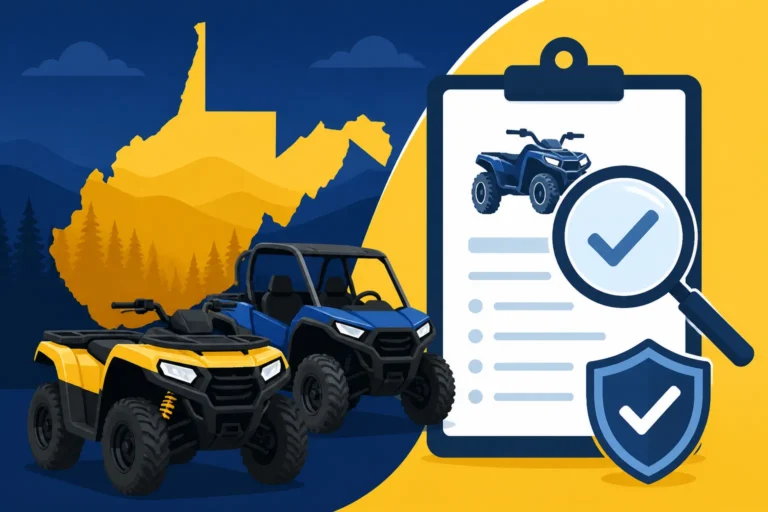
Before you even think about heading to one of the West Virginia DMV Offices That Handle ATV Titles, it's crucial to gather all the necessary paperwork. Showing up unprepared is a common pitfall that leads to wasted trips and frustration. The DMV requires specific documents to verify your identity, the ATV's identity, and the legality of the transfer. Missing even one piece can send you home empty-handed. Taking the time to collect and organize everything beforehand will save you immense hassle.
Gathering Your Proof of Ownership and Identification
The cornerstone of your titling application is proving that you legally own the ATV. For new machines purchased from a dealer, this usually means the Manufacturer's Statement of Origin (MSO) or Manufacturer's Certificate of Origin (MCO). If you're buying a used ATV, the most critical document is the existing title, properly signed over by the previous owner. Make sure all names are legible and match exactly. Along with proof of ownership, you'll need a valid form of personal identification, typically a driver's license or state-issued ID card. This confirms who you are and that you're eligible to title the machine in your name.
Sometimes, the previous owner might have lost the title. This is a common situation, but it doesn't mean you're out of luck. However, it does add a layer of complexity. If you're dealing with a seller who doesn't have the physical title, it's usually best for them to apply for a [Replacing a Lost West Virginia ATV Title] before they sell it to you. This ensures a clean transfer. If that's not possible, you'll need to explore options like a bonded title for an ATV in West Virginia, but this process is more involved and not always guaranteed. Having a clear, signed-over title is always the simplest path for [Proof of Ownership for a West Virginia ATV Title].
The Importance of a Complete Bill of Sale
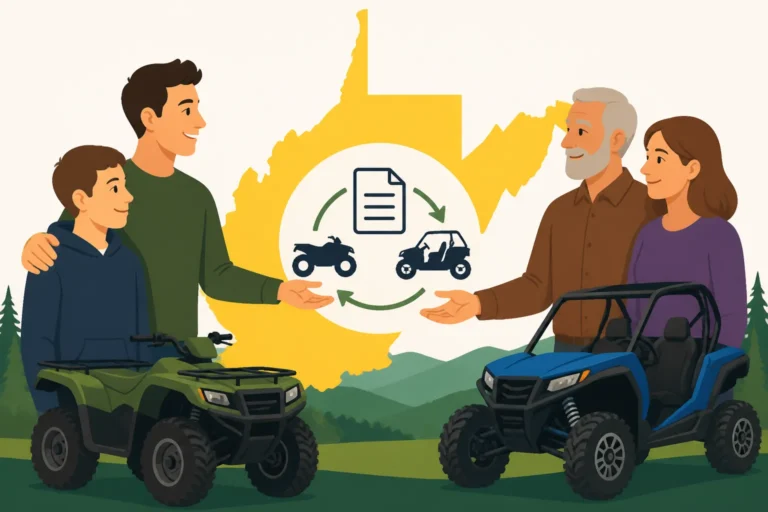
Even with a signed title, a comprehensive bill of sale is almost always required and serves as another crucial piece of the puzzle, especially for private party sales. This document outlines the details of the transaction, including the buyer and seller's information, the ATV's description (make, model, year, VIN), the purchase price, and the date of sale. It acts as a legal record of the transfer and is absolutely essential for calculating sales tax and proving the transaction occurred at a specific price point. Many online resources, like LawDepot, offer templates for a [West Virginia ATV Bill of Sale: What Belongs in It] to ensure you don't miss any critical details.
Beyond just the basic information, a good bill of sale can include clauses about the "as-is" condition of the sale and confirmation that the seller has the right to sell the machine. This protects both parties. When you present your documents at the DMV, they will scrutinize the bill of sale for accuracy and completeness. Any discrepancies between the bill of sale and the title, such as a different VIN or purchase price, could lead to delays or rejection of your application. Make sure the VIN on your bill of sale matches the VIN on the actual machine and the title exactly.
Here's a quick checklist for your DMV visit:
| Document Type | Required for New ATVs | Required for Used ATVs (Private Sale) |
|---|---|---|
| Manufacturer's Statement of Origin (MSO/MCO) | Yes | No (unless a never-titled machine) |
| Properly Signed-Over Original Title | No | Yes |
| [West Virginia ATV Bill of Sale: What Belongs in It] | No (dealer handles) | Yes |
| Valid Photo ID | Yes | Yes |
| [West Virginia ATV Title Application Form] (DMV-1-TR) | Yes | Yes |
| Proof of West Virginia Residency | Yes | Yes |
| Payment for Fees/Taxes | Yes | Yes |
What About Sales Tax?
Ah, sales tax. No one likes paying it, but it's a non-negotiable part of titling your ATV in West Virginia, unless a specific exemption applies. The West Virginia DMV collects sales tax on the purchase price of your ATV, even if you bought it from a private seller. This is why the bill of sale showing the purchase price is so critical. The amount you pay will be calculated based on the stated value, so don't try to undervalue the machine on paper, as the DMV has ways of checking fair market value. For an overview of how this works, check out [West Virginia Sales Tax on an ATV Purchase].
There are a few situations where you might be exempt from paying sales tax, such as inheriting an ATV or receiving it as a legitimate gift from a family member. However, even in these cases, you'll still need to provide specific documentation, often including an affidavit or notarized statement, to prove the nature of the transfer. It’s always best to be upfront and prepared to pay the sales tax unless you have a clear, documented exemption. Attempting to avoid sales tax by misrepresenting the purchase price can lead to legal issues down the road.
The Step-by-Step Process at the DMV
You've gathered all your documents, checked them twice, and perhaps even printed a backup copy of your bill of sale from a reputable source like LawDepot. Now comes the actual visit to the Department of Motor Vehicles. While it might feel intimidating, breaking down the process into smaller steps can make it much more manageable. Patience and preparation are your best friends here.
Making an Appointment or Walking In
In West Virginia, many DMV offices now offer the convenience of scheduling an appointment online, which can be a real time-saver. Showing up with a scheduled slot can drastically reduce your wait time compared to walking in and taking a number. Before you head out, check the specific DMV location you plan to visit online to see their current operating procedures and if appointments are available or required for ATV titling. Some smaller rural offices might still primarily operate on a walk-in basis, so it's wise to verify. If you do walk in, be prepared for potentially long waits, especially during peak hours like lunchtimes or early mornings.
Once you arrive, whether by appointment or walk-in, you'll typically check in and be directed to a specific counter or window. Have all your physical documents ready to hand over. The clerk will review everything, often making copies or scanning them into their system. This is the point where any missing documents or errors will be flagged, so having everything in order from the start is paramount. Be polite, clear, and concise in your answers, and don't hesitate to ask for clarification if something isn't clear to you.
Navigating the Paperwork and Inspection
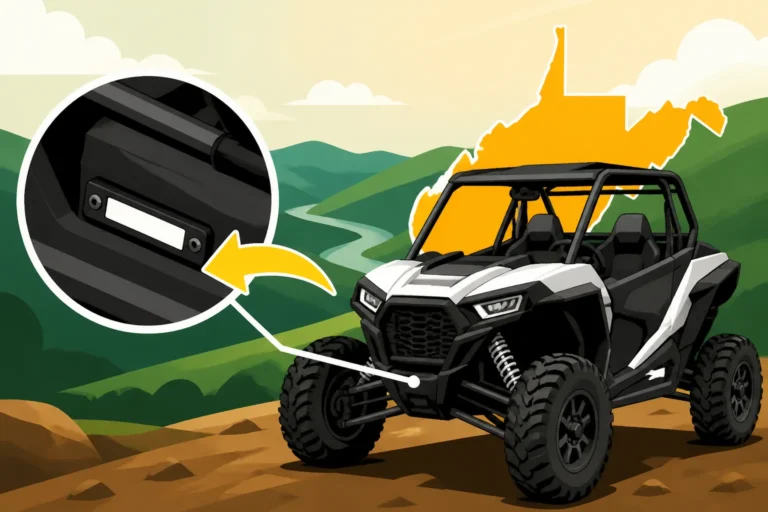
The DMV representative will guide you through completing the [West Virginia ATV Title Application Form] (Form DMV-1-TR). You'll fill in your personal information, the ATV's details (make, model, year, VIN), and sign where indicated. Make sure the VIN you provide on the form matches the VIN on the machine and any accompanying documents exactly. The VIN is essentially the ATV's unique fingerprint, and even a single digit off can cause major problems. In some cases, especially if you're coming from out-of-state or there's any ambiguity, the DMV might require a physical VIN inspection. This involves a DMV employee or an authorized agent physically verifying the VIN on the machine itself against your paperwork.
This inspection helps prevent fraud and ensures the machine isn't stolen. It's a quick process, but it does mean you'll need to have your ATV accessible for inspection, sometimes at the DMV office itself or at a designated inspection station. If you're titling an out-of-state machine, such as bringing a [Titling an Ohio ATV in West Virginia] or [Titling a Virginia ATV After Moving to West Virginia], a VIN inspection is highly likely. The agent will typically fill out a separate inspection form that then gets attached to your titling application. Be prepared for this possibility, and ensure your VIN plate or sticker is clean and easily readable.
What Happens After You Submit Everything?
Once all your paperwork is submitted, reviewed, and approved, you'll pay the necessary fees. This will include the [West Virginia ATV Title Fee] and any applicable sales tax, as discussed earlier. The DMV will provide you with a receipt and, usually, a temporary registration document or sticker that allows you to legally operate your ATV while you await the permanent title. The physical title document itself is typically mailed to you from the state capital, not printed on the spot at your local DMV office.
The timeframe for receiving your permanent West Virginia ATV Title can vary. It usually takes a few weeks, but during peak seasons or due to unforeseen delays, it could take longer. The temporary document is your proof of compliance during this waiting period. If you don't receive your title within the expected timeframe, keep your receipts and temporary documents handy, and don't hesitate to contact the West Virginia DMV's titling division for an update. Knowing [How Long a West Virginia ATV Title Takes] can help manage your expectations.
Common Challenges and How to Overcome Them
Despite your best efforts, sometimes complications arise during the titling process. It's not uncommon to encounter a hiccup or two, especially when dealing with used machines or unusual circumstances. Knowing what these challenges are and how to address them can save you a lot of stress.
Dealing with a Missing Title from a Previous Owner
One of the most frequent headaches is buying an ATV from a private seller who doesn't have the physical title. They might claim they lost it, never received it, or that "it's an old machine, it doesn't need one." While there are specific rules for [West Virginia Title Rules for a Pre-1989 ATV], most modern ATVs require a title. As mentioned before, the best scenario is for the seller to obtain a duplicate title before the sale. However, if you've already bought the machine and are now stuck, you have limited options.
You might need to contact the previous owner and insist they apply for a duplicate title. If that's not feasible, West Virginia offers a process for a [Bonded Title for an ATV in West Virginia]. This is a more complex route, requiring you to purchase a surety bond for a certain value, essentially insuring the state against potential claims of ownership. The bonded title process is designed to protect all parties in situations where the original title is truly lost or unobtainable. It's not a quick fix, and it involves extra costs and paperwork, but it can be a viable solution if you're determined to title the machine legally. Remember, the DMV will rarely issue a title if you cannot definitively prove a clean chain of ownership, especially for [Titling an ATV in West Virginia Without the Previous Owner].
Correcting Errors and What to Do Next
Mistakes happen, whether it's a typo on the bill of sale, an incorrect VIN entered on the application, or a name misspelled. If you discover an error before you submit your documents, correct it neatly and have both parties initial any changes on the bill of sale. If the error is on the title itself, things get trickier, as state-issued titles are highly sensitive documents. For example, if you find a wrong VIN on a West Virginia title after it's been issued, you'll have to follow the specific procedures for [Fixing a Wrong VIN on a West Virginia Title], which usually involves providing proof of the correct VIN and possibly returning the erroneous title for correction.
If you submit your application and the DMV identifies an error, they will likely reject your application and inform you of the issue. Don't panic. Carefully follow their instructions for correction. This might mean returning to the seller to amend the bill of sale, obtaining a new signature, or providing additional documentation. Sometimes, if the error is minor and clearly a clerical mistake, the DMV might allow you to correct it on the spot with proper identification. The key is to address any issues promptly and provide whatever additional information or corrected documents they request to keep the process moving forward. Patience and persistence are key to navigating these situations successfully.
Disclaimer
This article is for general informational purposes only and does not constitute professional advice. Laws, prices and regulations vary by location and change over time. Consult a qualified professional for guidance on your specific situation.