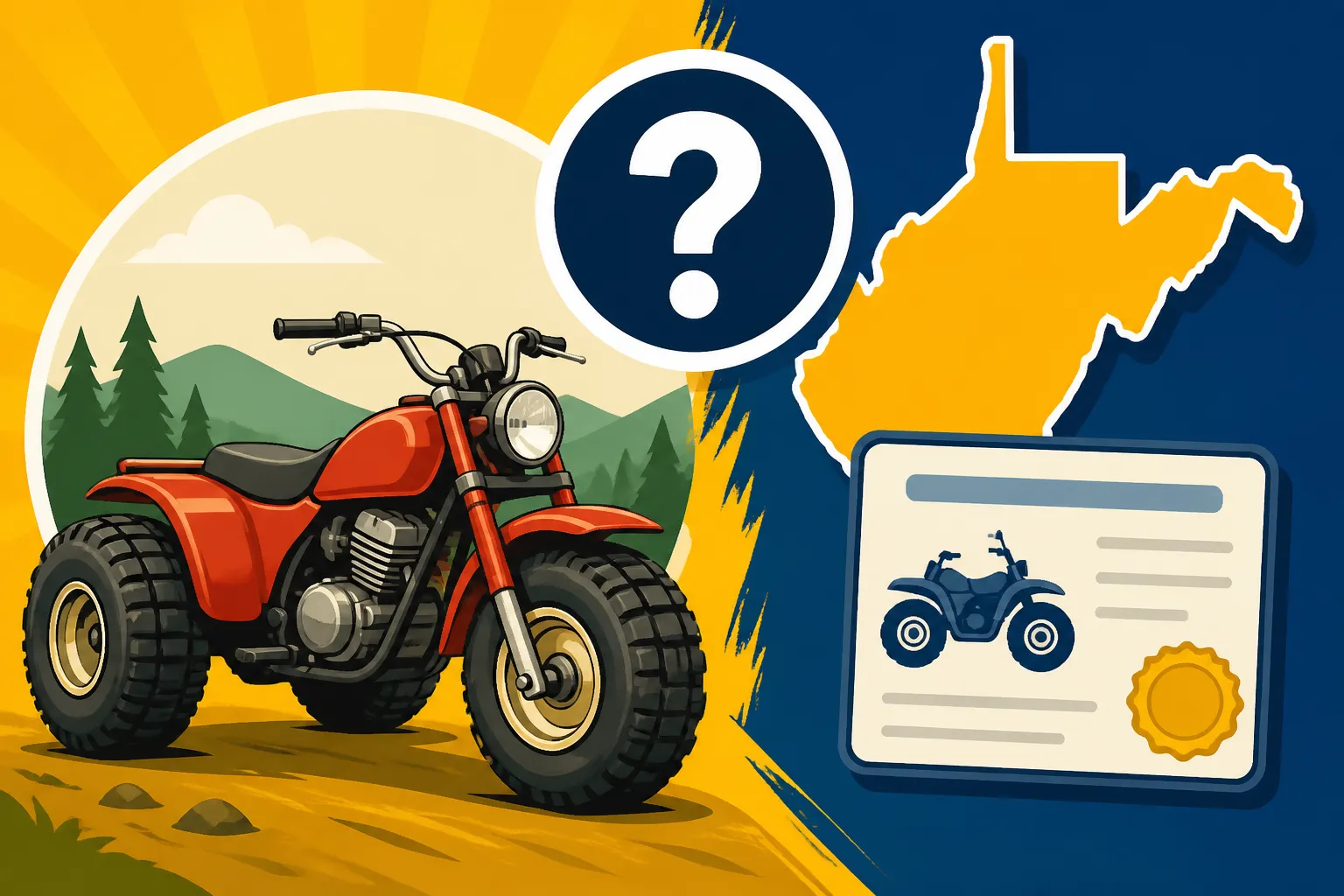
Do Old Three-Wheelers Need a West Virginia Title?
Oh, the classic three-wheeler! These machines hold a special place in the hearts of many riders, evoking memories of simpler times and trailblazing fun. But when it comes to the practicalities of ownership here in West Virginia, especially regarding titles, things can get mighty confusing. You might have inherited one from a family member, stumbled upon a gem at a yard sale, or perhaps you've been riding the same one since forever and suddenly hear whispers about new title requirements. This guide is here to cut through the confusion, explaining exactly when and why your cherished old three-wheeler might need a West Virginia title, and what steps you can take to make sure you're riding legally and responsibly.
The Historical Context of West Virginia ATV Titling
When three-wheelers were at their peak popularity, especially back in the 70s and early 80s, the concept of titling every single off-road machine simply didn't exist in the same way it does today. Laws evolve, and what was once common practice can now be a source of real headache for owners. It's not just about the age of the machine; it's about the laws that were (or weren't) in place when it was manufactured and what those laws became later.
Why Three-Wheelers Pose a Unique Challenge
Three-wheelers truly are a unique beast in the world of West Virginia ATV regulations. For a good number of years, they were the go-to off-road machine, a precursor to the modern four-wheeled ATV. Then, due to safety concerns and a voluntary manufacturer ban, production ceased. This means most three-wheelers out there are, by definition, "old." This age often puts them in a tricky spot legally, especially since many original owners never received a formal title because they simply weren't required at the time of purchase.
The perception often is that because they're old, they're "grandfathered in" and exempt from any current rules. While there's a kernel of truth to that for some specific scenarios, it's not a blanket exemption. The state has implemented rules over the years that impact these machines, even if they're vintage. It's a frustrating reality for owners who've enjoyed their machines for decades without a second thought about a piece of paper. The shift in manufacturing and safety standards also plays a role; these aren't just old ATVs, they represent a distinct chapter in off-road vehicle history.
West Virginia's Key Titling Date for ATVs
The critical date to remember for West Virginia ATV titling, and thus for most three-wheelers, is January 1, 1989. This is the date the state legislature set for when manufacturers were first required to issue a certificate of origin for all-terrain vehicles sold in the state. If your three-wheeler was manufactured for sale on or after this date, it absolutely needs a West Virginia title, regardless of how you plan to use it. This rule applies even if you bought it used years later or if it sat in a barn for a decade before you found it.
For machines manufactured before January 1, 1989, there's a specific nuance that can provide an exemption, but it's not without its conditions. This distinction helps separate truly vintage machines from those that fall under more contemporary regulations. It's a different situation than the [West Virginia UTV Title Rules Since 2010], which brought side-by-sides under the titling umbrella much more recently. Understanding this cutoff is your first step in determining your three-wheeler's title status.
Applying West Virginia Title Rules to an Old Three-Wheeler
So, you've got your three-wheeler, and you're wondering where it stands with the state. The answer largely hinges on that crucial 1989 date and how the machine has been used. It's not always straightforward, and many owners find themselves scratching their heads trying to apply modern regulations to a machine that predates them.
The "Pre-1989" Exemption for Off-Road Use
Here's where many old three-wheelers find a bit of relief. If your three-wheeler was manufactured before January 1, 1989, and it has been used exclusively off-road, meaning it has never been registered, titled, or operated on public roads in West Virginia or any other state, then it generally does not need a West Virginia title. This exemption is primarily designed for those classic machines that have always stayed on private land, trails, or closed courses.
However, the "exclusively off-road" part is critical. If your three-wheeler was, at any point, titled or registered for road use, even in another state, or if it was ever issued a Special Purpose Vehicle (SPV) plate, that exemption might not apply. For most three-wheeler enthusiasts, their machines have indeed lived a purely off-road life, making them eligible for this specific waiver. This is a key point to understand, especially if you're riding on private property and not venturing onto public roads or managed trail systems. You might also want to read about [Titling an ATV in West Virginia Without the Previous Owner] if you don't have a clear history of your machine's use.
When a Title IS Required for a Three-Wheeler
Even for older three-wheelers, there are clear-cut situations where a title becomes mandatory:
- Manufactured Post-1989: As mentioned, if your three-wheeler rolled off the assembly line on or after January 1, 1989, it requires a title. This might be rare for three-wheelers given their production history, but it's a hard and fast rule.
- Street-Legal Conversion: If you've modified your three-wheeler to be street-legal and intend to apply for a [West Virginia's Street-Legal Special Purpose Vehicle Plate], you will absolutely need a title. The DMV can't issue a plate for a vehicle without a proper title. This is less common for three-wheelers, but some dedicated enthusiasts do convert them for limited road use.
- Out-of-State Title or Registration: If your three-wheeler was previously titled or registered in another state, even if it's pre-1989, West Virginia will generally require you to obtain a new West Virginia title when you move here. This ensures a clear chain of ownership within the state's system. More details can be found in [West Virginia Title Rules for Out-of-State Machines].
The crucial takeaway is the manufacture date and the intended use. If there's any ambiguity or if you plan on using it in a way that involves public roadways, getting it titled is the safest and most legally compliant path.
Proving Ownership for Untitled Three-Wheelers
One of the biggest hurdles for owners of old, untitled three-wheelers is proving ownership. Unlike a newer machine that comes with a certificate of origin or a clear title, these vintage beauties often come with nothing more than a handshake and a faded bill of sale from decades ago. Or, even worse, no paperwork at all.
For machines falling under the pre-1989 off-road exemption, having a solid [West Virginia ATV Bill of Sale: What Belongs in It] is still paramount. This document, signed by both buyer and seller (even if it was years ago), acts as your proof of ownership. If you're selling it, the buyer will certainly want to see this. If you’re the current owner and don’t have one, you might need to try and get one from the person you bought it from, if possible. Even if it's a simple, handwritten document, it's better than nothing. Many people use reliable templates from services like LawDepot to ensure all the necessary information is included.
In cases where you have absolutely no paperwork, you might be asked to provide other forms of proof, such as old registration cards (if it was ever registered), maintenance records in your name, or even sworn affidavits from previous owners. A VIN inspection might also be required by the DMV to confirm the machine's identity and ensure it's not stolen. It's a good idea to read up on [VIN Inspection Before a West Virginia Title] to prepare for this. The more documentation you can gather, even if informal, the stronger your case for ownership.
Navigating the Titling Process for an Older Machine
So, you've determined your three-wheeler actually needs a title, or you simply want one for peace of mind. The process can feel daunting, especially with an older machine where the typical paperwork might be missing. Don't worry, it's a path many West Virginia riders have walked before.
Gathering Your Documentation
This is often the most challenging part for vintage three-wheelers. You'll need to present a clear chain of ownership to the West Virginia DMV. Here’s a breakdown of what you'll typically need and what to do if you don't have it:
- Bill of Sale: This is your primary proof of purchase. If you bought it recently, make sure it’s comprehensive, including the buyer and seller names, addresses, date, purchase price, and a detailed description of the three-wheeler, including the VIN. If you're drawing one up now for a past transaction, make it as complete as possible. LawDepot offers excellent templates that ensure you cover all legal bases. For more details, see [West Virginia ATV Bill of Sale: What Belongs in It].
- Previous Title/Registration: If the machine was ever titled in West Virginia or another state, bring the physical title or proof of prior registration. This establishes a clean transfer of ownership.
- Manufacturer's Certificate of Origin (MCO): Highly unlikely for a true "old" three-wheeler, but if by some miracle you have one, bring it.
- Proof of Identity: Your valid driver's license or state ID.
- West Virginia Residency Proof: Utility bill, lease agreement, etc.
- VIN Verification: Sometimes required for older machines or those without previous titles. A law enforcement officer or DMV-authorized inspector will verify the VIN on the machine matches your paperwork. You can learn more by checking [Finding the VIN Stamp on an ATV Frame].
If you're missing critical pieces of this puzzle, particularly the previous title or bill of sale from a long-ago seller who's now unreachable, don't despair entirely. This is where the DMV might require extra steps, like a bonded title, to establish ownership.
The Bonded Title Option for Missing Paperwork
When you have an old three-wheeler, and the paper trail has gone cold – no previous title, no detailed bill of sale, and the prior owner is a ghost – West Virginia's DMV may offer the option of a bonded title. This is essentially an indemnity bond you purchase from a surety company. It assures the state (and any potential future claimant) that if someone else proves legitimate ownership of the vehicle, they will be compensated.
The bonded title process is more involved:
- DMV Application: You'll first apply at the DMV, explaining your situation and lack of documentation. They will determine if a bonded title is appropriate for your situation.
- VIN Inspection: A law enforcement officer will need to inspect your three-wheeler to verify its VIN and confirm it's not reported as stolen. [Checking a Used Quad Against Stolen Records] is always a good idea before buying or attempting to title.
- Appraisal: The DMV may require an appraisal of the three-wheeler's value.
- Surety Bond: You'll then purchase a surety bond, typically for 1.5 to 2 times the appraised value of the three-wheeler. This bond generally lasts for three years.
- Title Issuance: Once all these steps are complete and the DMV is satisfied, they can issue you a bonded title. After the bond period expires (usually three years) and no claims have been made, you can usually apply for a standard title.
This option is a lifesaver for those truly "lost title" situations, allowing you to eventually gain legal, transferable ownership of your vintage machine. Delve deeper into the requirements by searching for [Bonded Title for an ATV in West Virginia].
What to Expect at the DMV
Once you've gathered all your documents, a trip to your local West Virginia DMV office is next. Expect to spend some time there, especially since titling an older, potentially untitled three-wheeler isn't a simple, cookie-cutter transaction.
- Forms: You'll need to fill out the [West Virginia ATV Title Application Form] (Form DMV-TMV-1). Make sure it's completely and accurately filled out before you even get in line.
- Presentation: Present all your gathered documentation, including your bill of sale, any previous titles, proof of identity, and residency.
- Fees: Be prepared to pay the West Virginia ATV title fee and any applicable sales tax. The sales tax applies to the purchase price, even if it's an older machine. For family transfers or gifts, there might be exemptions or different calculation methods. [West Virginia Sales Tax on an ATV Purchase] explains this further.
- Patience: The clerk might need to consult with a supervisor or spend extra time verifying your documents, especially for unique cases like older three-wheelers. Having all your ducks in a row and a clear explanation of your ownership history will help immensely.
It's always a good idea to call ahead to your local [West Virginia DMV Offices That Handle ATV Titles] to confirm their specific requirements for older, potentially untitled machines. This can save you a wasted trip and ensure you bring all the necessary [Documents to Bring for a West Virginia ATV Title].
Here's a quick comparison of the titling requirements based on the critical 1989 date:
| Feature | Three-Wheeler Manufactured Before Jan 1, 1989 (Off-Road Use Only) | Three-Wheeler Manufactured On or After Jan 1, 1989 (or Any Road Use) |
|---|---|---|
| Title Required? | Generally No, if exclusively off-road and never titled/registered | Yes, a West Virginia title is mandatory |
| Primary Proof of Ownership | Bill of Sale (robust and detailed is best) | Certificate of Origin or Prior Title |
| Common Ownership Challenge | Lack of historical paperwork, no current contact for seller | Lost prior title, incomplete bill of sale |
| Potential Solution for Missing Paperwork | Affidavit of Ownership, Bonded Title (if DMV allows) | Bonded Title (standard procedure for lost titles) |
| Road Legal Option | Would require titling as SPV (if eligible) | Would require titling as SPV (if eligible) |
Implications of an Untitled Three-Wheeler in West Virginia
You might think, "It's an old machine, I just ride it on my farm, why bother with a title?" While the pre-1989 off-road exemption does exist, choosing to keep a machine untitled when it should be titled, or even when it's exempt but you intend to sell it, can lead to a host of problems.
Legalities of Riding Without a Title
If your three-wheeler falls into a category that requires a West Virginia title (e.g., manufactured post-1989, or you intend to ride it on public roads), operating it without that title can lead to legal issues. While deputies in remote areas might be lenient with truly ancient farm machines, legally speaking, the state requires a title for such vehicles for proper identification and ownership.
Being caught on a public road or a managed trail system (like Hatfield-McCoy) with an untitled machine that should be titled could result in fines or other [Penalties for an Untitled ATV in West Virginia]. Even if it's strictly off-road, a lack of official documentation can complicate things if your machine is ever stolen or involved in an accident. Without a clear title, proving your ownership to law enforcement or an insurance company becomes significantly harder. This isn't about scaring you, but about being realistic about potential administrative headaches and legal challenges.
Selling, Gifting, or Transferring an Old Three-Wheeler
This is where having a title, even for an old three-wheeler, truly shines. While it's technically possible to sell an ATV without a title in West Virginia if it qualifies for the pre-1989 off-road exemption, it significantly limits your pool of potential buyers and can cause apprehension. Most buyers today expect a title for any significant vehicle purchase, as it provides undeniable proof of ownership and a clear transfer path.
- Selling: If your three-wheeler has a title, the process is simple: sign over the title, provide a bill of sale (consider using LawDepot for a professional-looking one), and the buyer can easily title it in their name. Without a title, you're relying on just a bill of sale, which might suffice for the pre-1989 exemption, but it places a greater burden of trust on the buyer. Read [Selling an ATV in West Virginia Without Trouble] for a smoother process.
- Gifting: Similarly, [Gifting an ATV in West Virginia and the Title That Follows] is much easier with a title. The gifted party can then transfer it into their name. Without a title, the gift recipient will face the same hurdles you did in proving ownership to the DMV, potentially needing to pursue a bonded title.
- Transferring After Death: If you're [Inheriting an ATV in West Virginia], having a title makes the estate process far more straightforward. Without it, the executor will have to gather all available ownership documents and present them, potentially needing small estate paperwork or other affidavits to transfer ownership.
Ultimately, a title is the gold standard for proving ownership and facilitates any future transactions, making it a valuable asset even for a machine that predates modern regulations.
Insuring an Older Three-Wheeler
While having a title isn't always a strict prerequisite for getting [Insuring an ATV in West Virginia], it can certainly make the process smoother and potentially influence the types of coverage available. Many insurance companies prefer to see a clear title as proof of ownership before issuing a comprehensive policy.
Even if your three-wheeler is exempt from titling due to its age and off-road use, it's still a good idea to consider insurance. Accidents happen, and liability coverage can protect you if someone is injured while riding your machine or if you damage someone else's property. Discuss your specific situation with an insurance agent, explaining that your three-wheeler is an older model that may be exempt from titling, but you still wish to insure it. They can guide you through the options.
Disclaimer
This article is for general informational purposes only and does not constitute professional advice. Laws, prices and regulations vary by location and change over time. Consult a qualified professional for guidance on your specific situation.