Hatfield-McCoy Single Track for Dirt Bikes
Dirt-bike riders often arrive at Hatfield-McCoy expecting every trail to feel like narrow single track, then discover that much of the network is designed for wider machines. The key is matching your bike and riding style to a system with suitable routes, checking current access before unloading, and planning for the terrain, rules, and practical demands of a West Virginia ride.
What Hatfield-McCoy single track is like
Single track is not the same as a narrow ATV trail
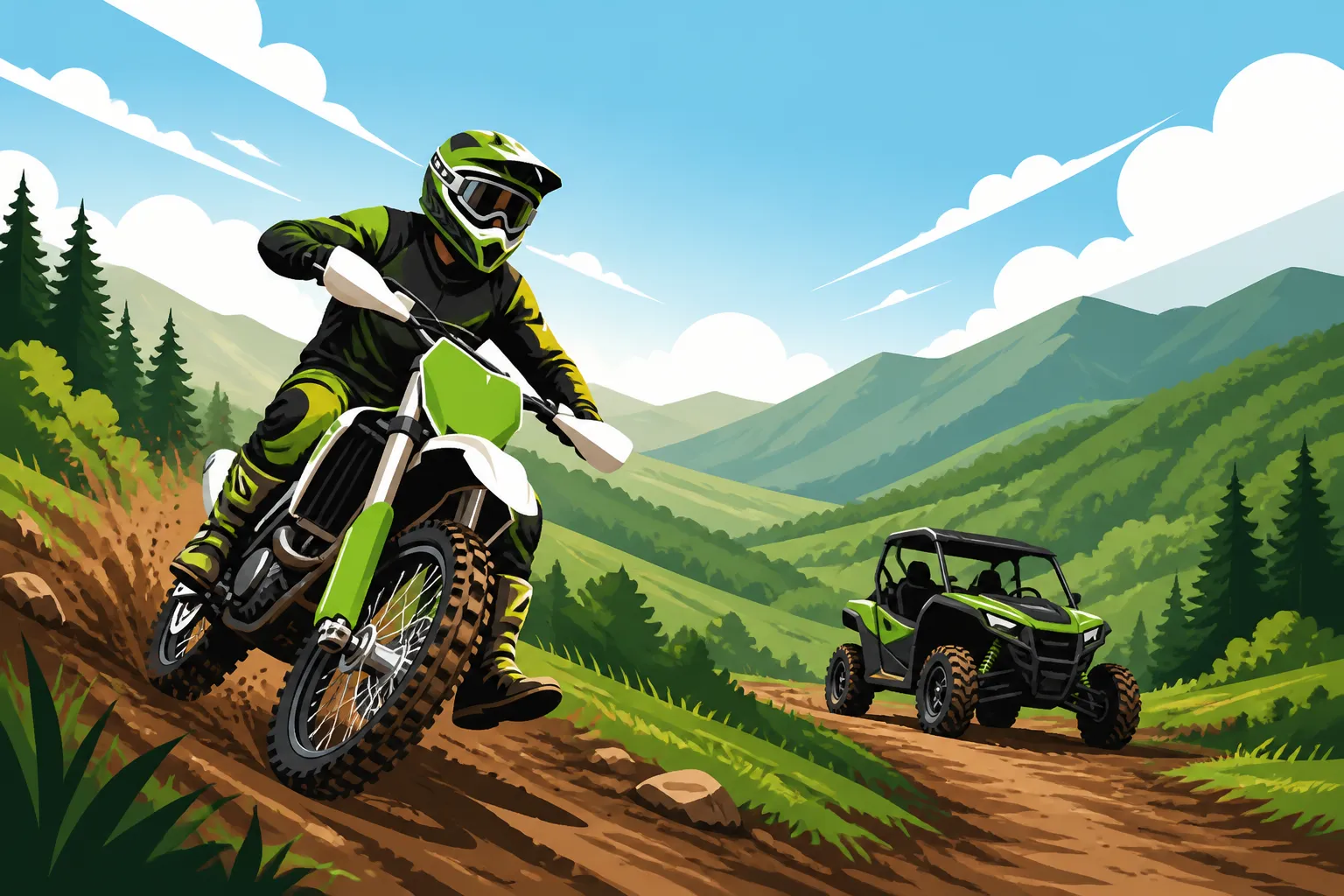
Single track generally means a route intended for one motorcycle-width machine, often with limited room to turn around or pass. It can feel very different from a broad trail built to accommodate an ATV or side-by-side. A narrow corridor may ask for careful line choice, balance, and steady control, even when the ground looks simple from the trailhead.
At Hatfield-McCoy, the network includes different kinds of riding routes, and not every marked trail is single track. Some routes are wide enough for larger machines; others may be more suited to motorcycles. Don’t assume that a path is legal for your dirt bike just because it looks narrow, or that every dirt-bike-friendly route offers the tight, technical experience you’re seeking. Confirm the permitted machine type and route status before you ride.
That distinction matters for safety as well as access. A dirt bike can fit through spaces where a UTV cannot, but that does not mean it is allowed to use every footpath, connector, or unofficial line. Stay on marked routes and use maps or trail signs to confirm you’re where you’re supposed to be. [Dirt Bike Only Trails at Hatfield-McCoy] is a useful companion topic when you’re sorting out route access.
Set expectations for West Virginia terrain
The riding experience can change quickly as the terrain shifts between rocky sections, roots, loose soil, mud, and steep grades. A trail that feels manageable on dry ground may demand much more attention after rain, when tires spin more easily and braking takes longer. On a narrow route, there may be little room to avoid a rut or adjust your line at the last moment.
That variety is part of the appeal, but it makes pacing important. Instead of trying to keep up with the fastest rider in your group, choose a speed that leaves room to react. On a climb, look beyond the front wheel and settle into a controlled line. On a descent, resist the urge to grab the brakes abruptly; smooth inputs help keep the bike settled on uneven ground.
If your usual rides are on open desert or broad forest roads, give yourself time to adapt. A West Virginia single-track route may feel more enclosed, with less visibility around turns and more frequent changes in elevation. For a broader look at surface and difficulty, see [West Virginia Trail Difficulty and How It Is Marked] and [Mud, Rock and Creek Crossings on West Virginia Trails].
Choosing a system and route for a dirt bike
Start with the official access information
Before choosing a trail system, check whether the specific routes you want to ride allow dirt bikes. A system name alone does not tell you what every individual trail permits, and routes may have different widths, uses, closures, or access conditions. Read current official trail information, then confirm details at the trailhead before starting.
This is especially useful when planning around towns such as Williamson, Matewan, Gilbert, or Logan. The nearest trailhead, lodging, fuel stop, and access route can shape your day just as much as the trail itself. If the route you hoped to ride is closed or unsuitable, knowing the alternatives in advance can save you from spending half the morning searching for a replacement.
Use an app such as onX Offroad as a navigation aid if it helps you understand your route and location, but don’t treat any third-party map as permission to ride. Compare what you see on your device with official trail information and posted signs. Download or prepare the map information you’ll need before you lose reliable cell service. For system overviews, see [West Virginia's Thirteen Hatfield-McCoy Trail Systems] and [Hatfield-McCoy Trailheads and Where to Start].
Match trail difficulty to the least experienced rider
A group ride is only as enjoyable as its least prepared rider feels comfortable making it. If one person is new to single track, build the plan around that rider rather than picking a route to impress the most experienced person. A difficult trail can quickly stop being fun when someone is exhausted, anxious, or unsure how to handle a rocky climb.
Talk through the plan before the bikes are unloaded. Ask how much technical riding everyone has done, how comfortable they are with hills, and whether they have experience riding in mud or over loose rock. Agree that anyone can ask to slow down or stop without being teased. On single track, small differences in ability can grow into long delays if the group gets spread out or a rider becomes stuck on a difficult feature.
A sensible approach is to select a manageable route first, then decide whether to add more challenging riding once everyone has found their rhythm. Trail colors and ratings can help, but they are not a promise that every section will feel easy in every condition. [Hatfield-McCoy Trail Ratings Explained] and [Trails Suited to a First-Time Rider] can help you think through the choice.
| Riding situation | What to check | A practical plan |
|---|---|---|
| First single-track ride | Motorcycle access, route difficulty, and current trail status | Choose a manageable route and leave time to stop |
| Mixed-experience group | The least experienced rider’s comfort and pace | Agree on regrouping points and a no-pressure turnaround option |
| Wet or recently rainy conditions | Mud, drainage, ruts, and closure notices | Shorten the plan and avoid pushing through uncertain sections |
| Limited cell service | Offline map access and a clear meeting point | Share the route plan before leaving the trailhead |
| Unfamiliar system | Trailhead location, permitted routes, and nearby services | Confirm access and logistics before unloading |
Preparing your dirt bike and gear
Check the bike before the ride
A quick inspection at the truck is much easier than troubleshooting a problem on a steep or remote section. Check tire condition and pressure, brakes, throttle return, clutch operation, chain tension, controls, and visible leaks. Make sure anything that could shake loose is secured. If the bike has been sitting, take a few minutes to confirm it starts reliably and runs as expected before heading onto the trail.
Pay attention to the parts that matter most on uneven ground. A loose chain, soft brake lever, damaged handguard, or worn tire can turn an ordinary section into a tiring one. Bring the tools and basic repair items you know how to use, such as a suitable wrench, tire-repair supplies, and a way to secure a broken part temporarily. What makes sense depends on the bike, your route, and whether you’re riding alone or with a group.
Don’t use a trail ride as the first test of a recent repair or setup change. If you’ve adjusted suspension, changed controls, fitted new tires, or worked on the clutch, try the bike in a safe, familiar area first. A short shakedown can reveal a problem before you’re committed to a narrow route far from the truck.
Pack for a full day, not just the forecast
West Virginia weather and trail conditions can make a ride feel much longer than expected. Wear a properly fitting helmet and protective gear suited to off-road riding, including boots, gloves, eye protection, and clothing that can handle brush and changing conditions. Bring a layer for cooler weather and a way to keep essential items dry. Gear that feels like overkill at the parking area can feel very welcome when the temperature drops or the trail gets wet.
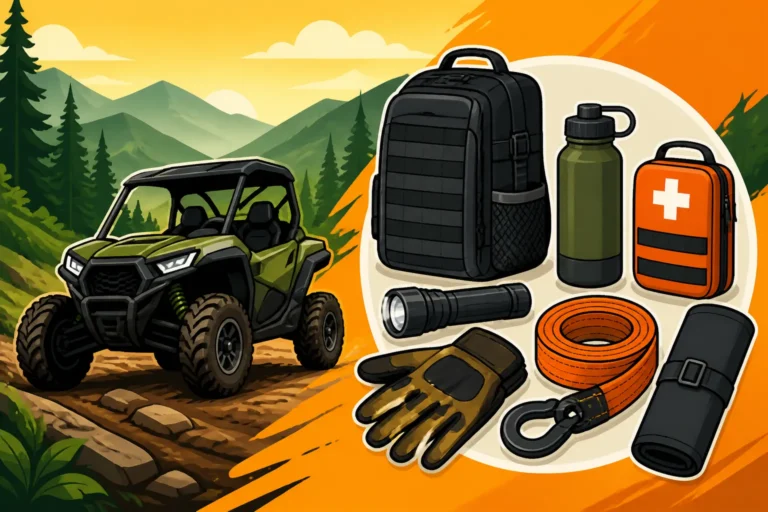
Carry water and snacks where you can reach them without unpacking everything. A compact first-aid kit, basic tools, phone, and map access are also sensible. Think about how you’ll carry those items securely on a dirt bike; a loose bag can shift, snag, or distract you. Keep the load modest enough that it doesn’t interfere with movement or control.
Before leaving, tell someone where you intend to ride and when you expect to return. Agree on what they should do if you miss that check-in. This small habit matters even when you’re riding with friends: groups can become separated, a bike can break down, and a minor injury can slow the return. [What to Carry on a Remote West Virginia Ride] and [Riding Alone on a Hatfield-McCoy Trail] cover related planning considerations.
Riding single track safely and responsibly
Control your pace and ride within sight
On a narrow trail, visibility can be limited by trees, bends, changes in elevation, and vegetation. Keep enough space to stop for a rider ahead, an unexpected obstacle, or a trail user coming from the opposite direction. Going fast on a section you can’t see through leaves little room to react, even if the surface looks familiar.
When riding in a group, keep a pace that allows everyone to stay composed. Agree on how the lead rider will communicate a hazard and how the group will regroup after a turn or a difficult section. Avoid stopping in the middle of a blind corner or on the steepest part of a climb. If you need to pull over, choose a spot where other riders can see you and get around safely.
Single track can make passing awkward. Don’t pressure a slower rider from directly behind, and don’t assume there will be a safe place to overtake. Give them room, communicate calmly when appropriate, and wait for a suitable wider spot. If you’re the rider being followed, pull over only when you can do so without blocking the trail or putting yourself at risk.
Protect the trail and respect boundaries
Stay on the marked route, even when a shortcut looks tempting. Cutting a corner can widen the trail, damage vegetation, and create a confusing new line for the next rider. Riding around a barrier or through a closed section can also create problems beyond trail wear, including trespass or loss of access. A closed gate or sign is a reason to stop and reassess, not an invitation to find a way around it.
After rain, avoid spinning the rear tire unnecessarily or powering through a muddy section when you can’t see the surface. A deep rut can hold water, hide rocks, or become difficult for the next rider to cross. If conditions are poor, choose a different route or end the ride early rather than turning one muddy stretch into a damaged trail.
Keep noise and roadside behavior considerate when passing near homes, businesses, or trail towns. Towns such as Gilbert and Matewan are part of the broader riding experience, and respectful conduct helps preserve good relationships between riders and residents. For more on shared-route etiquette, read [West Virginia Trail Etiquette on Shared Routes] and [Trail Rules Every West Virginia Rider Signs Up To].
Planning a smooth single-track day
Sort out permits, maps, and trail status before travel
Make the administrative checks part of the trip plan rather than something you try to solve at the trailhead. Find out what permit or other requirements apply to your ride, whether they differ by rider or machine, and where you need to display any required documentation. Confirm the details with the appropriate official trail resources before leaving home, especially if you’re bringing a bike from another state.
Check for closures and access changes close to the day of your ride. A route that appeared in an older map, a saved track, or a previous trip may not be open now. Use official updates and signs as your authority. If an app such as onX Offroad is part of your navigation setup, compare its information with current posted guidance rather than assuming the map reflects every temporary change.
Keep a backup plan. Pick an alternate system or a shorter route in case weather, a closure, or a mechanical problem changes your day. It’s also wise to share the plan with everyone in the group so no one heads off expecting a different trailhead or return time. For permit-related planning, see [West Virginia's Hatfield-McCoy Trail Permit Explained] and [Checking West Virginia Trail Status Before You Drive].
Make logistics part of the route choice
A great trail plan can still be frustrating if you arrive late, park in the wrong place, or discover that your vehicle and trailer don’t fit comfortably at the access point. Check where you’re supposed to park, how you’ll unload, and whether there are restrictions on trailers or overnight parking. If you’re riding with a group, decide who is carrying tools, water, and emergency supplies before vehicles separate.
Plan fuel and food around the day rather than assuming you’ll find them exactly when needed. Some rides take longer than expected because the group stops frequently or encounters slow sections. Keep enough fuel for your intended route and a reasonable margin, and avoid relying on a last-minute stop without confirming it fits your plan. [Fuel and Food Along West Virginia Trails] can help with the broader logistics of a trail visit.
Finally, set a realistic end time. A tiring final section ridden in a hurry is a common way for a good day to end badly. Leave room for breaks, regrouping, and minor delays, and make sure everyone knows where to meet if the group gets separated. If the route turns out to be more demanding than expected, turning back is a sound riding decision—not a failed trip.
Disclaimer
This article is for general informational purposes only and does not constitute professional advice. Laws, prices and regulations vary by location and change over time. Consult a qualified professional for guidance on your specific situation.