West Virginia Trail Etiquette on Shared Routes
Shared routes in West Virginia can put ATVs and UTVs alongside hikers, cyclists, horseback riders, and other motorized traffic. That mix is part of the fun—and a common source of close calls, dust, noise, and hard feelings. This guide explains how to share trails thoughtfully, avoid predictable conflicts, and leave routes in good shape for the next group.
Read the Route Before You Ride
Confirm who is allowed on the route
“Shared route” does not automatically mean every kind of user can travel every segment. Access can vary between managed trail systems, public roads, forest roads, private roads, and connections across private land. A route that welcomes OHVs may still restrict hikers, bikes, or horses in certain places, and a road open to local traffic is not necessarily an open riding trail.
Before setting out, check the rules for the specific area and follow signs, gates, and posted notices. In the Hatfield-McCoy trail system, for example, riders should stay on designated routes and follow the rules that apply to that managed system. Elsewhere, local land managers or landowners may set different access conditions. A map line alone does not establish permission to ride.
This is especially important when a route connects a trail system to a town or crosses land with changing ownership. If you are uncertain whether a segment is open to your machine, stop and confirm rather than assuming another rider’s tracks mean it is legal. For more about how access and trail types can differ, see [West Virginia Trail Etiquette on Shared Routes] and [West Virginia Trail Systems You Can Link in One Day].
Check signs, closures, and current route information
Trail signs are not decoration. They may identify permitted users, one-way travel, speed expectations, seasonal restrictions, hazards, or a closure. Follow what is posted at the trailhead and along the route, even if the sign conflicts with an older screenshot, a ride report, or a route someone shared in a group chat.
Closures can happen because of erosion, maintenance, weather, landowner requests, or safety concerns. A familiar route can change, and a trail that was open on your last visit may not be open today. Check the official information for the trail system before leaving home, then pay attention to notices at the access point. If a gate is closed, do not ride around it or create a new path beside it.
A navigation app can help you understand where you are, but it should not replace permission or current trail rules. If you use onX Offroad, review the route details and available map information before the ride, and save the material you may need while you have service. Treat the app as a planning aid—not as proof that every line shown is open to your vehicle.
Plan for limited service and uncertain terrain
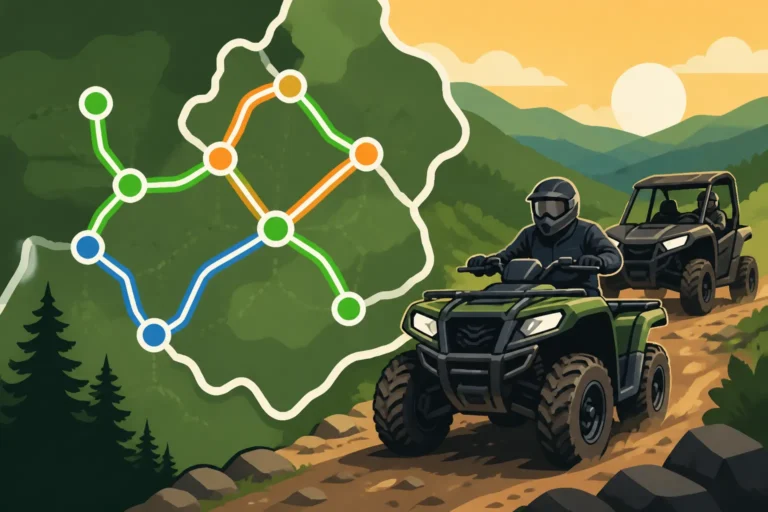
In the mountains, cell reception can be unreliable, particularly in narrow hollows, wooded areas, or remote parts of a route. Downloading available maps ahead of time, carrying a paper map, and agreeing on a regrouping point can make a big difference if riders become separated. Do not wait until your group has lost service to decide how it will navigate.
Look at the ride as a whole, not just the first stretch. Consider fuel, daylight, the experience level of everyone in the group, and whether the route includes narrow or exposed sections. A route that looks simple on a screen may feel very different when it is steep, muddy, crowded, or shared with oncoming traffic.
Before you go, set a simple plan: who leads, who sweeps behind the group, and where everyone will stop if the line breaks up. Tell someone who is not riding where you expect to be and when you plan to return. These small preparations help keep a minor navigation problem from turning into a stressful search.
Share Space Safely With Other Trail Users
Slow down early and make your presence clear
When you approach another user, ease off the throttle well before you reach them. A sudden burst of engine noise or a cloud of dust can be startling, especially for a hiker, cyclist, or horse. Slow enough to stay in control and to leave room for an unexpected move. On a tight bend or over a blind rise, assume someone may be coming toward you until you can see clearly.
Give others time to notice you. A calm greeting, a brief pause, or a gentle engine note can be more courteous than accelerating toward them and braking at the last moment. Avoid revving, spinning the tires, or driving close behind someone to make them move. If the route is narrow, stop where you have enough visibility and space for a safe pass.
Use extra care around people who may not hear you approaching, such as someone wearing headphones, a child, or a person focused on uneven footing. Do not assume they know which way you intend to pass. Make your approach predictable, allow them to acknowledge you, and leave a comfortable gap.
Pass with patience and plenty of room
A pass should feel uneventful. Wait until you can see enough of the route to pass safely, then use a low, steady speed. Do not squeeze between another user and a drop-off, ditch, tree, or unstable edge. If there is no safe passing space, wait for a wider section rather than pressuring the other person to step aside.
Horses deserve especially cautious treatment. A horse may react to a machine’s sound, movement, or exhaust even if its rider seems relaxed. Stop well back, reduce noise, and speak with the rider before moving closer. Follow their directions about whether to remain stopped, pass slowly, or give them time to move to a safer place. Never assume a horse is accustomed to ATVs simply because the route is familiar to local riders.
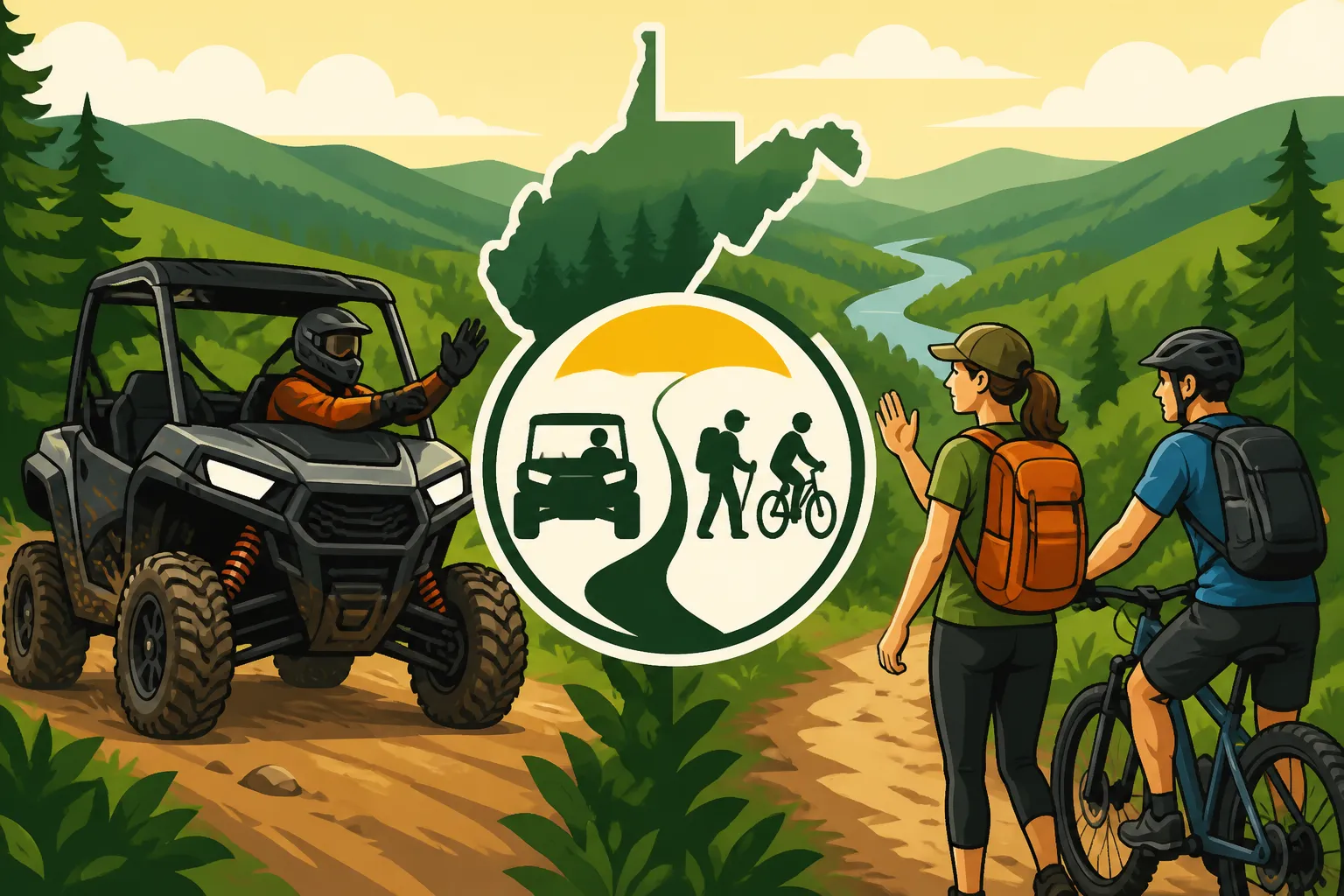
When passing hikers or cyclists, make the interaction easy for them. A short “Coming through when you’re ready” is often more useful than expecting them to guess what you plan to do. If they step aside, thank them and pass slowly. If they do not have a safe place to move, wait. Being in a motorized vehicle does not mean you should claim the whole route.
Manage oncoming traffic and narrow sections
On a narrow trail, meeting another machine can be awkward, especially where a bank, ditch, or steep slope limits room to maneuver. Slow down as soon as you spot the other vehicle. Make eye contact or use a clear hand signal if appropriate, then agree on who will move to the wider spot. Avoid backing up blindly around a bend or onto unstable ground.
If one machine must reverse, the driver should move slowly and use a spotter when available. Passengers should stay seated or move only when the machine is stopped and the driver agrees. Do not ask someone to stand directly behind a vehicle that may roll or slide. When there is not enough space to pass safely, one party may need to return to a wider section.
Groups should keep enough distance between machines to avoid bunching up at tight crossings. The first rider should not enter a narrow section until there is room for the rest of the group to follow without blocking opposing traffic. Keep a rider’s view of the trail open, and leave space for other users to pass or regroup.
Ride Considerately Around Machines and Groups
Keep speed and dust under control
A speed that feels comfortable on an empty, familiar trail may be too fast when other users are nearby. Reduce speed around blind corners, trailheads, busy intersections, homes, and places where people may enter the route unexpectedly. Stay within posted limits and any rules set by the trail system or local authority. If visibility is poor, slowing down is a safety measure—not a suggestion to ride by feel.
Dust can make a shared route miserable and dangerous. Leave a generous following distance, particularly on dry stretches, and avoid accelerating hard near people, buildings, campsites, or waiting groups. If someone behind you is caught in your dust, create space when you can do so safely. On a narrow section, do not pull off into vegetation or private land just to let another vehicle pass.
Noise matters, too. Keep exhaust systems in good working order and avoid unnecessary revving, especially near homes and trail communities. A loud machine can disrupt residents and make a reasonable riding area feel unwelcome. Respecting quiet areas and slowing through settled places helps protect access for everyone.
Keep groups organized and easy to pass
A large group can unintentionally take over a shared route. Agree on a leader and a sweep rider, use a manageable formation, and leave enough space for other users to pass when the terrain allows. Avoid riding side by side on a narrow trail, stopping across an intersection, or spreading out so far that the group becomes difficult to supervise.
Plan stops at wide, stable locations where the group can pull completely clear of the route. A trailhead, designated turnout, or broad staging area is generally better than a blind corner or narrow bridge approach. Keep the group together without blocking access for other riders, emergency vehicles, or local traffic.
Before a ride, make sure everyone understands the basic signals and the plan for regrouping. A simple rule—such as stopping at the next safe turnout if someone falls behind—can prevent riders from making hurried decisions. If someone in the group is inexperienced, keep the pace comfortable and do not pressure them to keep up by riding beyond their ability.
| Situation | Considerate response | Avoid |
|---|---|---|
| Approaching hikers or cyclists | Slow early, announce yourself calmly, and pass only when there is room | Rushing up behind them or forcing them to move |
| Meeting horses | Stop at a safe distance and ask the rider what they need | Revving, crowding, or passing without warning |
| Oncoming machines on a narrow trail | Pause, communicate, and use a wider section to pass | Backing up blindly or squeezing past an edge |
| Riding in a group | Leave room, keep a clear leader and sweep rider, and stop off the route | Blocking intersections or bunching across the trail |
| Riding in dry conditions | Increase following distance and reduce acceleration | Tailgating through another rider’s dust |
| Finding a closed gate or signed restriction | Turn back and check the official route information | Going around the barrier or making a new track |
Handle intersections and road connections carefully
Intersections are natural pinch points. Slow down, look in every direction, and give other users room to move through. Do not stop in the center of a junction to check a phone or discuss the route. If your group needs to regroup, move to a place where waiting riders will not obstruct people coming from another direction.
A trail connection that reaches a public road brings different hazards and rules. Treat road crossings with care, follow signs and local requirements, and do not assume vehicles on the road can see you. A machine may be legal on one designated stretch and restricted on another, so confirm the rules for that specific connection. For related guidance, read [Where West Virginia Trail Connectors Cross a Public Road] and [West Virginia Rules for Riding Trail to Trail].
Town streets and community roads are also places where residents are living their everyday lives. Keep noise and speed down, watch for pedestrians and parked vehicles, and avoid blocking driveways or business access. Courtesy in these transition areas helps keep trail access welcome in places such as Gilbert, Man, and Matewan.
Protect the Trail and Respect the Land
Stay on the designated route
Riding off a marked trail can damage vegetation, loosen soil, widen the route, and create erosion that affects everyone. It can also take you onto land where you do not have permission to ride. If a trail is muddy, blocked by debris, or difficult to navigate, do not cut around the obstacle through the woods. Turn back or use an approved detour if one is posted.
Stay behind gates and barriers, and do not move signs to make a route more convenient. A short detour around a closure can become an unauthorized track that others follow. If you cannot tell where the route goes, stop and check rather than choosing the easiest-looking path.
Private land deserves particular care. Trail access may depend on landowner agreements, and riding beyond the marked corridor can undermine that permission. Keep to the designated route, leave gates as you found them, and do not enter yards, work areas, or side roads just because they appear connected to the trail.
Leave no trash and avoid damaging trail features
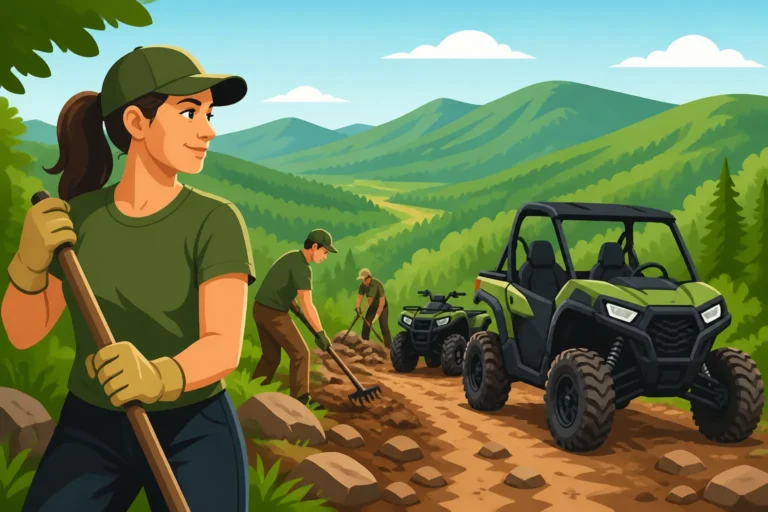
Pack out food wrappers, drink containers, broken parts, and anything else your group brings in. Do not leave trash beside a trail sign or assume someone else will collect it. If you see a small piece of litter and can safely pick it up, carrying it out helps keep the route pleasant for the next person.
Avoid digging ruts, spinning tires, or attempting repeated hill climbs that tear up the surface. A small damaged patch can grow quickly when water runs through it. Use the established route and ride within your abilities. If conditions are too slick or steep for a controlled pass, turn around rather than trying to force your way through.
Creeks, drainage areas, and soft shoulders are especially vulnerable. Do not create a new crossing or ride through vegetation to avoid a wet section unless the route specifically allows it. When a trail is muddy, ride smoothly and maintain enough distance to avoid throwing rocks or debris at the machine ahead.
Report hazards without creating new problems
A downed tree, damaged bridge, washout, or missing sign can put the next rider at risk. If you can do so safely, note the location and report the problem through the channel used by the trail manager or landowner. A clear description, nearby marker, and direction of travel are more useful than a vague message such as “trail is bad.”
Do not attempt repairs that could make the situation less safe or conflict with land-management plans. Moving a sign, cutting a tree, or building a bypass may seem helpful in the moment, but it can cause confusion or damage. If the route is blocked, turn around and notify the responsible manager.
For navigation, use the trail system’s official information alongside your own map tools. onX Offroad may help you keep track of your position where its map coverage is available, but verify route access with the appropriate trail authority. When reporting an issue, provide the trail name or system, the nearest junction or marker, and a concise description of what you encountered.
Make Courtesy Part of the Ride Plan
Set expectations before leaving the trailhead
A good group ride starts with a quick conversation before engines are running. Agree on pace, spacing, hand signals, regrouping locations, and what to do if someone needs to stop. Make sure every rider knows that the group will slow down near other users and will not pressure anyone to take a route or obstacle beyond their comfort level.
Check that each machine is suited to the route and that passengers understand how to ride safely. A passenger should know where to hold, when to stay seated, and why they should not step off while a machine is moving. If your group includes children or newer riders, plan a pace and route that leave room for questions and breaks rather than making them feel rushed.
It also helps to name one person who will communicate with other trail users if the group meets them in a tight spot. When everyone talks at once, confusion can grow. One calm voice can explain that the group is stopping, ask how the other party would like to pass, and keep the interaction respectful.
Respond well when a conflict happens
Even careful riders occasionally misread a situation. If someone is frustrated, stop somewhere safe, listen, and avoid arguing from the seat of a running machine. A brief apology and a change in behavior can defuse a tense encounter. Defensiveness, sarcasm, or revving the engine usually makes the problem worse.
If another user asks you to slow down or give them space, take the request seriously. You may not have noticed dust, noise, a frightened animal, or a narrow approach. If you believe a sign or access rule is being ignored, do not escalate the exchange or try to enforce it yourself. Note the location and report the concern through the relevant trail manager or local authority.
For a group, treat the incident as a chance to reset expectations. Move to a safe place, make sure everyone is okay, and agree on how to handle the next encounter. The goal is not to win an argument; it is to keep people safe and help preserve a route that depends on shared access.
Leave the route better for the next group
Before you leave a trailhead or turnout, check that no one has dropped gear, trash, or a tool. Confirm that every rider is accounted for and that your group has not blocked a gate or access lane. If you stopped for a repair, make sure loose parts and packaging come with you.
Courtesy also means being honest about what happened. If your group damaged a route or encountered a hazard, report it rather than hoping nobody notices. A clear report gives trail managers a better chance to address a problem before it causes an injury or a larger closure.
Shared trails work best when riders are predictable, patient, and attentive to the people around them. Check access, respect posted rules, slow down early, leave room to pass, and stay on the route. Those habits make a West Virginia ride safer while helping protect the relationships and land access that keep trails available.
Disclaimer
This article is for general informational purposes only and does not constitute professional advice. Laws, prices and regulations vary by location and change over time. Consult a qualified professional for guidance on your specific situation.