Cabwaylingo State Forest Riding Rules
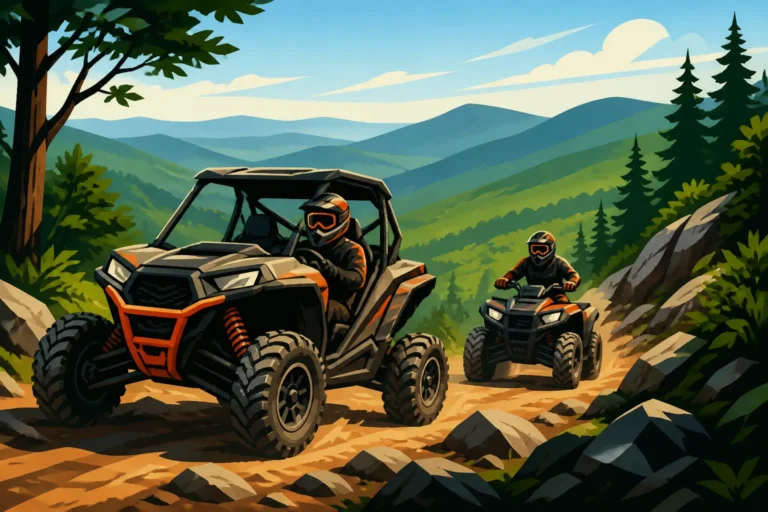
Cabwaylingo State Forest can feel wonderfully remote, but that also makes it easy to mistake a forest road, spur, or unsigned track for an open ATV route. This guide explains how to ride the designated trails responsibly, what to check before unloading, and how permits, trail signs, weather, and shared use affect your day.
Know where riding is allowed
Stay on designated Cabwaylingo trails
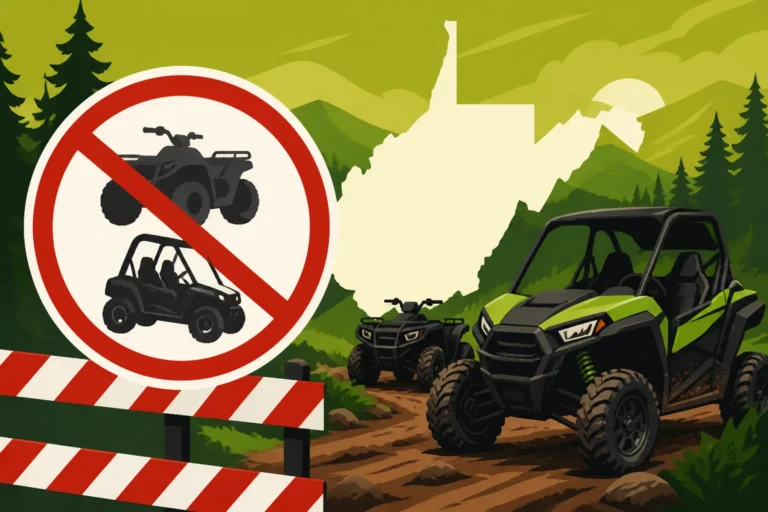
The most important rule is simple: ride only on routes that are open and designated for your machine. A visible track through the woods is not proof that it is an authorized trail. It could be a maintenance road, a closed route, a private access lane, or a path intended for a different use.
Cabwaylingo is a state forest, so do not assume every road or open-looking patch of land is available for recreational riding. Follow posted signs and barriers, and use the official Cabwaylingo trail information to identify routes open to motorized use. The broader guide to [West Virginia State Forest OHV Trails] can help clarify how designated off-highway vehicle routes differ from roads and paths that are not open to OHVs.
A practical habit is to pause at every junction and check the sign before continuing. If a trail marker is missing, a route is blocked, or the map and sign do not appear to match, do not guess. Turn around or contact the trail operator or forest staff for direction. One wrong turn can put you on a closed route, and “I saw tire tracks” is not a reliable permission check.
Understand which rules apply to your route
Cabwaylingo riding rules can depend on whether you are on a designated Hatfield-McCoy trail route, another authorized forest road, or land outside the trail system. If you are riding signed Hatfield-McCoy routes, check the current permit and system rules before setting out. A trail permit is not permission to ride anywhere else in the forest or across neighboring property.
Also keep trail access separate from public-road use. A machine that is allowed on a designated off-road trail is not automatically legal to ride on a public road. Road riding has its own requirements, and a trail permit does not replace road equipment, insurance, licensing, or other requirements that may apply. For a wider look at the distinction between public and private routes, see [Forest Roads Open to ATVs in West Virginia].
When you are uncertain about a boundary, stop rather than testing it. West Virginia property boundaries can be difficult to read in wooded terrain, and a trail may run close to private land or a restricted area. The guide to [West Virginia Trespass Law for ATV Riders] explains why staying on an authorized route matters even when a track looks well used.
Prepare for permits, machines, and riders
Check permits and documents before leaving home
If your ride uses the signed Cabwaylingo trails within the Hatfield-McCoy system, confirm the permit requirements for each machine and rider before traveling. Do not assume a permit bought for one vehicle, trail system, or trip automatically covers another machine or a later visit. Review the official permit instructions, where the permit must be displayed, and any rules that apply to your group.
Keep useful paperwork accessible, but avoid relying on paperwork as a substitute for permission. A title or proof of ownership helps establish who owns the machine; it does not authorize riding on a closed trail. Likewise, a registration document or insurance card does not turn a non-public route into an open one. For practical preparation, see [Do You Need Paperwork on the Trail in West Virginia?].
Before you leave, check that everyone in the group knows who has the permit information and where the documents are stored. A small zip pouch in a dry bag is more useful than a title folded into a pocket that may get soaked, torn, or lost during the ride.
Match the machine and rider to the route
A trail that is comfortable for a smaller ATV may be a poor fit for a wide side-by-side. Check current route restrictions and machine-width limits before unloading. Do not assume that a machine can fit simply because it can squeeze between trees: trails may have specific size restrictions, and forcing a wider vehicle through can damage the trail or endanger riders coming from the other direction.
Rider age, supervision, helmet, and passenger rules matter too. Make sure every rider can control the machine they are using and understands how to stop, yield, and respond to a blocked trail. A young rider should not be placed on a machine that is too powerful or too large simply because it is available. Review [West Virginia Helmet Rules for Riders Under 18] before a family ride, and check the trail operator’s requirements for the specific route.
Before the group starts, agree on a pace and a regrouping plan. For example, a family with a newer rider might agree to stop at every major junction and keep the most experienced adult behind the least experienced rider. That simple arrangement helps prevent a nervous rider from feeling rushed or a faster rider from disappearing around a blind bend.
| Before the ride | What to confirm | Why it matters |
|---|---|---|
| Route | The trail is designated, open, and appropriate for your machine | Tracks and forest roads are not automatically authorized riding routes |
| Permit | Requirements for the machine and riders on the route | A permit may be specific to the managed trail system |
| Machine | Width, condition, lights, brakes, and controls | A machine may not fit the route or may be unsafe to ride |
| Group | Rider ability, supervision, passenger rules, and meeting points | Clear expectations reduce separation and preventable mistakes |
| Conditions | Closures, rain, mud, and recent route changes | Weather and maintenance can change what is safe or open |
Ride safely on shared and changing trails
Follow signs and give other trail users room
Cabwaylingo routes may be used by more than one kind of visitor. Expect to encounter other OHV riders and, depending on the route, other forest users. Slow down when approaching people, animals, blind corners, trailheads, and junctions. A courteous greeting and a controlled speed are more useful than assuming you have the whole trail to yourself.
Stay on the marked surface. Cutting a corner or riding around a muddy section can widen the route, damage vegetation, and create a new unauthorized track. If a trail is muddy, use the established line where it is safe to do so rather than making a bypass. When a route is blocked by a gate or closure sign, do not go around it; the closure may protect riders from unsafe conditions, maintenance work, or a restricted area.
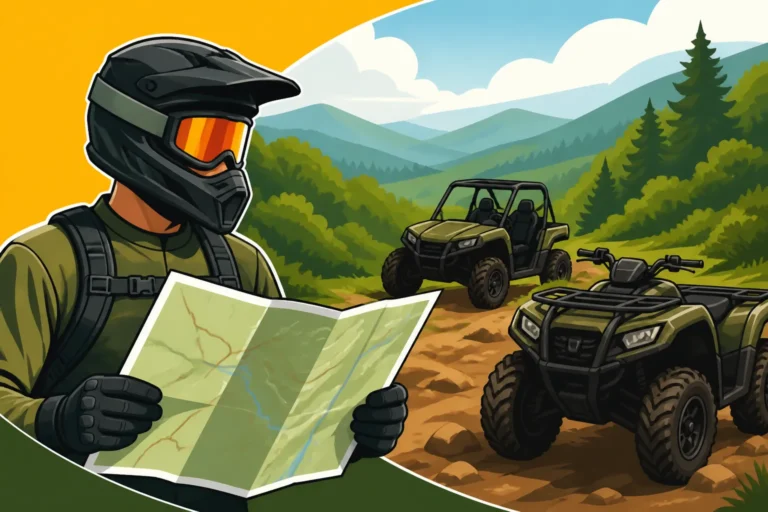
Trail markers and maps are aids, not a substitute for attention. Learn how the local signage is arranged before riding, and stop in a safe place if you need to check directions. The guide to [West Virginia Trail Maps and Signage] offers useful background on reading trail information. A mapping app such as onX Offroad can also help you follow a planned route, but a digital line should never override a gate, posted closure, or direction from trail staff.
Adjust to mud, rain, and limited visibility
Rain can make West Virginia trails slick and unpredictable. Clay, roots, rocks, and steep grades may be much harder to manage when wet, and a shallow-looking rut can conceal a deeper hole. Reduce speed, leave more space between machines, and avoid charging into water or mud when you cannot see the surface underneath.
If a section looks unsafe, do not let group pressure make the decision for you. Stop somewhere stable, discuss whether the group can proceed safely, and turn around if needed. Spinning tires can dig ruts, damage the trail, and make a difficult section worse for everyone behind you. More practical advice appears in [West Virginia Trail Conditions After Rain].
Weather can also affect visibility. Dust, fog, falling leaves, and low light can make it harder to see signs or riders approaching from the other direction. Keep your lights in working order, wear appropriate eye protection, and avoid continuing into conditions that prevent you from seeing the trail clearly. A route that felt manageable in the morning may be a very different ride after a downpour.
Plan the day and avoid common mistakes
Check access and closures before you drive
Before loading up, check the trail system’s official status and any notices from the managing authority. Do not rely only on an old map, a social media post, or a friend’s memory of a previous visit. Trail access can change because of maintenance, weather, land-management needs, or safety concerns.
When you arrive, read the information posted at the access point. Confirm where to park and unload, where the designated trails begin, and whether there are restrictions affecting your group. If you plan to use more than one area, make sure the permit and access rules cover each place you intend to ride.
Use onX Offroad or another mapping tool as a planning aid, not as final proof of access. Download or save the information you need before entering areas with weak cell service, and carry a backup route reference. A phone that loses signal in a hollow is a poor place to discover that your group has not agreed on the way back.
Pack for a remote ride and set a turnaround plan
Remote riding is more enjoyable when the group is prepared for small problems. Bring water, food, basic first aid supplies, a charged phone, and any machine-specific tools you know how to use. Carry a tire repair option suitable for your machine, and make sure at least one person in the group knows how to handle a minor mechanical issue. For a fuller checklist, see [What to Carry on a Remote West Virginia Ride].
Set a turnaround time before leaving the trailhead. That gives the group a clear point to head back, even if the ride is going well. It is especially helpful when riders have different experience levels or when the group is exploring unfamiliar junctions. Tell someone who is not riding where you plan to go and when you expect to return.
Avoid these common mistakes:
- Treating a visible track as an open trail. Confirm the route is designated and currently accessible.
- Assuming a trail permit covers public roads or nearby property. Check the rules for each type of route.
- Ignoring a closure because the trail looks passable. Follow gates, signs, and instructions from staff.
- Letting a digital map overrule posted information. Use mapping tools for orientation, not permission.
- Trying to keep up with the fastest rider. Ride at a pace the least experienced person in the group can manage.
- Riding around mud or obstacles. Stay on the established trail and turn back if the route is unsafe.
- Leaving without a communication plan. Agree on stops, meeting points, and a return time before the ride.
A considerate Cabwaylingo ride comes down to preparation and judgment: use authorized routes, follow local permit and safety requirements, respect closures, and leave the trail as you found it. When a sign or boundary is unclear, take the conservative option and ask the appropriate trail or forest authority before proceeding.
Disclaimer
This article is for general informational purposes only and does not constitute professional advice. Laws, prices and regulations vary by location and change over time. Consult a qualified professional for guidance on your specific situation.