Burning Rock Hill Climbs and Mud Pits
Burning Rock’s hill climbs and mud pits can turn a fun ride into a tiring, mechanical day if you choose terrain beyond your group’s ability or hit it after heavy rain. This guide explains how to assess climbs and mud, prepare your machine, ride with better control, and plan a safer outing at the off-road park near Sophia, West Virginia.
What to Expect From Burning Rock’s Hill Climbs and Mud Pits
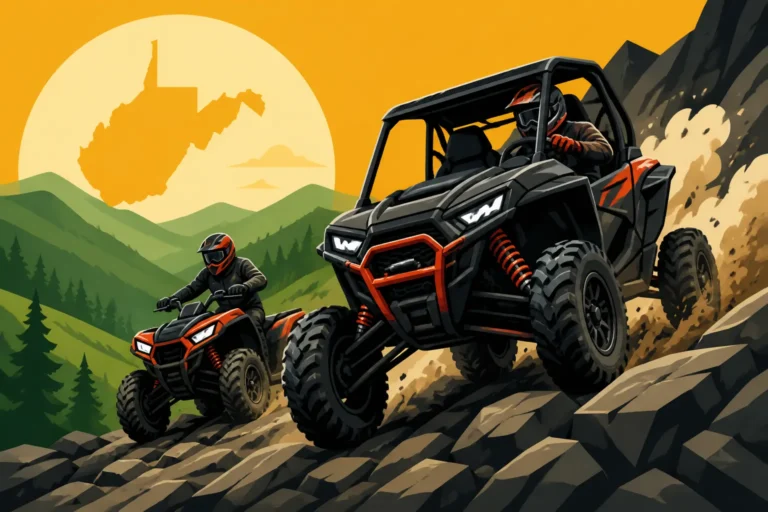
Hill climbs reward patience more than speed
A steep climb can look straightforward from the bottom, but the surface may change halfway up. Loose rock, ruts, roots, and washed-out patches can affect traction and steering. A route that seems manageable when dry may feel entirely different after rain, especially if water has carved channels into the slope.
Before you commit, stop somewhere safe and look at the whole line. Consider the incline, the surface, the width of the route, and whether you have enough room to turn around if you decide not to continue. If you can’t see the top or a clear exit, don’t assume the trail will improve just because you’ve already started climbing.
Riders often get into trouble by trying to power through a difficult section after losing momentum. A sudden throttle burst can spin the tires, dig a rut, or send the machine sideways. Choosing a suitable route and keeping your movements smooth is usually more useful than trying to make a machine climb beyond its limits. For broader guidance on interpreting trail ratings, see [Hatfield-McCoy Trail Ratings Explained].
Mud pits can be deeper and softer than they look
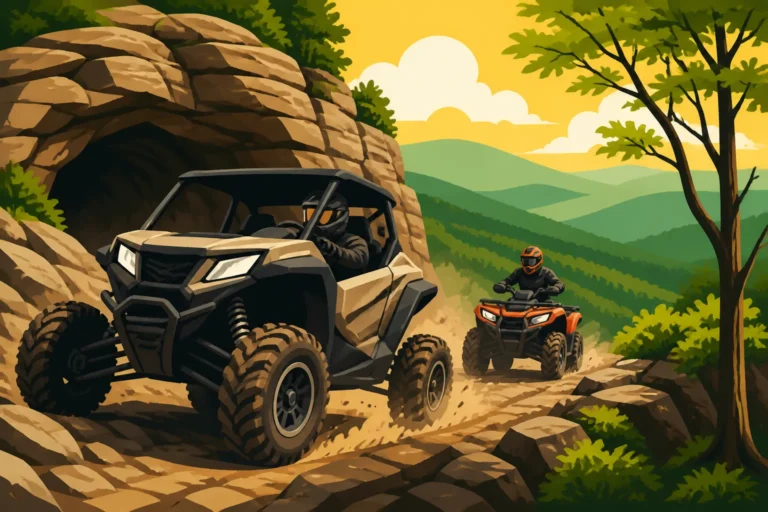
A puddle on a trail might be a shallow patch of water—or a hole with a soft bottom and a rut hidden underneath. Mud can cover rocks, branches, and uneven ground, while the approach and exit may be slicker than the middle. A machine that passes through one pit easily may struggle in another just a short distance away.
When you reach a muddy section, take a moment to assess it instead of following the machine in front of you without question. Look for existing tire tracks, but don’t treat them as proof that the route is safe; they may be from a different machine, or conditions may have changed. If you can’t judge the depth or the exit, take an approved alternate route or wait for help rather than gambling on a crossing.
Repeatedly spinning tires can make a mud hole harder for everyone to pass and may cause avoidable damage to the trail. Stay on marked routes, use designated riding areas, and avoid creating a new path around an obstacle. [Mud, Rock and Creek Crossings in West Virginia Trails] offers useful context for dealing with changing surfaces across the region.
Choose a Route That Fits Your Group
Match the terrain to the least experienced rider
A group ride is only as comfortable as its least experienced person feels on the route. A confident rider may be willing to tackle a steep, rutted climb, while a beginner may be uneasy before reaching the first difficult patch. That gap can leave the group separated, create pressure to attempt a section, or make a stressful ride feel like a test.
Talk through expectations before leaving the staging area. Ask who has experience on steep grades, who is comfortable in mud, and whether anyone is riding a new or unfamiliar machine. Choose routes that give everyone room to learn without needing to prove anything. If riders disagree about whether a climb is appropriate, a different route is the sensible choice.
Trail ratings can help with planning, but they don’t replace a real-time look at conditions or a rider’s own judgment. An easier-rated section can still feel challenging when it’s wet, while a skilled rider may be comfortable on terrain that is inappropriate for a mixed-experience group. For help thinking through route selection, read [West Virginia Trail Difficulty and How It Is Marked] and [West Virginia Trail Systems Best Suited to Side-by-Sides].
Check conditions and navigation before setting out
A route map helps you understand where trails connect and where you can turn back, but it won’t tell you exactly how a hill or mud pit will feel on the day you ride. Trail conditions change with rainfall, traffic, maintenance, and closures. Check current park information before the trip, and follow signs and staff directions once you’re on site.
A navigation app such as onX Offroad can help riders review mapped routes and keep track of their position, especially when a group is unfamiliar with the area. Download maps for offline use before heading into places where mobile service may be limited. Keep a paper map or another backup if you rely on a phone, and make sure someone in the group knows how to use the navigation tools.
Don’t treat a GPS line as permission to ride anywhere it appears. Stay on authorized routes, obey closures, and turn around when signs or conditions indicate that a route is not suitable. For practical route-planning ideas, see [West Virginia Trail Maps and Signage] and [Getting Lost on a West Virginia Trail].
Prepare Your Machine and Riding Gear
Inspect the ATV or UTV before the ride
A steep, muddy ride can expose problems that might not be obvious on a short, flat drive. Before unloading, check tires for damage and suitable tread, confirm that the brakes work, and look for loose steering components or visible leaks. Make sure lights and the horn work if your machine has them, and check that any required safety equipment is in place.
For a UTV, check seat belts and doors or nets, and confirm that everyone has a secure seat. For an ATV, keep the load within the machine’s limits and avoid carrying loose items that could shift during a climb. These simple checks are easier to do at the parking area than beside a muddy trail after a breakdown.
Bring equipment suited to the outing, including water, basic first-aid supplies, a charged phone, and a way to communicate with the rest of your group. Recovery gear may be useful, but only use it if you know how to handle it safely and the method is allowed. A strap, winch, or other tool can create serious hazards when attached or operated carelessly.
Dress for mud, changing weather, and trail exposure
Mud pits can soak clothing even when the rest of the day feels warm. Wear sturdy layers that can get dirty, gloves that allow a secure grip, and footwear that stays firmly on your feet. Eye protection helps keep dust, mud, and debris out of your eyes; helmets and other protective equipment should meet applicable requirements and fit correctly.
Pack a change of clothes and a way to keep wet gear separate from dry items. A spare pair of gloves can be especially welcome after a cold or muddy stretch. If rain is possible, consider how wet clothing and reduced visibility could affect the group’s comfort and control on steep terrain.
Don’t overlook basic hydration and rest. Climbing, steering through ruts, and staying alert in a group all take effort. If someone is getting tired, cold, overheated, or frustrated, pause in a safe location. The aim is a good day of riding—not squeezing in one more difficult section after attention and energy have started to fade.
Ride the Difficult Sections With Control
Use deliberate technique on a climb
Approach a hill only when you have assessed the route and feel confident that your machine and skill level are appropriate. Choose a steady line and maintain smooth control rather than making sudden inputs. Keep your focus on the route ahead, but stay aware of the surface directly in front of your tires; loose rock and ruts can change how the machine responds.
If traction starts to fade, avoid responding with a sharp burst of throttle. Stop safely if you can, and reassess whether the climb is still manageable. If you need to turn around, do so only where the route provides enough space and the maneuver can be completed without putting another rider in danger. Never block the trail while debating a decision.
Give each rider enough space to respond to changing conditions. A machine directly ahead can obscure a rut or throw debris, and following too closely leaves little room to stop. Agree on a simple signal or regrouping point before the ride so a rider who turns back or needs assistance can communicate clearly.
Decide when not to enter a mud pit
There is no shame in skipping a mud hole. If the entry is deeply rutted, the bottom is hidden, the exit looks difficult, or your machine is not suited to the conditions, stopping is a sensible riding decision. The same goes for a crossing that has changed after rain or a route that is visibly causing trouble for other riders.
If someone does get stuck, keep bystanders away from wheels, winch lines, and moving machines. Don’t stand in the path of a vehicle that might suddenly regain traction, and don’t wrap a recovery line around a person or an unsuitable attachment point. If the recovery looks unsafe or the group lacks the right equipment, ask park staff or qualified help rather than improvising.
After a muddy section, check that the machine is handling normally. Mud can hide damage and make it harder to spot a loose part, while packed debris may affect moving components. Stop in a safe place to look over the tires and machine, and report a trail hazard or damage through the appropriate park channel. More advice on changing conditions is available in [West Virginia Trail Conditions After Rain] and [What to Carry on a Remote West Virginia Ride].
| Riding situation | What to assess | Safer choice |
|---|---|---|
| Steep climb | Grade, surface, visibility, and space to turn around | Skip it if you cannot see a suitable route or exit |
| Mud pit | Apparent depth, hidden ruts, entry, and exit | Avoid it if the bottom or far side is unclear |
| Mixed-experience group | Confidence, machine type, and rider fatigue | Choose a route everyone can manage comfortably |
| Changing weather | Rain, visibility, and surface conditions | Reassess the plan instead of relying on earlier conditions |
| Stuck machine | Bystander position, recovery equipment, and operator skill | Keep clear and get appropriate help if recovery is unsafe |
Keep the day manageable from start to finish
Plan your ride around daylight, breaks, and the group’s comfort rather than trying to cover as much terrain as possible. Decide where you will regroup, what you’ll do if someone turns around, and how you’ll contact one another if the group gets separated. On unfamiliar routes, these small agreements can prevent a minor delay from becoming a confusing search.
Watch for changes in the surface as the day goes on. A familiar climb may become slick after showers or rougher after heavy traffic. If conditions shift, shorten the route or choose easier terrain. The plan that made sense at the trailhead doesn’t have to remain the plan all afternoon.
Respect the boundaries of the riding area and follow posted instructions, even when an alternate line looks tempting. A bypass can lead onto restricted land or damaged ground, and a closed trail may be unsafe for reasons that aren’t obvious from the entrance. For more on staying within designated routes, see [Staying on Marked Trails in West Virginia] and [Trail Closures on West Virginia's Trail System].
Disclaimer
This article is for general informational purposes only and does not constitute professional advice. Laws, prices and regulations vary by location and change over time. Consult a qualified professional for guidance on your specific situation.