Burning Rock Offroad Park Day Pass
A day at Burning Rock Offroad Park can go sideways before the first trail if you arrive without confirming what your pass covers, where to check in, or whether your machine fits the routes you want to ride. This guide explains how to plan a day pass visit near Sophia, West Virginia, what to verify before setting out, and how to prepare for a safer, less stressful ride.
What to Confirm Before Buying a Burning Rock Day Pass
Check what the pass covers
Start by confirming the park’s current day-pass options directly with Burning Rock. Ask whether access is sold per rider, per machine, or through another arrangement, and whether the pass covers the date and riding area you have in mind. Don’t assume that one purchase covers every person in your group or every vehicle arriving on the same trailer.
Also ask what the pass does not include. Entry, parking, camping, rentals, and other services can be handled separately at off-road parks. If you are bringing a child, passenger, or a second machine, make sure the rules for each are clear before you pay. A quick call or check of the park’s official information can prevent an awkward check-in conversation after a long drive.
A Burning Rock pass is not automatically interchangeable with access to other West Virginia trail systems. For example, the Hatfield-McCoy network has its own permit requirements, explained in [West Virginia's Hatfield-McCoy Trail Permit Explained]. If your trip includes more than one riding destination, confirm the access rules for each separately rather than treating one pass or permit as universal.
Verify hours, check-in, and park conditions
Before leaving home, confirm the park’s operating schedule, check-in location, and arrival procedure. Ask whether you need to check in before unloading, whether the entrance is staffed during your planned arrival, and what to do if you expect to arrive late. These details matter especially if you are towing a wide side-by-side or traveling with several machines and need time to unload safely.
Conditions and access can change with weather, maintenance, or other park operations. A route shown in an old post or saved map may not be open for your visit. Check for current closures and any restrictions on vehicle type or trail access. This is particularly useful after heavy rain, when muddy slopes, creek crossings, and soft ground can turn a familiar ride into a recovery problem.
If you’re comparing Burning Rock with other nearby destinations, remember it is a distinct riding area with its own access arrangements. [Burning Rock Offroad Park in West Virginia] provides broader destination context, while [Burning Rock Day Pass] is a useful related topic to check when you’re focused specifically on a single visit. Confirm the practical details with the park before making plans around assumptions from older trip reports.
How to Plan the Ride Around Your Machine
Match the trails to your vehicle and experience
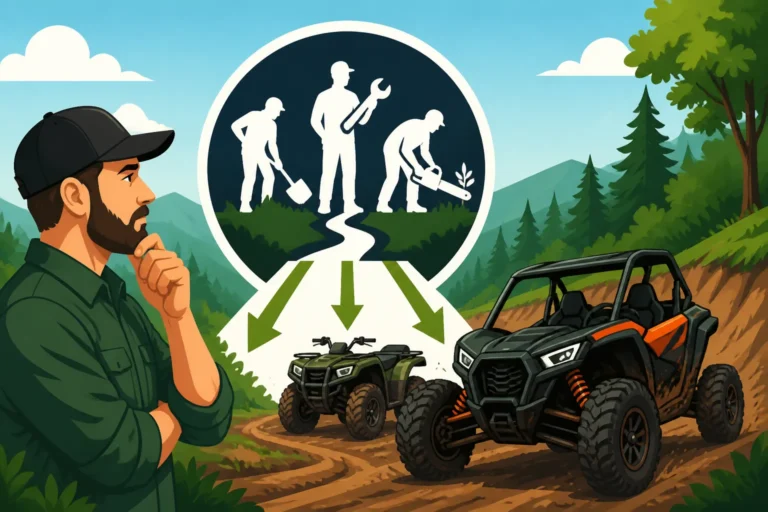
A day pass gets you through the access process; it does not tell you which routes are a good fit. Before you head out, ask which trails are appropriate for your machine’s width, ground clearance, tires, and the experience of the least-confident rider in your group. A route that feels manageable in a compact ATV may be a poor choice for a wide side-by-side, and a steep or rocky section can be intimidating for someone still learning.
Be candid about your group’s experience. If this is your first time riding in southern West Virginia, ask where beginners should start and which areas are better left to confident riders. Don’t let a more experienced friend’s description of a route—“not too bad”—be your only measure. People have different comfort levels, and a difficult climb can feel very different when the machine is loaded with passengers or the surface is slick.
Check trail width as well as difficulty. If you ride a wider machine, [West Virginia Trails Too Tight for a 64-Inch Machine] can help you think through a common fit issue. The park’s own current guidance should take priority for its routes, but it’s wise to know your vehicle’s actual width and ask about restrictions before you arrive.
Prepare your ATV or UTV before the drive
Give the machine a careful walk-around before loading. Check tire condition and pressure, brakes, steering, throttle return, lights, belts, and visible leaks. Secure loose gear and make sure anything that could come off in rough terrain is fastened down. A small issue that is easy to fix in the driveway can become a long delay when you’re parked at a trailhead with limited tools.
For a side-by-side, confirm that seat belts work and that every passenger has a suitable seat. For an ATV, check that the rider can reach the controls comfortably and that the machine is appropriate for their size and ability. If you’re bringing younger riders, review [Riding West Virginia Trails With Kids] and [West Virginia Age Rules on the Trails] before you set expectations for the day.
Bring practical gear for the conditions, not just the weather forecast. A helmet and eye protection are essential riding kit, and gloves, sturdy footwear, water, and a basic first-aid kit can make a long day more comfortable. Dust, mud, changing temperatures, and minor scrapes are all easier to handle when you’ve planned for them. Pack a small tool kit and recovery basics suited to your machine, but don’t attempt a recovery you’re not equipped or trained to perform.
| Before the visit | What to confirm or prepare | Why it matters |
|---|---|---|
| Day pass | Who needs one and what it covers | Avoids confusion about riders, machines, and included access |
| Park access | Check-in point, hours, and arrival process | Helps prevent delays, especially with a trailer or group |
| Trail choice | Width limits, closures, and difficulty | Reduces the chance of taking an unsuitable route |
| Machine | Brakes, tires, steering, belts, and fuel | Helps catch problems before they become trail emergencies |
| Group | Passengers, children, and experience levels | Keeps route choices realistic for everyone |
| Navigation | Current park information and a backup plan | Helps if conditions or access change |
Getting There and Staying Oriented
Plan the approach and trailer logistics
Burning Rock is near Sophia in Raleigh County, within reach of Beckley, but the final approach is still worth planning in advance. Put the park’s confirmed entrance or check-in location into your navigation before you leave. Don’t assume that a generic search result, an old social post, or a map pin will direct a long vehicle-and-trailer combination to the correct place.
Think about where you’ll fuel, unload, and secure your tow vehicle. If you’re hauling a wide UTV, check that your trailer setup is appropriate and that the machine is properly secured before driving. [Strapping a Side-by-Side Down for the Highway] is a helpful reminder to check tie-down points and machine movement rather than relying on a quick glance at the straps.
A navigation app can be useful for the drive, but it should not replace the park’s own instructions. If you use onX Offroad for general trip planning, compare the information you see with the park’s current directions and access guidance. Do not assume a mapped line is an authorized route or that a route shown in an app is open to your vehicle on the day you arrive.
Use maps as a backup, not permission
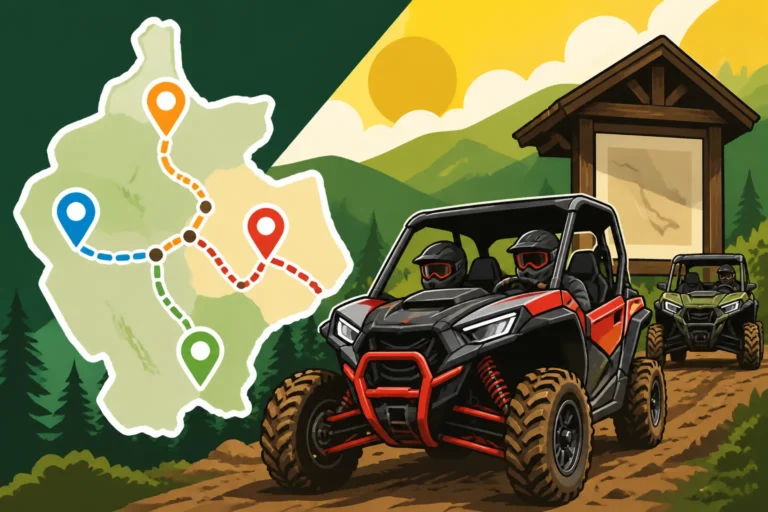
Before riding, ask where the park posts current trail information and how closures or restrictions are communicated. Keep a paper or offline backup if you expect weak cell service. In hilly areas, a phone can lose signal or battery sooner than expected, especially if it is being used continuously for navigation, photos, and group messages.
onX Offroad can help you think through location and route awareness, but map data is not a substitute for posted signs, staff instructions, or park rules. If a marked trail is closed, gated, or unclear, stop and check rather than trying to find a way around. Staying on authorized routes helps protect the land and avoids putting your group in a situation involving private property or an unsafe shortcut.
Share a simple plan with someone who is not riding: where you are going, when you expect to return, and who to contact if you are overdue. Keep your phone charged and carry a backup power source if you have one. For a remote ride, having a route plan, a meeting point, and a clear regrouping procedure is more useful than assuming every rider will stay together all day.
A Practical Day-Pass Visit From Arrival to Departure
Check in, set group expectations, and start conservatively
When you arrive, follow the park’s check-in instructions before unloading or heading toward a trail. Confirm any final questions about the pass, trail access, closures, and machine restrictions with staff. If you’re riding with a group, make sure everyone knows the plan before engines start: who leads, who sweeps, where to regroup, and what to do if someone needs to stop.
Start with an easier route while everyone gets comfortable with the terrain and machine handling. This gives new riders a chance to adjust to visibility, traction, and the pace of the group. If a trail looks beyond your ability or vehicle, turning around is a sound decision, not a failure. A good ride is one where the group gets back safely, not one where every difficult section is attempted.
Ride at a pace that leaves room to react. Keep a safe gap between machines, slow down near blind corners, and avoid following so closely that dust or mud blocks your view. If conditions change, reassess. A route that felt straightforward earlier may become slippery after rain, and tired riders often make poorer choices late in the day.
Leave time for the return trip and next steps
Set a realistic turnaround time so you’re not rushing back to the entrance or loading area. Before leaving, check the machine for new damage, loose parts, or anything that needs attention before the highway drive. Brush off mud where practical, secure gear, and make sure the trailer is ready before you pull out.
If you plan to ride elsewhere during the same trip, check each destination’s access rules in advance. Burning Rock access should not be treated as a substitute for a separate trail permit. Articles such as [Hatfield-McCoy Trailheads and Where to Start] and [West Virginia Trail Systems Best Suited to Side-by-Sides] can help you compare other riding plans, but always verify current rules directly with the destination.
A little preparation makes a day pass visit much easier: confirm the pass details, check current access, match trails to your machine, and arrive with a realistic plan. That way, you can spend less time sorting out logistics and more time enjoying the ride.
Disclaimer
This article is for general informational purposes only and does not constitute professional advice. Laws, prices and regulations vary by location and change over time. Consult a qualified professional for guidance on your specific situation.