Cabins With Direct West Virginia Trail Access
A cabin advertised as having direct West Virginia trail access can mean anything from a marked trail at the property line to a short ride on a local road before reaching a legal route. That difference affects your plans, paperwork, and safety. This guide explains what to confirm before booking, how to choose a location, and how to prepare for a smoother ride.
What Direct Trail Access Really Means
Ask what “direct access” means at that property
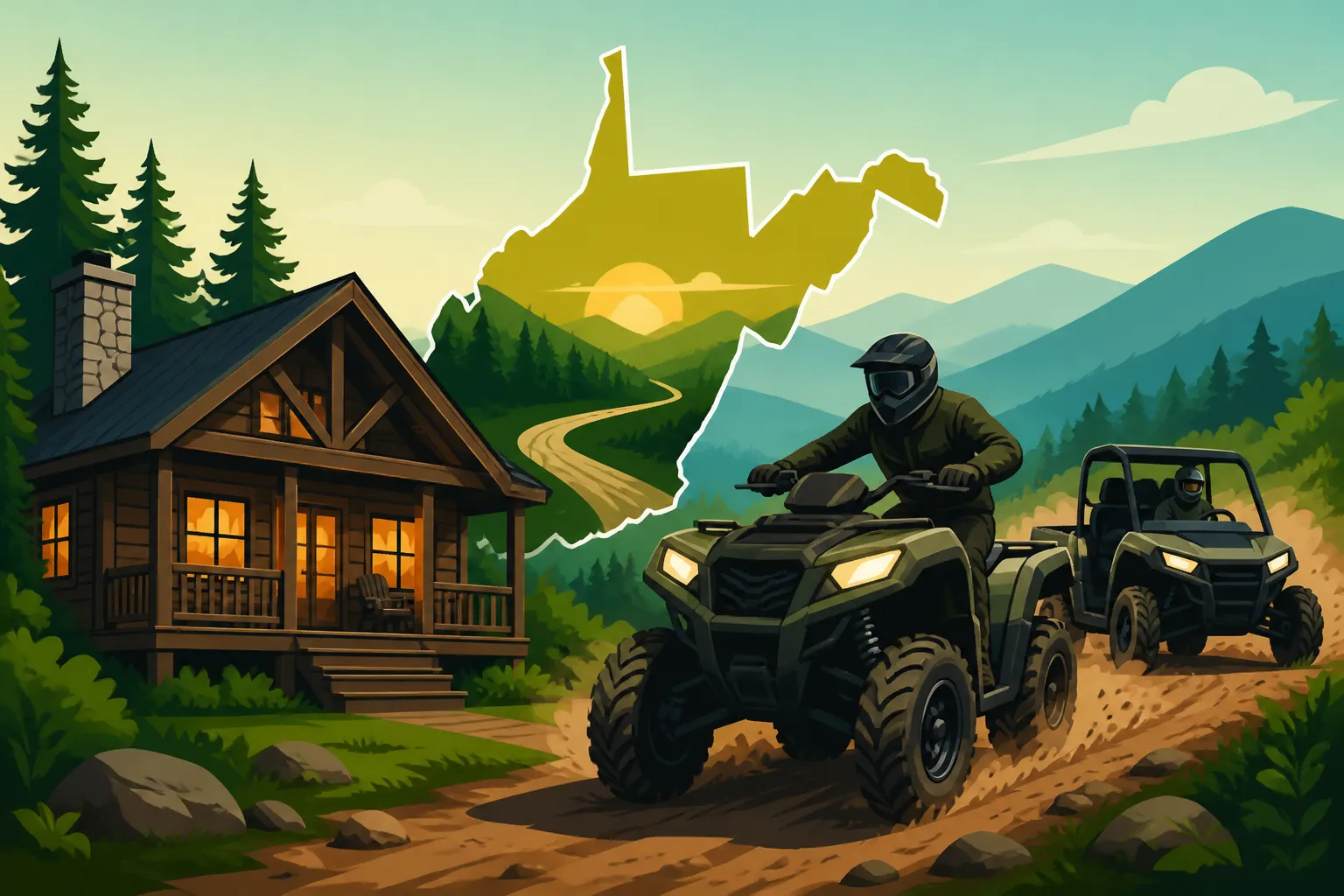
“Direct trail access” is appealing after a long drive with a trailer, but it is not a standardized promise. One cabin may sit beside an authorized trail connector. Another may offer a private path that leads to a trailhead, or simply be close enough that the host considers the trail easy to reach. Ask the owner to describe the route from the cabin to the riding area, including every road, gate, and property boundary along the way.
The key question is whether you can ride from the property to a trail you are allowed to use without loading your machine onto a trailer. Ask whether the route is open to guests, whether it is signed or mapped, and whether access changes seasonally. If the cabin is near the Hatfield-McCoy Trails, for example, confirm that the connector reaches the managed trail system—not just land or a road that happens to be nearby. The overview [Hatfield-McCoy Trailheads and Where to Start] can help you understand why the precise access point matters.
Get the answer in writing before you book. A listing that says “near trails” or “ride from the cabin” may not explain whether the route crosses private land, uses a public road, or requires a separate permit. Ask for the name of the trail system, the nearest official trailhead, and a map or written description of the legal route. If the owner’s answer is vague, treat that as a reason to ask more questions, not as proof that access is assured.
Separate proximity, access, and permission
A cabin can be close to a trail without offering permission to ride there. In West Virginia, trail access depends on the designated riding area, the landowner’s permission where applicable, and the rules attached to that trail. A path visible on a phone map is not automatically an authorized route. Likewise, a nearby forest road, private mine road, rail-trail, or county road may have restrictions that do not appear in a rental listing.
Ask whether guests can ride directly from the cabin and whether that access is included in the stay. Find out if you need to cross private property, use a shared driveway, or travel a short public-road section. A short connector can be perfectly workable, but it should be described accurately so you can check whether your machine, permit, and equipment suit the route. For broader context, see [Where to Ride an ATV in West Virginia] and [West Virginia Rules for Riding Trail to Trail].
Permission can also be limited by the property owner or local conditions. A route may be available only to registered guests, only during certain hours, or only when a gate is open. Ask whether there are posted speed limits, quiet hours, or instructions about returning by the same route. If access is interrupted by maintenance, weather, or a landowner decision, clarify what alternatives the host can offer.
Choosing a Cabin Location for Your Ride
Match the cabin to the trail system and your group
Start with the riding area you actually want to explore, then look for lodging within a practical distance of its authorized access points. Southern West Virginia has well-known trail towns and systems, including areas around Gilbert, Man, Williamson, and Bramwell. Those names can help narrow your search, but a town’s reputation for ATV riding does not mean every rental in or near it has legal trail access. Confirm the connection at the specific property.
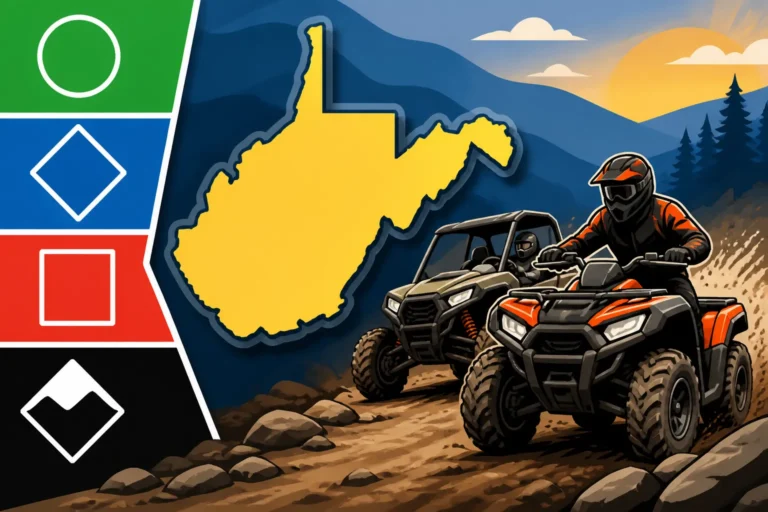
The terrain and trail character should also shape your choice. A group of experienced riders may want access to more technical routes, while a family or first-time group may prefer a location that makes it easy to reach beginner-suited trails and return to the cabin without a complicated road section. Look beyond the distance to the nearest trailhead: ask what kinds of routes connect from that access point, whether machine-width restrictions apply, and whether your group’s vehicles are suitable. [West Virginia Trail Difficulty and How It Is Marked] is useful when comparing riding plans.
Think about the whole trip, not just the ride. A remote cabin may offer quiet and easy machine staging but leave your group far from fuel, groceries, or repair help. A cabin closer to a trail town may make it easier to find meals and supplies, though parking, noise, and traffic can be different. Decide which trade-offs matter most to your group before you compare listings.
Check the property layout and trailer logistics
Direct riding access does not guarantee that the property works well for hauling machines. Ask whether there is enough room to turn a truck and trailer, unload safely, and park without blocking the driveway or neighboring homes. A narrow mountain lane or steep gravel approach can be stressful with a long trailer, especially after dark or in wet weather. If you are bringing multiple machines, describe your trailer and ask the host to confirm the available space.
Look for details about where machines can be stored overnight and whether the area is secure. Ask whether the host permits trailers or machines to remain on the property, whether there is a level place to park, and whether any covered storage is available. Do not assume a cabin’s porch, yard, or outbuilding can be used for equipment without permission. It is also sensible to ask whether washing mud off machines is allowed and where guests should dispose of muddy water.
A good access plan includes a fallback. If the cabin’s connector is closed or cannot be used by your machine, will you need to haul to a trailhead? How far away is the nearest suitable parking area? Check practical details in advance using official trail information and a mapping tool. onX Offroad can help you inspect routes and terrain, but a line shown on a map should not replace confirmation from the property owner or trail authority that the route is open and legal for your use.
| Cabin detail | What to confirm before booking | Why it matters |
|---|---|---|
| Trail connection | Exact route from the property to an authorized trail | “Nearby” does not necessarily mean rideable access |
| Road segments | Whether the route uses a public road or private road | Road rules, permissions, and machine requirements can differ |
| Trail system | Name of the system and nearest official access point | Helps you check trail rules, closures, and permits |
| Parking and staging | Trailer turning space, unloading area, and overnight parking | Prevents arrival-day problems with trucks and equipment |
| Machine fit | Width, passenger capacity, and route restrictions | A wide side-by-side may not fit every trail or connector |
| Backup plan | Nearest practical trailhead if cabin access is unavailable | Helps avoid losing a riding day |
Confirming Rules, Permits, and Machine Requirements
Verify trail access and permit requirements
A cabin reservation does not automatically provide access to a managed trail system. Before the trip, identify the system you plan to ride and check its current rules, trail status, and permit requirements through the relevant official channels. Ask the host whether any permit is included in the rental arrangement, but verify that information yourself rather than relying only on a listing. The guide [West Virginia's Hatfield-McCoy Trail Permit Explained] covers the basic purpose of a trail permit and the questions riders commonly need to resolve.
If you plan to ride a Hatfield-McCoy route, make sure your group understands where the official trail begins and what the permit covers. A connector from the cabin may not itself be part of the managed trail network. It could cross a road or private land, and the rules for that portion may differ from the rules on the trail. Do not assume that a trail permit authorizes riding anywhere between your cabin and the system.
Check for closures shortly before departure and again during your stay. Weather, maintenance, land-access changes, and other conditions can affect which routes are open. Keep a backup plan that uses an official trailhead, and be ready to load up if the cabin connector is unavailable. For help preparing, see [Checking West Virginia Trail Status Before You Drive] and [West Virginia Trail Maps and Signage].
Match your machine to the route and local rules
The phrase “ATV and UTV friendly” may cover a range of machines, but not every route accommodates every vehicle. Trail width restrictions, local rules, and connector conditions matter, particularly for wider side-by-sides. Confirm the width of your machine and ask whether there are restrictions on the trails you intend to ride. The overview [West Virginia Trail Systems Best Suited to Side-by-Sides] can help you frame questions about machine fit.
If a route from the cabin uses a public road, ask the host exactly where and how far. Do not assume that a trail permit makes an ATV or UTV legal on a road. Road riding rules are separate from managed trail rules, and requirements can depend on the road and the machine. Check the specific route and relevant requirements before riding. [Which West Virginia Roads Allow ATVs] offers a starting point for understanding that distinction.
You should also consider the machine’s condition and equipment before a multi-day trip. Check tires, brakes, lights, belts, steering, and tie-down points, and bring basic tools and recovery gear suited to the terrain. If the route has steep grades, mud, or creek crossings, make sure the driver and passengers are comfortable with those conditions. A cabin with convenient access can make it tempting to head out quickly, but taking time to review machine and rider readiness is part of a safer ride.
Booking Questions That Prevent Frustration
Get specific answers from the host
Before paying a deposit, send the host a short list of practical questions. Ask for the exact trail system, the route from the cabin to the trail, whether that route is legal for guests, and whether it is open to the type and width of your machine. Then ask about trailer parking, unloading space, overnight machine storage, and any quiet hours or property rules. Specific questions are more useful than asking only, “Is the cabin ATV friendly?”
Ask whether the access route has changed recently or is subject to gates, seasonal conditions, or landowner permission. If the host says guests ride directly from the property, ask whether they can share a route description or identify the nearest official trail access point. A clear answer should distinguish between riding on the trail system and using a connector to get there.
Finally, confirm what happens if access is unavailable during your stay. The host may not control trail closures or landowner decisions, but you should know whether the cabin is still useful as a base for hauling to another trailhead. Save the host’s answers along with your booking details. If your plans depend on a particular connector, written confirmation can prevent an avoidable disagreement after you arrive.
Review the lodging terms and group needs
Read the rental rules for occupancy, parking, noise, pets, cleaning, and equipment use. A group may be allowed to bring machines but not to store them in a garage or wash them on the property. Some places may restrict trailers or ask guests to keep vehicles in designated spaces. Clarify these points before arrival, especially if several families are sharing the cabin and each has a truck or trailer.
Think about sleeping arrangements and rider recovery, too. A long day on rocky or muddy routes can leave everyone tired, sore, and ready for a quiet evening. Check whether the cabin has enough beds for the group, a practical place to dry riding clothes, and a kitchen or nearby food option that fits your plans. If anyone in your party has mobility needs, ask about steps, parking distance, and access around the property rather than assuming the listing photos tell the whole story.
A helpful planning tool is [Planning a West Virginia Riding Weekend], especially if you are coordinating arrival times, meals, and multiple riding days. For a larger group, assign one person to handle the host questions, another to verify permits and route status, and another to organize trailer and machine logistics. Dividing the planning avoids the common last-minute scramble where everyone assumes someone else checked the details.
Riding Responsibly From Your Cabin
Respect property boundaries and neighbors
When you stay somewhere with machine access, you are also a guest in a residential and working landscape. Ride only on routes the host has specifically authorized and stay on marked trails or roads where riding is permitted. Do not follow tire tracks across a field, assume a gate is an invitation, or use a private driveway as a shortcut unless the owner has clearly allowed it. [West Virginia Trespass Law for ATV Riders] explains why property boundaries should be treated seriously.
Keep noise and speed under control near the cabin, neighboring homes, and trail access roads. Avoid revving engines early in the morning or late at night, and follow any quiet-hour rules in the rental agreement. A short ride through a neighborhood can affect people who are not part of your trip, and repeated complaints can jeopardize access for future visitors. If a host gives you a designated route or asks you to avoid a particular area, follow that instruction even if another path appears convenient.
Leave the property as you found it. Park where the host directs, secure equipment, and do not leave trash, fuel containers, or muddy gear where it could damage the cabin or yard. If you encounter a closed gate or a posted restriction, turn around rather than trying to work around it. Responsible behavior helps protect the relationships that make private lodging and trail access possible.
Build a safe plan for each ride
Before setting out, check the day’s route, weather, trail status, and expected return time. Mountain conditions can change quickly, and a connector that seems easy on a dry afternoon may be much harder after rain. Tell someone where you plan to ride, carry water and basic supplies, and make sure each machine has appropriate safety equipment. If your group includes newer riders, choose routes and distances that match their experience instead of letting the most confident rider set the pace.
Use a map and keep your group together at trail junctions. A phone map can be helpful, but battery life and cell coverage are not guaranteed in remote areas. Download or carry useful route information before leaving the cabin, and agree on what to do if riders become separated. onX Offroad can be useful for reviewing mapped routes and terrain in advance; still, verify access with the trail authority and follow posted signs on the ground.
End the ride with enough time to return before fatigue or fading light becomes a problem. Check that everyone is accounted for, inspect machines for damage, and let the host know if you found a blocked connector or a safety concern. If your route uses any public-road section, review the relevant road-riding requirements beforehand rather than improvising at the property entrance. The guide [West Virginia Road Rules Riders Get Wrong] is a useful reminder that road sections and off-road trails do not always follow the same rules.
Disclaimer
This article is for general informational purposes only and does not constitute professional advice. Laws, prices and regulations vary by location and change over time. Consult a qualified professional for guidance on your specific situation.