Bringing a Kentucky Machine to the Trails
Bringing a Kentucky ATV or UTV to West Virginia means arranging trail permits separately from any temporary road registration, plus helmets and insurance.
Your sticker stops at the state line.
Non-resident permits, what they cost and how long they last, and which states honor each other’s — or, increasingly, none at all.
Bringing a Kentucky ATV or UTV to West Virginia means arranging trail permits separately from any temporary road registration, plus helmets and insurance.
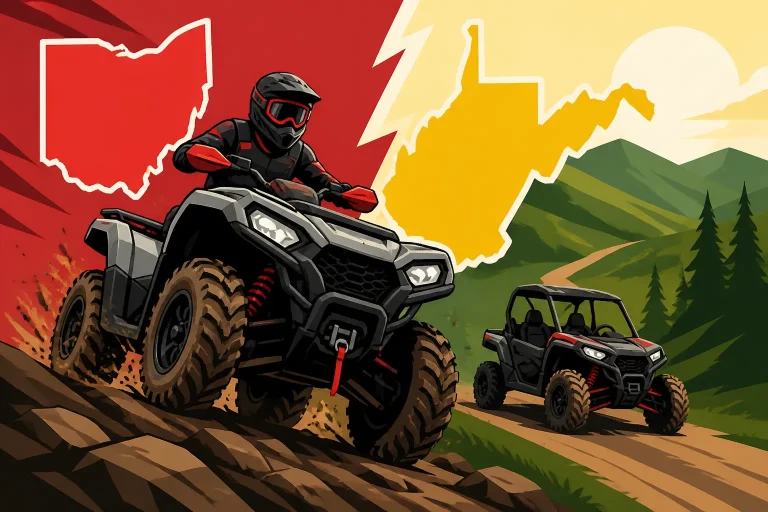
Bringing an Ohio machine to Hatfield-McCoy requires an individual trail permit; public-road riding has separate West Virginia SPV and insurance requirements.
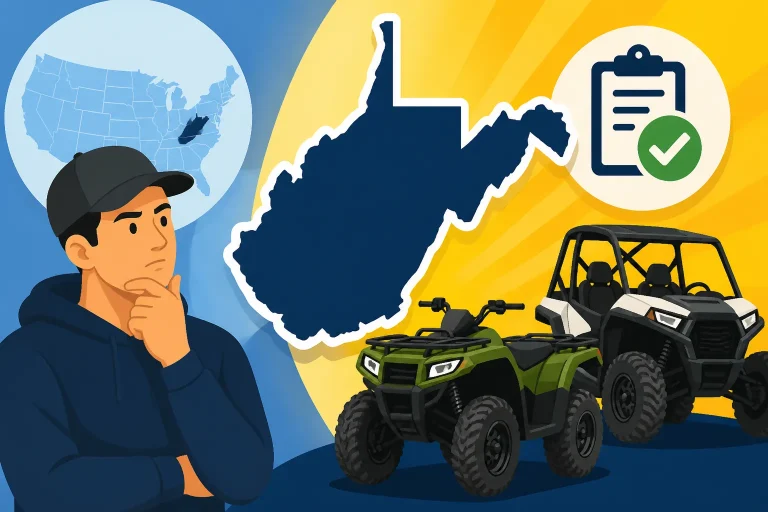
Out-of-state riders generally need no West Virginia ATV title for a temporary visit, but trail permits and road-use registration remain separate.
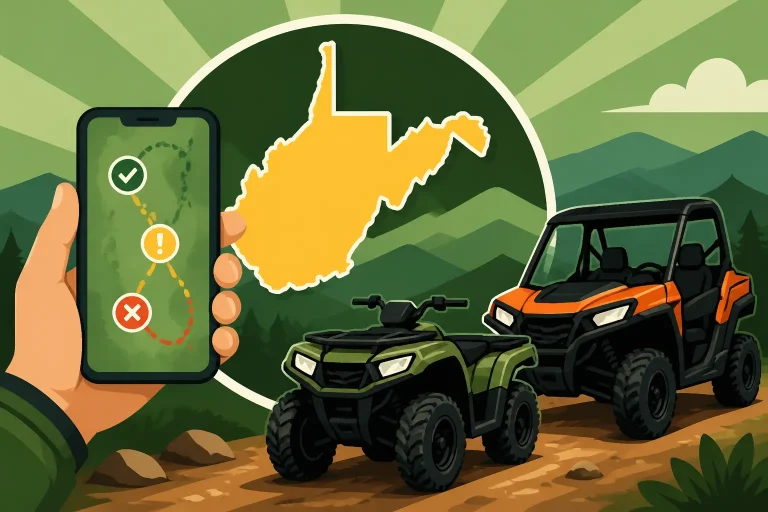
Checking West Virginia trail status before you drive helps confirm closures, weather conditions, access, permits and a workable backup plan.
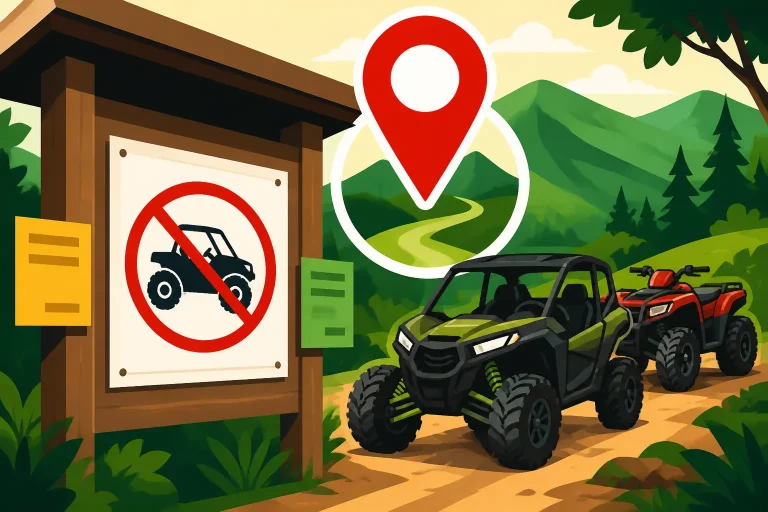
West Virginia trail closure notices appear through official updates and on-site signs; check both before riding, and never bypass a closed route.
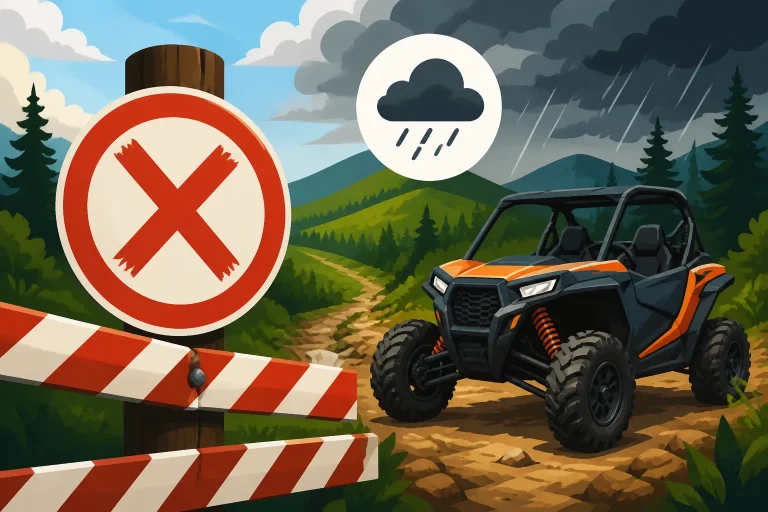
West Virginia trail closures happen due to weather damage, maintenance, land changes, or hazards, affecting trip plans.
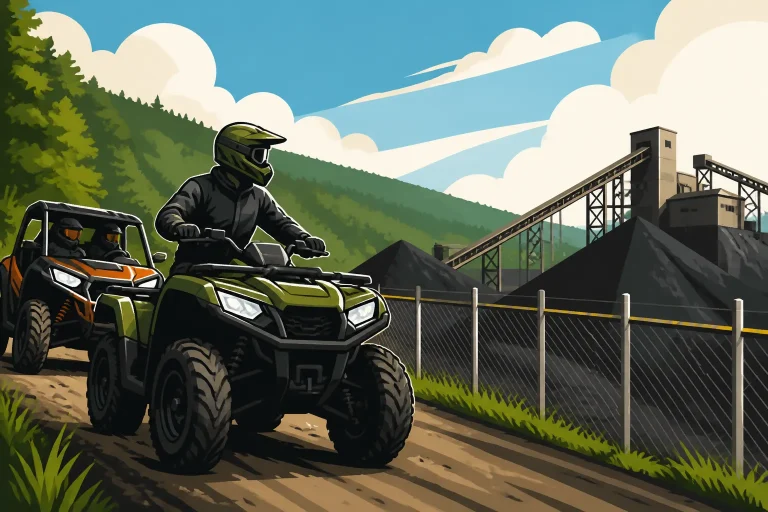
West Virginia ATV and UTV riders learn why trail permits and road registrations do not authorize private property access.
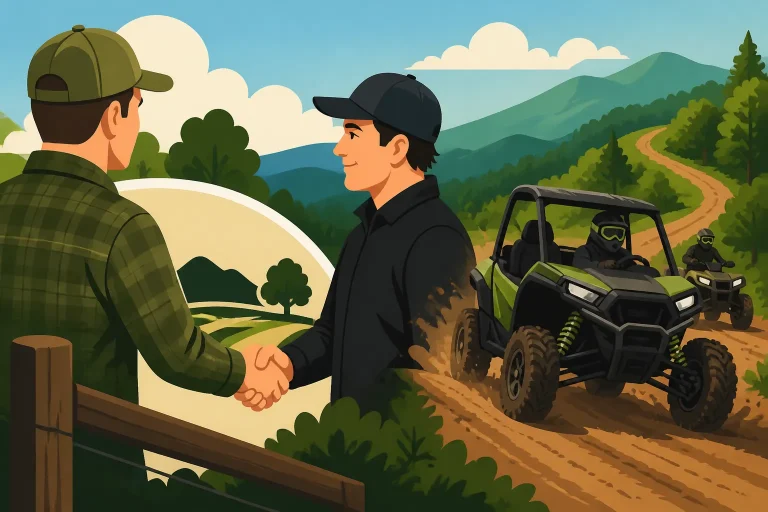
West Virginia trail agreements secure private-land access for motorized routes, but they do not replace permits or authorize riding beyond marked trails.
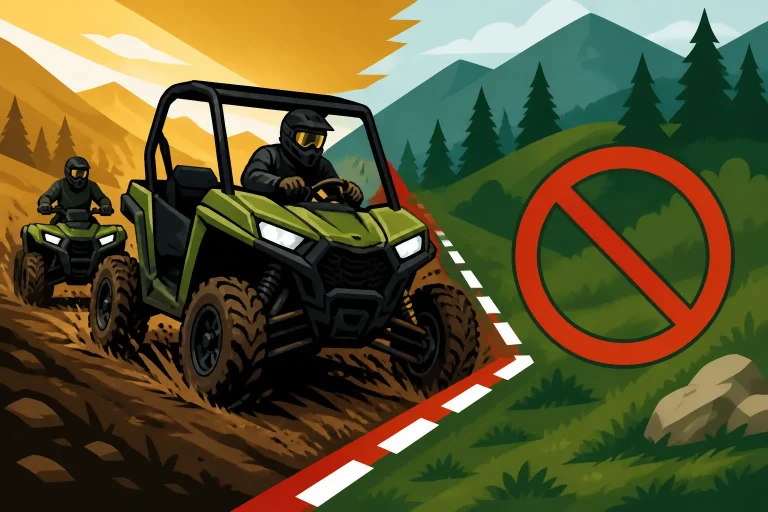
Trespass beyond West Virginia trail boundaries can bring a misdemeanor and $1,000 fine; stay on marked routes and verify access before riding.
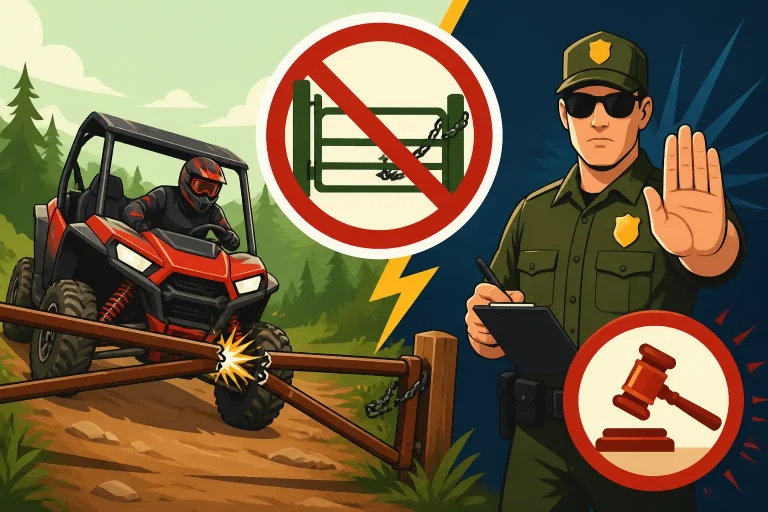
Penalties for cutting a trail gate in West Virginia can include responsibility for damage and misdemeanor consequences; permission and route status matter.