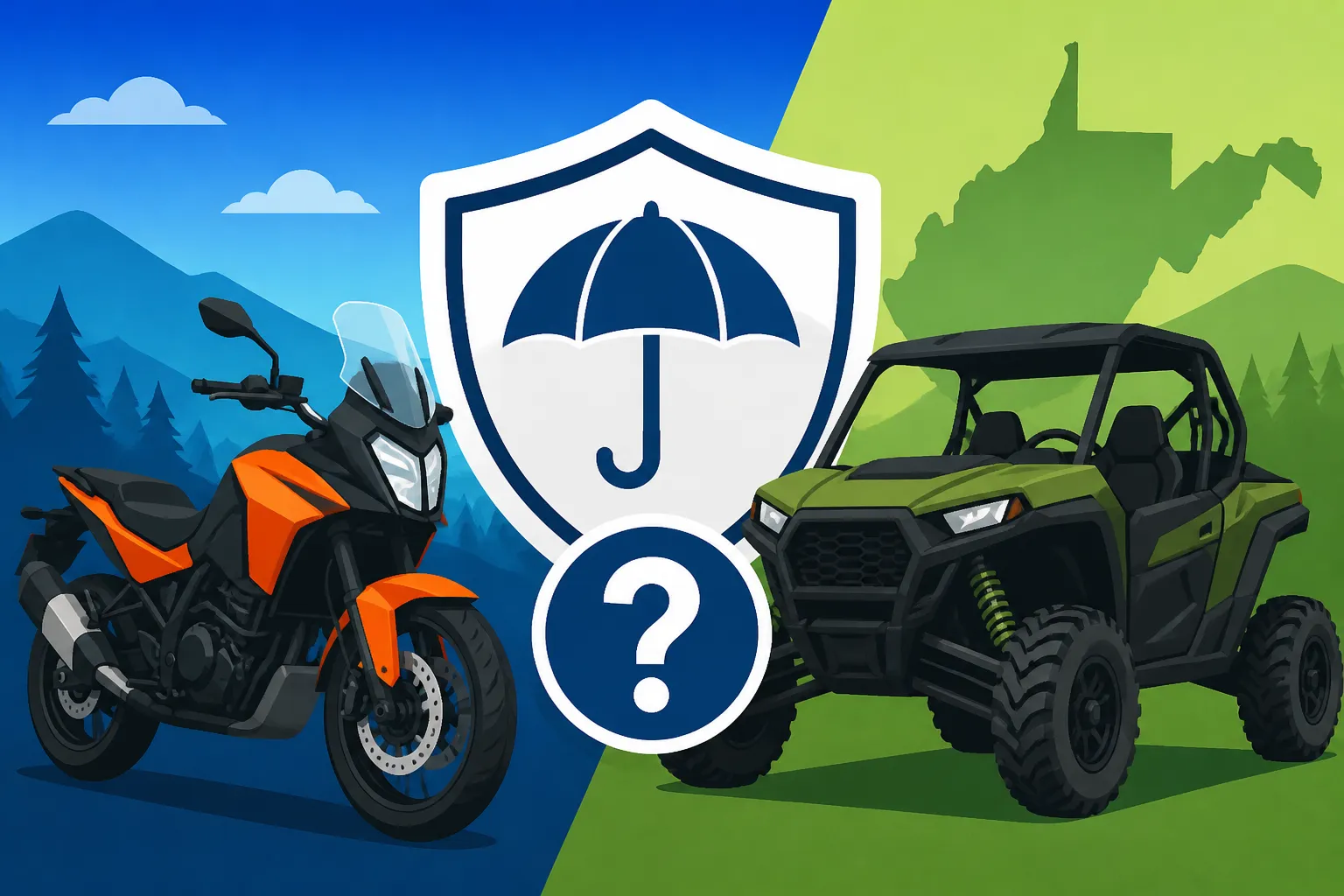
Does Motorcycle Insurance Cover a UTV?
It's a common dilemma for many West Virginia riders: you've got a motorcycle, you're covered, and now you've got a shiny new UTV or side-by-side. The logical question pops up – can your existing motorcycle insurance policy just stretch to cover your new off-road companion? Unfortunately, for most riders, the answer is usually no, and trying to force it can leave you dangerously exposed. This guide will help clear up the confusion and explain why UTVs often need their own dedicated insurance in the Mountain State.
Why UTVs and Motorcycles Are Different in the Eyes of Insurers
While both motorcycles and UTVs offer incredible thrills and open-air adventure, insurance companies don't typically see them as interchangeable. They categorize vehicles based on a myriad of factors, including their design, intended use, number of wheels, and potential risks. These distinctions are critical because they directly impact the type of policy you need and how much you'll pay. It's not just about two wheels versus four, it's about a whole different risk profile.
Design and Classification Differences
From an insurance standpoint, a motorcycle is generally a two-wheeled vehicle designed for on-road use, although dual-sport bikes can venture off-pavement. UTVs, or Utility Terrain Vehicles, are purpose-built for off-road environments, typically with four wheels, a steering wheel, roll cages, and side-by-side seating. These fundamental design elements mean they handle differently, are used in different terrains, and are exposed to different types of hazards. For instance, the wider stance and roll cage of a UTV might seem safer, but their weight and high center of gravity can lead to rollovers in challenging off-road conditions, a risk profile distinct from a motorcycle's.
Intended Use and Risk Exposure
Think about where you ride your motorcycle versus your UTV. Your motorcycle might primarily see asphalt, commuting to work, or cruising scenic routes. Your UTV, on the other hand, is likely tearing up trails, hauling gear on your property, or navigating rugged terrain on the Hatfield-McCoy system. This difference in primary usage translates to vastly different risk exposures. An insurer considers factors like the likelihood of striking wildlife on a paved road versus encountering hidden obstacles, steep inclines, or deep mud on an off-road trail. They also consider the potential for property damage when traversing rough land, or the risk of injury to multiple passengers in a UTV versus typically one or two on a motorcycle. The very essence of off-road riding introduces a separate set of risks that traditional motorcycle policies aren't structured to cover.
Passenger Capacity and Liability Concerns
One of the most significant differences, especially with side-by-sides, is the passenger capacity. Motorcycles are typically single-rider or have room for one passenger. UTVs often accommodate two, four, or even six passengers, sometimes with additional cargo space. This increased capacity escalates the potential liability in case of an accident. If you're involved in a collision or rollover on a West Virginia trail and have multiple passengers, the medical and injury claims could be significantly higher than a motorcycle incident. Insurance companies need to account for this expanded risk, making a dedicated UTV policy essential for adequate liability protection. Without it, you could be personally responsible for substantial medical bills and damages if your motorcycle policy excludes UTVs.
Understanding UTV Insurance Coverage in West Virginia
Since motorcycle insurance typically won't cut it, let's talk about what dedicated UTV insurance in West Virginia actually covers. It's designed specifically for the unique challenges and risks associated with off-road and utility vehicles, providing a robust safety net whether you're hitting the trails or using your machine for work around the farm. Just like auto insurance, UTV policies come with various components that protect you, your machine, and others.
Essential Coverage for Off-Road Adventures
A standard UTV insurance policy in West Virginia usually includes several key types of coverage. [Insuring an ATV in West Virginia] is often a similar process. First, there's Liability Coverage, which is arguably the most crucial. This protects you if you're at fault in an accident that causes bodily injury or property damage to someone else. Imagine accidentally colliding with another rider on a busy trail or damaging a fence on private land. Without liability coverage, you'd be footing the bill yourself. Second, Collision Coverage helps pay for repairs or replaces your UTV if it's damaged in a collision with another vehicle or object, regardless of who is at fault. This is vital for protecting your investment in a high-value machine. Third, Comprehensive Coverage steps in for non-collision incidents like theft, vandalism, fire, or damage from natural disasters. If your UTV is stolen from your campsite or damaged by a falling tree branch, comprehensive coverage is your savior. Lastly, Uninsured/Underinsured Motorist Coverage protects you if you're hit by another off-road rider who doesn't have insurance or doesn't have enough to cover your damages.
Additional Protections to Consider
Beyond the basics, many UTV insurance providers offer specialized options that are incredibly useful for West Virginia riders. For example, Accessory Coverage is a big one. If you've customized your UTV with aftermarket parts like a new winch, LED light bar, upgraded suspension from a company like SuperATV, or a plow kit, these additions can significantly increase the value of your machine. Standard policies might only cover factory-installed parts, so a dedicated accessory endorsement ensures your investments are protected. [Street-Legal Conversion Kit Prices] can add up, making this coverage even more critical. Another valuable addition is Roadside Assistance, which can be a lifesaver if your UTV breaks down far out on a remote trail. Towing a UTV from an inaccessible area can be incredibly expensive and challenging without this coverage. Some policies also offer Medical Payments Coverage, which helps cover medical expenses for you and your passengers regardless of fault, a handy feature for unexpected bumps and bruises on the trail.
Street-Legal UTV Insurance Requirements
If you've gone through the process of making your UTV street-legal in West Virginia to ride on designated public roads, your insurance needs shift slightly. While the core coverages like liability, collision, and comprehensive remain essential, you'll need to ensure your policy specifically covers on-road use and meets West Virginia's minimum liability requirements for street-legal vehicles. [Insurance Minimums for a West Virginia SPV] are designed to protect other motorists and property on public roads. This means your UTV policy needs to function more like an auto insurance policy when it comes to covering road hazards. Some specialized carriers offer specific "street-legal UTV" policies that are tailored to meet these dual-use requirements, bridging the gap between off-road protection and on-road compliance. It’s important to talk to your agent about your specific intentions for road riding when setting up your policy to ensure there are no gaps in coverage.
Factors Affecting UTV Insurance Costs in West Virginia
Just like with any vehicle, the cost of UTV insurance in West Virginia isn't one-size-fits-all. Several factors play into how much you'll pay for your premium. Understanding these can help you anticipate costs and even find ways to save without sacrificing essential coverage. It's about finding that sweet spot between adequate protection and an affordable price tag.
Your UTV's Make, Model, and Value
The specific UTV you own has a huge impact on your insurance rates. More expensive, high-performance machines, like a turbocharged sport side-by-side, generally cost more to insure than a basic utility model. This is because their repair costs are higher, and their performance capabilities might be associated with a higher risk of accidents. Newer models with advanced technology might also command higher premiums. The value of your UTV directly influences how much an insurer might have to pay out for theft or total loss, so a higher-value machine means a higher premium for comprehensive and collision coverage. For example, a fully decked-out, lifted UTV with a custom sound system and significant performance upgrades from SuperATV will likely cost more to insure than a stock farm utility vehicle.
Your Riding Habits and Location
How and where you ride your UTV matters to insurers. If you primarily use your UTV for slow, careful utility work on private land, your perceived risk might be lower than someone who frequently tackles aggressive black diamond trails on the Hatfield-McCoy system. [West Virginia Title Rules for Farm ATVs] might even apply to you. Even if your machine is only used on private property, you still need liability coverage in case of an incident involving guests or contractors. Your geographic location within West Virginia also plays a role. Areas with higher theft rates for UTVs or higher frequencies of accidents might see slightly elevated premiums. Additionally, if you plan to make your UTV street-legal and frequently ride on public roads, your policy will need to reflect that increased exposure to traffic and road hazards, potentially increasing your premium compared to a purely off-road policy.
Your Driving Record and Coverage Choices
Your personal driving history, even for your car or motorcycle, influences your UTV insurance rates. A clean driving record with no accidents or violations generally leads to lower premiums. Conversely, a history of claims or serious infractions can signal a higher risk to insurers, leading to higher costs. Beyond your record, the specific coverages and deductibles you choose significantly impact your premium. Opting for higher liability limits, for instance, provides more protection but will cost more than the state minimums. Choosing lower deductibles for collision or comprehensive coverage means you pay less out-of-pocket if you file a claim, but your monthly or annual premium will be higher. Carefully weighing your budget against your desired level of protection is key when selecting your policy. You might also want to look at bundling discounts if you have other policies with the same provider.
What Happens if You Only Have Motorcycle Insurance?
Relying solely on your motorcycle insurance to cover your UTV is a gamble you absolutely do not want to take in West Virginia. While it might seem convenient or cost-effective on the surface, the potential consequences can be financially devastating. Most standard motorcycle policies explicitly exclude coverage for other vehicle types, including UTVs, side-by-sides, and ATVs, because of those fundamental differences we discussed earlier.
No Coverage in Case of an Accident
The most immediate and severe consequence of having only motorcycle insurance for your UTV is a complete lack of coverage in the event of an accident. If you're riding your UTV on the [Rockhouse Trail System] and get into a fender bender, or worse, cause significant damage to another machine or injure another rider, your motorcycle policy will almost certainly deny any claims. This means you will be personally responsible for all repair costs, medical bills for injured parties, and any legal fees that might arise if they sue you. The out-of-pocket expenses for even a minor incident can quickly escalate into thousands, if not tens of thousands, of dollars. It’s a terrifying prospect that can lead to severe financial hardship and even bankruptcy.
Liability Risks Are Substantial
Beyond physical damage to your machine, the liability risks are enormous. Imagine you're riding your UTV, and you inadvertently cause an accident where multiple passengers are injured, or you damage someone else's expensive property, like a truck or a cabin, near the trails. If your motorcycle policy doesn't cover your UTV, you have zero liability protection. This means any medical expenses, lost wages, pain and suffering, and property damage claims will fall entirely on your shoulders. In West Virginia, where riders frequently enjoy shared access areas and trail systems, the chance of interacting with other people and their property is high. Without dedicated [West Virginia ATV Liability Coverage Limits] for your UTV, you're essentially riding without a safety net, exposing your personal assets to immense risk.
Legal and Financial Ramifications
Riding an uninsured UTV, especially if you're operating it on public roads or designated trail systems that require insurance, can lead to legal penalties. While dedicated UTV insurance isn't always mandatory for off-road use on private land in West Virginia, it is required if you've obtained a [West Virginia's Street-Legal Special Purpose Vehicle Plate] and plan to use it on public roadways. Trying to pass off motorcycle insurance as valid for a street-legal UTV is likely to result in fines, license suspension, or other legal consequences if you're stopped by law enforcement. Furthermore, if you finance your UTV, the lender will almost certainly require you to carry full coverage insurance to protect their investment. Failing to maintain proper insurance could violate your loan agreement, leading to repossession or other financial penalties. Don't risk it; a dedicated UTV policy is the only way to ensure you're truly protected.
| Feature | Motorcycle Insurance (Typical) | UTV Insurance (Dedicated) |
|---|---|---|
| Vehicle Type | Two-wheeled vehicles, sometimes three (trikes) | Four-wheeled, side-by-side or utility vehicles |
| Intended Use | Primarily on-road, some dual-sport off-road | Primarily off-road, utility, some street-legal use |
| Risk Factors | Collision with vehicles/objects, road hazards, theft | Rollovers, off-road obstacles, trail hazards, multiple passengers |
| Liability Coverage | Covers injuries/damage caused by motorcycle | Covers injuries/damage caused by UTV (often higher limits needed) |
| Passenger Count | 1-2 riders | 2-6+ riders |
| Accessory Coverage | For motorcycle modifications | Specific for UTV winches, light bars, lift kits (e.g., SuperATV) |
| Road Legal | Designed for road use, meets state requirements | Can be off-road only, or modified to meet street-legal requirements |
| Acceptance by DMV | For motorcycles/street bikes | Required for West Virginia SPV plates, generally recognized for UTVs |
Disclaimer
This article is for general informational purposes only and does not constitute professional advice. Laws, prices and regulations vary by location and change over time. Consult a qualified professional for guidance on your specific situation.