Fixing a Wrong VIN on a West Virginia Title
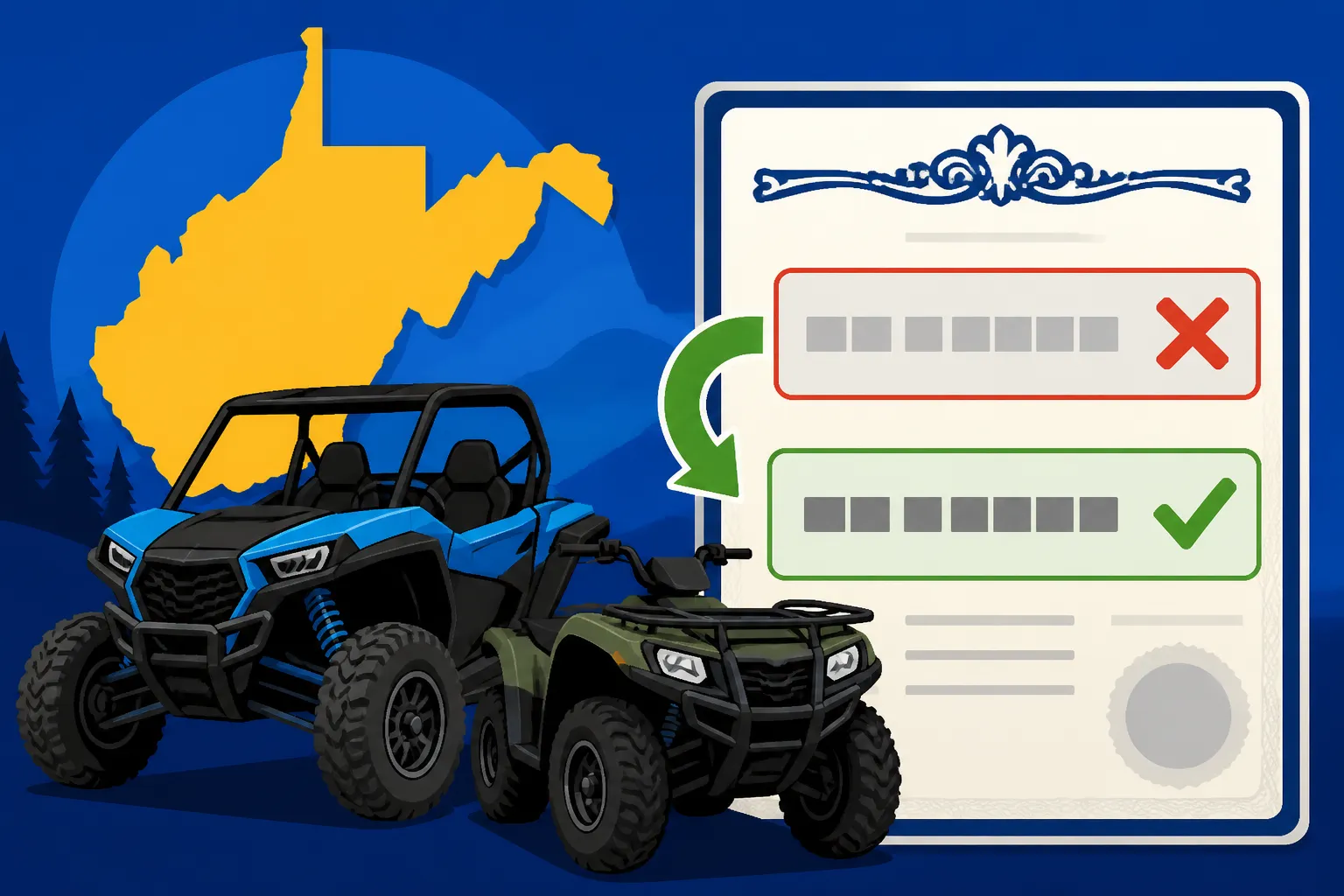
There's nothing quite like the sinking feeling you get when you finally receive your shiny new ATV or UTV title in the mail, only to find a glaring error: the Vehicle Identification Number (VIN) is wrong. It's a frustrating setback that can feel like a massive headache, threatening to derail your riding plans or future sale. This comprehensive guide is here to walk you through exactly how to tackle and correct a mistaken VIN on your West Virginia title, so you can get back to enjoying the trails.
The Frustration of a Mismatched VIN on Your West Virginia Title
Imagine you've just bought your dream side-by-side, spent a fantastic weekend riding the [Hatfield-McCoy Trails, West Virginia's 1,200-Mile Network], and now you're ready to get everything squared away with the DMV. You get your title, excitedly open the envelope, and then your heart drops. The VIN printed on that official document doesn't match the one stamped on your machine's frame. This isn't just a minor typo; a mismatched VIN can lead to a host of legal and practical problems down the line, turning your excitement into a bureaucratic nightmare.
Why a Correct VIN is Non-Negotiable
The Vehicle Identification Number is essentially your ATV or UTV's unique fingerprint. It's how law enforcement identifies stolen machines, how insurance companies verify claims, and how the DMV tracks ownership history. If the VIN on your title doesn't perfectly match the one on your physical machine, it can cast a shadow of doubt on your legal ownership. This becomes a particularly sticky situation if you ever need to sell your quad. A prospective buyer, especially one who runs a [Running a VIN Check Before You Buy], will immediately flag the discrepancy, likely walking away from the deal due to the potential complications.
Beyond selling, a wrong VIN can create issues with financing, insurance, or even just proving your ownership if your machine is ever stolen. You might think it's a small detail, but in the eyes of the law and official agencies, it's a critical component of your vehicle's identity. Trying to process an insurance claim with an incorrect VIN on file could lead to significant delays or even outright denial, leaving you with a damaged or lost machine and no recourse. It’s a foundational piece of paperwork that absolutely has to be right.
Common Scenarios Leading to VIN Errors
So, how do these errors happen in the first place? It's often not malicious, but rather a simple mistake in a long chain of paperwork. One common culprit is human error at the dealership or even the DMV itself, where a digit might be transposed or skipped during data entry. For example, a "B" could be mistaken for an "8," or a "0" for an "O." These mistakes, while seemingly small, can throw off the entire identification process.
Another scenario might arise from a private sale. Perhaps the previous owner made a mistake when filling out the [West Virginia ATV Bill of Sale: What Belongs in It], or even mistakenly copied the VIN from an old machine's paperwork instead of the one being sold. Sometimes, previous owners might have performed extensive modifications, like an engine or frame swap, without correctly updating the title, which introduces a whole other level of complexity that you might unwittingly inherit. It's an issue that can stem from various points in a machine's history, often leaving the current owner with the unenviable task of sorting it out.
Pinpointing the Origin of the VIN Discrepancy
Before you can fix the problem, you need to understand exactly what the correct VIN should be and where the error occurred. This detective work is crucial for providing the West Virginia DMV with the clear information they need to make the correction. Without a precise understanding of the discrepancy, you’ll find yourself going in circles.
Checking Your Machine's Actual VIN
The first and most critical step is to physically locate and verify the VIN stamped on your actual ATV or UTV. This number is usually found in a few key places. Most often, it's stamped directly onto the frame, typically near the steering head on an ATV, or on a frame rail under the seat or near a wheel well on a side-by-side. Some manufacturers also place a sticker or plate with the VIN in other accessible spots, like on the engine casing or inside a glove compartment. However, the frame stamp is usually the definitive one.
Take clear photos of this stamped VIN from multiple angles. Compare each character carefully to the one listed on your title document. Is it just one digit off? Are several numbers transposed? Is it an entirely different VIN? Knowing the exact nature of the error is vital. You can find detailed guidance on how to locate these numbers by referencing resources like [Finding the VIN Stamp on an ATV Frame] or specific guides like [Where to Find the VIN on a Polaris RZR]. This initial inspection is your bedrock of evidence.
Reviewing Your Purchase Documents
Next, dig out all your original purchase paperwork. This includes your bill of sale, any dealer invoices, loan documents, and if you purchased it used, any previous title you might have received (even if it wasn't signed over to you directly). Compare the VIN listed on all these documents against the VIN you found on your machine and the VIN on your current problematic title. Sometimes, the error originated early, like on the bill of sale, and was simply carried over to the title application.
If you bought from a dealership, their original sales agreement might hold the key. For private sales, the bill of sale is paramount. Pay close attention to how the VIN was hand-written or typed on these documents. Sometimes, a poorly written number can be misread and entered incorrectly further down the line. It's like a game of telephone, and you need to find where the message got garbled.
Contacting the Previous Owner or Dealership
If you've identified the discrepancy, and it appears to stem from the point of sale, your next move is to contact the person or entity who sold you the machine. If it was a dealership, reach out to their sales or finance department. They often keep detailed records of all transactions, including VINs, and might be able to provide an affidavit or corrected paperwork. Many reputable dealers will be eager to help rectify an error they made, as it reflects on their business.
For a private sale, reaching out to the previous owner can be a bit trickier, but it's often essential. Explain the situation calmly and provide them with the evidence you've gathered. They might be willing to provide a notarized statement or a corrected bill of sale, verifying the correct VIN of the machine they sold you. This additional documentation can be incredibly helpful to the DMV. If they used a platform like LawDepot to generate their original bill of sale, they might even find it easier to create a corrected version or a sworn affidavit of facts.
Your Action Plan for Correcting the VIN
Once you've diligently traced the error and gathered your evidence, it's time to put your plan into motion. The West Virginia Division of Motor Vehicles (DMV) has a process for correcting title errors, and understanding the steps will save you a lot of time and frustration. Be prepared, be patient, and have all your ducks in a row.
Gathering Your Evidence
The West Virginia DMV isn't going to take your word for it. You need tangible proof. This means compiling everything you've discovered into a neat, organized package. Include the clear photographs of your machine's actual, correct VIN. Make copies of all your purchase documents—the bill of sale, dealer invoice, and any previous title documents—highlighting where the correct VIN appears. If you obtained a sworn statement or affidavit from the previous owner or dealership, make sure it's properly notarized and included.
For more complex cases, such as a previous owner admitting to a data entry error, a notarized affidavit stating the correct VIN and acknowledging the error on the original title can be incredibly powerful. Resources like LawDepot can provide templates for these types of legal documents, ensuring they are structured correctly to meet official requirements. The more compelling and verifiable evidence you can present, the smoother the correction process will be.
Engaging with the West Virginia DMV
With your evidence in hand, your next step is to contact or visit a West Virginia DMV office that handles ATV titles. While some basic title services can be done online, correcting a VIN error usually requires an in-person visit or at least a detailed mail-in application with supporting documents. It's often beneficial to call ahead or check the DMV's website for specific forms related to title corrections or amendments. You'll likely need to complete a new title application form, indicating that it's a correction.
Be prepared for the possibility that the DMV might require a VIN inspection. This means a trained official will physically examine your ATV or UTV to verify the VIN stamped on the frame. This step is a safeguard against fraud and ensures that the correction being made aligns with the actual machine. You can learn more about this process by looking into [VIN Inspection Before a West Virginia Title]. Don't be surprised if they want to see your machine; it's part of their due diligence.
The Title Correction Application Process
Once you're at the DMV or have all your forms ready to mail, you'll typically fill out a new application for title. On this form, you'll clearly indicate that you're seeking a VIN correction. You'll attach all your supporting evidence, including the original (incorrect) title. It’s important to submit the incorrect title, as the DMV will need to invalidate it and issue a new one. Be thorough when filling out any forms, ensuring all your personal information and the correct VIN are accurately recorded.
There might be a small fee associated with issuing a corrected title, similar to the fee for a duplicate or new title. Once submitted, the DMV will process your application. The timeline for receiving your corrected title can vary, but generally, you can expect it to take a few weeks. You can get a general idea of waiting times by checking out information on [How Long a West Virginia ATV Title Takes], though corrections might sometimes take a bit longer due to the manual review required.
| Aspect of VIN Correction | Description | Key Action for You |
|---|---|---|
| Error Identification | Locating the correct VIN on your machine and comparing it to the erroneous title. | Physically inspect VIN; review all purchase documents. |
| Evidence Gathering | Collecting documents, photos, and statements to prove the correct VIN. | Take clear VIN photos; get notarized affidavits. LawDepot can help. |
| DMV Contact | Initiating communication with the West Virginia DMV regarding the discrepancy. | Call or visit a DMV office; ask about specific forms. |
| VIN Inspection | A DMV official may need to physically verify the VIN on your machine. | Be prepared to take your machine for inspection. |
| Application Submission | Filling out a new title application with the correct VIN and supporting documents. | Submit original title, all evidence, and applicable fees. |
| Waiting Period | Time taken by the DMV to process your request and issue a new title. | Be patient; track application status if possible. |
Essential Documents and Proof You'll Need
Successfully correcting a VIN error at the West Virginia DMV hinges on presenting a robust package of documentation. Think of it like building a legal case; the more irrefutable evidence you have, the stronger your position. Without the right paperwork, your request might be delayed or even denied, sending you back to square one.
The Original (Incorrect) Title
This might seem counter-intuitive, but the original title with the wrong VIN is absolutely necessary. The DMV needs to take possession of this document to officially cancel it and then issue a new, corrected title in its place. Think of it as exchanging the flawed version for the accurate one. Do not discard it, even if it feels useless. Presenting the original title demonstrates that you are the current documented owner (albeit with an error) and helps the DMV track the transaction history of your machine. Without it, you might face a much more complicated process, potentially having to go through a lost title procedure first.
Proof of Your Machine's Correct VIN
This is where your upfront detective work really pays off. You need irrefutable proof of what the correct VIN actually is. This can come in several forms:
- Manufacturer's Certificate of Origin (MCO) / Manufacturer's Statement of Origin (MSO): If your ATV or UTV was purchased new, or if you have access to the original MCO/MSO, this is often the gold standard. It’s the manufacturer's official document stating the vehicle's original VIN.
- Dealer Invoice or Bill of Sale: An original, clearly legible invoice from a licensed dealer will show the VIN at the time of sale. This is a strong piece of evidence, especially if the dealer acknowledges their error.
- Clear Photographs: As mentioned before, clear, well-lit photos of the VIN stamped on your machine's frame are crucial. These photos serve as direct visual confirmation.
- Previous Registration/Title Documents: If you received any old registration cards or a prior title from an out-of-state transfer, and they show the correct VIN, those can also be valuable.
Any document that directly links the correct VIN to your ownership, like a [Proof of Ownership for a West Virginia ATV Title], will strengthen your case. The more distinct pieces of evidence you have that consistently show the same, correct VIN, the better.
Supporting Statements and Affidavits
Sometimes, physical documents aren't enough, or they might be difficult to obtain. In these situations, sworn statements or affidavits from credible parties can bridge the gap. For example, if you bought the machine from a private seller who mistakenly wrote the wrong VIN on the bill of sale, a notarized affidavit from them confirming the correct VIN of the machine they sold you would be incredibly helpful. This is their sworn testimony that the machine they transferred to you has a particular VIN, and the initial paperwork contained an error.
Similarly, if a mechanic has worked on your machine and can verify its VIN, their signed and possibly notarized statement could serve as supporting evidence. These statements add a layer of personal accountability and verification that the DMV will appreciate. When drafting such documents, ensure they are clear, concise, and contain all relevant details. Tools like LawDepot can be invaluable for generating professional, legally sound affidavit templates, ensuring all the necessary legal language and formatting are included for acceptance by the West Virginia DMV.
Navigating Tricky Situations and Common Roadblocks
While many VIN corrections are straightforward, some situations can throw a wrench into the works. It's important to be prepared for these potential roadblocks and know your options when things get complicated. The West Virginia DMV deals with a wide array of scenarios, and yours might just be one of the more unique ones.
When the Previous Owner is Unavailable or Uncooperative
This is a common and frustrating hurdle. You've identified the VIN error, but the person who sold you the machine has moved, changed their phone number, or simply refuses to cooperate. Without their signature or statement, proving the origin of the error can become significantly more challenging. In such cases, the DMV might require more substantial proof of ownership and the correct VIN.
One potential route, though more involved, is a bonded title. A bonded title is essentially a title issued by the state based on a surety bond, which protects previous owners and future buyers if a legitimate claim of ownership arises. It's a way for the state to grant you legal title when traditional proof of ownership or a clear chain of title cannot be established. This process is generally reserved for situations where ownership is in question, and a VIN error without previous owner cooperation might push it into this territory. For more details on this, you might need to explore options like [Bonded Title for an ATV in West Virginia]. This approach essentially provides the DMV with financial assurance against any future claims related to the machine's true identity or ownership.
Dealing with Extensive VIN Discrepancies (e.g., Frame Swap)
What if the VIN on your title is not just a digit or two off, but entirely different? This often points to a more significant issue, such as a frame swap. If the frame of your ATV or UTV has been replaced with one from another machine, or even a brand-new, non-VIN-stamped frame, this isn't a simple title correction. This becomes a re-titling issue, where the identity of the vehicle has fundamentally changed.
In West Virginia, if a frame or major component with a VIN is swapped, it often requires a new VIN assignment, a thorough inspection, and potentially a salvage or rebuilt title process. This is far more complex than correcting a typo and usually involves providing proof of purchase for the new frame, an inspection by a certified professional, and extensive paperwork to ensure the machine isn't stolen or reassembled from illegal parts. The process for [Salvage and Rebuilt ATV Titles in West Virginia] outlines the rigorous steps needed for such cases, which are designed to prevent the re-entry of unsafe or illicit vehicles into circulation.
Multiple Errors or Complex Ownership Histories
Sometimes, you might discover not just a VIN error, but other discrepancies on the title, such as an incorrect lien holder listed (even though you've paid it off) or an outdated owner's name. Furthermore, if your machine has been passed down through several owners without proper title transfers, or if you're trying to title an ATV in West Virginia after buying it out-of-state with an unclear title history, the VIN correction process can get tangled with other issues.
In these complex scenarios, it might be beneficial to seek legal advice or inquire if the West Virginia DMV has a specialized unit or individual who handles unusual title cases. You might need to fill out additional forms to address each specific error, providing separate documentation for each discrepancy. For instance, if there's an old lien on the title that you know has been paid off, you'll need to secure a lien release from the original lender. The more layers of error, the more documentation and patience you'll need to untangle the web of ownership.
Protecting Yourself: Preventing Future VIN Woes
The best way to avoid the headache of a VIN error is to prevent it from happening in the first place. A little extra diligence upfront can save you a tremendous amount of time, money, and frustration down the road. Especially when dealing with private sales, where there isn't a dealer's compliance department to ensure accuracy, the responsibility falls squarely on your shoulders.
Due Diligence Before You Buy
Never, ever skip this step. Before you hand over any money for an ATV or UTV, perform a thorough inspection of the machine, and that absolutely includes verifying the VIN. Physically locate the VIN stamped on the frame and compare it character by character to the VIN on the title document the seller provides. Take a picture of both side-by-side if you can. Don't be shy; this is your future investment.
Furthermore, always run a VIN check through an online service or by contacting the DMV yourself. This check can reveal if the machine has ever been reported stolen, if it has a salvage history, or if there are any active liens against it. An article like [Checking a Used Quad Against Stolen Records] can give you great tips on where and how to do this. A clean VIN check that matches the physical machine and the title is a green light; any discrepancy is a major red flag that warrants further investigation or walking away from the deal entirely.
Meticulous Paperwork at Purchase
When it comes time to complete the sale, whether it's with a dealer or a private seller, be incredibly meticulous with the paperwork. For private sales, use a comprehensive bill of sale that clearly lists the correct VIN, the buyer's and seller's full names and addresses, the purchase price, and the date of sale. Ensure both parties sign and date it, and consider having it notarized for an extra layer of authenticity.
Double-check every single character of the VIN on all documents before you sign anything. If you're using a template for your bill of sale, like those offered by LawDepot, ensure it has a dedicated section for the VIN and encourages thorough verification. It's a critical legal document, and catching an error at this stage is much easier than fixing it after the fact. Don't let the excitement of a new machine rush you into overlooking important details.
Promptly Reviewing New Titles
Once you've submitted your title application to the West Virginia DMV, and especially after you receive the new title in the mail, make it a priority to review it immediately. As soon as that envelope arrives, open it up and compare the VIN on the new title to the one physically stamped on your machine. Check your name, address, and any lienholder information for accuracy too.
If you spot an error on the newly issued title, contact the DMV right away. The sooner you report an error on a title they've just issued, the easier it generally is for them to correct it. Waiting too long might lead to questions about why the error wasn't reported sooner, potentially adding complexity to what should be a straightforward correction process. A quick check upon receipt is the final, crucial step in ensuring your title is absolutely perfect.
Disclaimer
This article is for general informational purposes only and does not constitute professional advice. Laws, prices and regulations vary by location and change over time. Consult a qualified professional for guidance on your specific situation.