Getting an ATV Safety Card at the DMV
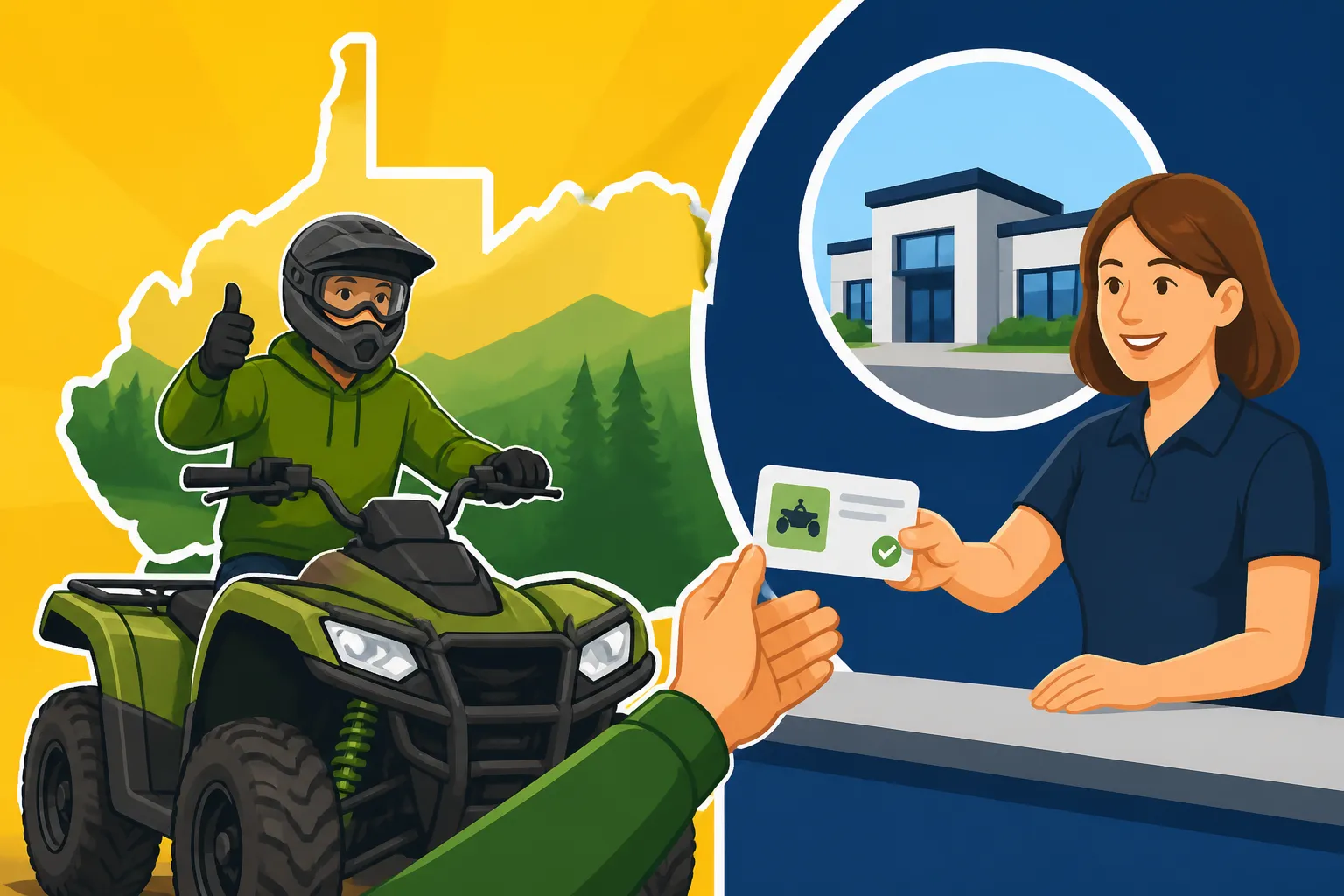
Getting an ATV safety card in West Virginia can mean more than stopping at a DMV counter: you may need to complete the state course first. Knowing what to ask, what proof to keep, and how the card differs from a trail permit can prevent a wasted trip and last-minute paperwork problems.
What the ATV safety card is for
West Virginia’s ATV Safety Awareness Course is the key step behind the safety card. The card is evidence that a rider completed the required course; it is not an ATV title, registration, insurance document, or trail permit. Those documents serve different purposes, so having one does not automatically meet the requirements for another.
The rules can depend on the rider’s age and where the machine will be used. Trail-system rules and exemptions may also differ from rules that apply elsewhere. Before relying on a card—or assuming one is not needed—check the current instructions for the specific riding area and rider. The state’s Who Needs the West Virginia Safety Course and West Virginia Age Rules on the Trails explain the questions to check first.
A safety card is also not the same as a permit to ride a managed trail system. A trail permit is tied to trail access and may have separate purchase, display, and machine requirements. For example, review West Virginia’s Hatfield-McCoy Trail Permit Explained before heading to those trails. Likewise, a safety card does not make a machine street legal or replace the documents needed to title it.
| Item | What it generally establishes | What it does not replace |
|---|---|---|
| ATV safety card | Completion of the applicable safety course | Trail permit, title, insurance, or street-legal documents |
| Trail permit | Permission to use a particular managed trail system, subject to its rules | Safety-course requirements or vehicle ownership documents |
| ATV title | Recorded ownership of the machine | Course completion, trail access, or insurance |
| Insurance proof | Coverage under the policy’s terms | A safety card, title, or trail permit |
Keep that distinction in mind when asking the DMV for help. If you only say that you need an “ATV permit,” staff may reasonably think you mean trail access rather than course documentation. Ask specifically about the ATV Safety Awareness Course and the card or proof issued after completion.
How to get the card through the DMV
The DMV can be a useful starting point for finding out how to take the course and obtain proof of completion. But do not assume every office offers classes, handles every step in person, or can print a card on demand. Ask about the current process before making a trip.
-
Check whether the rider needs the course. Requirements can depend on age and riding circumstances. Confirm the rule for the rider and location rather than relying on another person’s card or experience. A course exemption for one managed setting does not necessarily apply to every place a person might ride.
-
Contact the DMV before visiting. Ask whether the local office provides the ATV Safety Awareness Course, directs riders to an online course, or refers them to another approved location. Also ask whether an appointment is needed and what identification or other information the rider should bring. Office services can vary, so a nearby branch may not handle course enrollment or card questions.
-
Confirm who must take the course. If a parent is arranging the process for a young rider, verify whether the rider must complete the course personally and whether a parent or guardian needs to be present for any part of enrollment. For a broader explanation, see West Virginia’s ATV Safety Awareness Course.
-
Complete the course as instructed. Follow the DMV’s current directions for lessons, any required test, and submission of information. Save a completion screen, certificate, email, or other confirmation until the card arrives or the DMV confirms that the record is complete. A course provider’s confirmation and the physical card may not be the same document.
-
Ask how the card is issued. Before finishing, find out whether the card is mailed, delivered electronically, picked up, or provided through another process. Ask what to do if the card does not arrive or if the rider’s name or details are wrong. Do not assume that a course pass automatically means a physical card is immediately available at the counter.
For the course itself, use the DMV’s official instructions or the provider it identifies. A search result, a private class, or a course from another state may not satisfy West Virginia’s requirements. If a rider has a certificate from somewhere else, ask whether it is accepted before treating it as a substitute. The related topic Out-of-State Safety Certificates in West Virginia is useful when a visitor or new resident already has training documentation.
What to ask before you go
A short call can settle the practical details. Ask:
- Does this office handle ATV safety-course questions or enrollment?
- Is the course offered in person, online, or through another approved provider?
- Does the rider need an appointment?
- What information or identification should the rider bring?
- How is proof of completion issued, and how long should the rider allow for delivery?
- What should the rider do if they already completed a similar course elsewhere?
If staff direct you to another office or provider, write down the name and instructions. That gives you a clear next step and reduces the chance of repeating the same inquiry at multiple counters.
After completing the course
Once the rider completes the course, keep the card and the original completion information together. The card may be the easiest proof to show, while a certificate or confirmation may help resolve a record or delivery issue. Store a photo or scan separately from the original, but do not assume a copy is accepted in every situation. Ask the relevant agency or trail operator what form of proof it will recognize.
Check the details on the card as soon as it arrives. Make sure the rider’s name is accurate and that the card is clearly readable. If information is wrong, or the card is lost, contact the DMV or the office named in the course instructions for the correction or replacement process. The details may differ depending on how the course was completed, so explain where and when the rider took it and keep any completion confirmation available.
When riding, carry the card if the applicable rules or the trail operator ask riders to show proof. A card that is at home may be harder to verify during a ride. At the same time, do not carry it as though it covers every other requirement. Check whether the rider also needs a permit, proof of insurance, or other paperwork for that particular machine and destination. Permits West Virginia Riders Actually Need can help sort out which documents apply to a planned ride.
The course may also be only one part of a young rider’s preparation. A safety card does not override a machine’s manufacturer age and size guidance, supervision rules, helmet requirements, or restrictions on where minors may ride. Review Manufacturer Age and Size Requirements and the rules for the intended trail or road before taking a young rider out.
Common delays and questions for visitors
A frequent source of confusion is expecting a DMV office to issue a card immediately without course completion. Start by confirming the course requirement and the process for receiving proof; then go to the office only if it handles the step you need. If a website or phone response is unclear, ask whether the office can direct you to the correct program contact.
Another common mix-up is assuming a safety card is a universal pass. It does not grant access to a trail system, prove ownership, or make a machine eligible for public-road use. Riders planning to visit the Hatfield-McCoy system should separately verify its permit and trail rules. People riding somewhere else should check that operator’s requirements, too.
Visitors should be especially careful about reciprocity. A safety course card from another state may or may not meet a particular West Virginia requirement; acceptance can depend on the rule and context. Before traveling, ask the responsible West Virginia agency or trail operator whether the specific certificate is accepted. Do not rely only on a card’s appearance or on a general statement that it is “nationally recognized.” For trail-specific information, see Out-of-State Riders on West Virginia Trails.
If a rider completed a West Virginia course but cannot find the card, gather the rider’s full name, approximate completion date, provider, and any certificate or confirmation. Then contact the office or program identified in the original instructions. That information can help staff locate the record and explain whether a replacement, reprint, or other proof is available.
Finally, check requirements again when the riding location changes. A card that answers one course question does not settle the rules for every road, private property, public land, or managed trail. Confirm the requirements for the rider, machine, and destination together. That simple check helps keep course documentation in its proper place: important proof of training, but only one part of riding legally and safely.
Disclaimer
This article is for general informational purposes only and does not constitute professional advice. Laws, prices and regulations vary by location and change over time. Consult a qualified professional for guidance on your specific situation.