Golf Carts and West Virginia Title Rules
It’s a common scenario across West Virginia: you’ve got a golf cart, maybe for zipping around your property, or perhaps you’re looking to pick one up to take to your local course or even cruise the neighborhood if local ordinances allow. But then the question hits you – does this thing need a title? It’s a frustrating piece of confusion, especially when you know ATVs and UTVs definitely do, and it leaves many folks scratching their heads. This guide will clear up the mystery surrounding golf carts and West Virginia title rules, helping you understand when a title is necessary, when it absolutely isn't, and what makes all the difference.
The Core Question: Do Golf Carts Need a Title in West Virginia?
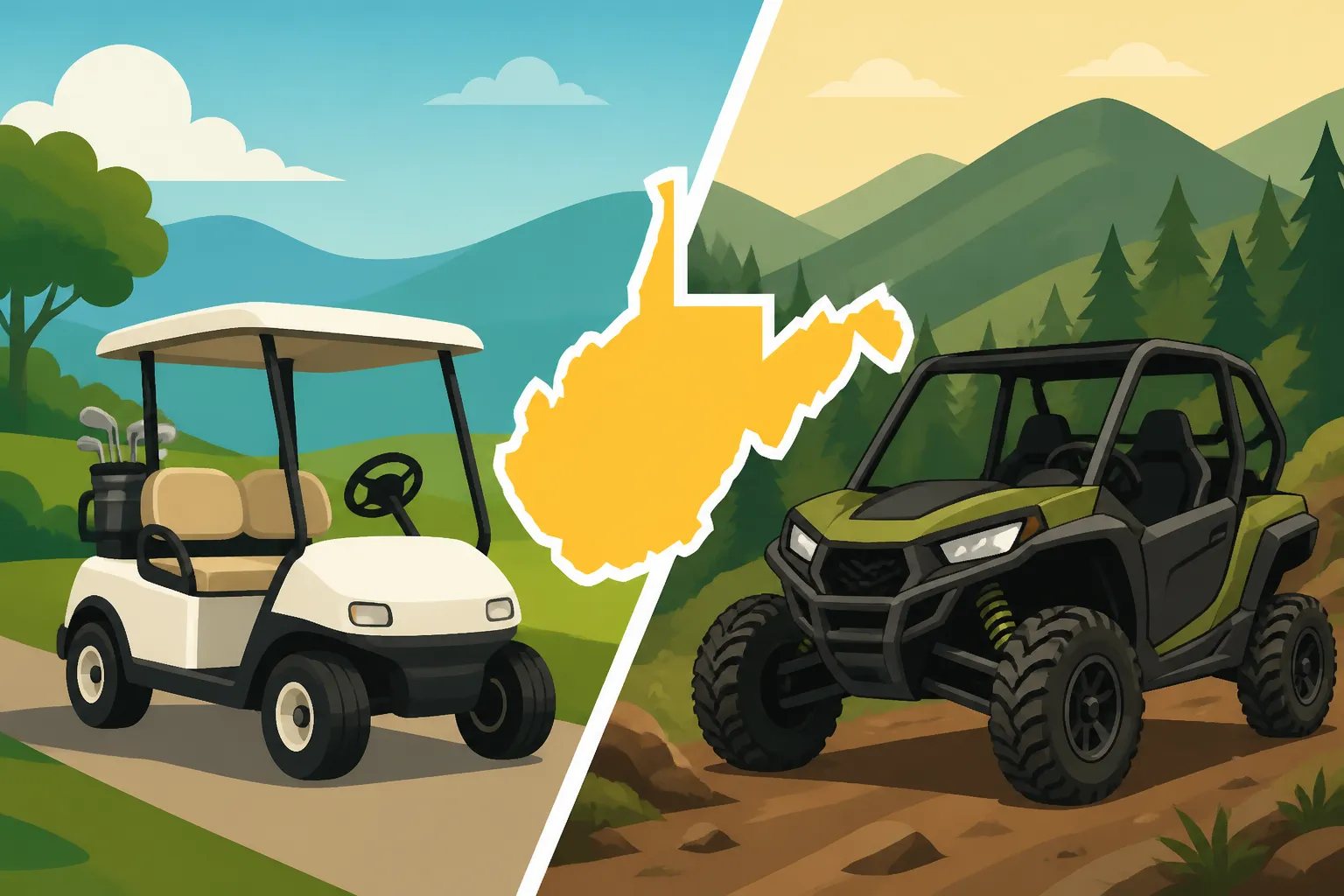
The simple answer for most traditional golf carts used in West Virginia is: no, they typically do not need a title. This often comes as a surprise to many, especially since the state is so particular about titling other off-road machines. But there's a good reason for this distinction rooted in how the state views and defines different types of vehicles.
The State's Primary Stance on Golf Carts as Recreational Devices
West Virginia generally considers golf carts to be recreational vehicles designed for specific, limited use, primarily on golf courses or private property. Think of them like a riding lawnmower or a souped-up kid's power wheel – they're not built for public road use in the same way a car or even a traditional ATV is. Because of this intended purpose, the state doesn't require a certificate of title for them.
This stands in stark contrast to other off-highway vehicles. If you own an ATV or a UTV, you know the drill: getting that title is a non-negotiable step. The West Virginia Division of Motor Vehicles (DMV) mandates titles for ATVs and UTVs because these machines, while also recreational, are classified differently due to their design, power, and potential for more widespread off-road use, even if that use remains on private land. The absence of a title requirement for golf carts highlights a fundamental difference in how they are perceived by state law. It's less about the actual machine itself and more about its legal classification based on its design and intended operational environment.
What Makes an ATV or UTV Different from a Golf Cart in WV Law?
The key to understanding why golf carts are often title-exempt, while ATVs and UTVs are not, lies in their legal definitions and operational characteristics. West Virginia law is quite precise about what constitutes an "all-terrain vehicle" or a "utility terrain vehicle." These machines are typically designed for off-road travel, often have higher top speeds, more robust suspension systems, and engines that produce significant power. They are built for rugged terrain, trails, and work applications, distinguishing them from the lighter, slower, and usually less powerful golf cart.
For instance, [West Virginia UTV Title Rules Since 2010] clearly outline the requirements for titling UTVs, which include detailed VIN verification and proof of ownership. These rules exist because UTVs, even if never driven on public roads, are still considered a form of "vehicle" that the state tracks for ownership, sales tax purposes, and potential theft recovery. Golf carts, on the other hand, rarely meet these robust definitions. They typically have smaller engines (often electric), lower top speeds (usually capped around 15-20 mph), and are designed for smooth, manicured surfaces rather than rough trails. While you might occasionally see a beefed-up "lifted" golf cart, even these generally fall short of the technical specifications that would classify them alongside ATVs or UTVs for titling purposes. This legal separation means less red tape for golf cart owners in most cases.
When a "Golf Cart" Might Act Like Something That Needs a Title: The LSV Exception
While most golf carts dodge the title requirement, there's a significant exception that often trips people up: the Low-Speed Vehicle (LSV). This is where the lines can blur, especially if someone has modified a golf cart or purchased one that was specifically manufactured to meet certain federal and state standards. If your "golf cart" fits the definition of an LSV, then suddenly, a title and registration become absolutely essential.
Defining a Low-Speed Vehicle (LSV) in West Virginia
In West Virginia, a Low-Speed Vehicle (LSV) is a specific class of vehicle that, despite its name, is designed to be operated on public roads. This is the crucial distinction from a standard golf cart. An LSV must meet a set of federal safety standards and has a maximum speed rating. Generally, an LSV is defined as a four-wheeled vehicle with a top speed greater than 20 miles per hour but not greater than 25 miles per hour. This speed range makes them distinct from traditional golf carts (under 20 mph) and from regular automobiles (over 25 mph).
But speed isn't the only factor. To qualify as an LSV and be eligible for titling and registration, the vehicle must also be equipped with a specific list of safety features. These typically include headlamps, tail lamps, stop lamps, turn signal lamps, reflex reflectors, an exterior mirror on the driver’s side and an interior mirror or exterior mirror on the passenger’s side, a parking brake, a windshield, seat belts, and a Vehicle Identification Number (VIN). If your "golf cart" has all these features and meets the speed criteria, it's no longer just a golf cart in the eyes of the law – it's an LSV, and it needs to be treated as such.
The Process of Titling and Registering a Low-Speed Vehicle
If your golf cart has transformed into an LSV, or if you purchased one that was manufactured as an LSV, you'll need to go through the proper titling and registration process with the West Virginia DMV. This is very similar to how you would title any other street-legal vehicle. First, you’ll need proof of ownership, which typically means the Manufacturer’s Certificate of Origin (MCO) if it's new, or a properly endorsed title from the previous owner if it's used. You'll also need a bill of sale, and it's always a good idea to have a robust one, even if the vehicle already has a title. For any private sale, a clear document like one you could create using a service such as LawDepot would be invaluable to record the transaction details.
You'll need to fill out the necessary application forms, which can usually be obtained from the DMV website or at any of the [West Virginia DMV Offices That Handle ATV Titles] (as these offices handle all vehicle titles, including LSVs). You'll pay the applicable titling fees and sales tax – yes, sales tax will apply, much like [West Virginia Sales Tax on an ATV Purchase]. After the title is processed, you'll then need to register the LSV, which involves obtaining license plates and paying registration fees. Critically, because an LSV is a street-legal vehicle, it must have liability insurance. This is not optional; you can't register it without proof of coverage. [Registering a Low-Speed Vehicle in West Virginia] means taking all these steps, ensuring your LSV is fully compliant for road use.
Practical Implications for West Virginia Golf Cart Owners
Understanding the legal classifications has real-world consequences for how and where you can use your golf cart in West Virginia. The difference between a simple, untitled golf cart and a titled, registered Low-Speed Vehicle dictates everything from where you can drive to how you prove ownership if you decide to sell.
Private Property Versus Public Road Use
For the vast majority of golf cart owners in West Virginia, their machine is intended for use exclusively on private property, such as a golf course, a sprawling farm, or your own residential land. In these scenarios, the fact that your golf cart doesn't have a title is perfectly fine. You're operating it within its designed parameters and generally outside the purview of state road regulations.
However, the moment you consider driving your golf cart on a public road, even just to cross a street or run a quick errand in a small town, you enter a legal gray area. An untitled, unregistered golf cart is not a street-legal vehicle in West Virginia. Driving one on public roads can lead to fines, citations, and even impoundment, as it's essentially operating an unregistered and uninsured vehicle. Now, there's a nuance here: some individual towns and municipalities in West Virginia have specific local ordinances that may allow golf carts on certain low-speed public roads within their limits. These local rules, such as those discussed in [Golf Cart Ordinances in West Virginia Towns], are specific exceptions, and they don't change the state's titling requirements. Even if a town allows golf carts on its streets, that doesn't automatically mean your golf cart now needs or can get a state title. It's simply a local allowance for operation, often with specific speed, time of day, or equipment requirements. Always check with your local city hall or police department for specific guidance before venturing onto public roads with an untitled golf cart.
Selling or Buying a Golf Cart in West Virginia
Since most golf carts in West Virginia don't come with a state-issued title, the process of buying or selling one relies heavily on other forms of documentation, primarily a bill of sale. This document becomes your primary [Proof of Ownership for a West Virginia ATV Title], or in this case, for a golf cart that lacks a title. Without a formal title transfer, a well-crafted bill of sale is critical for both the buyer and the seller.
When you're selling a golf cart, the bill of sale should clearly identify the golf cart (make, model, year, VIN if it has one), the seller's and buyer's information, the sale price, and the date of the transaction. It should also state that the vehicle is sold "as-is" unless you're offering a warranty. Using a template from a reputable source, like one available through LawDepot, can help ensure you cover all the necessary details, much like you would for a document such as [West Virginia ATV Bill of Sale: What Belongs in It]. This protects both parties by documenting the transfer of ownership. For buyers, receiving a clear bill of sale is paramount. Without it, you could face difficulties proving ownership if the cart is ever stolen, if there's a dispute, or even if you just want to take it to another state where their rules might differ. Always insist on a written bill of sale, even for what seems like a simple transaction between friends or family members. It creates a paper trail that can save a lot of headaches down the road.
Common Misconceptions and How to Stay Compliant
The world of vehicle regulations can be murky, and golf carts, straddling the line between recreational equipment and low-speed vehicles, are ripe for misunderstanding. Clearing up these common misconceptions is key to ensuring you stay compliant with West Virginia law and avoid any unexpected legal trouble.
The "Street-Legal" Myth for Standard Golf Carts
One of the biggest misconceptions is that simply adding a few aftermarket accessories, like headlights, taillights, turn signals, or a horn, automatically makes a standard golf cart "street-legal" and perhaps even eligible or requiring a title. This is a common pitfall. While these additions are great for safety and visibility, they do not magically transform a golf cart into an LSV or a street-legal vehicle in the eyes of West Virginia state law.
For a vehicle to be truly street-legal and require a title and registration for public road use, it must meet all the specific criteria of an LSV, including its inherent design, top speed, and federal safety compliance, as discussed earlier. A standard golf cart, even with a full complement of lights and mirrors, is still fundamentally a golf cart. It doesn't receive a state title simply because you've accessorized it. It also won't qualify for something like [West Virginia's Street-Legal Special Purpose Vehicle Plate], which is a specific designation for modified ATVs and UTVs, not golf carts. Attempting to drive a modified, yet still untitled, golf cart on state roads outside of very specific local ordinances is still considered illegal and could result in penalties. Focus on the vehicle's inherent classification and legal definition, not just its added features.
When in Doubt: Check Local Ordinances and DMV Guidance
Given the complexities and the potential for variations at the local level, the best advice for any West Virginia golf cart owner is always to verify the rules that apply to your specific situation. Don't rely solely on what your neighbor does or what you read on a forum. If you're considering driving your golf cart on any public road, even a small residential street in your town, contact your local municipal government or police department. Ask about any specific ordinances that might allow or restrict golf cart use on their roads.
For state-level questions regarding titling, registration, or the definition of an LSV, the West Virginia Division of Motor Vehicles (DMV) is your primary resource. Their website often has detailed guidance, or you can call or visit a local office. It's always better to get official clarification than to risk a fine or accident. And remember, for any document needs, especially when buying or selling without a title, reliable resources can make a big difference. Services like LawDepot can provide templates for bills of sale or other legal documents to ensure your transactions are well-documented and compliant with general legal principles, even if the state doesn't require a title for the item itself. Staying informed and proactive is the best way to enjoy your golf cart without any unexpected legal headaches.
Disclaimer
This article is for general informational purposes only and does not constitute professional advice. Laws, prices and regulations vary by location and change over time. Consult a qualified professional for guidance on your specific situation.