Machines That Cannot Become a West Virginia SPV
It can be incredibly frustrating to hear about all the ways people are making their ATVs and UTVs street legal here in West Virginia, only to find out that your particular machine might not qualify for that coveted Special Purpose Vehicle (SPV) plate. You've got visions of riding directly from your cabin to the trailhead, or even just heading down to the local gas station, and then reality hits. This guide is going to walk you through exactly which machines, for various reasons, simply cannot become a West Virginia SPV, and what that means for you as a rider in the Mountain State.
Understanding the West Virginia SPV Designation
Before we dive into what can't be an SPV, it's really helpful to understand what the West Virginia Division of Motor Vehicles (DMV) considers a Special Purpose Vehicle in the first place. It's not just a blanket term for anything with four wheels and an engine that you want to ride on the road. There are specific criteria that your machine has to meet, both in its original design and any modifications you make, to even be considered.
What Makes a Vehicle a Special Purpose Vehicle?
In West Virginia, a Special Purpose Vehicle, or SPV, is a classification created to allow certain off-road vehicles to operate legally on designated public roads. Think of it as a middle ground between a traditional car and a pure off-road machine. These vehicles are primarily designed for off-highway use, but with the right equipment and title, they can gain limited street access. Typically, this applies to ATVs and UTVs that meet certain manufacturing and safety standards, and which have been properly equipped with things like headlights, taillights, brake lights, turn signals, mirrors, and a horn. The whole point is to bridge the gap for riders who want to connect trails or access amenities in our wonderful trail towns.
The legislative intent behind the SPV designation was to support our state's burgeoning ATV tourism industry, particularly around places like the Hatfield-McCoy Trails. It provides a legal framework for riders to access towns for food, lodging, and fuel, often using specific connector roads or designated routes. This isn't about turning every quad into a daily driver, but rather enhancing the trail riding experience. For more on what's involved in getting one, check out [Registering a Street-Legal Special Purpose Vehicle in West Virginia].
The Allure of an SPV Plate for West Virginia Riders
Honestly, the allure is huge. Imagine finishing a long day on the Rockhouse Trail System and being able to ride your side-by-side directly to a restaurant in Gilbert for dinner, or to your cabin without having to load it back onto a trailer. That's the dream the SPV plate makes possible for many. It offers unparalleled convenience, saving time and hassle for riders who frequent our trail systems. Without an SPV plate, even crossing a paved road to get from one trail section to another can be a legal grey area, and certainly a major inconvenience.
Beyond the major trail systems, an SPV plate means you might be able to ride your UTV on certain county roads or within specific ATV-friendly towns under the [West Virginia's 10-Mile, 25 mph Road Rule], as long as you meet all the equipment and operational requirements. This freedom of movement is a game-changer for many, allowing them to truly explore parts of West Virginia that were previously difficult to access with their off-road machines. It opens up opportunities for recreational riding that connects communities and enhances the overall outdoor experience.
The Core Restrictions: What West Virginia Law Defines
The state of West Virginia has laid out specific definitions and limitations for what can and cannot be classified as a Special Purpose Vehicle. These aren't arbitrary rules; they're in place for public safety, vehicle classification consistency, and to maintain the integrity of our road systems. Understanding these core restrictions is vital for knowing if your machine has a shot at an SPV plate.
Weight and Width Limits for SPVs
One of the most immediate hurdles for many machines trying to qualify as an SPV involves weight and width. West Virginia law defines an SPV, in part, by its dimensions. Generally, an SPV cannot exceed certain width limits, typically around 64 inches, and has a gross vehicle weight rating (GVWR) limit. For most modern utility side-by-sides or sport UTVs, the width can be a significant issue. Many popular models, especially those designed for high-performance trail riding, easily exceed 64 inches. This wider stance provides stability off-road but instantly disqualifies them from SPV status if they are too wide for the defined limits.
These limitations are in place for several reasons, including road wear, lane integrity, and safe sharing of public roads with other vehicles. A machine that's too wide could encroach on opposing lanes or struggle to navigate narrower county roads safely. Similarly, a vehicle that's too heavy could cause excessive wear on pavement not designed for such concentrated loads. Before you invest in any street-legal conversion kit, it's absolutely critical to measure your machine's width from the widest points (usually the outside of the tires) and check its GVWR against current West Virginia SPV requirements. Otherwise, you might be throwing money away on modifications for a machine that can never pass muster.
Engine Type and Original Design Limitations
Another significant factor is the original design and engine type of the vehicle. The SPV designation is specifically for off-road vehicles that are not primarily designed for highway use. This means traditional cars, trucks, vans, or even highly modified versions of these vehicles, are automatically excluded. The law intends for SPVs to be ATVs and UTVs, not repurposed street vehicles. For instance, if you take an old Jeep and chop it down, or try to register a heavily modified Suzuki Samurai as an SPV, you're almost certainly going to hit a roadblock. These machines were originally manufactured as highway vehicles, and that classification tends to stick, regardless of how much off-road capability you build into them.
Furthermore, certain engine characteristics or vehicle categories have their own distinct classifications. Diesel engines, for example, aren't typically found in recreational ATVs or UTVs, and if they were, they'd likely be viewed under a different commercial or agricultural vehicle lens rather than an SPV. The spirit of the SPV law is to allow specific recreational off-highway vehicles, like your typical quad or side-by-side, to gain limited road access, not to create a loophole for other types of vehicles to avoid standard titling and registration.
The Role of a Vehicle Identification Number VIN
The Vehicle Identification Number, or VIN, is essentially your machine's fingerprint, and it plays a critical role in determining SPV eligibility. When you go to title or register any vehicle, the DMV looks at the VIN to verify its make, model, year, and original classification. The first few digits of the VIN often indicate the vehicle type and manufacturer's intended use. If the VIN reveals that the machine was originally manufactured as a dirt bike, a golf cart, or a full-size car, it will almost certainly be denied an SPV plate, regardless of any modifications you've made.
This is why performing a [Running a VIN Check Before You Buy] is so important, especially for used machines. You want to make sure the VIN clearly identifies the machine as an ATV or UTV. If you have a machine with a questionable or missing VIN, that's a whole other can of worms. Trying to get a [Bonded Title for an ATV in West Virginia] might be an option for ownership issues, but it won't change the fundamental classification dictated by the manufacturer's VIN. The DMV relies heavily on this information to categorize vehicles correctly and ensure they meet the specific requirements for various designations, including the SPV plate.
Common Machines That Don't Qualify as SPVs
It's easy to get excited about the idea of making your favorite off-road toy street legal, but unfortunately, not every machine fits the bill for a West Virginia SPV plate. Riders often inquire about a range of vehicles, hoping to gain that street access, only to find out they fall into categories specifically excluded by law.
Dirt Bikes and Enduro Motorcycles
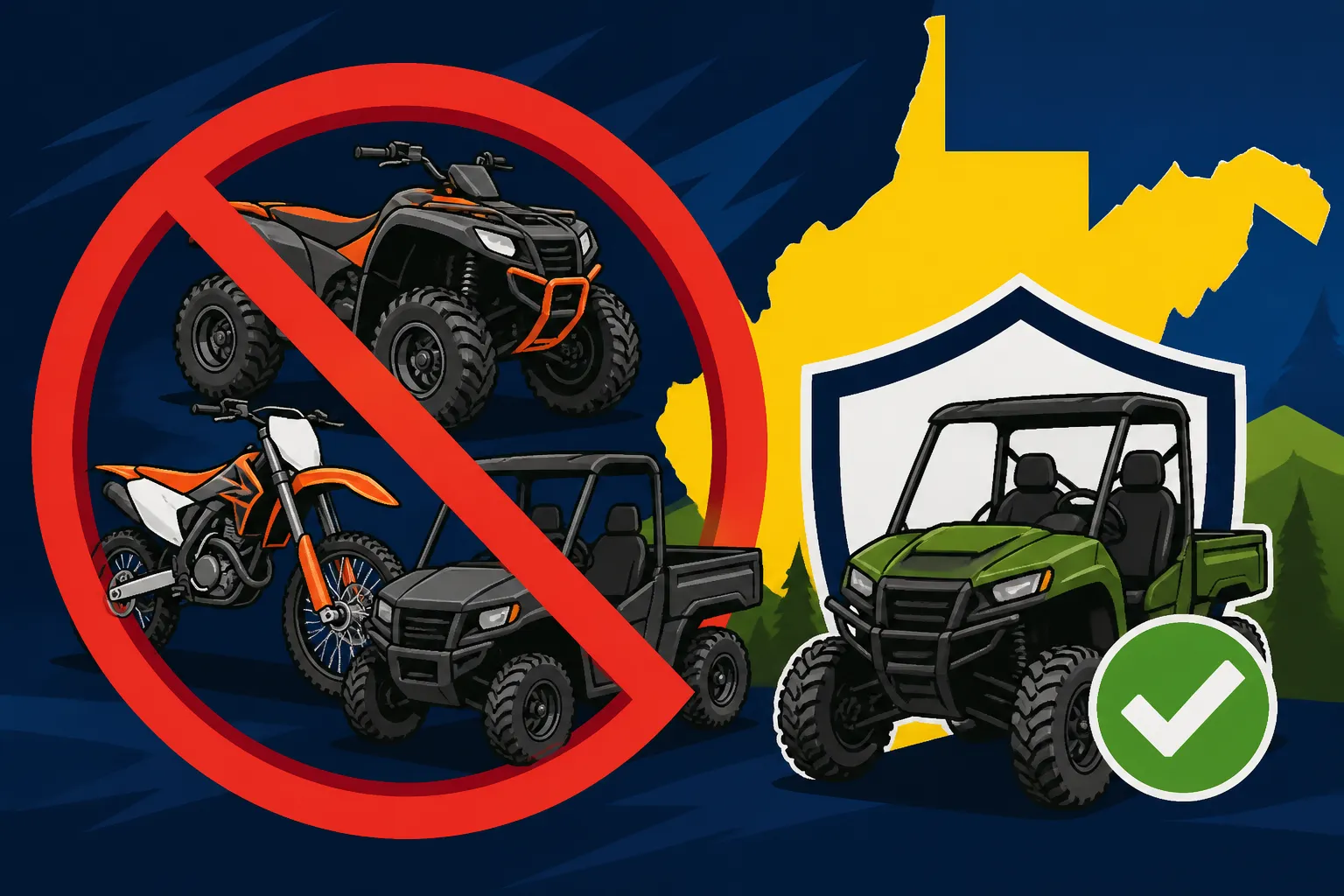
This is a common point of confusion for many riders. Dirt bikes and enduro motorcycles, while clearly off-road machines, are generally not eligible for a West Virginia SPV plate. While some states have specific "dirt bike conversion" laws to make them street legal, West Virginia's SPV designation is typically reserved for ATVs and UTVs. A dirt bike, even if you add all the required street-legal equipment like lights, mirrors, and a horn, is still fundamentally classified as a motorcycle, not a Special Purpose Vehicle.
The distinction lies in how the state categorizes vehicles. A dirt bike or enduro is built on a motorcycle frame, designed to be ridden like a motorcycle, and therefore falls under motorcycle titling and registration rules. If you want to ride a dirt bike on public roads, it typically needs to be fully street-legal as a motorcycle, meaning it was originally manufactured as such or can be converted to meet all motorcycle safety standards, including emissions and federal highway safety regulations. This is a far more stringent process than simply adding a few lights for an SPV plate. It's a question we hear a lot, and unfortunately, the answer for the SPV plate is almost always no. You might find this helpful: [Can a Dirt Bike Get a West Virginia SPV Plate?].
Golf Carts and Low-Speed Vehicles
Another frequent contender for SPV status that doesn't quite make the cut are golf carts and Low-Speed Vehicles (LSVs). While you might see golf carts on roads in some communities or within specific resorts, they operate under entirely different regulations in West Virginia. Golf carts have their own set of rules, often determined by local municipal ordinances, and are generally restricted to specific low-speed areas or private property. They are not considered ATVs or UTVs for the purpose of an SPV plate.
Low-Speed Vehicles (LSVs) are also a distinct category. An LSV is typically a small, four-wheeled vehicle that can go no faster than 25 mph and has specific safety equipment. While they are street legal, they have their own titling and registration process separate from SPVs, and they must meet federal safety standards to be classified as an LSV. So, if you have a golf cart or an LSV, you'll need to look into [Golf Carts and West Virginia Title Rules] or specific LSV registration, rather than trying to get an SPV plate for it. They are simply different classes of vehicles with different intended uses and legal frameworks.
Full-Size Jeeps and Modified Trucks
This might seem obvious to some, but many off-road enthusiasts wonder if their heavily modified full-size Jeeps, Broncos, or pickup trucks could somehow qualify for an SPV plate, especially if they're rarely driven on highways. The short answer is a resounding no. These vehicles, regardless of how extreme their lift kits, tire sizes, or suspension modifications, were originally manufactured and titled as passenger vehicles or trucks. West Virginia's SPV designation is specifically for machines that are not designed for highway use but are being granted limited highway access.
Trying to get an SPV plate for a full-size vehicle would be like trying to get an ATV plate for your daily driver sedan. It simply doesn't fit the legal definition or the spirit of the law. The DMV will look at the original VIN and title history, which will clearly identify these machines as cars or trucks, immediately disqualifying them from SPV status. If you're looking to make a full-size off-road rig street legal, you'll need to meet all standard automotive registration, inspection, and insurance requirements for that vehicle class.
Homemade or Heavily Modified Machines
This category can be a bit more nuanced, but generally, machines that are homemade or have undergone such extensive modifications that their original identity is obscured often face significant challenges in getting an SPV plate. While West Virginia does have provisions for titling homemade vehicles, trying to then get that homemade machine classified as an SPV adds layers of complexity. The issue often comes down to proving that the vehicle meets the fundamental characteristics of an ATV or UTV as defined by the SPV law, including weight, width, and safety standards, without a manufacturer's certification.
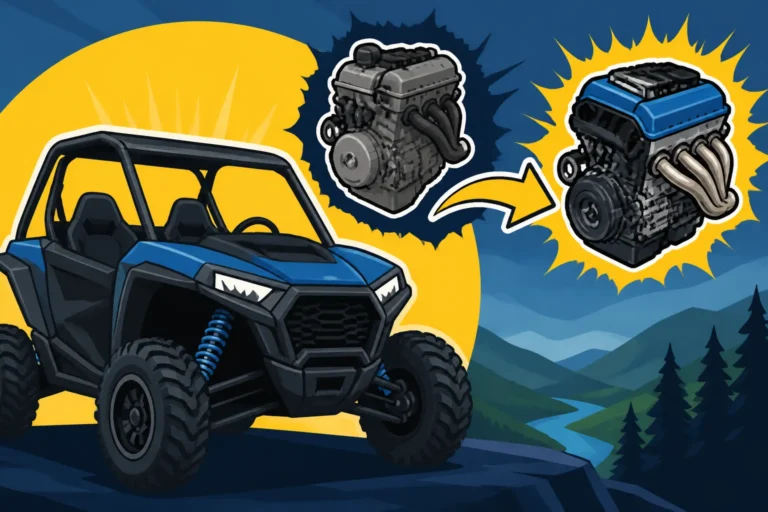
For example, if you've welded together a custom "buggy" frame and installed an engine, it might be a fantastic off-road machine, but proving it fits the SPV criteria can be incredibly difficult. The DMV might struggle to classify it, and it could be rejected due to lack of manufacturer certification, inability to meet safety standards, or simply not fitting the clear definition of what an SPV is intended to be. The law often relies on an established manufacturer's VIN and design intent. While there are rules for [Titling a Homemade UTV Frame in West Virginia], converting that into an SPV might be a bridge too far. Similarly, if you've done an engine swap or other major alterations, the DMV might question the machine's original classification.
Why These Exclusions Matter for West Virginia Riders
Understanding why certain machines are excluded from SPV status isn't just about following rules; it's about grasping the practical implications for rider safety, public road integrity, and avoiding potential legal headaches. These regulations are designed to create a safer environment for everyone sharing our roads and trails.
Safety Concerns and Public Road Integrity
The primary reason for many of these exclusions boils down to safety. Dirt bikes, for instance, are often lighter, have knobbier tires, and lack the stability of an ATV or UTV, making them less suitable for predictable road handling, especially at higher speeds or in traffic. Golf carts, while useful in their designated environments, lack the robust construction, lighting, and braking systems typically required for even limited road use where heavier, faster vehicles are present. West Virginia roads, particularly our winding mountain roads, present unique challenges. The stability, braking, and handling characteristics of an SPV are critical for safety, and some machines simply aren't designed to meet those demands.
Furthermore, the design of our public roads and infrastructure is based on assumptions about the types of vehicles that will use them. Heavily modified, oversized, or non-standard vehicles could pose unforeseen risks, from excessive wear and tear on pavement to issues with lane adherence and emergency maneuvering. The state has an interest in protecting its investment in roads and ensuring they can be used safely by all compliant vehicles. The regulations aim to ensure that anything granted special access to these roads can operate predictably and safely alongside conventional traffic.
Manufacturer Design Intent vs. Street Use
Another significant factor is the manufacturer's original design intent. When a manufacturer designs and builds a dirt bike, golf cart, or a full-size truck, they do so with a very specific purpose and set of operating conditions in mind. A dirt bike is built for tearing through trails, not for cruising down a paved highway. A golf cart is designed for low-speed travel on golf courses or within specific communities. A full-size truck is engineered for hauling, towing, and regular highway speeds.
The SPV designation attempts to bridge a very specific gap for ATVs and UTVs—machines that are robust enough for off-road but can, with modifications, handle short stints on pavement without compromising safety too severely. Trying to force a vehicle that was never intended for road use, even in a limited capacity, into an SPV category often goes against its fundamental design and engineering. This isn't just about what lights you can bolt on; it's about the frame, suspension, steering, and overall integrity of the vehicle when subjected to road conditions and interactions with other vehicles. These differences in design intent are why the state distinguishes between vehicle types so carefully.
Legal Consequences of Misrepresenting a Machine
Attempting to misrepresent your machine to obtain an SPV plate can lead to serious legal consequences. If you try to title a machine as an SPV that clearly doesn't meet the legal definition—for example, trying to pass off a dirt bike or a heavily modified car as an SPV—you could face issues ranging from denial of title and registration to fines, seizure of your vehicle, or even charges of fraud. The DMV personnel are trained to identify vehicle types and will scrutinize applications. It’s simply not worth the risk.
Even if you somehow manage to get an SPV plate for a non-qualifying machine, you'd be operating an improperly registered vehicle. This could void your insurance coverage in the event of an accident, leaving you personally liable for damages and injuries. Furthermore, law enforcement officers who are familiar with SPV regulations, especially in our trail towns, are likely to spot non-compliant vehicles. You could face citations, fines, and have your riding privileges revoked. Always err on the side of caution and ensure your machine genuinely qualifies. For those instances where you are selling a machine and want to be sure you have the right documentation, even if it's not an SPV, a service like LawDepot can provide reliable templates for forms like a [West Virginia ATV Bill of Sale: What Belongs in It], ensuring you don't inadvertently misrepresent anything.
Alternatives for Riding on West Virginia Roads
So, if your machine doesn't qualify for an SPV plate, does that mean you're stuck only riding on private land? Not necessarily! West Virginia offers several other avenues for off-road enthusiasts, though they might not provide the same freedom as an SPV. It's about understanding the rules for each type of vehicle and location.
Designated ATV-Friendly Roads and Trail Systems
For most ATV and UTV riders in West Virginia, the solution for public road access comes not from an SPV plate, but from the incredible network of designated ATV-friendly roads and trail systems. The Hatfield-McCoy Trails, for example, is a vast network of over 1,200 miles where you can legally ride your ATV or UTV. Many of these trail systems include specific "trail connectors" that allow you to ride on certain public roads to link trails or access towns. These routes are clearly marked, and while you'll still need proper lights and follow speed limits, they are designed for off-road vehicles.
The key here is that these are specific designated roads, not just any public road. You typically need a [West Virginia's Hatfield-McCoy Trail Permit Explained] to ride these routes. Even without an SPV plate, you can still experience the convenience of riding into towns like Gilbert, Man, or Williamson for gas, food, and lodging. These trail systems represent the heart of West Virginia's off-road tourism and are a fantastic alternative for those whose machines don't make the SPV cut. They allow you to safely and legally ride your machine in areas designed for it, maximizing your enjoyment without the headache of SPV conversion issues.
Titling and Registering as Other Vehicle Types
For some specific machines, if they don't qualify as an SPV, they might fit into another distinct vehicle category that does allow limited road access. This is most common for Golf Carts and Low-Speed Vehicles (LSVs). As mentioned before, LSVs have their own pathway to street legality. If your "golf cart" actually meets the federal standards for an LSV (maximum speed of 25 mph, specific safety equipment), you could register it as an LSV, which would give you access to certain public roads. This isn't an SPV, but it achieves a similar goal for a different class of vehicle.
Similarly, if you have a street-legal dirt bike, it would be titled and registered as a motorcycle, not an SPV. This involves meeting all motorcycle safety and emissions standards. This path is often more complex and costly than an SPV conversion, but it's the correct legal route for those particular machines. The important takeaway is to correctly identify your vehicle's classification and pursue the appropriate titling and registration process. Misclassifying a vehicle can lead to legal issues down the road, and sometimes, the legal route means not going for an SPV plate but rather looking at other legitimate categories. If you're involved in a private sale for any of these distinct vehicle types, a robust agreement is key. Services like LawDepot can help you create a formal [Wording a Private ATV Sale Agreement] to ensure everything is above board.
Private Land Riding Opportunities
Finally, for any machine that absolutely cannot be made street legal in West Virginia, whether as an SPV, an LSV, or a motorcycle, there's always the option of riding on private land. West Virginia has countless acres of private property, and with proper permission from the landowner, you can enjoy your machine without worrying about public road regulations. This is the simplest and most unrestricted form of riding for machines that are strictly off-road. You can find local riding areas, work with landowners, or even consider purchasing your own tract of land for dedicated off-road fun.
Always remember that riding on someone else's property without permission is trespassing, and West Virginia takes [West Virginia Trespass Rules Along Roads] very seriously. This means getting explicit permission is non-negotiable. Many riders have strong relationships with local farmers or timber companies that allow access. While it might not offer the same connectivity as the Hatfield-McCoy Trails or the limited freedom of an SPV plate, riding on private land guarantees you full control over your riding environment and freedom from public road requirements. It's a fantastic option for those unique builds or machines that are simply too specialized for any form of street legality.
| Vehicle Type | SPV Eligible (Generally) | Other WV Street-Legal Options (Generally) | Common Road Use |
|---|---|---|---|
| Standard ATV | Yes | Designated Trail Connectors | Limited |
| Standard UTV | Yes | Designated Trail Connectors | Limited |
| Wide UTV (>64") | No | Designated Trail Connectors | Limited |
| Dirt Bike/Enduro | No | Full Street-Legal Motorcycle | Limited |
| Golf Cart | No | Local Ordinances, LSV (if qualified) | Very Limited |
| Low-Speed Vehicle | No | LSV Registration | Limited |
| Full-Size Jeep/Truck | No | Standard Auto Registration | Full |
| Homemade Buggy | No (often) | Private Land Only | None |
Disclaimer
This article is for general informational purposes only and does not constitute professional advice. Laws, prices and regulations vary by location and change over time. Consult a qualified professional for guidance on your specific situation.