The Montana LLC Route and What West Virginia Owners Risk
It's a common dilemma in the world of ATV and UTV ownership: you want to enjoy your machine on West Virginia's incredible trails and backroads, but the thought of sales tax, annual registration fees, and the paperwork hustle can feel like a heavy burden. Many folks hear whispers of the "Montana LLC loophole" as a magic bullet to sidestep these requirements, but what often sounds too good to be true usually is, especially for folks living right here in the Mountain State. This guide is here to unravel that mystery, explain the allure, and, most importantly, lay bare the very real risks and penalties that West Virginia owners might face if they venture down this tempting, yet treacherous, path.
What is the Montana LLC "Loophole" Anyway?
Let's start by understanding what this whole Montana LLC thing is about, because it's not some secret handshake or underground club. It's a legitimate business structure used for a very specific (and legal, in Montana) purpose. The issue arises when people try to apply it outside of Montana to avoid their home state's laws.
The Basic Idea
At its heart, the Montana LLC route involves creating a limited liability company (LLC) in Montana. Once this company exists, you, as the West Virginia resident, then "sell" your ATV or UTV to your own Montana LLC. The LLC, being a Montana entity, then titles and registers the vehicle in Montana. Because Montana doesn't have a state sales tax, and often has lower registration fees than many other states, the immediate perceived benefit is avoiding your home state's sales tax and potentially reducing annual fees. For very expensive machines, like high-end side-by-sides, the sales tax savings alone can be thousands of dollars, which is incredibly tempting. This arrangement is often pitched as a way to "legally" avoid certain taxes and fees.
Why Montana is Different
Montana stands out from most other states because it does not impose a statewide sales tax on goods, including vehicles. This policy is a huge draw for residents and businesses within the state, as it significantly reduces the cost of purchasing everything from groceries to luxury items, and, of course, ATVs and UTVs. Beyond the sales tax advantage, Montana also offers a certain level of privacy for LLC owners. Many states require the names of LLC members to be publicly listed, but Montana does not. This appeals to some owners who prefer to keep their personal assets out of public view, adding another layer to the perceived benefits of this "loophole." This combination of no sales tax and enhanced privacy makes Montana a unique proposition for vehicle registration, but its application to out-of-state residents is where the waters get murky.
The "Catch" for Out-of-State Owners
Here’s where the "loophole" starts to fray, especially for people who live outside Montana but try to use its laws. The fundamental principle is called "domicile" or "situs" – essentially, where your vehicle is actually located and primarily used, regardless of where its paper title says it belongs. If you, a West Virginia resident, form a Montana LLC and title your ATV there, but that ATV is physically kept, ridden, and insured in West Virginia, then West Virginia considers it a West Virginia vehicle. Our state's Department of Motor Vehicles (DMV) and tax authorities are not fooled by a Montana LLC if the machine itself is clearly domiciled here. The "catch" is that states like West Virginia want to collect their fair share of sales tax and registration fees for vehicles that benefit from their infrastructure, emergency services, and legal protections. They see through the shell game, and when they do, you could be in for a rude awakening.
The Allure for West Virginia ATV & UTV Owners
It's easy to see why the Montana LLC route catches the eye of West Virginia ATV and UTV enthusiasts. Our state has a thriving off-road culture, with incredible trail systems like Hatfield-McCoy, but it also has its own set of rules and costs. The idea of sidestepping some of these can seem like a no-brainer, especially when you hear folks online touting its benefits without mentioning the inherent risks for non-Montana residents.
Avoiding West Virginia Sales Tax
The biggest motivator, hands down, is the desire to avoid West Virginia's sales tax. When you buy a new or used ATV or UTV here, whether from a dealer or a private seller, you're generally on the hook for a sales tax that can add a substantial amount to the overall cost, especially on a new side-by-side. Imagine dropping $20,000 on a new machine and then having to pay hundreds, or even over a thousand, dollars more in sales tax. It stings, especially when you feel like you've already paid so much. The promise of forming a Montana LLC and seemingly bypassing this large expense is incredibly attractive. Many people hear that they can save this money and think it's a clever way to keep more cash in their pocket for accessories, trail permits, or more riding adventures. They see it as a smart financial move, but they often don't fully understand the strings attached. You can learn more about this by reading [West Virginia Sales Tax on an ATV Purchase].
Bypassing West Virginia Title Headaches
Beyond the sales tax, some owners hope the Montana LLC route will help them avoid other aspects of West Virginia's titling process. Perhaps they bought a machine without a proper title, or they're importing an older ATV and anticipating issues getting it titled here. While West Virginia does have a clear process for [Titling an ATV in West Virginia], it can involve paperwork, inspections, and visits to the DMV. The perceived ease of registering a vehicle in Montana through an LLC, where you might not even need to physically bring the vehicle to the state, seems like a shortcut around any potential bureaucratic hurdles back home. For those who dread paperwork or have unique situations, this "easy button" can be very appealing, even if it leads to much larger problems down the road.
Privacy Concerns
Finally, a less common but still significant draw for some individuals is privacy. By having the ATV or UTV legally owned by a Montana LLC, the individual's personal name is not directly on the title or registration. This means if someone were to search public records related to vehicle ownership, they wouldn't necessarily find your name linked to that specific machine. For individuals with high net worth, public figures, or anyone simply valuing their personal anonymity, this layer of separation can be quite attractive. It feels like a way to shield personal assets from prying eyes, adding another perceived benefit to the Montana LLC strategy that goes beyond just monetary savings.
The Serious Risks West Virginia Owners Face
While the allure of saving money and simplifying paperwork is strong, the reality of using a Montana LLC for a West Virginia-domiciled ATV or UTV is fraught with serious risks. These aren't minor inconveniences; they can lead to substantial financial penalties, legal battles, and even criminal charges.
Tax Evasion Allegations
This is the most significant risk. West Virginia, like all states, has clear laws regarding sales and use tax for vehicles domiciled within its borders. When you register an ATV or UTV in Montana via an LLC, but the machine is physically located and used primarily in West Virginia, our state's tax authorities can, and often do, consider this an act of tax evasion. They might argue that you intentionally structured ownership to avoid paying the legally mandated sales tax. The penalties for tax evasion can be severe, including:
- Back taxes: You'll be required to pay the original sales tax you tried to avoid.
- Penalties and interest: On top of the back taxes, there will be substantial penalties and accumulated interest, which can make the total amount far exceed the initial tax savings.
- Fines: Significant fines can be levied.
- Legal action: In egregious cases, civil lawsuits or even criminal charges for tax fraud could be pursued.
- Seizure of property: The state may even have the right to seize your ATV or UTV until all back taxes, penalties, and fines are paid.
It’s simply not worth the gamble, especially when West Virginia's DMV has robust systems to identify these situations.
Insurance Headaches
This is another area where the Montana LLC route can cause immense pain. When you insure an ATV or UTV titled to a Montana LLC, most insurance companies assume the vehicle is garaged and primarily operated in Montana. If you have an accident in West Virginia, and your insurance company discovers the machine is actually domiciled here, they could deem your policy null and void due to material misrepresentation.
Imagine this: you're out riding the [Rockhouse Trail System], you have a collision, and someone is injured or your side-by-side is totaled. You file a claim, and the insurance investigator finds out your "Montana-based" LLC's ATV has been stored in your garage in southern West Virginia for the last two years. They could deny your claim entirely, leaving you personally responsible for all damages, medical bills, and potentially facing a lawsuit. This could lead to financial ruin, far outweighing any sales tax savings. Always ensure your insurance accurately reflects where your machine is actually located and operated.
Enforcement and Legal Troubles
West Virginia law enforcement and DMV officials are increasingly aware of the Montana LLC scheme. They understand that a shiny new side-by-side with a Montana plate, parked in a West Virginia driveway or trail town, is often a red flag. What might start as a simple traffic stop or a check at a trailhead could quickly escalate into a more serious investigation.
You could face:
- Fines for improper registration: Riding or operating an improperly registered vehicle can lead to significant fines.
- Vehicle impoundment: Your ATV or UTV could be impounded by authorities.
- Mandatory West Virginia titling: You'd be forced to go through the full West Virginia titling process, paying all the back taxes, penalties, and fees.
- Difficulties with trail permits: While Hatfield-McCoy permits are based on the rider, not the machine's registration, a deeper look by officials could reveal the underlying titling issue. Learn more about trail rules in [Fines for Riding Hatfield-McCoy Without a Permit].
- Criminal charges: In severe cases, particularly involving intentional misrepresentation to defraud the state, criminal charges could be brought.
It's a huge burden of stress and potential legal expenses that no rider wants to deal with when all they want to do is enjoy the trails.
Resale Value and Future Complications
Even if you manage to fly under the radar for a while, selling your ATV or UTV down the line can become a major headache. If you try to sell a machine with a Montana LLC title to a new owner in West Virginia, that new owner will likely face the same issues you tried to avoid – or worse. A savvy buyer, or any West Virginia dealer, will immediately spot the Montana LLC title and recognize the potential problems. They might be unwilling to purchase the machine, or they might demand a significant discount to account for the risk and the hassle they'll face getting it properly titled in West Virginia.
If you attempt to sell it out-of-state, some states might also question the legitimacy of the Montana LLC titling if the machine has clearly been domiciled elsewhere. This can limit your pool of potential buyers and force you to accept a much lower price than the machine is worth, essentially wiping out any initial savings you might have achieved. You could find yourself stuck with a machine that's difficult to sell, or you might have to spend a considerable amount of time and money to rectify the titling issues before anyone will touch it.
West Virginia's Stance on Out-of-State Registrations
West Virginia is not unique in having a firm stance on vehicles that are domiciled within its borders but registered elsewhere. The state has clear regulations designed to ensure fairness, collect necessary revenue, and maintain proper oversight of all vehicles operating on its roads and trails. They're not trying to be difficult; they're trying to uphold the law and fund local services.
Residency and Domicile Rules
For West Virginia, the key is where the vehicle lives and is primarily used. If you are a West Virginia resident, and your ATV or UTV is kept at your West Virginia address, ridden predominantly on West Virginia trails, or stored in a West Virginia garage, then West Virginia considers it a West Virginia vehicle. Period. The name on the LLC, or the state the LLC was formed in, doesn't change the physical reality of the machine's domicile. Our state's DMV looks at factors like your driver's license address, the address where the vehicle is stored, and even where it's insured to determine if it truly belongs here. Attempting to circumvent these rules by using an out-of-state LLC, like one formed in Montana, for a vehicle that's clearly domiciled in West Virginia, is viewed as an attempt to avoid state taxes and registration fees. West Virginia expects vehicles benefiting from its infrastructure and emergency services to be properly titled and taxed within the state. For new residents, there are specific rules about [Moving to West Virginia With an Out-of-State ATV] that also emphasize this domicile principle.
Proof of Ownership and Use
When you go to title a machine in West Virginia, whether it's new, used, or from out of state, the DMV requires substantial proof. This includes a clear chain of ownership, bills of sale, and, for out-of-state machines, proof that any applicable taxes in that state were paid or that the vehicle legitimately belongs to you. If your Montana-titled machine comes under scrutiny, the West Virginia DMV will likely ask for documentation proving the LLC's legitimate business purpose in Montana, as well as evidence of the machine's actual primary location. If it's clear the vehicle is in West Virginia and the LLC is merely a shell to avoid taxes, the state will demand proper titling here. This often means providing the [Documents to Bring for a West Virginia ATV Title] and proving ownership. They might also investigate the actual usage and storage location of the vehicle, which can easily expose the ruse.
The "Too Good to Be True" Principle
As a general rule in life, if something sounds too good to be true, it probably is. The Montana LLC "loophole" for out-of-state residents falls squarely into this category. States like West Virginia have very sophisticated systems to track vehicle ownership and enforce tax laws. They are not ignorant of these schemes and actively work to identify and prosecute individuals who try to exploit them. While you might hear anecdotes of people who "got away with it" for a while, that's often a matter of luck, not legality, and the risk of eventually being caught far outweighs any perceived short-term savings. The consequences, as we've discussed, can be financially devastating and legally complex. It's simply not a sustainable or legitimate strategy for long-term ATV or UTV ownership if you live in West Virginia.
Better, Legal Alternatives for West Virginia ATV & UTV Ownership
Instead of risking legal and financial headaches with an out-of-state LLC, West Virginia offers straightforward, legal ways to own and enjoy your ATV or UTV. While there are costs involved, following the proper procedures ensures peace of mind and full compliance with state law.
Understanding West Virginia Title Requirements
The absolute best approach is to understand and follow West Virginia's own titling requirements. Our state has a clear process for all kinds of ATVs and UTVs, whether new or used, purchased from a dealer or a private seller.
- New Machines: When you buy a new ATV or UTV from a West Virginia dealer, they typically handle all the titling paperwork for you, including collecting sales tax and submitting the application to the DMV. This is by far the easiest route.
- Used Machines (Private Sale): If you buy a used machine from a private seller, you'll need a properly completed bill of sale and the original title signed over to you. You then take these documents to the DMV to transfer the title into your name and pay the sales tax. This process is covered in detail in articles like [Buying a Used ATV in West Virginia: The Title Steps] and [West Virginia Title Transfer After a Private Sale].
- Out-of-State Machines: If you bring an ATV or UTV from another state, you'll need to follow specific procedures for [West Virginia Title Rules for Out-of-State Machines]. This will often involve a VIN inspection and providing proof of ownership from the previous state.
It's about doing things correctly from the start. While forming an LLC can be done legally with services like LawDepot, using it for a legitimate business purpose in West Virginia (e.g., an ATV rental business) is entirely different from using a Montana LLC to avoid West Virginia's sales tax on a personal machine.
Working with Licensed Dealers
One of the easiest ways to ensure your ATV or UTV is properly titled and registered is to purchase it from a licensed West Virginia dealer. These businesses are well-versed in state regulations and are responsible for collecting sales tax and submitting all the necessary paperwork to the DMV on your behalf. They act as a trusted intermediary, streamlining the process and ensuring everything is done by the book. They'll issue you a temporary registration (if applicable) and make sure your application for a permanent title is submitted correctly. This eliminates much of the guesswork and stress for you, the buyer. While the sales tax will be included, you're paying for peace of mind and avoiding any potential future legal or financial issues.
Gifting or Inheriting an ATV Legally
There are even legal ways to transfer ownership of an ATV or UTV within families that can sometimes reduce or exempt sales tax, but these still require proper titling.
- Gifting: If a family member truly gifts you an ATV, West Virginia law might provide an exemption or reduction on sales tax, but the title still needs to be properly transferred into your name. This involves specific documentation from the giver and a trip to the DMV. Make sure it's a genuine gift, not a disguised sale, or the sales tax exemption won't apply. You can learn more about [Gifting an ATV in West Virginia and the Title That Follows].
- Inheritance: If you inherit an ATV or UTV after a death, there's a legal process to transfer the title into your name, often involving probate documents or small estate affidavits. While sales tax might not be applicable in these cases, getting the title correctly transferred is crucial for legal ownership. Details can be found in [Inheriting an ATV in West Virginia].
In both scenarios, the machine still needs a legitimate West Virginia title in the name of the new owner. These are legitimate, recognized pathways within West Virginia law, offering transparency and protection, unlike the risky Montana LLC scheme.
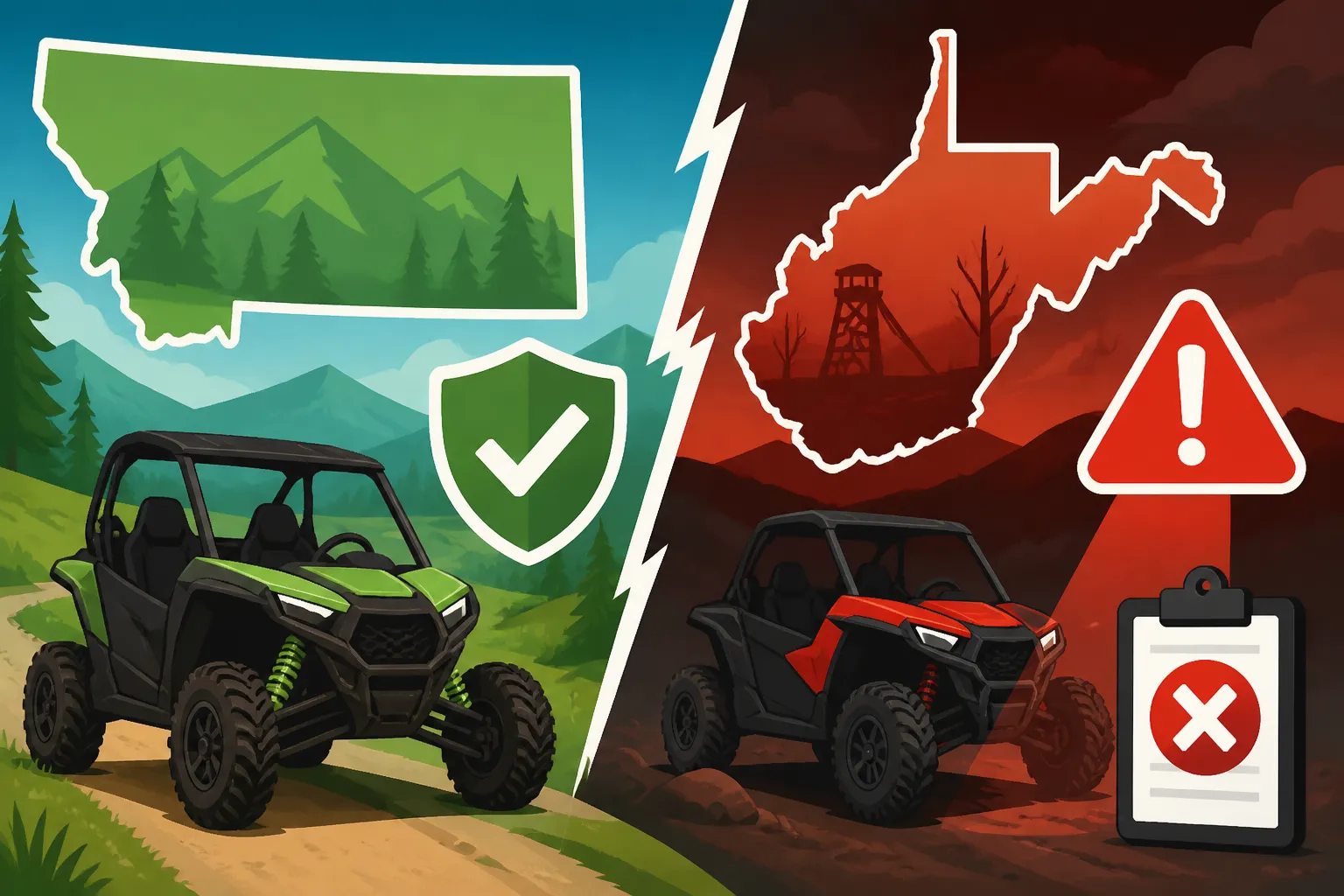
West Virginia vs. Montana LLC: A Quick Comparison
To help clarify the differences and the inherent risks, let's look at a simple comparison between properly titling an ATV or UTV in West Virginia versus attempting the Montana LLC route for a machine domiciled in West Virginia.
| Feature | West Virginia Titling (Proper) | Montana LLC (for WV Resident's Machine) |
|---|---|---|
| Sales Tax | Required at time of purchase/transfer | Avoided initially, but subject to back taxes + penalties if caught in WV |
| Registration Fees | WV annual fees required | Montana annual fees paid (lower), but WV may still demand WV fees |
| Legal Status | Fully compliant with WV law | High risk of tax evasion and improper registration charges in WV |
| Insurance | Valid policy reflecting WV domicile and use | Risk of voided policy, denied claims due to misrepresentation |
| Privacy | Owner's name on public title/registration | LLC name on title, but personal name still linked if domicile challenged |
| Resale | Smooth, clear title transfer in WV | Potential buyer reluctance, lower value, legal issues for future owner |
| Penalties | Minor for honest mistakes, easily fixed | Severe: back taxes, fines, impoundment, legal prosecution |
| Peace of Mind | High – you're doing it right | Low – constant worry about getting caught |
As you can see, while the Montana LLC might appear to offer some short-term financial benefits, the long-term legal and financial risks for a West Virginia resident are substantial and far outweigh any perceived savings.
Disclaimer
This article is for general informational purposes only and does not constitute professional advice. Laws, prices and regulations vary by location and change over time. Consult a qualified professional for guidance on your specific situation.