Trail Erosion and Maintenance Closures
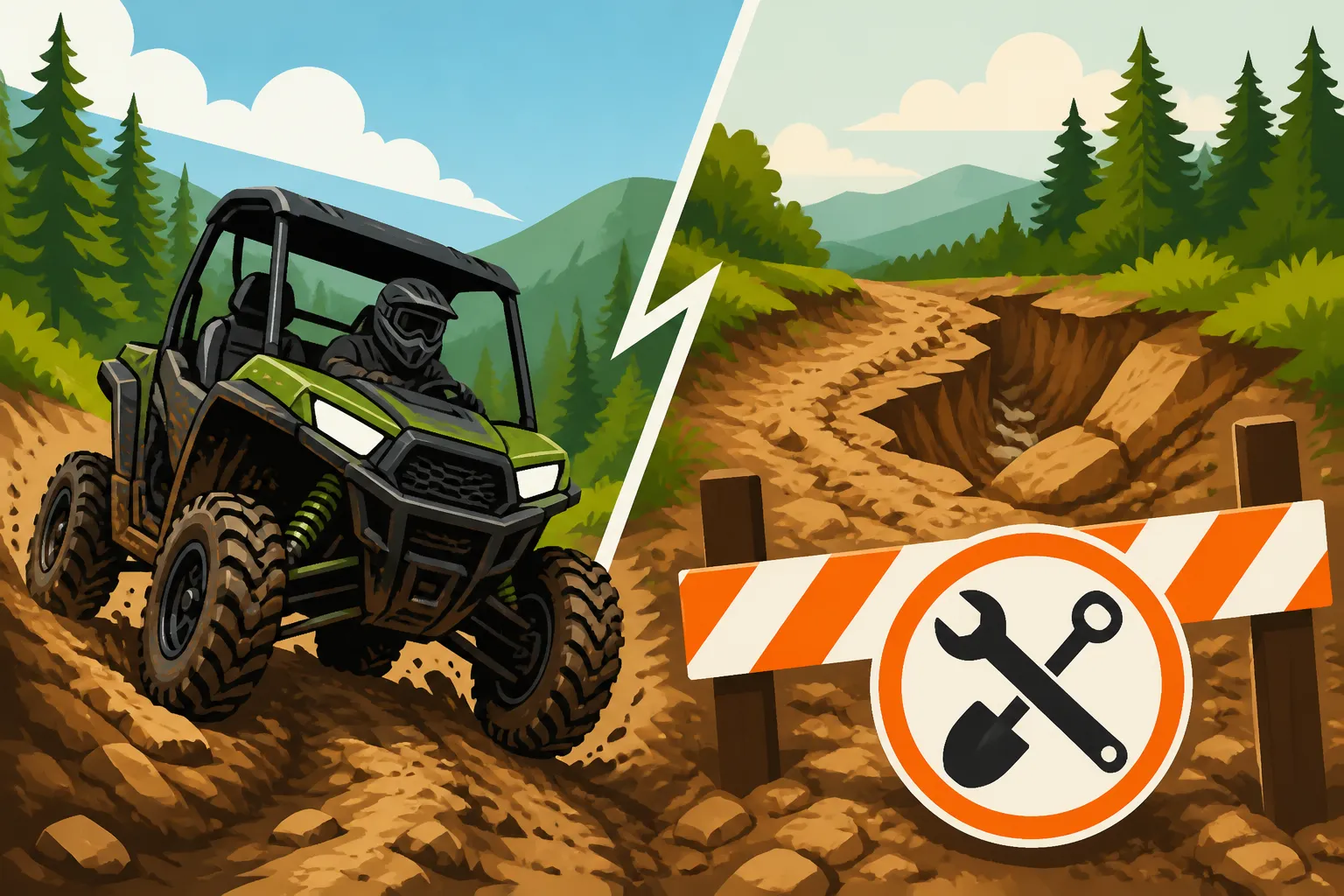
A trail that was open last weekend can be muddy, damaged, or closed by the time you reach the trailhead. In West Virginia, steep slopes, heavy rain, and repeated traffic can turn a small rut into a safety problem or an erosion hazard. This guide explains why maintenance closures happen, how to check for them, and how to ride responsibly when plans change.
Why West Virginia ATV trails close for erosion and maintenance
How weather and repeated traffic damage trails
West Virginia’s wooded mountain trails can be especially vulnerable when rain runs downhill across a steep or exposed section. Water may cut channels into the trail surface, loosen soil, and carry sediment toward a stream. In other places, wet ground gives tires little support, so a rut deepens each time a machine spins or climbs through it.
The damage is not always dramatic at first. A shallow groove may seem easy to ride through, but water can follow it and widen it into a drainage problem. A narrow trail on a hillside can also lose its outside edge, leaving less room to pass safely. On a climb near Rockhouse or Buffalo Mountain, riders who keep accelerating through slick soil may dig the trail further rather than regain traction.
Traffic matters, too. A trail that holds up well when dry may become soft after a storm, especially where many machines use the same line. Side-by-sides can be wider and heavier than smaller ATVs, so their tires may put more pressure on a vulnerable section. That does not mean one type of machine is always responsible for trail damage; weather, drainage, soil, route design, and riding behavior all contribute.
What maintenance crews may need to do
A closure can give crews room to address drainage, stabilize a slope, clear storm debris, repair a crossing, or reshape a damaged surface. Some work is visible, such as moving fallen branches or filling a washed-out rut. Other work involves managing where water flows so it does not keep cutting across the trail after the repair is complete.
A section may need to stay closed while the ground is too wet for repairs to hold. If crews rebuild a trail during saturated conditions, tires and equipment can disturb fresh soil before it firms up. In that situation, waiting for better conditions may protect the repair and reduce the chance of another closure soon afterward.
Closures can also be needed for reasons riders do not immediately see: unstable ground, a blocked route, work equipment, or a damaged crossing that cannot be used safely. A sign or gate is not an invitation to assess the hazard yourself. Check Trail Closures on West Virginia’s Trail System and Why West Virginia Trails Close on Short Notice for more on how closures affect a ride plan.
How to check closures before you haul to the trailhead
Check official trail status close to your ride
A map can help you plan, but it may not show a new closure posted after rain, a maintenance project, or a safety issue. Before you leave home, look for current information from the trail system or riding area you plan to visit. For Hatfield-McCoy, confirm status through the system’s official channels; for a private riding park such as Burning Rock, check with the park directly.
Make a second check before unloading. Conditions can change between the time you plan a trip and the time you arrive, particularly after heavy rain or when crews discover damage during an inspection. If you are staying in Gilbert, Man, Logan, or another trail town, ask your lodging host or a local outfitter whether they have heard of a closure, but treat official notices as the deciding information.
Digital maps are useful for orientation, but a saved route is not proof that every segment remains open. Riders who use onX Offroad for West Virginia Trails can use mapping tools to organize a route and understand where they intend to go. Still, verify closures with the managing trail system before riding. A map app should support your planning, not replace posted notices or official updates.
Read signs and barriers as part of the route
At the trailhead, take a moment to read the kiosk and signs rather than following another group out without checking. A closure may apply to one connector, one section, or a larger area. Knowing its scope can help you avoid a wrong turn that leaves you at a gate with no safe or authorized way forward.
Do not move a barrier, ride around a closed gate, or assume that a short detour is acceptable. A closure may protect active work or unstable ground, and riding around it can cause more damage or put you in a hazardous area. If the sign is unclear, stop and contact the trail operator or an authorized local representative instead of guessing.
It helps to carry both a digital map and a practical backup plan. Download the information you need before leaving cell coverage, and make sure everyone in your group knows what to do if the planned connector is closed. West Virginia Trail Maps and Signage and Checking West Virginia Trail Status Before You Drive can help you build that pre-ride routine.
What to do when a trail section is closed
Change the plan without creating a new problem
If you reach a closure during a ride, stop in a safe place before the group bunches up. Check the posted notice, tell the riders behind you, and use an open route that is permitted for your machine. Do not create an unofficial bypass through the woods or across private property. A shortcut can damage vegetation, soil, and drainage while exposing the group to trespass or other hazards.
Before setting off, confirm that the alternative is actually connected and appropriate for your vehicle. A narrow ATV route may not accommodate a wide side-by-side, and a route shown on an old screenshot may no longer be open. Check trail ratings and width restrictions where available; West Virginia Trail Systems Best Suited to Side-by-Sides may help UTV riders think through machine fit when selecting an alternative.
Sometimes the best choice is to turn back, shorten the ride, or spend the day on a different open route. That can be frustrating after a long drive, especially if everyone has booked lodging or taken time off. But trying to force the original plan through a closed area can turn a disappointing detour into a recovery problem, a damaged machine, or a more serious safety issue.
| Situation | Safer response | Avoid |
|---|---|---|
| A closure sign blocks the planned route | Stop, read the notice, and choose a verified open route | Moving the barrier or riding around it |
| A trail is muddy and deeply rutted | Turn around if conditions appear unsafe or damaging | Spinning tires to push through |
| The map and posted sign do not match | Follow the closure notice and confirm with the operator | Treating the map as permission to continue |
| Your group is split at a closure | Regroup in a safe spot and agree on the next route | Sending riders ahead to scout a closed section |
| Cell service is unavailable | Use previously saved maps and known open routes | Continuing into unfamiliar areas without a plan |
Ride in ways that reduce erosion
When a trail is open, ride smoothly and avoid unnecessary wheelspin. On a climb, choose a controlled line and steady throttle rather than repeatedly charging the same loose section. If the route is too slick or steep for your skill level, turning around is usually better than digging deeper ruts while trying to prove the machine can make it.
Stay on the marked trail, including where a muddy patch tempts you to go around it. A wide bypass can damage plants and soil that help hold a slope in place. It can also become a second informal route that spreads the impact rather than solving the original problem. Trail markers and boundaries matter even when the ground looks passable.
Give other riders space and avoid stopping where your tires will churn a vulnerable slope. If a machine is stuck, coordinate a careful recovery rather than having several vehicles repeatedly spin through the same spot. West Virginia Trail Etiquette on Shared Routes and Mud, Rock and Creek Crossings in West Virginia offer useful context for navigating difficult conditions without widening the damage.
Planning a ride around changing conditions
Build flexibility into your trip
A good West Virginia ride plan includes more than a destination. Identify a primary route, one or two alternatives, and a clear point where the group will turn back if conditions or closures make the plan unsuitable. If you are traveling with new riders or children, leave extra room for delays and avoid building the day around reaching a distant stop at a fixed time.
Before loading the trailer, check the trail system’s status and confirm that your machine fits the routes you intend to ride. Make sure your group understands the trail markings, has the right permits and equipment, and knows how to regroup if the route changes. For an overnight trip, Planning a West Virginia Riding Weekend can help with the broader logistics, while West Virginia Trail Conditions After Rain is relevant when weather is part of the decision.
A practical checklist can be simple:
- Check the managing trail system’s closure and condition notices.
- Confirm that your planned routes are suitable for your machine and group.
- Save maps or route information for areas with limited cell service.
- Choose an alternate route that is confirmed open.
- Agree on a regrouping point and a turnaround plan.
- Follow all signs and barriers once you reach the trail.
When to postpone instead of rerouting
Rerouting works only when a safe, open alternative exists. If the closure cuts off the route you need, the remaining trails are unsuitable for your machine, or the ground is too wet for responsible riding, postponing may be the better decision. That is not wasted effort: it can prevent a repair bill, protect trail access, and spare crews from having to fix avoidable damage.
Pay attention to how conditions feel under the tires, not just what the forecast says. A brief shower can leave a shaded hillside slick, while a trail may remain soft after the rain has stopped. If the group is already struggling to maintain control on easier sections, treat that as a reason to scale back rather than push toward more difficult terrain.
If you are unsure whether a route is open or appropriate, ask the trail operator before riding it. Local knowledge can help clarify a confusing sign or identify an authorized alternative, but it does not override a posted closure. Respecting closures keeps riders out of active work areas and helps preserve the routes people travel to West Virginia to enjoy.
Disclaimer
This article is for general informational purposes only and does not constitute professional advice. Laws, prices and regulations vary by location and change over time. Consult a qualified professional for guidance on your specific situation.