West Virginia’s 20-Mile Centerline Limit for an SPV
Navigating the unique world of West Virginia's Special Purpose Vehicles (SPVs) can feel like trying to solve a complex puzzle, especially when you start looking at where you can actually ride these machines. One of the most common points of confusion and frustration for owners is the specific rules governing how far an SPV can legally travel on certain public roads. This guide aims to demystify the 20-mile centerline limit, helping you understand what it means for your West Virginia SPV and how to ride legally and confidently.
Understanding West Virginia's SPV Laws and the Centerline Rule
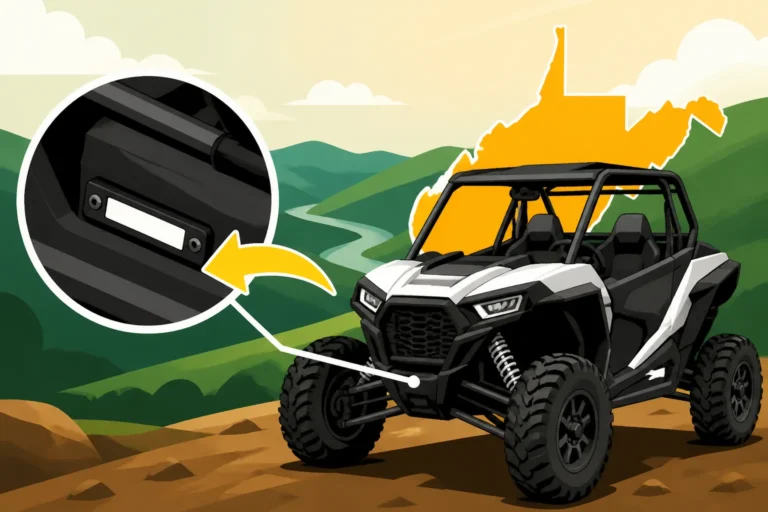
So, you've gone through the effort of getting your ATV or UTV titled as an SPV in West Virginia, perhaps you've even secured that distinctive [West Virginia's Street-Legal Special Purpose Vehicle Plate]. That's a huge step toward expanding your riding possibilities beyond just private land or designated trail systems. But the plate itself doesn't grant you carte blanche to ride everywhere. West Virginia has specific statutes designed to allow SPVs limited road access, primarily as a way to connect trail systems or access local services, and a cornerstone of these rules is the "20-mile centerline limit."
What Exactly is a Special Purpose Vehicle SPV in West Virginia?
Before we dive into the mileage, let's quickly clarify what an SPV is in the Mountain State. An SPV isn't just any ATV or UTV; it's a machine that has been specifically converted to be "street-legal" by meeting certain equipment requirements and then formally titled and registered as such with the West Virginia Department of Motor Vehicles (DMV). This involves having things like headlights, taillights, brake lights, turn signals, mirrors, a horn, and often a windshield and DOT-approved tires. It's a process for sure, transforming your off-road warrior into something that can mingle, albeit briefly, with regular traffic. The whole idea is to give riders flexibility, making it easier to go from your cabin to the trailhead, or even grab a bite to eat in one of the many [West Virginia Trail Towns You Can Ride Into].
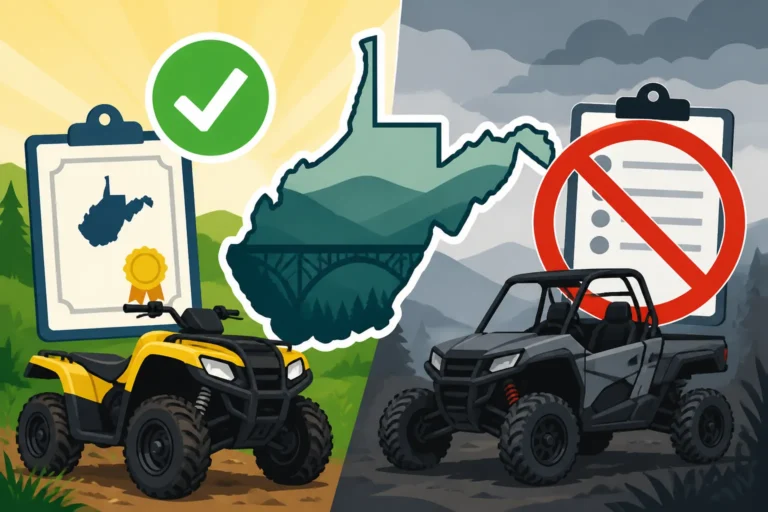
The SPV designation is distinct from a standard ATV title, which doesn't grant any road access except under very specific circumstances like agricultural use or crossing certain low-traffic roads. The state recognizes the popularity of side-by-sides and quads and created the SPV category to accommodate riders while still prioritizing safety and public order on main thoroughfares. It’s a delicate balance, and that's where the limits come into play.
The Core of the 20-Mile Centerline Limit
Now, to the heart of the matter: the 20-mile centerline limit. This isn't just an arbitrary number pulled out of thin air; it's a specific restriction written into West Virginia law regarding where and how far an SPV can travel on certain public roads. Essentially, it means that an SPV can only operate on public roads with a posted speed limit of 50 mph or less, and crucially, for a cumulative distance not exceeding 20 miles from the point where the operator entered the roadway.
Let's break that down with a real-life example. Imagine you're staying at a cabin just off a county route in Wyoming County, and you want to ride your street-legal UTV to the [Pinnacle Creek Trail System] trailhead, which is about 8 miles away. According to the 20-mile centerline limit, you could legally ride those 8 miles to the trailhead. But what happens if you then decide to ride another 3 miles into the town of Pineville for gas and some snacks? You've now traveled 11 miles one way from your starting point on public roads. The "centerline" part refers to the measurement of the road itself. It's not a radius from your home; it's the actual distance traveled along the centerline of the permissible roads.
The intent behind this limit is clear: to facilitate short-distance travel for recreational or service access, not to turn SPVs into daily commuters. It prevents SPVs from becoming full-fledged street vehicles that would compete with cars and trucks on longer routes, which they simply aren't designed for in terms of safety features or speed. This rule helps maintain the balance between rider convenience and public safety on West Virginia's diverse road network. It’s a limit often misunderstood, leading to potential fines if not adhered to carefully, highlighting why understanding [West Virginia's 20-Mile Centerline Rule for Street-Legal Machines] is so important.
Navigating the 20-Mile Limit: Practical Implications for SPV Owners
Understanding the why behind the 20-mile centerline limit is one thing, but knowing how to apply it in your actual riding experience is where the rubber meets the road – literally. Many riders get tripped up on the practical application, wondering if it's a one-way limit, a round trip, or something else entirely. Let's clear up some of that confusion.
Measuring the 20 Miles: How Does It Work in Real Life?
The 20-mile centerline limit is generally interpreted as the total cumulative distance traveled on permissible public roads in a given outing, from the point you access the public road network. This is not a "20 miles out, 20 miles back" scenario, nor is it a 20-mile radius from your home. It means that the entire journey you take on public roads during one continuous trip should not exceed 20 miles.
Think of it like this: You leave your house on a county road, ride 5 miles to a gas station, then 5 miles to the trailhead, and then 5 miles back to the gas station before heading home. That's a total of 15 miles on public roads. If you then ride another 3 miles on public roads to a friend's house, your cumulative total is 18 miles. You're still within the limit. However, if you then decide to take a scenic detour that adds another 5 miles before returning home, you've now exceeded the 20-mile total for that continuous trip.
This cumulative aspect is vital to grasp. It's not about staying within 20 miles of your home at any given moment; it's about the odometer reading of your specific journey on permitted roads. For this reason, many SPV owners find it incredibly helpful to use a GPS device or a mapping app on their phone (like onX Offroad, though cell service can be spotty in some parts of West Virginia) that tracks mileage, especially when connecting different trail systems or riding into towns like Gilbert or Man. It's easy to lose track of mileage on winding mountain roads, so having a way to monitor your distance is a smart move.
Roads That Qualify for SPV Use Under the Limit
The 20-mile limit applies specifically to public roads with a posted speed limit of 50 mph or less. This typically means county routes, secondary state routes, and municipal streets within towns and communities. These are often the same roads that serve as connectors between trail systems or provide access to local businesses in places like Gilbert or Matewan.
It’s crucial to understand what kind of roads are excluded from this rule. You absolutely cannot ride an SPV on interstate highways, freeways, or any divided highways, regardless of the speed limit. These roads are designed for high-speed traffic and SPVs simply aren't built for that environment. Attempting to do so would not only be illegal but incredibly dangerous. Even if a road has a centerline, if its speed limit exceeds 50 mph, it's off-limits for your SPV. This distinction is critical for your safety and for staying compliant with West Virginia law. Being caught on the wrong type of road can lead to significant penalties, not just a ticket for exceeding the mileage.
When and Where the Limit Doesn't Apply (or Changes)
While the 20-mile centerline limit is a broad rule, there are a few nuances and specific scenarios to be aware of. The most common "exception" isn't an exception to the limit itself, but rather to the types of roads you might encounter. For instance, when you're riding in a designated [West Virginia ATV-Friendly Towns and What You Can Ride], the local ordinances often permit SPVs (and even non-street-legal ATVs/UTVs, provided they meet certain local criteria) on all municipal streets within town limits, often without the 20-mile restriction for those specific town roads. However, the moment you leave the boundaries of that trail town and venture onto a state or county road outside its jurisdiction, the 20-mile limit and other statewide SPV rules immediately kick back in.
Another important point relates to crossing major roads. You might encounter a situation where you need to cross a higher-speed highway (e.g., a four-lane road with a speed limit over 50 mph) to get from one permissible road section to another. West Virginia law generally allows for such crossings at intersections, but you cannot travel along these high-speed roads for any significant distance. This is about crossing directly and safely, not using them as part of your 20-mile journey. Always exercise extreme caution at such intersections.
It's also worth noting that the 20-mile limit is specifically for SPVs on public roads. It doesn't apply to ATVs or UTVs being operated on private property, designated trail systems like the [Hatfield-McCoy Trails], or for agricultural purposes on certain roads under specific exemptions. These different contexts have their own sets of rules and restrictions.
Essential Considerations Beyond the Centerline Limit for West Virginia SPVs
Understanding the 20-mile centerline limit is undeniably crucial, but it's just one piece of the puzzle when it comes to legally and safely operating your Special Purpose Vehicle on West Virginia's public roads. There are several other vital aspects you need to master to ensure your SPV adventures are compliant and enjoyable. Ignoring these can land you in just as much trouble as exceeding your mileage.
Other Key Equipment and Documentation for SPV Road Use
Obtaining that [West Virginia's Street-Legal Special Purpose Vehicle Plate] is the visible sign that your machine is ready for limited road use, but it's the behind-the-scenes work that truly makes it legal. For an SPV to even qualify for road use, it must be equipped with specific safety features. This isn't just a suggestion; it's the law. You'll need:
- Headlights and Taillights: These must be operational, especially when riding during low-light conditions or after sunset. [West Virginia Headlight Rules After Sunset] are strict.
- Brake Lights: Crucial for signaling your intentions to other drivers.
- Turn Signals: Required on both the front and rear of the machine.
- Mirrors: At least one rear-view mirror is typically required, allowing you to see traffic behind you.
- Horn: A functional horn is necessary to alert others.
- Windshield: While not always mandatory for all SPV types, many UTVs will benefit from a safety glass windshield. For ATVs, eye protection is always required.
- DOT-Approved Tires: Your tires need to be rated for highway use, unlike purely off-road knobbies.
- Spark Arrester and Muffler: Your exhaust system must meet noise and emissions standards. [Spark Arrester and Muffler Requirements in West Virginia] are enforced.
Beyond the machine itself, you, as the operator, have responsibilities. You must carry proof of insurance, as [Insurance Required for a West Virginia SPV Plate] isn't optional. This liability insurance protects you and others in case of an accident. You also need a valid driver's license, as you are operating a motor vehicle on public roads. While on the trail you might only need your [Hatfield-McCoy Trail Permit Explained], on the road, it's your driver's license and vehicle registration. It’s also wise to carry a copy of your [West Virginia ATV Title Application Form] or proof of ownership, just in case you're stopped and need to verify your vehicle's legitimacy.
| Requirement Category | Specific Items/Details |
|---|---|
| Vehicle Equipment | Headlights, Taillights, Brake Lights, Turn Signals, Mirrors, Horn, DOT-Approved Tires, Muffler, Spark Arrester |
| Operator Documents | Valid Driver's License, Proof of SPV Insurance, SPV Registration Card |
| Operating Rules | Speed limit 50 mph or less, 20-mile centerline limit, Helmet use (under 18 or specific situations), Eye protection, Staying on marked public roads |
Common Pitfalls and How to Avoid Them
Even with the best intentions, it's easy to fall into common traps when riding your SPV on West Virginia roads. Being aware of these can save you a lot of headache and potential fines.
- Forgetting the Cumulative Mileage: As discussed, the 20-mile limit isn't just "20 miles away." It's the total on-road mileage for your entire trip. Many riders get caught by adding a quick detour for fuel or supplies that pushes them over the edge. Always keep an eye on your odometer or GPS.
- Riding on Prohibited Roads: Mistaking a state secondary road for an interstate access road, or simply ignoring speed limit signs, is a common mistake. Always verify the road type and speed limit. High-speed, divided highways are strictly off-limits.
- Lack of Proper Documentation: Getting pulled over and not having your driver's license, registration, or proof of insurance is an instant ticket generator. Keep these documents easily accessible on your person or securely stored on your SPV.
- Inadequate Equipment: Forgetting to turn on your headlights at dusk, having a non-functional turn signal, or riding with off-road-only tires can lead to citations. Do a quick pre-ride check of all your SPV's street-legal equipment every time you plan to hit the pavement.
- Assuming Trail Town Rules Apply Everywhere: While [Riding Through Gilbert on an ATV] or other trail towns offers more freedom, these local ordinances stop at the town limits. Don't assume you have the same latitude once you're on a county or state road outside those boundaries.
- Underestimating Traffic: Even on a rural county road, you're sharing the pavement with cars, trucks, and often coal haulers. SPVs are smaller and less visible. Always ride defensively, use your signals, and maintain awareness of your surroundings. Understanding [West Virginia Trespass Rules Along Roads] also helps ensure you don't inadvertently ride onto private property adjacent to the roadway.
By being diligent about your mileage, understanding road classifications, carrying the correct paperwork, ensuring your machine is properly equipped, and always riding cautiously, you can ensure your West Virginia SPV experience is both thrilling and fully compliant with the law.
The 20-mile centerline limit for Special Purpose Vehicles in West Virginia is a key regulation that every SPV owner must understand to enjoy legal and safe road access. It's designed to facilitate connectivity between trail systems and local services, not to transform off-road machines into full-time commuters. By grasping the cumulative nature of the 20-mile restriction, identifying permissible roads with speed limits 50 mph or less, and ensuring your SPV meets all equipment and documentation requirements, you can confidently navigate the Mountain State's unique mix of trails and backroads. Always remember that safety and compliance go hand-in-hand, making for a better riding experience for everyone.
Disclaimer
This article is for general informational purposes only and does not constitute professional advice. Laws, prices and regulations vary by location and change over time. Consult a qualified professional for guidance on your specific situation.