Safety Course Requirements for a 17-Year-Old
A 17-year-old is still under West Virginia’s age threshold for ATV safety-course rules, so turning 17 does not automatically remove the requirement. Whether the course is needed depends partly on where the machine will be ridden. Here’s how to sort out the course, managed-trail exceptions, and the other paperwork a young rider may still need.
Does a 17-year-old need an ATV safety course in West Virginia?
A 17-year-old should assume a West Virginia ATV safety-awareness course is required when the state’s course rule applies to the ride. The key distinction is that the course requirement is not the only rule to check: the riding location, machine type, and trail system can affect what applies.
West Virginia’s course rules generally concern riders under 18. Because a 17-year-old has not yet reached 18, the age-based requirement may still apply. It is not enough to say, “I’m almost 18,” or to assume that years of riding experience take the place of a required safety credential.
The course question is separate from the basic right to ride in a particular place. A course card does not by itself provide permission to use a trail system, make a machine street legal, or establish that the rider meets every age and supervision rule. Those requirements can apply independently.
| Riding situation | What a 17-year-old should check |
|---|---|
| Public riding area where the state course rule applies | Confirm the course requirement and complete the approved course before riding |
| Authorized managed trail system | Check whether that system is covered by the managed-trail course exemption |
| Private property | Confirm which state rules still apply and get the landowner’s permission |
| Public road section | Check road-use, age, equipment, and supervision requirements separately |
| Out-of-state safety certificate | Confirm West Virginia accepts that certificate for the intended riding location |
For the state’s course overview and current instructions, see West Virginia’s ATV Safety Awareness Course. The useful question is not just whether a 17-year-old has taken “an ATV course.” It is whether the rider has completed a course that West Virginia accepts for that use and can show the required proof.
Where the rider plans to go matters
West Virginia’s managed-trail exception can change the course answer for a particular ride. The exception is not a blanket exemption for every trail, park, private property, or off-road area in the state. A trail system must fit the state’s managed-trail rules for the exception to apply.
This is why an answer for a ride at a managed trail system may differ from an answer for a ride on another public route. Before setting out, check both the state guidance and the trail operator’s current rules. Who Needs the West Virginia Safety Course explains the general age-based issue, while West Virginia’s Safety Course Exemption for Managed Trails focuses on the exception.
If the ride includes multiple areas, check each one. A rider might be exempt from the course requirement while riding within an eligible managed system but still need a safety card for another part of the trip. Don’t treat an exemption that applies to one trail as permission to ride anywhere without the course.
The machine may matter too
People often use “ATV” as shorthand for quads and side-by-sides, but the rules can distinguish among machine types and uses. Check whether the course guidance covers the specific ATV or UTV, particularly if the machine is unusual, modified, or being used on a road.
If you are unsure how the state classifies the machine, ask the relevant state office or trail authority before riding. A dealer’s description, a rental agreement, or the owner’s informal label may not settle which legal category applies.
What the managed-trail exception does and does not do
West Virginia provides a course exemption for eligible managed trail systems. It may be relevant to riders planning to use Hatfield-McCoy Trails, but confirm the current rules for the specific system and route before relying on it. The trail authority can tell you whether the exemption applies and what documentation or other conditions it expects.
An exemption means the rider may not need the state safety course for the covered activity. It does not mean the rider can ignore the rest of the rules. A 17-year-old must still follow applicable requirements for helmets, machine size, trail access, supervision, permits, and operation. The trail system may also have rules of its own.
For example, a trail permit and a safety course serve different purposes. A permit grants access under the trail system’s rules; a course teaches safe operation and may satisfy a state requirement. One does not automatically replace the other. Review Permits West Virginia Riders Actually Need and West Virginia Age Rules on the Trails when planning a trip.
The same caution applies to road riding. Permission to use an authorized trail does not make a trail connector, town street, or public road legal for an ATV. Road riding has its own restrictions and equipment rules. Check Riding an ATV on the Road in West Virginia before including public roads in the plan.
Avoid assuming every off-road area qualifies
“Managed trail” can sound like a broad description, but the exemption is tied to the applicable rules, not simply to the fact that someone maintains a route. A private riding area, informal club route, or landowner’s trail should not be assumed to qualify.
Ask the operator or responsible authority these questions:
- Is this specific trail system covered by West Virginia’s managed-trail course exemption?
- Does the exemption apply to a 17-year-old riding this type of machine?
- Are there any conditions, age rules, or route limits that affect the ride?
- What proof should the rider carry or show?
- Does the planned trip leave the managed system or use a public-road connector?
Get the answer before travel, especially if your group will cross between different areas. If an operator says the course is not needed, ask whether that answer applies to the whole planned ride or only to a defined trail network.
An exemption is not a safety recommendation
Even where the course is not legally required for a particular managed-trail ride, it can still be valuable. A 17-year-old may be an experienced rider and still benefit from a structured refresher on braking, hills, surfaces, visibility, passengers, and what to do when a machine becomes stuck or disabled.
The decision is not only about legal compliance. A young rider may be sharing narrow routes with larger machines, meeting changing trail conditions, or riding with a group whose experience levels differ. A course can help a rider recognize risks and make conservative choices before a problem develops.
How to complete the course and show proof
When the course applies, use the official West Virginia course information to find the approved option and follow its instructions. Course availability, delivery method, testing, and proof-of-completion procedures can change, so confirm the current process before enrolling. Start with West Virginia’s ATV Safety Awareness Course rather than relying on an old course handout or a recommendation from someone who took a class years ago.
A practical way to handle it is:
- Confirm the riding location. Identify every trail, public route, and connector the 17-year-old expects to use.
- Check whether an exemption applies. Ask the relevant trail operator or state authority about the exact system and machine.
- Confirm the accepted course. If the exemption does not apply, check which course satisfies the state requirement.
- Complete the course early. Leave time to finish any required learning or assessment and obtain proof.
- Keep the proof accessible. Carry or store the card or other evidence in the way the official instructions recommend.
- Check the rest of the ride’s rules. A course card does not replace a trail permit, helmet, or road-use requirements.
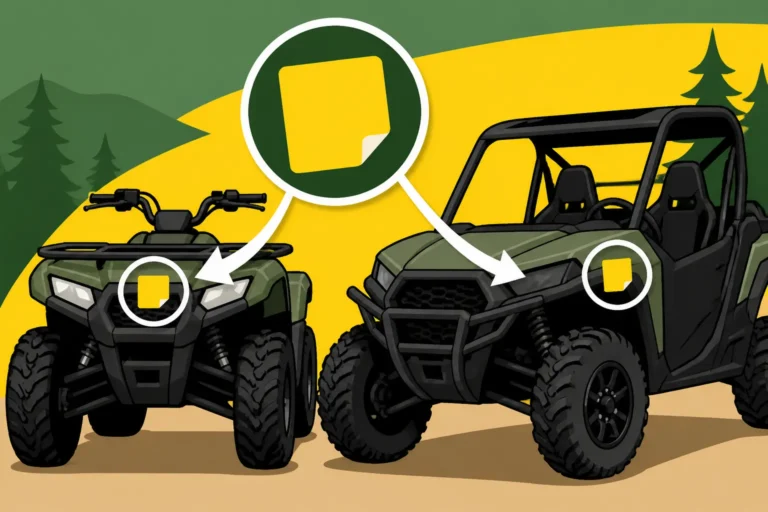
Do not assume a course completion email, a certificate from another organization, or a parent’s statement will count as the required credential. Find out what form of proof is accepted. The article Safety Card and Helmet Sticker in West Virginia can help clarify what a rider may need to carry or display.
If the 17-year-old has already taken a course in another state, do not automatically assume it transfers. West Virginia may accept some outside credentials, but acceptance depends on the credential and the use. Check Out-of-State Safety Certificates in West Virginia and ask the state or trail authority to confirm before the ride.
Keep course proof separate from access paperwork
A common planning mistake is to collect one document and assume it covers everything. Keep a simple checklist that separates:
- Safety-course proof, if required
- Trail permit or access authorization
- Machine ownership or title documents, where relevant
- Insurance information, if required for the use
- Any paperwork requested by a rental company or trail operator
Rules differ by activity. A trail system may have its own permit process, while a public-road ride may require a different set of conditions. A rental provider may also set age, license, or passenger conditions beyond the state’s course rule. Ask the provider directly rather than treating a rental booking as confirmation that every rider is eligible.
If you are buying gear for the trip, prioritize fit and compliance over a broad product label. A helmet should meet the applicable standards and fit securely; goggles or other eye protection should suit the machine and riding conditions. When shopping online, including through Amazon, verify the exact model and approval markings rather than relying on a listing title alone. West Virginia’s rules for young riders are covered in West Virginia Helmet Rules for Riders Under 18.
A pre-ride checklist for a 17-year-old
Before the machine leaves the trailer, confirm the requirements for the actual route—not just the destination. A weekend itinerary can involve a managed system, a town connector, private property, and a public road, with different rules at each point.
Use this checklist:
- Age: The rider is 17, so check rules that apply to anyone under 18.
- Course: Confirm whether the state course requirement applies to this location and machine.
- Exemption: If relying on a managed-trail exemption, verify that the specific system and route qualify.
- Proof: Carry the required course evidence if applicable, and confirm what form is accepted.
- Permit: Check whether the trail system requires a separate permit for the machine.
- Helmet and eye protection: Confirm the rules for the rider’s age and the planned activity.
- Machine fit: Check that the machine is appropriate for the rider and complies with applicable youth-size rules.
- Supervision: Confirm whether any supervision condition applies to the route or activity.
- Road access: Treat a public-road section as a separate question; a trail exemption does not authorize road riding.
- Current status: Check trail closures and any temporary operating restrictions before leaving.
For families, it can help to have the 17-year-old explain the route and safety requirements back to the adults in the group. That is a useful check that the rider knows where the group is permitted to go, what rules apply, and what to do if separated. For rules about age, supervision, and trail use, West Virginia Age Rules on the Trails is a useful companion.
The safest practical answer is simple: a 17-year-old should not assume they are exempt just because they have ridden before or are using an off-road trail. Check whether the course rule applies, verify any managed-trail exception for the exact location, and keep course proof separate from permits and other ride requirements. When the answer is unclear, confirm it with the state or trail authority before the ride.
Disclaimer
This article is for general informational purposes only and does not constitute professional advice. Laws, prices and regulations vary by location and change over time. Consult a qualified professional for guidance on your specific situation.