Buying a Permit at a Hatfield-McCoy Trailhead
Buying a Hatfield-McCoy permit at a trailhead can be convenient, especially if you arrive without one or prefer to handle the paperwork in person. The catch is that sales may depend on the location’s hours and staffing. Here’s how to prepare, what to bring, what to ask before paying, and what to do with the permit before you ride.
Can You Buy a Permit at a Hatfield-McCoy Trailhead?
Often, riders can buy a permit at or near a Hatfield-McCoy trailhead, but you should not assume that every trailhead sells permits or that a sales office will be open when you arrive. Locations, staffing and sales hours can vary. A trailhead may be open for riding while its permit sales point is closed, or it may direct riders to another authorized seller.
The safest approach is to treat trailhead purchase as an option to verify, not a guaranteed walk-up service. Before leaving home, check the trail authority’s current permit information or contact the specific trailhead or local seller you plan to use. Ask whether permits are sold there, when sales are available, and what payment methods the seller accepts. The same details can help if you’re weighing a trailhead purchase against Buying a Permit Online Before You Drive or visiting an authorized vendor listed in Authorized Permit Vendors Across Southern West Virginia.
This matters most when you’re arriving late, riding on a weekday, traveling with a group, or planning to start at a less familiar access point. An open trail does not necessarily mean a staffed permit counter is operating. If no seller is available, you may have to find another authorized sales location or delay your ride until you can obtain the required permit.
A trailhead purchase is useful when you want help with the process or need to collect a physical permit locally. It is less convenient if you are counting on a specific counter to be open without checking first. In particular, don’t plan to reach the trailhead just before your intended start time and assume the permit can be sorted out in a few minutes. There may be a line, a form to complete, details to verify, or a separate question about rider requirements.
If you already know where you’ll start, check the sales arrangements for that access point rather than relying on general information about other trailheads. If you are flexible about where you buy, identify a backup seller before traveling. Where to Buy a Hatfield-McCoy Trail Permit and Permit Sales Hours at West Virginia Trailheads can help you plan that decision.
A permit is not the same thing as a machine’s title, registration or permission to ride on public roads. It authorizes trail access under the trail system’s rules; it does not settle every other legal or safety requirement. For example, a machine from another state may still need a Hatfield-McCoy permit to use the system. Trail access and title questions are separate issues, as explained in [Do Out-of-State Riders Need a West Virginia Title?].
What to Check Before You Drive to the Trailhead
A little preparation can prevent a frustrating start to the day. Before setting out, confirm the practical details and make sure you know which requirements apply to your group and machines.
Confirm sales availability
Contact the seller or check current information from the trail authority close to your trip. Confirm:
- Whether permits are sold at your planned trailhead
- The hours when a seller is available
- Whether sales are walk-in or require another arrangement
- Which payment methods are accepted
- Whether the seller can provide the permit and any required sticker at the time of purchase
- Where to go if the sales point is closed
Ask about your expected arrival time, not just the seller’s general operating schedule. A seller may have limited hours, and operating hours can differ by day or season. If you’re arriving after a long drive, have a backup option that you can reach before you unload and ride.
If you are traveling during a busy weekend or event, allow extra time. Other riders may be buying permits, asking questions or handling rentals at the same location. Don’t make a tight schedule that depends on reaching the trail at the last minute and getting straight onto the route.
Work out what each rider and machine needs
Before you buy, be clear about the number and type of machines in your group. Ask whether each machine needs its own permit and whether any separate requirement applies to passengers or riders under a certain age. Don’t assume that one permit covers every vehicle in a group just because you are buying them at the same counter.
If you’re renting, ask the rental business what it includes. Some rental arrangements may handle permit paperwork; others may expect you to buy a permit separately. Verify the answer for your specific booking rather than relying on what another renter received. The trail permit, rental agreement and safety requirements are distinct items, even when a business helps with more than one of them.
Age-related requirements also deserve a check before travel. West Virginia’s safety-course rules and managed-trail provisions can be easy to confuse, particularly for families and visitors. Review West Virginia’s ATV Safety Awareness Course and ask the trail authority whether any course, card, supervision or equipment requirement applies to the riders in your group. Don’t rely on an adult’s permit purchase to resolve a young rider’s separate requirements.
Bring useful information
Have the machine and rider details available when you reach the seller. Depending on the purchase process, you may be asked for information about the machine, the rider or your eligibility. Exact requirements can vary, so ask ahead instead of assuming which documents will be needed.
A practical checklist may include:
- The number of machines you intend to ride
- Each machine’s make, model or identifying details, if requested
- The names and ages of riders in your group, if relevant to the application
- Proof of residency if you are seeking a resident permit
- A payment method accepted at that sales point
- Any confirmation or reference information from an online purchase, if applicable
You may not need every item on this list, but having the information handy makes it easier to answer questions accurately. If you are buying for several riders, gather the details before you get to the counter. That can help avoid delays and reduce the chance of entering incorrect information.
For physical paperwork, a small waterproof pouch can keep receipts and other documents from getting wet or muddy. Amazon is one place people look for a basic pouch, but any suitable waterproof holder works. A phone power bank, which you might also find through Amazon, can help if you need to check trail information or contact a seller while traveling. These are trip-preparation tools, not permit requirements.
Check trail status separately
A permit does not guarantee that every route you hoped to ride is open. Closures, access changes or other notices can affect your plan, so check trail status separately before setting off. If a route is closed, a permit does not make it available.
When possible, verify status close to your departure and again before unloading. Keep a way to check updates while traveling, but don’t rely only on a phone signal at the trailhead. Download or save essential information ahead of time if you expect limited service. See Checking West Virginia Trail Status Before You Drive for more on making a status check part of your plan.
What Happens When You Buy in Person
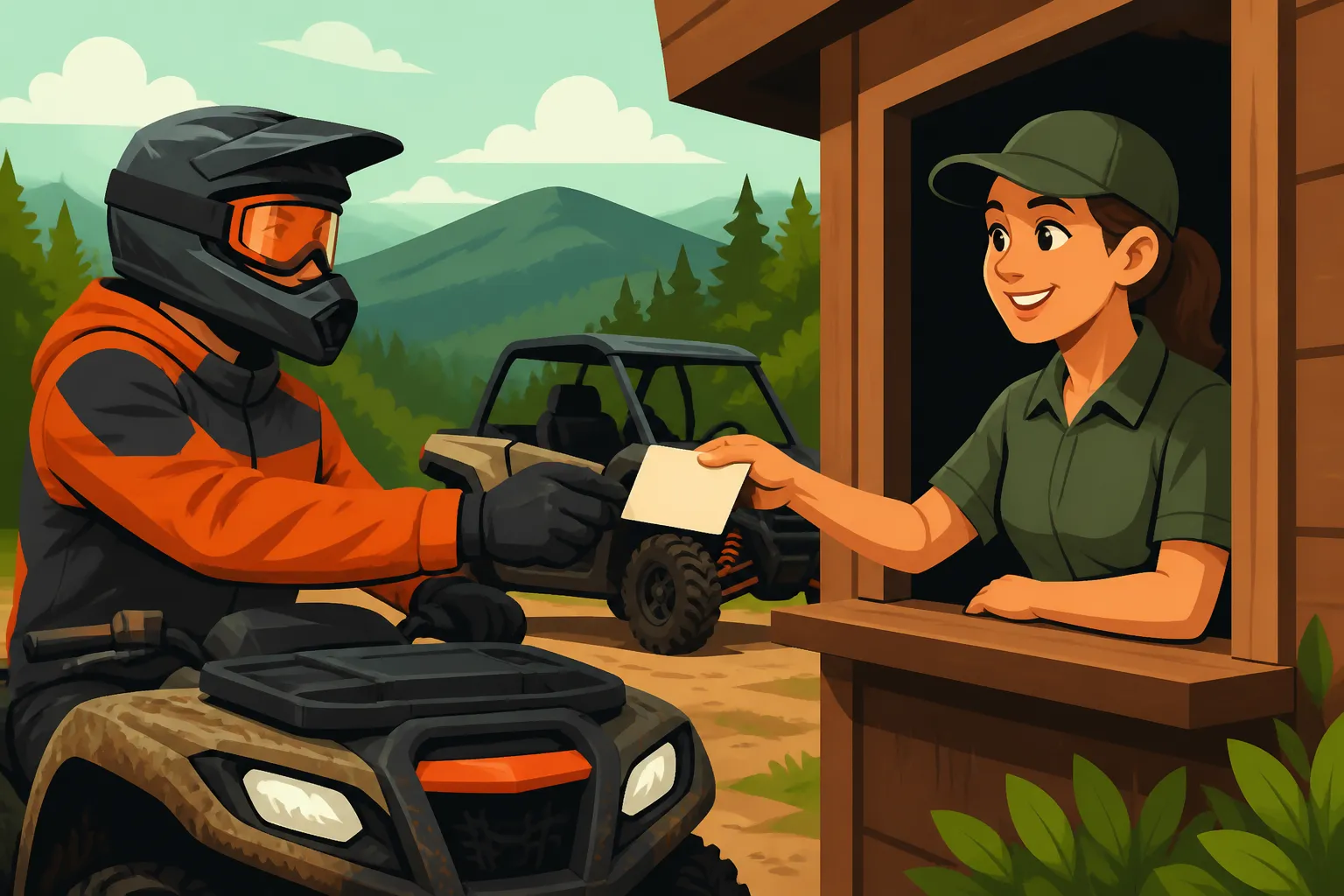
The exact process depends on the seller and current permit procedure, but a trailhead purchase generally involves confirming what you need, providing the requested information, paying through an accepted method, and receiving the permit materials or instructions.
Take a moment to review the details before you leave the counter. Check that the purchase matches the correct rider and machine information, and confirm what you have received. If a sticker is issued, ask how it must be displayed and whether there are any instructions for attaching it. If you receive a receipt or confirmation, keep it until you have verified that the permit is properly issued and displayed.
Ask specific questions at the counter
A few direct questions can help avoid confusion later:
- Does this purchase cover the machine or machines I’m bringing today?
- Is there a separate requirement for a passenger or a younger rider?
- Do I need to carry a receipt, card or other proof while riding?
- Where should the permit sticker go, and does it need to be visible from a particular angle?
- What should I do if the sticker is damaged or won’t stay attached?
- Are there any current trail closures or access changes I should know about?
- If I have a problem with the permit after leaving, whom should I contact?
If the seller is unsure about an age, residency or machine-specific question, get clarification before riding. A confident but incorrect assumption can create a problem later, especially if your group includes young riders or a machine that doesn’t fit the common ATV or UTV categories.
For help with sticker placement, see Mounting a Hatfield-McCoy Permit Sticker. Avoid trimming, covering or altering a sticker unless the instructions specifically allow it. The goal is to display it as directed so it can be identified during a trail check.
Keep the permit and other documents distinct
People sometimes treat a trail permit as if it were proof of ownership or registration. It is not a substitute for title documents, and title paperwork does not replace the trail permit. If you are bringing an out-of-state machine, make sure you have handled both questions separately: what documents apply to the machine, and what permit is required for trail access.
You generally should not carry an original title on a trail ride unless an official instruction or specific circumstance calls for it. Keep ownership paperwork secure at home or in another safe place, and carry the proof the trail authority says riders should have with them. If you’re unsure what documentation you need on the trail, Do You Need Paperwork on the Trail in West Virginia? covers the distinction between trail paperwork and ownership records.
If your group has more than one machine, confirm that the permit details match the machine being used. Don’t move a sticker from one vehicle to another unless the rules expressly permit it. A permit assigned or issued for one machine may not automatically transfer to another. For questions about coverage across machines or systems, check One Permit for Every Trail System and confirm any current details with the trail authority.
After Purchase: Display It and Follow the Trail Rules
Buying a permit is only one step. Before riding, make sure you know how it must be displayed, what requirements apply to each person in your group, and which routes are open.
Attach the sticker according to its instructions. Choose the specified area, prepare the surface as directed and press it on firmly. Don’t wait until you are on a dusty trail to work out where it belongs. If the sticker gets wet, peels, tears or is partly obscured, stop and ask an authorized source how to fix the problem. Carrying a receipt can help with questions, but it may not replace a properly displayed permit.
If you buy permits for several machines, check each one rather than assuming the group’s paperwork is complete. Confirm that the sticker is attached to the correct vehicle and is visible. A simple check in the parking area is easier than discovering a problem after you’ve started riding.
Read the trail rules before entering the system, even if you have ridden elsewhere in West Virginia or at another managed trail network. Rules about staying on marked trails, required protective equipment, alcohol, young riders and access restrictions can differ from what you’re used to. Review Trail Rules Every West Virginia Rider Signs Up To and make sure every rider understands the basics.
Also keep in mind that a permit does not make a closed route open, authorize trespass beyond trail boundaries, or provide general permission to ride on roads. Stay on signed and open routes, respect gates and barriers, and follow any instructions posted at the trailhead. If a sign, closure notice or staff member’s direction conflicts with your planned route, stop and get clarification rather than riding through and hoping the restriction does not apply.
Before leaving the parking area, make a brief group check:
- Every machine has the required permit displayed as directed.
- Each rider has the required documents and safety equipment.
- Young riders meet applicable age, supervision and machine-size requirements.
- Everyone knows the day’s route and where to meet if separated.
- The group understands current closures and trail boundaries.
- Phones, maps and other navigation tools are ready for limited-service conditions.
Buying at a trailhead can be simple when the seller is open and you have the right details ready. The biggest preventable mistake is treating it as an automatic, always-available service. Verify the sales location and hours, have a backup plan, check that the purchase matches your group, and take a few minutes to display the permit correctly before riding.
Disclaimer
This article is for general informational purposes only and does not constitute professional advice. Laws, prices and regulations vary by location and change over time. Consult a qualified professional for guidance on your specific situation.