Where the Permit Sticker Goes on a West Virginia Machine
Where the Permit Sticker Goes on a West Virginia Machine
A Hatfield-McCoy permit is only useful if trail staff can see it on the machine it belongs to. But a curved fender, removable panel or old decal can make placement less obvious than expected. Put the sticker on a clean, visible exterior surface, follow the current instructions supplied with it, and check that it stays readable after riding.
The Best Place to Put the Sticker
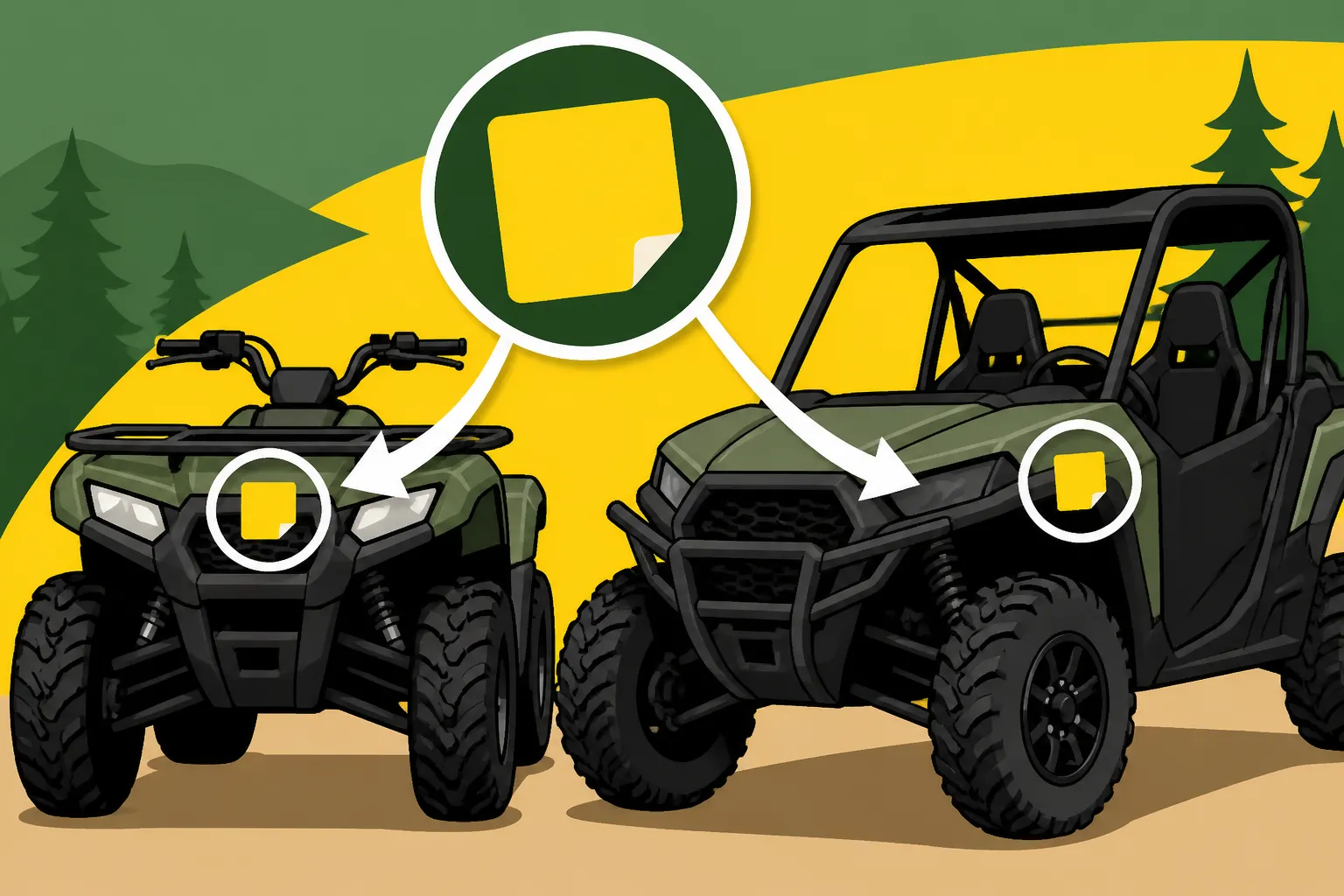
For a Hatfield-McCoy machine, the practical rule is to put the permit sticker on the machine itself, in a visible spot where trail staff can identify it without searching or removing equipment. A flat area on the left exterior side is a sensible choice when the current permit instructions allow it. Avoid placing it somewhere hidden by a rider, passenger, cargo, a windshield, or a body panel.
The sticker should be easy to spot when the machine is parked or approached on the trail. A location that looks clear in the garage may be obscured once you add a cooler, luggage, a spare tire, or other ride gear. Before sticking it down, sit on the machine and check the view from outside, including from the side and rear.
The permit package or current trail-authority directions take priority over general placement advice. Check those directions before installing the decal, especially if the sticker’s shape, backing, or instructions differ from what you have seen on another rider’s machine. For an overview of what a permit covers and how it fits into a ride, see West Virginia’s Hatfield-McCoy Trail Permit Explained.
| Placement option | Practical assessment | What to check |
|---|---|---|
| Flat exterior panel on the left side | A straightforward, visible choice when allowed by the permit instructions | Make sure a rider, cargo, or accessory will not cover it |
| Curved fender or bodywork | Can work if the sticker lies flat and remains readable | Look for wrinkles, lifted edges, and flexing that may loosen it |
| Under a windshield or inside a cab | Usually a poor choice for an exterior decal | The glass, glare, dirt, or cab structure may obstruct inspection |
| Removable accessory or storage box | Risky because the sticker can leave the machine or be taken off | The permit should remain with the permitted machine |
| Helmet, trailer, or tow vehicle | Not a substitute for placing the permit on the machine | Keep separate items and requirements clearly distinguished |
Use the vehicle’s left side as viewed by someone sitting in the normal riding position and facing forward. If a panel design makes that side impractical, do not guess at a hidden alternative. Check the instructions that came with the permit or ask the trail authority or an authorized permit vendor where that particular decal should go.
A sticker on a machine is not the same thing as a paper permit, a safety-course card, or any separate helmet sticker. Each item has a different purpose. Keep documents that you are required to carry in a secure place, and install each decal only as directed. The distinction matters because putting a course-related sticker on a helmet does not display a trail permit on the machine.
The permit also belongs with the machine it was issued for. If you are taking more than one machine, do not assume that displaying one decal on a group’s lead vehicle covers the others. Review One Permit for Every Trail System and confirm the current permit requirements for every machine you plan to ride.
How to Install It So It Stays Readable
Good placement starts with preparation. A decal applied over dust, mud, oily residue, wax, or an old sticker is more likely to lift or become difficult to read. Take a few minutes to prepare the surface rather than trying to press the permit onto a dirty panel at the trailhead.
- Read the permit instructions first. Check for a required location, orientation, or installation method. Keep any included paperwork in case you need to confirm the instructions later.
- Choose a permanent exterior panel. Prefer a spot that is easy to see and is part of the machine, not a removable bag or accessory.
- Check visibility with the machine loaded. Add the gear you expect to carry, then look at the proposed location from outside. Make sure nothing blocks the decal.
- Clean the area. Use a cleaner suitable for the machine’s finish and allow the surface to dry completely. Avoid harsh solvents or abrasive tools that could damage plastic or paint.
- Position before peeling. Hold the sticker in place and check that it sits level and can be read. Do not stretch it around a corner or across a seam.
- Apply it carefully. Follow the decal’s instructions. Press it down evenly and work out air pockets without creasing or tearing it.
- Check the edges. Make sure the entire sticker is attached, especially at corners and along curves.
- Inspect it before each ride. Look for dirt, scratches, lifting edges, fading, or anything that hides the permit information.
A flat spot is usually more reliable than a sharply curved surface. A decal that bridges a seam or bends over an edge may peel as the panel flexes, the machine vibrates, or the sticker catches on brush and clothing. If the only available panel is curved, test the fit before removing the backing. Do not cut or alter the sticker unless the issuing authority explicitly allows it.
Avoid mounting the permit where regular cleaning will quickly abrade it, such as a spot that gets scrubbed hard after every muddy ride. At the same time, do not protect it by putting it behind a cover that makes inspection difficult. If the permit comes with specific directions for protecting or applying it, follow those rather than improvising with tape, laminate, or a clear film.
Trail conditions can be rough on decals. Mud, water, grit, repeated washing, and contact with branches can all make a sticker harder to read or loosen its edges. A quick inspection when loading the machine can catch a problem before it turns into a question at a trail checkpoint. If the sticker is already peeling, do not rely on a loose corner to survive another ride; check the current replacement process in Permit Stickers That Fall Off.
Placement for ATVs, UTVs, and Other Setups
The basic goal is the same for an ATV and a UTV: display the permit on the permitted machine in a place that is visible and secure. The best panel will depend on the machine’s body design, accessories, and the instructions that came with the decal.
ATVs
Many ATVs have a front or rear fender that offers a visible surface. Choose a panel that is not hidden by the rider’s leg, a front rack load, a rear cargo box, or other equipment. Avoid a spot on a part that is routinely removed for maintenance or replaced as an accessory.
A fender’s shape matters. If it curves sharply, the decal may wrinkle or lift at the edges. A broad, flatter body panel is generally easier to apply and keep readable. Before committing, check the sticker against the panel and make sure it does not cross a vent, seam, fastener, or moving joint.
UTVs and side-by-sides
A UTV’s doors, cab panels, fenders, and cargo areas can provide several possible locations, but accessories can obstruct them. A door may be covered by mud, a graphic, or an added storage panel. A rear panel may disappear behind a spare tire or cargo. A windshield can make a decal harder to see and may not be an appropriate substitute for an exterior panel.
Look at the machine as it will actually be ridden. If the UTV has a roof, doors, windshield, mirrors, a rear-mounted spare, or a full cargo load, check visibility from outside with those parts in place. Keep the sticker on the machine rather than putting it on a removable storage bag, helmet, trailer, or tow vehicle.
Machines with replacement bodywork or custom panels
Owners sometimes replace fenders, add graphics, or change body panels. If the permit is on a part that gets removed, the sticker could be damaged or separated from the machine during repair. Choose a durable panel that stays attached during normal use, and consider the permit before installing aftermarket accessories.
A sticker placed over a graphic may be difficult to read. A sticker placed too close to a panel edge may peel. Avoid covering required information with a decorative overlay. If the sticker has already been applied to a panel that needs replacement, do not assume it can be peeled off and transferred. Ask the issuing authority how to handle it and whether a replacement is needed.
For a closer look at the broader permit process, Where to Buy a Hatfield-McCoy Trail Permit can help you plan where to get one before heading to a trailhead. If you are unsure which paper or decal belongs with which requirement, Permits Riders Ask About Most can help separate trail permits from other riding paperwork.
What Trail Staff Need to Be Able to Check
A visible sticker makes it easier for staff to confirm that the machine has the required permit. If the decal is hidden, badly damaged, or attached to a different vehicle, you may be asked to clarify the situation. Do not assume a receipt in a phone or a sticker displayed on another machine will take the place of a properly displayed permit.
Before riding, check that:
- The sticker is on the machine it was issued for.
- It is in the location specified by the current instructions.
- Its information is not covered by mud, tape, a rack, a bag, or an accessory.
- The sticker is attached securely and has not been moved from another machine.
- You have any separate paperwork or safety credentials required for your ride.
A machine may be stopped for reasons unrelated to sticker placement, so a visible decal does not by itself prove that every permit, safety, equipment, or operating requirement is satisfied. Check the rules that apply to your trip and machine. The permit is also not permission to ride outside authorized routes or onto private property.
If you are stopped and the sticker is visible, stay calm and follow staff instructions. If it is obscured or damaged, explain what happened rather than trying to adjust or remove it during the check. For a fuller overview of the issue, see Riding West Virginia Trails Without a Visible Permit and [West Virginia Trail Rangers and What They Check].
Trail access and rules can vary by riding area and can change. Check the current trail status and permit directions before you travel, rather than relying only on an old decal, a friend’s machine, or a remembered placement rule. If you need background on where riding starts and how systems connect, Hatfield-McCoy Trailheads and Where to Start is a useful planning reference.
If the Sticker Is Missing, Damaged, or on the Wrong Panel
Do not copy a decal from another machine or make a substitute that looks like an official permit. A damaged or missing sticker is a reason to contact the permit issuer or an authorized vendor and ask what to do. Keep any purchase confirmation or permit documentation you already have, but do not assume that paperwork alone will satisfy a display requirement.
If the permit is peeling, first avoid tugging at it. Pulling a partly attached decal can tear it or leave part of the information behind. Take a clear photo of the sticker and its condition, then ask about the correct replacement steps. If a machine panel has been repaired or replaced, ask whether the sticker can be moved or whether you need a replacement. Follow the current instructions instead of trying to transfer it yourself.
When the sticker is lost, use the process described in [Replacing a Lost West Virginia Trail Permit]. The issuer can tell you what proof or information is needed and whether the original decal should be reported. Replacement procedures may differ from a simple reapplication, so do not wait until you arrive at the trail entrance to sort it out.
If the sticker is on a removable part or is hidden by new cargo, correct the issue before riding. Repositioning a permit should only be done if the authority’s instructions allow it; otherwise, ask first. The same applies if you bought a machine with a sticker already attached. A permit decal left by a prior owner should not be treated as proof that the new owner or machine is currently covered. Confirm what you need for your own ride.
When planning a trip, make permit checks part of the loading routine:
- Confirm the permit applies to each machine in your group.
- Compare the machine information with the permit paperwork, if applicable.
- Check the sticker’s placement and condition.
- Pack any required documents where they can be reached.
- Confirm the trail is open and that your planned route is authorized.
That small check can prevent avoidable delays at the trailhead. It also helps keep the permit visible throughout the ride, especially when the machine is carrying passengers or gear.
Frequently Asked Questions
Does the sticker go on the left or right side?
Use the location stated in the current instructions that come with the permit. When those instructions allow a choice, a clear, permanent exterior panel on the left side is a practical option. Make sure it is not hidden by the rider, cargo, or an accessory.
Can I put the permit sticker on my helmet?
No. A trail permit decal belongs on the permitted machine, not on a helmet. Helmet or safety-course requirements are separate, so follow the instructions for each item.
Can I put the sticker on a windshield?
Do not use the windshield unless the current permit directions specifically allow it. An exterior body panel is a more reliable choice because the decal remains associated with the machine and is not obscured by glass, glare, or cab structure.
Can I move the sticker to another machine?
Do not move it or assume it covers another machine. Confirm the permit rules for every machine you plan to ride, and ask the issuer how to handle a change of machine or a damaged decal.
What should I do if the sticker is peeling?
Check the permit instructions and contact the issuer or an authorized vendor if the decal may no longer remain attached. Avoid covering it in a way that hides its information, and use the official replacement process if needed.
Disclaimer
This article is for general informational purposes only and does not constitute professional advice. Laws, prices and regulations vary by location and change over time. Consult a qualified professional for guidance on your specific situation.