Goggles Versus a Face Shield on the Trail
Choosing goggles or a face shield for a West Virginia trail ride can be confusing: both seem to protect your eyes, but they behave differently in dust, rain, and close brush. The best option depends on your helmet, machine, riding conditions, and whether the protection stays securely in place when the trail gets rough.
Why eye protection matters on a West Virginia trail
Trail riding exposes your eyes to more than wind. Dust from the machine ahead, grit kicked up by tires, branches, rain, and insects can all interfere with your vision. A moment of watering eyes or a sudden blink can matter on a narrow route with rocks, ruts, or other riders nearby.
In West Virginia, trail conditions can change quickly. A dry stretch may be dusty, while a shaded hollow or creek crossing is damp and slick. Routes can also pass through brush or have limited sight lines. Your choice of eye protection should account for the ride you actually expect, not only how the gear looks in the garage.
Eye protection is also separate from a trail permit. A permit gives access under the applicable rules; it does not replace protective gear or make an unsuitable helmet safe. Check current requirements for the trail system you plan to ride, including Eye Protection Requirements on West Virginia Trails and Helmet and Eye Protection Rules in West Virginia. Rules may differ by riding situation, age, and machine.
A good setup should do four things:
- Keep wind and debris away from your eyes.
- Stay in place when you turn your head or hit uneven ground.
- Let you see clearly through changing light and weather.
- Work with your helmet without creating gaps or pressure points.
Goggles and face shields can both meet some of those needs, but neither is automatically the better choice for every rider. A shield is convenient to raise or lower. Goggles usually seal more closely around the eyes. The right decision comes down to how well each option fits your helmet and protects your vision in the conditions you encounter.
Goggles versus a face shield
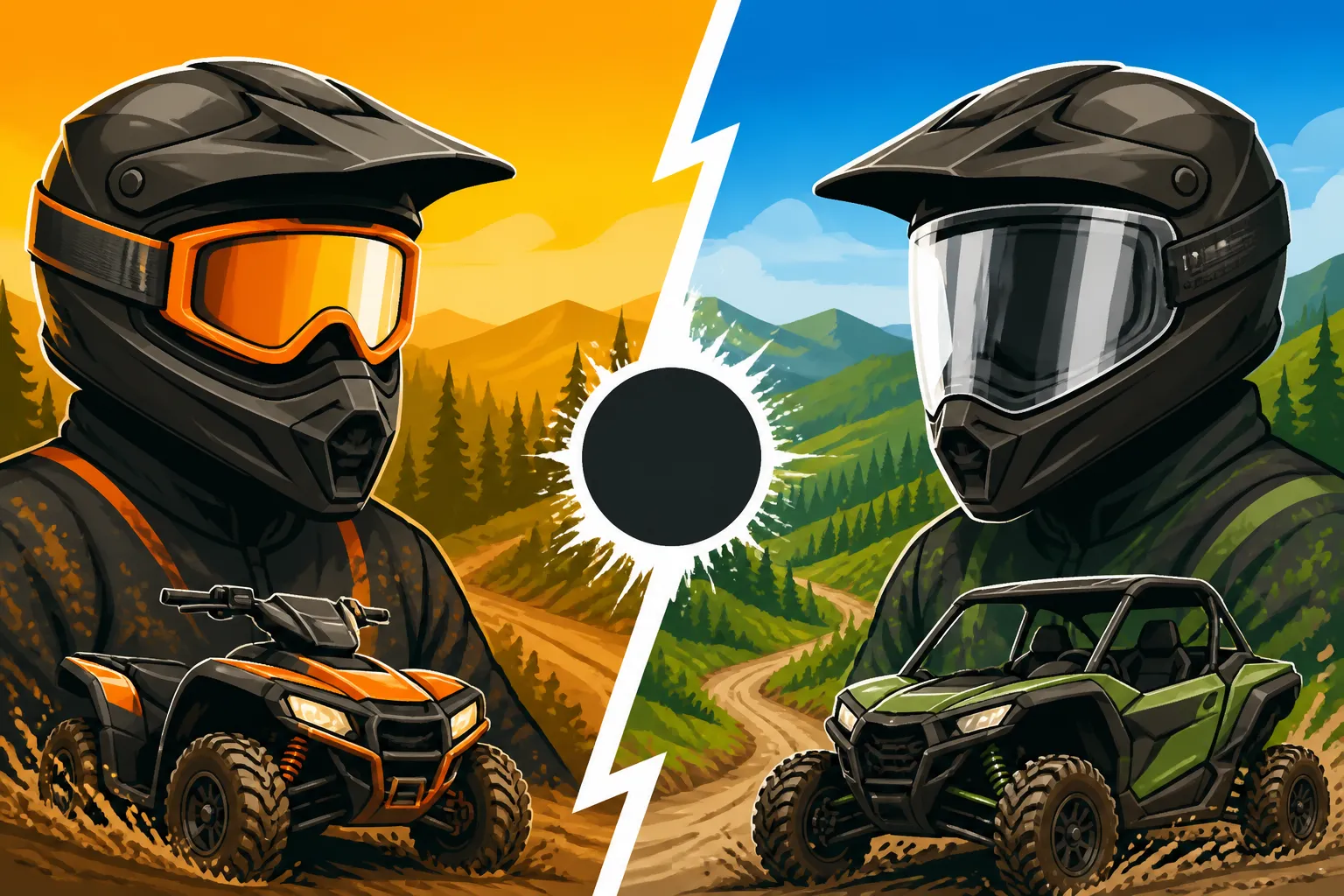
Goggles fit around the eyes and are normally held in place by an adjustable strap. A face shield is a larger visor attached to a helmet, or a protective screen that covers more of the face. Some helmets have a clear shield that can be raised; others are designed to work with separate goggles.
| Feature | Goggles | Face shield |
|---|---|---|
| Seal around the eyes | Usually close-fitting when sized and adjusted correctly | Often leaves more room around the sides or lower edge |
| Dust control | Generally the stronger option for dusty trail riding | Can deflect larger debris, but may allow dust to swirl behind it |
| Ventilation | Depends on the frame, foam, and lens design | Often allows more airflow, though airflow varies by helmet |
| Fog management | Can fog if ventilation or lens treatment is inadequate | Can fog, especially when lowered in slow, humid conditions |
| Convenience | Requires a strap and may need to be removed to wipe or adjust | Often quick to raise or lower |
| Compatibility | Must fit the helmet opening and face shape | Must be designed for the helmet and lock or stay in position |
| Best use | Dusty rides, rough trails, and conditions where a close eye seal matters | Convenience, changing airflow, and situations where a compatible helmet shield gives adequate coverage |
When goggles are the better fit
Goggles are often the practical choice when the trail is dusty or when another machine will be close ahead of you. Their foam and frame sit around the eyes, making it harder for fine dust and wind to get in from the sides. They can also be easier to pair with an open-face off-road helmet than a large shield.
That seal depends on fit. Goggles that are too narrow may press uncomfortably against the face or leave gaps near the temples. A frame that is too large may interfere with the helmet opening. Try them on with your helmet, not just by holding them against your face.
Goggles can also be useful if you want to swap lenses for different light conditions. A clear lens is a sensible starting point for wooded trails, overcast days, or rides that may continue into lower light. Tinted lenses can reduce glare in bright conditions, but a lens that is too dark can make shaded sections harder to read. Avoid changing into a darker lens if the ride may extend into dusk or dense forest without checking visibility carefully.
When a face shield may suit you better
A face shield is convenient because you can often lift it to speak, get more airflow, or wipe condensation. It can also reduce exposure across more of the face than goggles alone. For some riders, that makes it easier to wear consistently, especially on a machine with a cab or windshield where the riding position and airflow are different from an open ATV.
But coverage across the face does not necessarily mean a close seal around the eyes. On an open trail, wind can curl around the sides or bottom of a shield and carry dust behind it. A shield can also pick up scratches that scatter light, making it harder to see in bright sun or at night. If yours is badly scratched, cracked, loose, or no longer stays in its intended position, replace it rather than relying on it for clear vision.
A face shield should be designed for your helmet and secured as intended. A loose or improvised shield can shift during a bump or catch airflow. Don’t assume a street motorcycle shield, a shop-made panel, or a machine’s windshield will provide the same protection as properly fitted eye gear.
A helmet visor is not always a substitute
Some off-road helmets have a peak or visor above the eye opening. That can help shade your eyes or deflect some overhead debris, but it does not close the space around your eyes. The peak is not the same thing as goggles or a face shield.
Likewise, a side-by-side windshield can reduce wind and larger debris without sealing the cockpit. Dust may still enter through openings, circulate inside, or come from another vehicle. Riders in open-cab machines may need eye protection even when the machine has a windshield. The type of machine changes airflow, but it does not remove the need to see clearly.
For a closer look at open-cab setups and their trade-offs, see Safety Glass Windshield or Goggles. For dusty routes, Dust Masks and Goggles on a Coalfield Ride covers a related gear concern.
Choosing the right protection for your ride
Start with your helmet and machine, then consider the expected trail conditions. If your eyes water from airflow or you ride behind other machines, prioritize a secure seal. If you want to raise your protection often, a compatible shield may be more convenient, but check whether it still keeps wind and debris out when lowered.
Match the gear to the conditions
Think through the ride before leaving:
- Dry, dusty trail: Goggles usually offer better control of dust around the eyes. Leave enough distance behind the next machine to reduce the dust you breathe and see through.
- Rain or wet brush: A shield can help deflect drops and brush, but water, mud, and condensation can still obscure it. Goggles also need a lens that stays clear enough for the conditions.
- Cold, humid weather: Fogging becomes more likely when warm breath meets a cool lens. Look for suitable ventilation and follow the manufacturer’s care instructions.
- Changing light: A clear lens is often more versatile where wooded sections alternate with open areas. If using a tinted lens, make sure it does not make shaded sections too dark.
- Long rides: Comfort and fit matter more over time. A pressure point, slipping strap, or shield that catches wind can become a distraction.
Conditions can be difficult to predict on a route with elevation changes, shaded hollows, and exposed sections. Check trail information before setting out and be prepared to stop somewhere safe if your lens becomes dirty or your vision deteriorates. Advice on West Virginia Trail Conditions After Rain and What to Wear on a West Virginia Trail Ride can help with the broader gear and weather plan.
Check fit before you ride
Try the full setup at home. Put on your helmet, secure the strap or shield, and move your head as you would on the trail. Look up, down, and side to side. Check for gaps, pressure, restricted vision, or contact between the goggles and helmet.
For goggles, the strap should hold them in place without relying on a tight fit that makes your face sore. The frame should sit evenly around your eyes, and the foam should contact your face without obstructing your view. If you wear glasses, confirm whether the goggles are designed to fit over them. Do not force eyewear into a frame that pinches or pushes the lenses against your face.
For a shield, check that it moves smoothly and stays in the position intended by the helmet design. Confirm that it does not interfere with the helmet’s fit or leave an unexpected opening when lowered. If the helmet manufacturer says to use goggles with the shield raised or in particular conditions, follow that guidance.
A quick check before every ride can catch problems:
- Inspect lenses for cracks, deep scratches, mud, and residue.
- Check that straps, pivots, fasteners, and seals are in good condition.
- Put on the helmet and eye protection together.
- Confirm that you can see clearly in the light you expect.
- Carry a cleaning cloth and a safe way to store spare lenses or goggles.
Choose for comfort, then keep the lens clear
Riders sometimes focus on the advertised features and overlook whether they can tolerate the gear for a full ride. If goggles make your face too hot, or a shield fogs whenever you stop, you may be tempted to raise or remove it. That can leave your eyes exposed just when another rider passes or the trail becomes dusty.
Try a few options with your actual helmet before buying. Look for a fit that keeps the lens stable without squeezing, and confirm that replacement lenses or parts are available for the model you choose. When shopping on Amazon, check the product’s helmet compatibility, sizing details, lens type, and return conditions rather than relying on a product photo alone. A low-cost option that does not fit securely is not a useful bargain.
Keep lenses clean using the manufacturer’s recommended method. Grit can scratch a lens if you wipe it dry, so rinse or remove loose debris first when possible. Avoid harsh cleaners unless the manufacturer says they are safe. Store goggles and shields where they cannot rub against tools, buckles, or other hard objects.
If you’re deciding between goggles and a face shield for a particular machine, test the setup in a safe, stationary setting before the ride. Then check it again after the first short section. You should be able to see the trail edges, read surface changes, and turn your head without the gear shifting or fogging badly. If you can’t, stop and address the problem rather than pushing on with impaired vision.
A practical decision for West Virginia trail riding
For many open ATV rides, well-fitted goggles are the more dependable choice when dust control is the priority. A face shield can be a convenient option when it fits the helmet properly and gives clear, stable coverage, but it may not seal around the eyes as closely. A shield and goggles are not always either-or: some helmet setups allow both, giving the rider a shield for additional coverage and goggles for a closer eye seal.
Use this simple decision process:
- Check the rules. Confirm the current requirements for the trail system and your riding situation. Don’t treat a permit as proof that your eye protection is adequate.
- Start with your helmet. Use equipment designed to work together. A visor, windshield, or face shield that does not fit the helmet is not a safe workaround.
- Consider dust and airflow. If dust is likely or your eyes are exposed to strong airflow, favor a close-fitting option.
- Consider visibility and weather. Choose a lens that works in shade as well as bright light, and account for fog, rain, and mud.
- Test the fit and clarity. If the equipment shifts, leaves gaps, or blocks your view, choose a better-fitting setup.
- Carry a backup plan. A clean cloth, spare eye protection, or replacement lens can help you deal with damage or changing conditions.
The best choice is the one that remains comfortable, secure, and clear through the ride. For dusty trails, that often means goggles. For riders who value quick adjustment and have a helmet designed for it, a face shield can work well, provided it offers the needed protection. Recheck the trail’s current gear requirements before you go, and review Trail Rules Every West Virginia Rider Signs Up To along with the relevant guidance on Helmet and Eye Protection Rules in West Virginia.
Disclaimer
This article is for general informational purposes only and does not constitute professional advice. Laws, prices and regulations vary by location and change over time. Consult a qualified professional for guidance on your specific situation.