Helmet and Eye Protection Rules in West Virginia
West Virginia’s helmet and eye-protection rules can depend on where you ride, who is operating the machine, and whether you are on a managed trail or a public road. The safest approach is to separate the legal minimum from the equipment a ride actually calls for. This guide explains what to check before you load up, including when you bring an out-of-state machine.
The rule depends on where and how you ride
There is no single equipment checklist that answers every helmet and eye-protection question in West Virginia. A ride might include a managed off-road trail, a public-road connector, a town street or private property, and different rules or conditions can apply to each part.
A useful starting point is to distinguish three things:
- State law: The requirements that apply under West Virginia law to the type of machine, rider and riding location.
- Trail or land rules: Additional conditions imposed by a managed trail system, landowner or event organizer.
- Practical safety: Protective equipment that may be wise even when you are not sure it is legally required in a particular setting.
These are related, but they are not interchangeable. A helmet that meets a state requirement may still be a poor fit. Goggles that are comfortable in a field may not stay put on a rocky trail. And meeting an equipment rule does not grant permission to ride on a road or trail.
| Riding situation | What to check before setting out | Sensible preparation |
|---|---|---|
| Managed off-road trail | The current trail-system rules, permit conditions and rider requirements | A properly fitted helmet and secure eye protection for every rider |
| Public road or town street | State road-riding requirements, vehicle classification, local rules and age-related conditions | Helmet and eye protection appropriate to the road, weather and machine |
| Private property | The landowner’s conditions and any state rules that still apply | Treat dust, branches, rollover risk and passenger exposure seriously |
| Organized ride or rental | The organizer’s or rental operator’s rules, waiver and safety briefing | Ask what equipment is included and whether it meets the ride’s requirements |
| Out-of-state visit | Rules for the West Virginia riding location, plus any permit or visitor conditions | Do not assume a home-state rule or registration substitutes for local requirements |
Before a trip, check the requirements for the exact place you intend to ride. The rules for a managed trail may be stricter than the minimum that applies to an off-road ride elsewhere. If you plan to use public roads, review road-riding rules separately. West Virginia Helmet Rules for Riders Under 18 is a useful related topic for families, while Helmet and Eye Protection Rules on West Virginia Trails focuses on managed-trail requirements.
A visitor should also keep permits and safety equipment in separate mental boxes. A trail permit addresses access under the trail system’s rules; it does not automatically settle whether a particular helmet, goggles or face shield is acceptable. If you are planning a visit, see Out-of-State Riders on West Virginia Trails and Do Other States’ Registrations Work in West Virginia? for the separate questions of visitor access and machine paperwork.
When a rule is unclear, do not rely on a seller’s description, an old forum post or a rider’s recollection. Ask the agency or trail operator responsible for the place where you will ride, and describe the machine and situation accurately: for example, an adult operator on a UTV, a minor passenger, or an ATV using a road connector. That small detail can change which rule applies.
Helmets: fit, approval and real-world protection
A helmet is only useful if it is designed for the activity, fits the rider and stays in place. A loose helmet can shift over the eyes or come off during a crash. One that is too tight can become uncomfortable enough that the rider loosens the strap or takes it off. For adults and children alike, fit should be checked before the trip rather than in a trailhead parking lot.
What makes a helmet appropriate
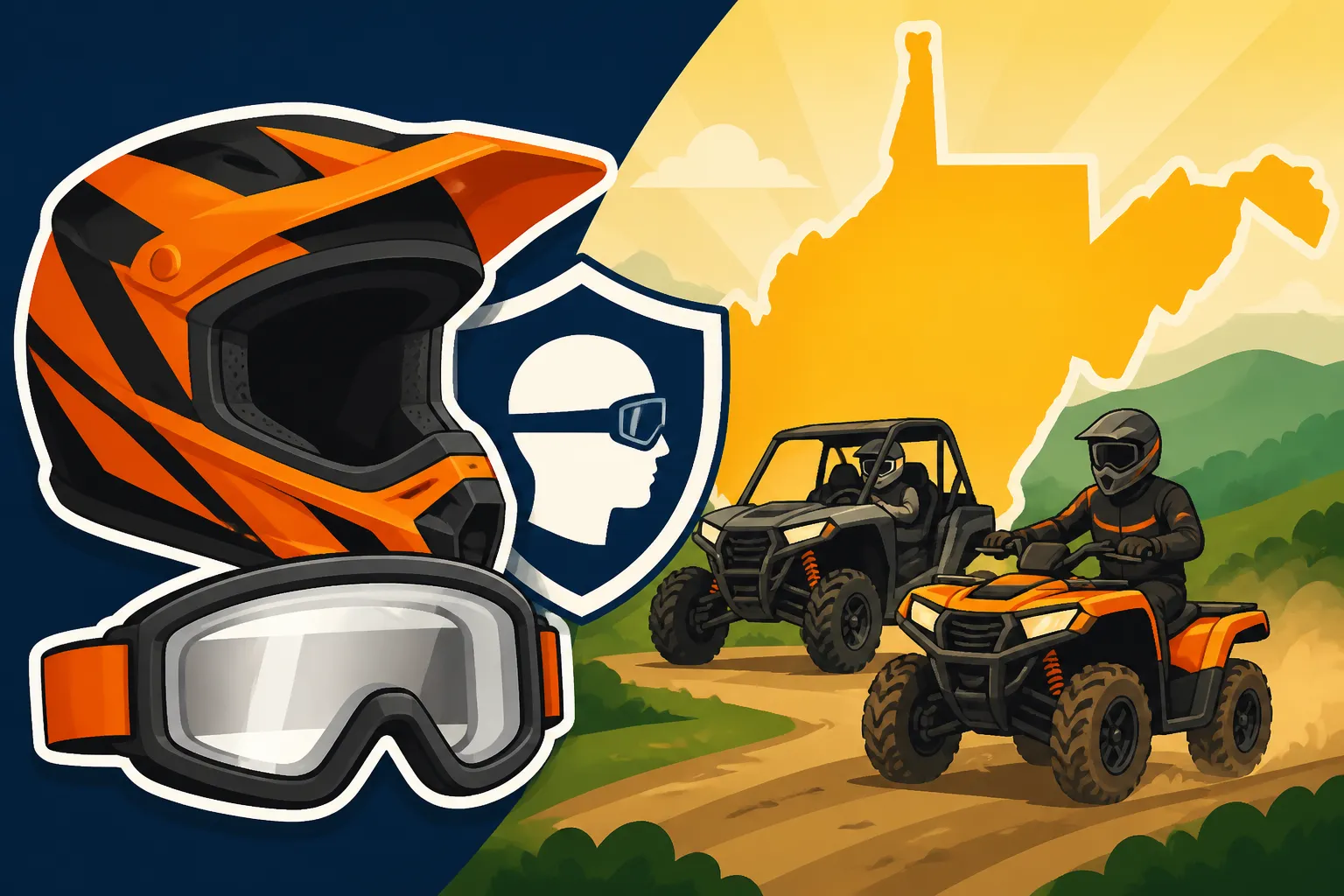
For ATV and UTV riding, choose a helmet intended for motorized riding and verify that it carries the safety approval required for the place you will ride. Requirements can differ by setting, and a helmet that is marketed as a “bike helmet” or “off-road helmet” is not automatically suitable for every legal purpose. Read the label and the manufacturer’s description rather than relying on the product name alone.
A sensible helmet check includes:
- Look for the required certification label, if one applies to the ride.
- Confirm that the helmet is designed for the rider’s activity and head size.
- Make sure the shell and liner are undamaged and have not been altered.
- Check that the chin strap fastens securely and can be snugged without pain.
- Wear the helmet in the position intended by the manufacturer, not tipped back.
- Make sure it does not obstruct the rider’s view or interfere with eye protection.
A helmet can look intact after being dropped, but a hard impact may damage internal materials that are not visible from the outside. Follow the manufacturer’s guidance about replacing a helmet after a crash or other significant impact. Also check its condition before use: cracks, crushed areas, loose padding, a damaged strap or a buckle that will not hold are reasons to stop and replace it.
Do not buy a helmet solely because it is inexpensive, has an aggressive-looking shell or matches the machine. If you are shopping online, including through Amazon, check the exact model, size, approval markings and return conditions. A listing photo can show a certification label that does not match the particular model or size being sold. Confirm the label on the helmet itself when it arrives.
Fit a helmet to the person who will wear it
Helmet sizes are not perfectly consistent across manufacturers. A rider’s usual hat size is only a starting point. Have the rider try the helmet on, following the manufacturer’s fitting instructions. It should sit level, cover the intended areas of the head and feel evenly snug rather than pressing sharply in one spot.
Once it is fastened, gently move the helmet from side to side and front to back. The skin on the forehead and cheeks should move with it; the helmet should not slide freely over the head. The strap should be secure under the chin without making breathing or swallowing difficult. A child should be able to wear the helmet correctly throughout the ride, not just tolerate it for a few minutes at home.
A common mistake is buying a helmet with room to “grow into.” A helmet that is too large may shift or come off when the rider needs it most. Choose the correct size now, and reassess fit as a child grows. If the helmet has removable pads, adjust them only as the manufacturer permits; improvised padding is not a substitute for a proper fit.
For youth riders, helmet fit is only one part of the decision. The machine itself must suit the rider, and adult supervision, age restrictions and passenger rules still matter. See West Virginia Age Rules on the Trails, Manufacturer Age and Size Requirements and Riding With Kids Under 16 on the Trails before planning a family ride.
Helmets for UTV passengers
A UTV’s roll cage, doors, seat belts or windshield do not make it a closed passenger car. Riders remain exposed to impacts, flying debris and the possibility of a rollover. Do not assume that being inside the cab means a helmet is unnecessary. Check the rules for the specific riding location and follow the manufacturer’s guidance for the machine.
A helmet should work with the UTV’s seating and restraint system. It must not prevent the rider from sitting correctly or using a seat belt as intended. Avoid bulky or poorly fitting headgear that presses against the roof or makes it difficult to turn and see. If a child’s helmet cannot be worn comfortably with the child seated and restrained properly, do not treat the problem as solved by loosening the belt.
Passengers need helmets sized for them, not borrowed helmets that are plainly too large. If your group has more passengers than correctly fitting helmets, reduce the number of riders or make another plan. That is safer than sharing ill-fitting gear or assuming that the vehicle’s structure covers the gap.
Eye protection: dust, debris and visibility
ATV and UTV riding can expose eyes to dust, grit, insects, branches and material kicked up by the machine ahead. On a road, wind and airborne debris can be a problem even when the surface looks clean. Eye protection helps preserve vision, which is a safety issue as well as a comfort issue.
The exact legal requirement can depend on the riding setting and machine equipment. Do not assume that a windshield always counts as adequate eye protection, or that goggles are unnecessary because a UTV has a roof. Check the applicable rule and the trail operator’s conditions for your situation. If the rule is unclear, ask before riding and choose protection that keeps the eyes covered securely.
Picking the right type
The right choice depends on the helmet, machine, weather and riding conditions. Common options include goggles, a full-face helmet with an appropriate visor, or protective eyewear used with a compatible open-face helmet. Not every option is suitable for every ride or every rule.
- Goggles can seal around the eyes and help keep out dust, but they must fit comfortably with the helmet and not fog excessively.
- A visor or face shield can provide broader coverage, but it should be intended for riding, stay in place and offer clear vision.
- Protective glasses may be useful in some settings, but open-sided eyewear may leave gaps that let dust or debris reach the eyes.
Use equipment designed for the speed, exposure and activity involved. Ordinary sunglasses may reduce glare but do not necessarily provide the coverage, impact protection or secure fit needed for off-road riding. Likewise, a tinted lens that looks suitable in bright sun can make it difficult to see in shadows, wooded sections or low light.
At the end of the day, eye protection has to stay on. Check that goggles do not slide down when the rider looks over a shoulder. Make sure the strap works with the helmet and is not stretched out. The frame or shield should not press painfully against the face, and nothing should block the rider’s peripheral vision.
Windshields and open-cab machines
A windshield can reduce wind and some debris, but it is not a universal substitute for eye protection. Its coverage may be partial; air can flow around the sides or over the top. A cracked, scratched or dirty windshield can also make it harder to see. A half windshield may deflect some material while still leaving riders exposed to dust and grit.
If you rely on a windshield as part of your protection, confirm that it is the type and configuration recognized for the setting where you ride. Check whether the trail or road rules require separate eye protection. When riding behind another machine, consider that the lead vehicle may throw dust or small debris toward riders behind it even if the trail is otherwise calm.
For an open-cab ATV, goggles or another secure form of eye protection are often a practical choice. A full-face helmet may offer more coverage, but it still must fit the rider and be compatible with the machine and activity. Do not add a face covering that interferes with breathing, visibility or the helmet’s fit.
Fog, glare and changing light
Fogging can tempt a rider to lift goggles or raise a visor while moving. That can turn a minor comfort problem into an eye injury. Prepare for changing conditions instead:
- Clean lenses with products suitable for their material.
- Check the manufacturer’s advice on anti-fog treatments.
- Carry a clean spare lens or a backup pair when the ride is long.
- Use a lens that allows enough light for shaded woods and dusk conditions.
- Stop in a safe place before cleaning or adjusting eye protection.
A dark lens may feel comfortable in an open, sunny area but become unsafe in a shaded hollow. A clear lens can work well in low light but may not control bright glare. If you expect to ride from open roads into wooded trails, choose a lens that keeps visibility clear across those conditions instead of optimizing for just one stretch.
When buying goggles or lenses through Amazon or another retailer, read the details for the exact model, check whether it fits your helmet, and look for clear information about lens type and intended use. Do not assume that a product described as “protective” meets every West Virginia requirement. Keep the packaging or product information until you have confirmed the markings and fit.
Trails, roads and private property are not the same
A ride may pass through several kinds of land and road, and a different rule can govern each one. Treat every transition as a reason to know where you are and what conditions apply. A trail permit does not convert an off-road machine into a road-legal vehicle, and road equipment does not automatically satisfy a trail operator’s rules.
Managed trails
A managed trail system may require protective equipment as a condition of access, even when a rider believes state law would allow a different setup elsewhere. The system can also set rules for passengers, minors and machine types. Read the current requirements before purchasing permits or arriving at the trailhead. Do not assume that a friend’s previous trip reflects today’s rule or that the same conditions apply to every trail system.
If you rent a machine, ask the outfitter which protective equipment is included, what you need to bring, and whether each item is suitable for your riders. A rental shop’s supply of helmets does not necessarily mean every size will fit your group. Confirm the fit before the ride begins. For more on visitor requirements, see Permits West Virginia Riders Actually Need and What a Trail Permit Does Not Cover.
Public roads and town streets
Public-road riding raises separate questions: whether the machine may use that road, whether it meets the applicable vehicle requirements, what local rules apply and what equipment riders must wear. A short road connector does not erase road rules. Nor does a street-legal plate automatically settle every helmet or eye-protection question.
Check the requirements for the particular machine and road use. Making a UTV Street Legal in West Virginia and West Virginia’s Street-Legal Special Purpose Vehicle Law address vehicle status; West Virginia Helmet Rules for Riders Under 18 is relevant when a minor is involved. If your planned route enters a town, confirm local riding rules as well. A municipality may have limits on where and how machines may travel.
Road riding also changes the practical protection needed. Wind, traffic, pavement and higher closing speeds can make a brief connector more demanding than a slow trail section. Keep eye protection clear and secure, and do not raise a visor or remove goggles while moving. Review Riding an ATV on the Road in West Virginia separately from the equipment question.
Private land
Private property is not a reason to ignore protection. The landowner may set conditions, and state requirements can still apply depending on the activity and circumstances. Even when a particular legal rule does not require a helmet or eye protection, the hazards do not disappear: uneven ground, hidden rocks, branches, dust, passenger movement and sudden stops remain possible.
Ask the property owner what is allowed, whether there are boundaries or shared routes, and what safety conditions apply. Keep riders on authorized land and avoid assuming that a path crossing a property line is open for use. West Virginia Trespass Law for ATV Riders explains why access permission is a separate issue from protective equipment.
Children, passengers and visiting riders
A group’s equipment plan should start with the least experienced rider, not the fastest machine. Children and passengers may need different sizes, extra supervision or a different route. A helmet or goggles that fit one adult cannot simply be passed around to everyone else.
Riders under 18
Age-related requirements are especially important to verify. West Virginia has rules that address young ATV riders, and separate conditions can apply to managed trails and public-road use. Check the current rule for the rider’s age, role and location rather than relying on a broad statement such as “kids need helmets” or “the trail requires helmets.” The answer may depend on whether the young person is operating, riding as a passenger or using a particular type of vehicle.
Plan for the stricter applicable condition when a trip includes more than one setting. If a child will ride on a trail and then cross or travel along a public road, verify both situations. Bring a correctly fitting helmet and eye protection even if you are uncertain whether one portion of the ride has a different minimum. Never treat adult supervision as a substitute for required equipment.
Passengers
Before taking a passenger, check that the machine is designed to carry one and that the passenger can sit securely in the intended position. A passenger should not be perched on a cargo rack or squeezed into a space that the manufacturer did not design as a seat. Protective equipment does not make an unsafe passenger arrangement acceptable.
Give each passenger a helmet and eye protection that fit them. Explain how to hold on, keep hands and feet inside the vehicle and avoid sudden movements. UTV passengers should use the provided restraints as intended. ATV passengers should never be carried on a machine that is not designed for a passenger. Review Passengers on a West Virginia Road Ride and Carrying a Child as a Passenger for related questions.
For a child in a side-by-side, check the seating position, restraint fit and ability to use the equipment correctly. A helmet that hits the roof or makes it difficult to sit upright is not a good fit for that vehicle. If the child cannot be properly restrained and protected, choose a different activity rather than improvising.
Out-of-state visitors
A helmet rule from your home state may not answer what is required on a West Virginia trail or road. Visitors should check West Virginia requirements, the specific trail operator’s conditions and any permit rules that apply. The same caution applies to eye protection: do not assume that a setup allowed where you live will meet the conditions at your destination.
Permit, title and protective-equipment questions are separate. An out-of-state title or registration may be relevant to ownership or machine documentation, but it does not by itself establish the helmet standard for a West Virginia ride. Start with the place you intend to ride, then confirm any machine paperwork separately through West Virginia Title Rules for Out-of-State Machines.
If you are riding with a group, assign someone to check requirements before departure and share the answer with every rider. A single person arriving without a properly fitting helmet can delay the whole group. A short equipment check at home is easier than trying to find the right size after reaching a remote trailhead.
A practical gear check before every ride
Good protective gear is not a one-time purchase followed by years of assumption. Check helmets, goggles and visors before each ride, and take a few minutes to confirm that they still fit and work. Dust, mud, scratches and worn straps can turn otherwise suitable equipment into a problem.
Use this checklist:
- Confirm the riding location. Identify whether the route includes managed trails, public roads, town streets or private land.
- Check the current rules. Review the requirements for that location and for each rider’s age and role.
- Inspect every helmet. Look for damage, secure padding, a working buckle and the required approval marking.
- Test the fit. Have each rider put on and fasten their own helmet. Do not rely on a helmet that is too loose or uncomfortable.
- Inspect eye protection. Clean lenses, check straps and frames, and confirm the equipment gives a clear view without gaps or excessive fogging.
- Check compatibility. Make sure helmets, goggles, visors, restraints and the machine’s seating work together.
- Plan for conditions. Consider dust, rain, glare, shade and low light. Pack suitable backup lenses or eyewear if needed.
- Brief passengers and children. Explain how to wear the gear, when it must stay on and what to do if it shifts or fogs.
- Keep adjustments for a safe stop. Pull over before fixing a strap, cleaning a lens or changing eye protection.
- Recheck after a fall or impact. Inspect gear and follow the manufacturer’s replacement guidance before riding again.
Shopping for equipment can be confusing because product listings often use broad terms. If you are comparing options on Amazon, check the actual model and approval details rather than selecting by a search result headline. Fit is more important than color or appearance, and a high-quality item that does not fit the rider is still the wrong choice. For children, buy for the child who will wear it now; do not size up in the hope that the helmet will last longer.
Keep a small gear kit in the tow vehicle or trailer: lens cloth, suitable cleaning supplies, spare straps or approved replacement parts, and a backup pair of eye protection if your ride is remote. Do not use damaged equipment as a temporary fix. Tape, improvised padding or a loose strap can create a false sense of security.
Common mistakes to avoid
- Assuming every ride has the same rule. Trail systems, roads and private land can have different conditions.
- Assuming a windshield settles the question. Coverage varies, and the applicable rule may still require separate eye protection.
- Using a bicycle helmet without checking suitability. A product’s general label does not establish that it meets the requirement for the ride.
- Sharing one helmet among riders with different head sizes. A poor fit can compromise protection.
- Letting a child wear an oversized helmet. “Room to grow” is not a safe fitting method.
- Riding with a raised visor or goggles on the forehead. Wind and debris can reach the eyes quickly.
- Buying based only on an online description. Verify the exact item, labels and fit when it arrives.
- Treating a permit as an equipment approval. Access permission and protective-equipment requirements are separate.
- Assuming a UTV cab makes helmets unnecessary. A roof, windshield or roll structure does not remove every impact hazard.
What to do when a rule is unclear
If you cannot tell whether a helmet or eye-protection setup is allowed, pause before the ride and ask the authority responsible for that location. Be specific. Say whether the machine is an ATV or UTV, whether the rider is an operator or passenger, the rider’s age, whether there is a windshield, and whether the route is on a managed trail or public road.
For trail access, check with the trail operator and review the current posted rules or permit conditions. For a public road, check the state requirements and any local restrictions that apply to the route. For private property, ask the landowner and confirm that your planned route stays within the permitted area. If a rental or guided trip is involved, ask the operator before booking what they require and what equipment they provide.
When you receive an answer, note what situation it covers. A statement about adult riders on a managed trail may not answer the question for a minor on a road. Likewise, an answer about a full windshield may not apply to an open-cab machine. If your ride crosses settings, confirm each one separately.
When the answer remains uncertain, the safer course is to wear a properly fitting helmet and secure eye protection, and to avoid a route whose legality you have not confirmed. That is not a substitute for checking the rule, but it reduces the chance that a preventable equipment problem ends the ride—or causes an injury.
Disclaimer
This article is for general informational purposes only and does not constitute professional advice. Laws, prices and regulations vary by location and change over time. Consult a qualified professional for guidance on your specific situation.