Bill of Sale Versus a Title as Proof
It’s a tale as old as time for anyone trying to buy or sell an ATV or UTV here in West Virginia: you’ve got a piece of paper, but is it the right piece of paper? When you’re dealing with off-road machines, the line between a bill of sale and an actual title can feel blurry, leading to a lot of frustration and confusion about who truly owns what. This guide is here to clear up that confusion, explaining exactly what each document means for your beloved quad or side-by-side in the Mountain State, and how to protect yourself whether you're buying or selling.
Understanding the Purpose of a West Virginia ATV Title
Think of your ATV or UTV's title as its birth certificate and deed rolled into one. It’s the single most important document for proving legal ownership of your machine in West Virginia. Without it, you’re often stuck in a legal gray area that can make selling, insuring, or even recovering a stolen vehicle nearly impossible.
What the Title Legally Represents
A West Virginia ATV title is much more than just a fancy piece of paper; it’s a legal declaration issued by the state's Division of Motor Vehicles (DMV) that formally identifies who the rightful owner of a specific all-terrain vehicle or utility terrain vehicle is. This document contains crucial information, including the vehicle identification number (VIN), the make, model, and year of the machine, and most importantly, the name of the registered owner. The VIN is paramount here; it's a unique serial number stamped onto the machine's frame, and it serves as the ultimate identifier, linking the physical machine directly to its legal owner on record.
For instance, if you purchase a brand-new side-by-side from a dealership, they will handle the initial titling process with the DMV on your behalf. The title will eventually be mailed to you, solidifying your legal claim to the machine. Should there be a loan involved, the lienholder (the bank or finance company) will often hold the physical title until the loan is fully paid off, clearly demonstrating their financial interest and highlighting the title's legal weight. Trying to sell a machine without the title in your name, even if you paid for it in full, can lead to serious headaches because, legally speaking, the DMV still considers the person whose name is on the title as the owner.
When a Title is Absolutely Required
In West Virginia, a title is often required for several key actions, particularly if your machine was sold new after 1989. For example, if you plan on registering your ATV or UTV for a [West Virginia's Street-Legal Special Purpose Vehicle Plate] to ride on approved public roads, having a valid title in your name is non-negotiable. The DMV needs that definitive proof of ownership before they'll even consider issuing a plate or registration. Without it, they have no way of knowing you’re not trying to title a stolen machine or one that rightfully belongs to someone else.
Beyond road-legal registration, the title is paramount when you decide to sell your machine. When you transfer ownership to a new buyer, you physically sign over the title, effectively handing over legal possession. The buyer will then take that signed title to the DMV to have a new one issued in their name. This ensures a clean chain of ownership and protects both parties. Imagine buying a used quad from someone who only has a bill of sale but no title. What happens if the original titled owner disputes the sale? You could be left with a machine you paid for but can't legally prove you own. [Titling an ATV in West Virginia] outlines these requirements in more detail, emphasizing the title's central role in the process. The rules surrounding titles changed for ATVs sold after 1989 and for UTVs after 2010, meaning [West Virginia Title Rules for ATVs Sold After 1989] are crucial to understand.
The Role of a West Virginia ATV Bill of Sale
While the title is about legal ownership, the bill of sale serves a different, though equally important, purpose: it’s primarily a record of a transaction. It details the agreement between a buyer and a seller, confirming that money or other consideration has changed hands for a specific item.
What a Bill of Sale Documents
A bill of sale for an ATV or UTV in West Virginia is essentially a contract that documents the details of a private sale. It should include vital information such as the full names and addresses of both the buyer and the seller, the date of the transaction, the agreed-upon purchase price, and a detailed description of the machine, including its make, model, year, and crucially, its Vehicle Identification Number (VIN). It also typically states that the machine is being sold "as-is," meaning the buyer accepts it in its current condition. Both parties then sign and date the document, making it a legal record of the exchange.
Think of it this way: when you buy a used ATV from a private individual, the bill of sale acts as your immediate proof that you've just paid money for that specific machine. It's not yet the official, state-recognized proof of ownership (that's the title), but it absolutely confirms the transaction took place. It protects both parties by clearly laying out the terms of the sale and preventing disputes over price or machine condition later on. Many people find using a reliable template, perhaps from a service like LawDepot, invaluable for ensuring all necessary details are included and legally sound. This ensures nothing is overlooked, which can be a real relief when you’re navigating the intricacies of a private sale. [West Virginia ATV Bill of Sale: What Belongs in It] provides a comprehensive rundown of what specific elements should always be included.
Situations Where a Bill of Sale is Sufficient (and Where it Isn't)
A bill of sale shines in situations where you need to prove the exchange of the machine, rather than ultimate legal ownership. For instance, when you go to the DMV to get a title issued in your name after a private sale, you'll need to present the signed-over title and the bill of sale. The bill of sale acts as supporting documentation, verifying the purchase price for sales tax calculations and confirming the details of the transaction that led to you acquiring the signed title. If you've just bought an ATV and haven't had a chance to get to the DMV yet, carrying a bill of sale can offer temporary proof of your recent acquisition should you encounter any questions about where you got the machine.
However, a bill of sale alone is generally not sufficient for proving legal ownership for purposes like registering the machine, getting full comprehensive insurance coverage, or selling it to another party. If you only have a bill of sale and no title, you might own the machine in a practical sense, but the state doesn't recognize you as the legal owner. This can create massive headaches, especially if the machine is ever stolen or involved in an accident. LawDepot templates, for example, are great for solidifying the transactional details, but they can't magically transform into a state-issued title. You'll still need to follow the proper channels to acquire the official title from the DMV.
The Critical Differences: Title vs. Bill of Sale
Understanding the fundamental distinctions between a title and a bill of sale is crucial for anyone involved with ATVs and UTVs in West Virginia. Misinterpreting their roles can lead to legal complications, financial loss, and a whole lot of stress down the road.
Legal Weight and Implications
The primary difference lies in their legal weight. A title is the ultimate, state-issued legal document proving ownership. It's what the West Virginia DMV uses to track who legally owns a vehicle, and it’s the definitive proof required for nearly all official actions involving your ATV or UTV. When a law enforcement officer checks the VIN, they're looking for it to match the registered owner on file with the DMV via the title. This is why if you ever need to report your machine stolen, the first thing they'll ask for is the title. It confirms that the machine was legally yours to begin with.
A bill of sale, on the other hand, is a contract of sale. It confirms that a transaction occurred between a buyer and a seller on a specific date for a specific price. While legally binding for the terms of the sale itself, it does not, by itself, convey legal ownership in the eyes of the state. If you only have a bill of sale and no title, you face significant challenges. You can't just take a bill of sale to the DMV and expect to get a plate or registration. In the worst-case scenario, if you buy a machine with only a bill of sale and the seller never actually had the legal right to sell it (perhaps it was stolen, or they didn't have the title themselves), you could lose both the machine and your money. This is why articles like [Selling an ATV With No Title in West Virginia] strongly caution against such practices, and [Buying From an Unlicensed Seller in West Virginia] highlights the inherent risks. A robust bill of sale, perhaps drafted using a service like LawDepot, can help clarify the terms of the transaction, but it absolutely cannot substitute for the official title when it comes to proving legal ownership.
Scenarios: Buying, Selling, and Proving Ownership
Let’s walk through some real-world scenarios to illustrate when each document takes precedence:
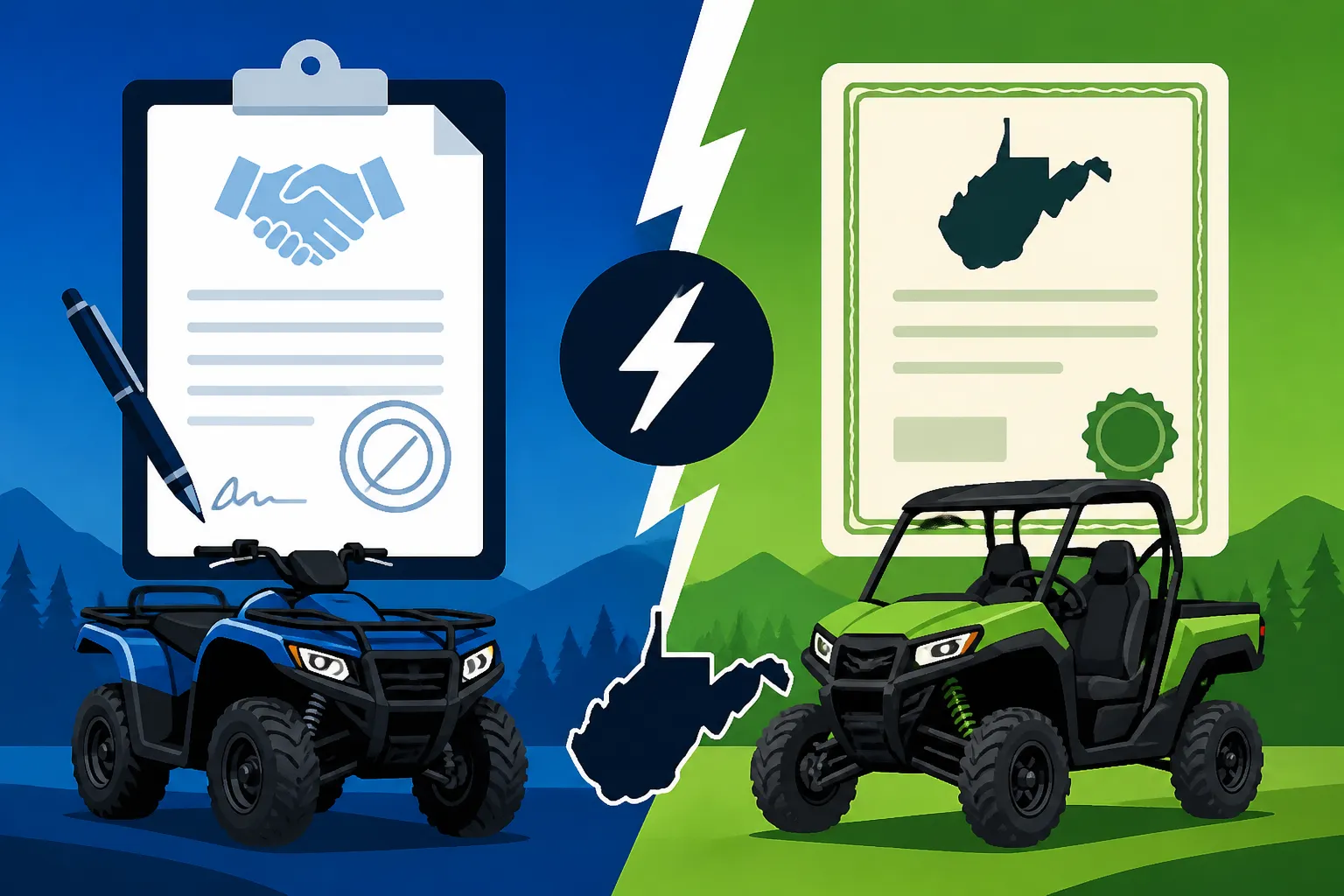
| Feature | West Virginia ATV Title | West Virginia ATV Bill of Sale |
|---|---|---|
| Purpose | Official proof of legal ownership | Record of a purchase/sale transaction |
| Issued By | West Virginia Division of Motor Vehicles (DMV) | Buyer and Seller (private agreement) |
| Legal Standing | Definitive proof of who owns the machine | Proof that a transaction occurred |
| What it Proves | Legal ownership, lien status | Purchase price, date of sale, machine "as-is" condition |
| When it's Used | DMV transfers, registration, insurance, theft reporting | Sales tax calculation, temporary proof of purchase |
Scenario 1: Buying a Used ATV from a Private Seller. This is where both documents are critical. When you find that perfect used quad, the seller should present you with the original title, signed over to you. You should then create a bill of sale with the seller, detailing the transaction. You'll take both of these documents to the DMV to get a new title issued in your name and pay the sales tax. If the seller only offers a bill of sale and claims the title is lost or they never had one, walk away unless you're prepared for significant potential headaches trying to secure a [Bonded Title for an ATV in West Virginia]. [Buying a Used ATV in West Virginia: The Title Steps] outlines this process in detail.
Scenario 2: Selling Your ATV. When you sell your machine, you must sign over your title to the buyer. This is how legal ownership transfers. Simultaneously, you and the buyer should complete a bill of sale. This protects you by documenting the sale price and that the machine was sold "as-is," limiting your liability if issues arise later. You hand over the signed title and a copy of the bill of sale to the buyer.
Scenario 3: Proving Ownership for Insurance or a Police Report. Let's say your side-by-side gets stolen from your garage. When you file a police report or an insurance claim, the first thing they’ll ask for is your title. The title is the definitive proof that the machine legally belonged to you, allowing them to proceed with investigations or claims. A bill of sale might help confirm when you acquired it, but it's the title that proves you were the owner at the time of the incident. This is especially true if you're trying to [Recovering a Stolen ATV Through Its Title]. Even for tax purposes, while the bill of sale helps establish the purchase price, the title is what the state looks at to ensure proper ownership transfer and collection of [West Virginia Sales Tax on an ATV Purchase]. A thorough [West Virginia ATV Bill of Sale Template Requirements] can help ensure you don't miss any critical details during the sale.
Navigating Common Pitfalls and Ensuring a Smooth Transaction
Dealing with ATV and UTV paperwork can feel like a minefield if you're not prepared. But with a clear understanding of titles versus bills of sale, you can avoid common traps and ensure your transactions are smooth and legitimate.
What to Do If You Only Have a Bill of Sale
This is one of the most common and frustrating scenarios: you've bought a machine, perhaps a great deal, but the seller didn't have a title, only a bill of sale. Or maybe you've had an older machine for years and never realized it needed to be titled. If you find yourself in this situation, it's critical to understand that the bill of sale alone will not allow you to legally register or transfer ownership of your ATV or UTV in West Virginia. The DMV will require a title.
Your options often depend on the specific circumstances. If you can track down the previous titled owner, you might be able to get them to apply for a duplicate title and sign it over to you. This is the cleanest path. However, if the titled owner is unreachable or unwilling to cooperate, you might need to explore options like applying for a bonded title. A bonded title requires you to purchase a surety bond that protects previous owners or lienholders if they later claim ownership. It's a more complex process involving the DMV and a bonding company, and it’s typically reserved for situations where you have a legitimate claim but are missing the original title. Always remember that the process for out-of-state machines might differ slightly, so understanding [West Virginia Title Rules for Out-of-State Machines] can save you headaches. For machines abandoned on your property, there's a specific process to follow, but it's distinct from a regular purchase.
Best Practices for Buyers and Sellers
To save yourself a world of trouble, always prioritize getting a clean, signed-over title when buying an ATV or UTV in West Virginia.
For Buyers:
- Demand the Title: Never purchase an ATV or UTV from a private seller without receiving a properly signed-over West Virginia title. No title, no deal.
- Verify the VIN: Always cross-reference the VIN on the title with the VIN stamped on the machine's frame. They must match exactly. This helps prevent fraud and ensures you're buying the correct machine. Use resources like [Checking a Used Quad Against Stolen Records] and [Running a VIN Check Before You Buy] to verify the machine's history.
- Complete a Thorough Bill of Sale: Even with a title, always complete a detailed bill of sale. Ensure it includes the buyer's and seller's full information, the machine's details (VIN, make, model, year), the purchase price, and the date. Both parties should sign and date it. A reliable template, such as those available through LawDepot, can help ensure all necessary legal language and disclosures are included, protecting both you and the seller.
- Go to the DMV Promptly: Once you have the signed title and bill of sale, head to one of the [West Virginia DMV Offices That Handle ATV Titles] as soon as possible to transfer the title into your name and pay any applicable sales tax.
For Sellers:
- Have a Clean Title Ready: Ensure your title is in your name and free of any liens before you list your ATV or UTV for sale. If there's a lien, you'll need to get a [West Virginia Lien Release on a Paid-Off UTV] before you can transfer ownership.
- Sign Over the Title Correctly: When you sell the machine, accurately fill out the assignment of title section on the back of the title certificate. Sign it clearly, and ensure the buyer’s name and address are correct.
- Use a Comprehensive Bill of Sale: Protect yourself by preparing a detailed bill of sale for the transaction. This document should clearly state the "as-is" condition of the sale and the final purchase price. Provide a copy to the buyer and keep one for your records. This can be crucial if any disputes arise later regarding the terms of the sale.
By understanding the distinct roles of a title and a bill of sale, and by following these best practices, you can navigate the purchase or sale of your West Virginia ATV or UTV with confidence, avoiding the legal tangles that can otherwise turn an exciting deal into a frustrating ordeal.
Disclaimer
This article is for general informational purposes only and does not constitute professional advice. Laws, prices and regulations vary by location and change over time. Consult a qualified professional for guidance on your specific situation.