Does Homeowners Insurance Cover an ATV in West Virginia?
It’s a natural assumption for many West Virginia ATV and UTV owners: if you have a homeowners insurance policy, surely it covers your quad or side-by-side, right? After all, it's personal property, often stored right there on your land. But that assumption can lead to a rude awakening, leaving you exposed to massive financial risk. This guide will clarify exactly what your homeowners policy does and doesn't cover when it comes to your beloved off-road machine in the Mountain State, and why a dedicated policy is almost always the answer.
The Core Question: Does Homeowners Insurance Cover Your ATV in West Virginia?
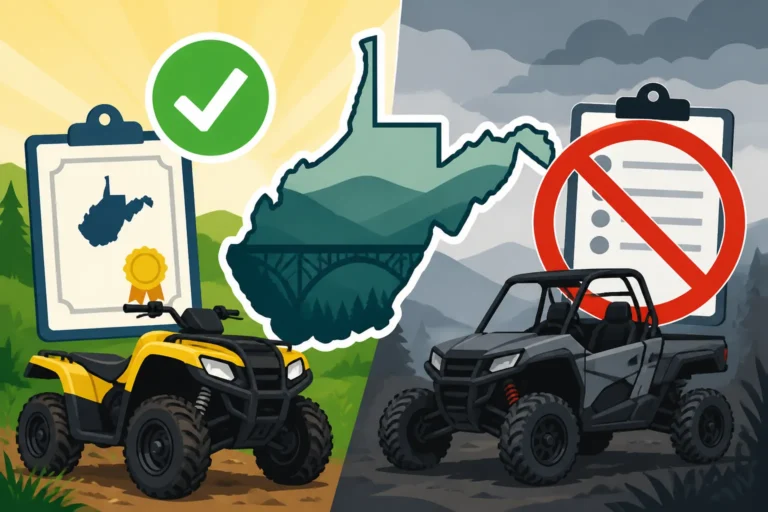
Let's cut right to the chase because this is where a lot of folks get tripped up, and it's a frustration we hear often. Generally speaking, your standard homeowners insurance policy in West Virginia does not provide comprehensive coverage for your ATV or UTV, especially when it comes to liability for accidents that happen off your property. It’s designed to protect your home and personal belongings, yes, but motorized vehicles are usually a significant exclusion in these policies.
Understanding Standard Homeowners Policies
Think about what your homeowners insurance is truly designed to protect. It's there for the big stuff: the physical structure of your house, your personal items inside like furniture, electronics, and clothing, and liability for accidents that occur on your property. For instance, if a visitor slips and falls on your porch, or if a tree falls on your roof, your homeowners policy is typically there to help. This is excellent coverage for what it's intended for, providing a crucial safety net for your home life.
However, the moment you bring a motorized vehicle into the equation, especially one not intended for typical road use like an ATV or UTV, the rules of the game change. Most standard policies have clear exclusions for "recreational vehicles" or "motorized vehicles" when it comes to both damage to the vehicle itself and, critically, liability arising from its use. It feels counterintuitive sometimes, thinking something stored in your garage isn't covered, but that’s often the harsh reality.
The "Off-Premises" Problem and Liability Concerns
Here's where the biggest gap in homeowners coverage for ATVs truly shows itself, and it's where most West Virginia riders will find themselves in a precarious position. Your homeowners policy is primarily focused on incidents on your insured property. The moment you venture off your land—whether that's onto public trails, a friend's farm, or even just down the road to a neighbor’s house—your homeowners liability coverage for the ATV typically vanishes.
Imagine this scenario: you're riding your UTV on the Rockhouse Trail System, having a great time, when an unforeseen incident causes you to collide with another rider. That rider is injured, and their machine is damaged. Who pays for their medical bills, the repairs to their ATV, and potentially their lost wages? If you were relying solely on your homeowners policy, you would likely be personally responsible for all those costs. The legal fees alone, even if you weren't found at fault, could be devastating. This is why having proper [ATV Insurance Cost in West Virginia] is so vital. Without a specific ATV policy, your assets—your house, your savings, your future earnings—could be at risk. It's a heavy thought, but a realistic one that every rider needs to consider seriously before hitting the trails.
When Homeowners Insurance Might Offer Limited ATV Protection
While the general rule is that homeowners insurance offers little to no protection for your ATV, there are a few very narrow circumstances where you might see some minimal, often insufficient, coverage. It's crucial not to mistake these limited scenarios for comprehensive protection, as they rarely cover the most significant risks associated with ATV ownership and riding.
Very Specific "On-Premises" Scenarios
In extremely specific situations, your homeowners policy might offer a sliver of coverage for your ATV, but it's typically related to its status as personal property and only when it's located on your insured property. For example, if your ATV is parked in your garage and your house catches fire, leading to your ATV being destroyed, your homeowners policy might cover the loss of the ATV under your personal property coverage. Similarly, if your ATV is stolen directly from your locked shed on your property, there could be coverage for the theft.
However, even in these cases, it's not a guarantee, and there are often significant limitations. This kind of coverage is for property damage or theft from your premises, not for accidents or liability when the machine is in use, especially off your property. It's vital to read your specific policy documents carefully or, better yet, talk to your insurance agent to understand the precise language and exclusions. Don't assume anything, because an assumption in this area can lead to a costly surprise down the road.
Personal Property Coverage Limits and Deductibles
Even if your homeowners policy does extend some minimal coverage for your ATV as personal property (like for fire or theft from your garage), it's highly likely to be subject to specific limitations and your deductible. Most homeowners policies have sub-limits for certain categories of personal property, and motorized vehicles often fall under these. This means that while your house might be insured for hundreds of thousands, your ATV might only be covered up to a few thousand dollars, or a percentage of its value.
Consider a situation where your ATV, valued at $10,000, is stolen from your garage. Your homeowners policy might have a $2,500 sub-limit for motorized vehicles not primarily used on public roads. After your $1,000 deductible, you’d only receive $1,500 for a $10,000 loss. This clearly illustrates how inadequate homeowners coverage can be for a significant asset like an ATV or UTV. For accurate valuation and protecting your investment, a dedicated policy is almost always superior. It’s a common frustration to discover these limits only after a loss, making you feel like you had coverage you didn't truly possess.
Why Dedicated ATV Insurance is Almost Always the Better (and Necessary) Solution
Given the significant limitations of homeowners insurance for ATVs and UTVs, a standalone, dedicated off-road vehicle insurance policy isn't just a good idea—it's practically essential for any West Virginia rider. This type of policy is specifically designed to cover the unique risks associated with riding ATVs and UTVs, offering protection far beyond what a typical homeowners policy ever could. It provides the peace of mind you need to truly enjoy the trails, knowing you're protected.
What a Standalone ATV Policy Covers
A dedicated ATV insurance policy offers a comprehensive suite of coverages tailored to your off-road adventures. Unlike homeowners policies, these are built for the dynamic environment of trail riding. Here's what you can expect:
- Collision Coverage: This pays for damage to your ATV if you hit another vehicle, an object (like a tree or a rock), or if it overturns. Whether you misjudge a turn on the Bearwallow Trail System or have an unfortunate incident on a rocky climb, collision coverage helps repair or replace your machine.
- Comprehensive Coverage: This steps in for non-collision incidents. Think fire, theft (even from a trailhead parking lot), vandalism, or damage from natural disasters like floods or falling objects. This is critical for protecting your investment against a wide range of unforeseen events.
- Liability Coverage: This is perhaps the most important component. It includes:
- Bodily Injury Liability: If you cause an accident that injures another person, this coverage pays for their medical expenses, lost wages, and pain and suffering. This is absolutely crucial, especially considering potential legal battles.
- Property Damage Liability: If you damage someone else's property with your ATV (e.g., another vehicle, a fence, a mailbox), this pays for the repairs or replacement.
- Uninsured/Underinsured Motorist Coverage: This protects you if you're involved in an accident with another rider who doesn't have insurance or doesn't have enough to cover your damages. While many assume everyone carries insurance, it's a gamble you don't want to take.
- Medical Payments Coverage: This helps cover medical expenses for you and your passengers, regardless of who was at fault in an accident. It's a quick way to get immediate care without waiting for liability to be determined.
- Accessory Coverage: Many policies offer specific coverage for aftermarket parts and accessories you've added to your machine, like winches, upgraded tires, lighting kits, or sound systems, which often aren't covered by standard property insurance.
When you weigh these comprehensive protections against the minimal, "on-premises" type of coverage from a homeowners policy, the choice becomes clear. A dedicated policy actually covers you where you ride and for the risks you face.
Navigating West Virginia's Specific Insurance Needs
West Virginia, with its incredible trail networks like the Hatfield-McCoy Trails, has specific regulations and considerations for ATV and UTV use that highlight the need for dedicated insurance. For instance, to ride on the Hatfield-McCoy Trails, while not explicitly requiring liability insurance for every machine, they do have rules that underscore the importance of personal responsibility. Furthermore, if you’re planning on making your UTV or ATV street-legal with a [West Virginia's Street-Legal Special Purpose Vehicle Plate], you will absolutely be required to carry specific liability insurance minimums, similar to auto insurance.
A homeowners policy will simply not meet these specific legal or recreational requirements. It won't provide the proof of liability coverage needed for an SPV plate, nor will it give you the financial backing in case of an accident on a managed trail system where you might be liable for damages or injuries. Many riders find that a dedicated ATV policy offers peace of mind, knowing they are compliant with various regulations and protected against common riding hazards. When drafting agreements or reviewing terms for a sale or specific riding use, resources like LawDepot can be helpful for understanding contract language and ensuring all parties are clear on responsibilities, though they are not an insurance provider themselves. Your insurance agent is your go-to for policy specifics.
Practical Steps for West Virginia ATV Owners
Understanding that your homeowners insurance likely falls short is the first step. The next is taking action to ensure you're properly protected. This involves reviewing what you currently have and actively seeking out the right kind of coverage for your off-road adventures in West Virginia. Don't wait until after an incident to find out you're exposed; be proactive.
Reviewing Your Current Homeowners Policy
The absolute best first step is to pick up the phone and call your current homeowners insurance agent. Don't guess, and don't rely on assumptions. Tell them you own an ATV or UTV and you want to understand exactly what, if any, coverage your current policy provides for it. Here are some key questions to ask:
- "Does my policy cover damage to my ATV if it's stored in my garage or shed?"
- "What are the limits of personal property coverage for motorized vehicles?"
- "Does my policy provide any liability coverage if I'm riding my ATV on my own property?"
- "Does my policy provide any liability coverage if I'm riding my ATV off my property, for example, on a public trail or a neighbor's land?"
- "Are there any exclusions in my policy that specifically mention ATVs, UTVs, or recreational vehicles?"
Be prepared for the possibility that the answer to most of these questions, particularly regarding off-premises liability, will be "no" or "very limited." This isn't a failure of your agent or your policy; it's simply how homeowners insurance is structured. This conversation will clarify your current situation and underscore the necessity of dedicated ATV insurance.
Shopping for Dedicated ATV/UTV Insurance
Once you understand the limitations of your homeowners policy, it's time to shop for a dedicated ATV/UTV insurance policy. Many major insurance carriers offer these specialized policies, and it's worth getting quotes from a few different providers to compare coverage and premiums.
When you're shopping around, be ready to provide details about your machine (make, model, year, VIN), how you use it (recreational, utility, competitive), and where you typically ride. Factors that influence your premium include the value of your machine, your driving record, and the types and limits of coverage you choose. Don't just look for the cheapest option; focus on getting adequate liability protection first and foremost, followed by collision and comprehensive coverage for your machine. You can explore [West Virginia ATV Liability Coverage Limits] to understand common requirements. While LawDepot focuses on legal documents, they can sometimes provide templates that help in documenting private sales, which might be a good record for your insurance provider, but for actual policy shopping, go directly to insurance companies or brokers.
Special Considerations for Street-Legal SPVs and Rental Machines
West Virginia allows for the creation of [West Virginia's Street-Legal Special Purpose Vehicle Plate] for certain modified UTVs and ATVs, which enables limited road use. If you go this route, dedicated insurance isn't just a recommendation—it's a legal requirement. You'll need to carry specific liability coverage minimums, just like a regular car. Your homeowners policy will absolutely not fulfill this requirement. Ensure your dedicated ATV policy is specifically endorsed or designed to cover street-legal use if you plan to obtain an SPV plate.
Furthermore, if you ever rent an ATV or UTV in West Virginia for a trip to the Hatfield-McCoy Trails, understand that your homeowners policy will almost certainly not cover damage to the rental machine or liability for an accident you cause while operating it. Rental companies often offer their own insurance or damage waivers, which, while an added cost, are usually a wise investment for peace of mind. Never assume your personal insurance, homeowners or even auto, extends to a rented off-road vehicle; always clarify directly with the rental provider.
Disclaimer
This article is for general informational purposes only and does not constitute professional advice. Laws, prices and regulations vary by location and change over time. Consult a qualified professional for guidance on your specific situation.