Do You Need a Trailer Title in West Virginia?
It’s a common scenario for many folks in West Virginia, especially when you’ve just bought a new side-by-side or an ATV and need a way to haul it to the trails. You’re excited about hitting the Hatfield-McCoy trails, but then a question pops up: does that utility trailer you just bought, or even built, actually need a title in West Virginia? It can feel like a tangled mess of rules, and no one wants to get pulled over for something that seems so simple. This guide will help you untangle the regulations, ensuring you understand exactly when a trailer needs a title in the Mountain State and how to get it done right.
Understanding West Virginia's Trailer Titling Laws
When it comes to motor vehicles in West Virginia, we’re pretty used to the idea of titles. Your truck has one, your car has one, and since 1989, your ATV needs one too. But trailers? That’s where the confusion often sets in. Many people assume smaller trailers, or those used only for specific purposes like hauling an ATV, might fly under the radar. The reality, however, is that most trailers operating on public roads in West Virginia absolutely require a title.
A title isn't just a piece of paper; it's the legal document that proves ownership. It protects you from theft, makes selling your trailer straightforward, and ensures that if something happens, there’s no question about who the trailer belongs to. Without one, you could face a heap of legal and practical problems. We often hear from riders who've been caught off guard, learning the hard way that their trusty utility trailer needed more than just a license plate. It’s frustrating because the rules aren't always intuitively clear, especially for those of us who just want to get our machines to the trailhead without hassle.
The General Rule: When a Title Is Required
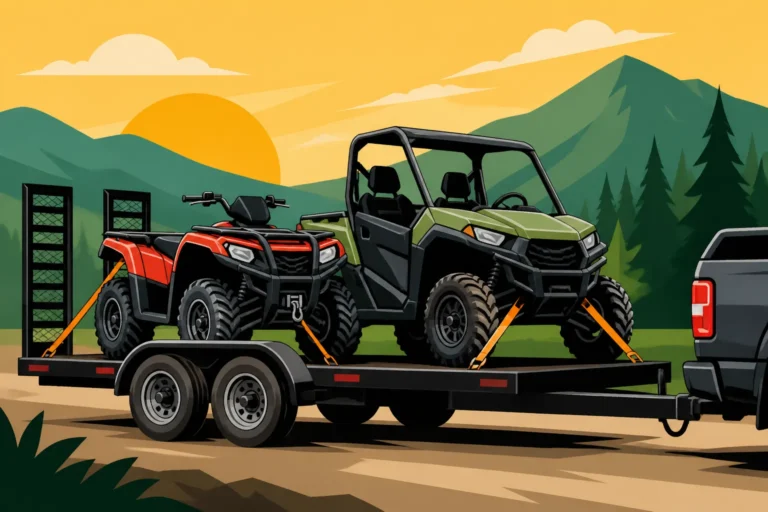
Let's cut right to it: if your trailer is going to be hitched to your truck and hauled down a public road, highway, or even a county route in West Virginia, it almost certainly needs a title. This applies to a vast majority of trailers, including those designed for hauling your ATV or UTV, boat trailers, travel trailers, and even most general utility trailers you might use for moving yard waste or furniture.
The state views these trailers as distinct vehicles that need to be properly documented for identification and ownership purposes. This is especially true for any trailer that has a permanently affixed chassis and wheels designed for highway travel. Even if it's a small single-axle trailer, if it has a VIN (Vehicle Identification Number) or is capable of being registered for the road, the expectation is that it will be titled. The process usually involves submitting an application, proof of ownership, and paying the necessary fees, much like you would for any other vehicle. It's not just about getting a license plate; the plate relies on having a valid title first. If you’re ever unsure, the safest bet is always to assume a title is required.
Common Exemptions and What They Mean
While the general rule is "title required," there are a few narrowly defined exceptions in West Virginia. However, it's critical to understand that these exemptions are typically very specific and usually don't apply to the average ATV or UTV hauling trailer.
For instance, some farm wagons or trailers used exclusively for agricultural purposes on farm property or moving between farm fields might be exempt. But note the emphasis on "exclusively for agricultural purposes" and "farm property." If that same farm trailer is suddenly hauling your quad down U.S. Route 19, it's no longer exempt. The state really focuses on the use and location for these exceptions. Another common misconception involves very small utility trailers. There isn't a blanket exemption for all small trailers; typically, if it has a VIN and is designed for highway travel, it needs a title, regardless of its diminutive size. Homemade trailers, which we'll dive into more later, also generally require a VIN assignment and then a title, debunking the myth that "if I built it, it doesn't count." It's easy to get frustrated by these nuances, thinking your unique situation might get a pass, but unfortunately, West Virginia's laws are pretty encompassing when it comes to road-going trailers.
Titling Your ATV/UTV Trailer: The Step-by-Step Process
So, you’ve determined your trailer needs a title. Now what? The process, while requiring a bit of paperwork and a trip to the DMV, is generally straightforward once you know what to gather. Think of it like titling any other vehicle, just with a few specific considerations for trailers. The goal is to establish clear ownership in the state’s records, which is crucial for both legal compliance and your peace of mind. Without proper documentation, you might find yourself in a bind when trying to get a license plate, sell your trailer, or even prove it's yours if it ever goes missing. The key is to be prepared and have all your ducks in a row before you head to the DMV. You can save yourself a lot of frustration by ensuring every piece of information is accurate and complete.
Documents You'll Need to Gather
The success of your trailer titling visit hinges on having the correct documents. Imagine getting everything ready, driving all the way to the DMV, only to find you're missing one crucial paper – it's a headache we all want to avoid!
First and foremost, you'll need a clear Bill of Sale if you bought the trailer from a private seller. This document is your proof of purchase and should contain essential details: the full names and addresses of both the buyer and seller, a detailed description of the trailer (make, model, year, and especially the VIN), the date of sale, and the purchase price. Both parties should sign it, and while not always legally required for a private trailer sale in West Virginia, having it notarized can add an extra layer of protection and legitimacy. If you're buying from a dealer, they'll provide a Manufacturer's Certificate of Origin (MCO) or Manufacturer's Statement of Origin (MSO). This is basically the trailer's birth certificate and acts as the initial ownership document. Don't lose this! You'll also need proof of your identity, typically your valid West Virginia driver's license. For accurate guidance on creating a legally sound Bill of Sale, resources like LawDepot can be incredibly helpful, ensuring all necessary fields are covered and protecting both parties in a private transaction. Having these documents organized and filled out completely before you leave home will make your DMV visit much smoother. For a deeper dive into what makes a good bill of sale, check out our guide on [West Virginia ATV Bill of Sale Template Requirements].
Sales Tax and Fees for Trailer Titling
Ah, the part nobody loves: paying fees and taxes. Unfortunately, trailers are not exempt from the standard financial obligations associated with vehicle ownership in West Virginia. When you title your trailer, you’ll typically encounter two main costs: sales tax and the titling fee itself.
Sales Tax: Just like when you buy a car or an ATV, West Virginia charges sales tax on the purchase price of your trailer. This tax is usually collected at the time of titling, unless you purchased it from a licensed dealer who collected it at the point of sale. If you bought your trailer used from a private seller, you'll generally pay sales tax on the amount listed on your bill of sale, or on the fair market value if the purchase price seems unusually low. Don't try to lowball the price on the bill of sale to save a few bucks on tax; the DMV has ways of determining fair market value, and lying on legal documents can lead to serious trouble. For more details on how sales tax is calculated on vehicle purchases, you can look at our guide on [West Virginia Sales Tax on an ATV Purchase].
Titling Fee: In addition to sales tax, there's a specific fee for processing the title application. This is a much smaller, flat fee compared to the sales tax. It covers the administrative cost of recording your ownership and issuing the title document. Remember, if you moved to West Virginia with a trailer you already owned and titled in another state, you might be exempt from sales tax again (if you already paid it in the previous state), but you’ll still need to pay the West Virginia titling fee to get a local title. For specific figures, it's always best to check the current rates on the West Virginia DMV's official website. Understanding these costs upfront helps avoid any surprises when you're at the counter.
The Risks of an Untitled Trailer in West Virginia
Now, let's talk about why all this titling talk is so important. Ignoring the rules for trailer titling in West Virginia isn't just a minor oversight; it can lead to a host of headaches, legal trouble, and financial risks. Many folks, especially those who only use their trailer a few times a year for their quads, think they might be able to slide by. But state authorities are increasingly vigilant, and the consequences of being caught with an untitled (and therefore unregistered) trailer on public roads can far outweigh the minor inconvenience and cost of getting it properly documented in the first place. You don't want your fun weekend trip to the trails to turn into a legal nightmare.
Penalties and Legal Headaches
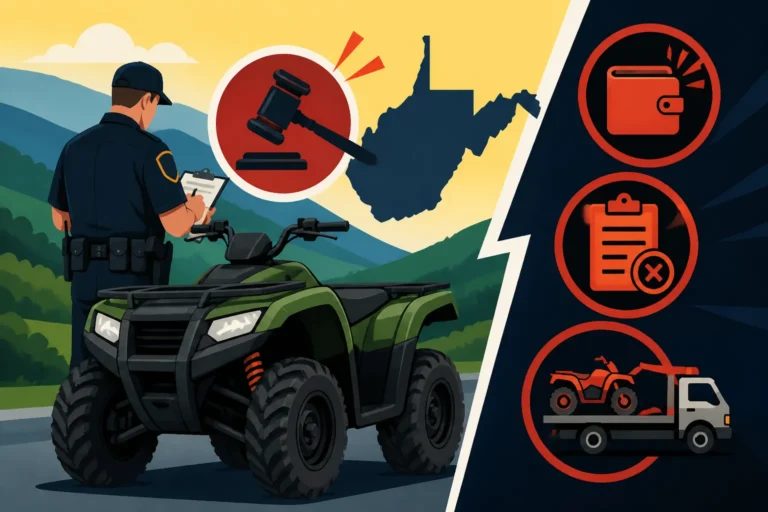
The moment you pull an untitled trailer onto a public road where a title is required, you're opening yourself up to potential legal issues. One of the most common consequences is a fine for operating an unregistered vehicle. Since a title is usually a prerequisite for registration, an untitled trailer is, by default, an unregistered one. Law enforcement officers have the authority to pull you over for this, and the fines can be substantial. It's not just a slap on the wrist; these can be costly tickets that put a real dent in your wallet.
Beyond fines, there's the possibility of impoundment. If your trailer is deemed non-compliant or illegal on the roads, a police officer might order it to be impounded. This means your trailer (and whatever it's hauling, like your expensive ATV or UTV) could be towed away, leaving you stranded. Recovering an impounded trailer involves paying towing fees, daily storage fees, and often proving proper ownership before it's released – which is a Catch-22 if you don't have a title. It's a logistical nightmare and an unexpected expense that no one wants to face. For a sense of similar penalties for off-road vehicles, you can check out our article on [Penalties for an Untitled ATV in West Virginia]. Dealing with the DMV and law enforcement without proper documentation is a frustrating and time-consuming process that can easily be avoided.
Selling or Insuring an Untitled Trailer
Beyond the immediate legal risks, an untitled trailer (when a title is required) creates significant long-term problems, particularly if you ever plan to sell it or need to insure it.
Selling an Untitled Trailer: Imagine trying to sell your trailer. Most prospective buyers, especially those who are savvy and want to avoid future headaches, will rightfully demand a title. Without it, they won't be able to register the trailer in their name, obtain a license plate, or legally prove ownership. This severely limits your pool of buyers and can drastically reduce the value of your trailer. Many buyers will simply walk away rather than take on the burden of trying to obtain a title for a trailer they just bought. It becomes a major red flag, raising suspicions about the trailer's origins or whether there are outstanding liens. What might seem like a minor oversight to you can become a deal-breaker for someone else, turning a quick sale into a prolonged, frustrating ordeal.
Insuring an Untitled Trailer: Getting proper insurance for a trailer that lacks a legal title can also be incredibly challenging, if not impossible. Insurance companies rely on clear proof of ownership to issue policies. Without a title, how can they confirm you're the rightful owner? If your untitled trailer is stolen, damaged in an accident, or involved in a liability claim, your insurance company might deny coverage due to lack of verifiable ownership. This leaves you financially exposed, potentially losing the full value of your trailer and anything it was hauling, like your valuable UTV. The peace of mind that comes with proper documentation and insurance is invaluable. For guidance on structuring a sale properly, even when you have a valid title, you might find our article [Selling an ATV in West Virginia Without Trouble] helpful. Having proper documentation, perhaps even using a template from LawDepot for a professional bill of sale, is crucial for both selling and insuring your trailer.
Special Considerations: Homemade and Out-of-State Trailers
West Virginia has a vibrant culture of DIY ingenuity, and it’s not uncommon for resourceful folks to build their own utility trailers. Similarly, our state attracts many new residents, often bringing their vehicles and trailers from other states. Both scenarios introduce unique titling challenges that require specific attention. It's easy to assume that a trailer you built yourself might be exempt, or that an out-of-state title simply transfers over with no fuss. However, navigating these situations requires understanding distinct procedures to ensure your trailer is legal and properly documented in the Mountain State.
Titling a Homemade Trailer
For those who have poured their time and effort into building a custom trailer, getting it legally titled in West Virginia is a crucial final step to protect your investment. The good news is, it's absolutely possible, though it involves a bit more legwork than titling a factory-built unit. Since your homemade trailer won't come with an MCO/MSO, the West Virginia DMV needs to establish a record for it.
The process typically involves two main stages. First, you'll need to gather documentation of the materials used in its construction – think receipts for axles, steel, lights, etc. This helps verify the trailer's origins and value. Second, and perhaps most importantly, your homemade trailer will need to undergo an inspection and VIN assignment. A representative from the DMV or State Police will inspect the trailer to ensure it meets safety standards and then assign a unique VIN. This VIN will then be physically stamped onto the trailer’s frame. Once you have an assigned VIN and your proof of construction, you can then proceed to apply for a West Virginia title, much like you would for any other vehicle. It's a bit of a process, but it ensures your hard work is recognized and legally protected. For more information on similar processes, you can refer to [Titling a Homemade UTV Frame in West Virginia].
Bringing an Out-of-State Trailer to West Virginia
If you're a new resident or you've purchased a trailer from another state and are bringing it into West Virginia, the titling process is primarily about transferring your existing ownership documentation to the Mountain State's system. It’s generally a straightforward process, but you need to be aware of a few key requirements.
You will typically need the original title from the previous state, properly signed over to you if you purchased it, or simply in your name if you're transferring your own. You'll also need a Bill of Sale (especially if purchased privately) and proof of your West Virginia residency and identity. The West Virginia DMV will process this paperwork, issue you a new West Virginia title, and then allow you to register the trailer for a license plate. Keep in mind that West Virginia sales tax may apply if you haven't paid sales tax on the purchase in your previous state, or if the tax rate paid was lower than West Virginia's. The state usually expects new residents to title their vehicles and trailers within a certain timeframe after establishing residency. Don't procrastinate on this; delays can lead to penalties. For similar advice regarding other vehicles, our guide on [Moving to West Virginia With an Out-of-State ATV] provides useful context.
Here's a quick overview of trailer types and their general titling rules in West Virginia:
| Trailer Type | Typical WV Titling Requirement | Common Use Case | Notes |
|---|---|---|---|
| ATV/UTV Utility Trailer | Required | Hauling quads to trails, general hauling | Essential for off-road enthusiasts. Must have a VIN and be titled if used on public roads. |
| Boat Trailer | Required | Transporting boats to water | Similar to other vehicle titles, requires a VIN and follows standard titling procedures. |
| Small Utility Trailer | Required (most) / Exempt (rarely) | Home projects, light hauling | Many smaller utility trailers still require titles if used on public roads and designed for such use. Exemptions are extremely narrow, often for non-permanent units used strictly off-road or in specific farm contexts. |
| Farm Trailer | Exempt (under strict conditions) | Agricultural use only, on private or farm roads | This exemption is highly specific to bona fide farm operations and does not extend to general hauling or recreational use on public highways. |
| Travel Trailer / Camper | Required | Recreational lodging, long-distance travel | These are always titled and often registered, given their size, value, and frequent use on public roads. |
| Homemade Trailer | Required | Custom-built for specific hauling needs | Requires a DMV or State Police inspection and assignment of a new VIN before a title can be issued. |
Disclaimer
This article is for general informational purposes only and does not constitute professional advice. Laws, prices and regulations vary by location and change over time. Consult a qualified professional for guidance on your specific situation.