Hauling Two Machines on One Trailer
There's nothing quite like the excitement of heading out for a riding weekend, especially when you're bringing along not just one, but two of your trusty machines. Maybe it's a quad and a side-by-side, or two ATVs for you and a buddy. But loading up a trailer with multiple machines and hitting the winding roads of West Virginia presents its own unique set of challenges that can easily turn anticipation into anxiety. This guide will walk you through everything you need to know to safely and legally haul two ATVs or UTVs on a single trailer, ensuring your journey to the trails is as smooth as your ride.
Why Hauling Two Machines Isn't as Simple as It Looks
When you picture yourself cruising down I-79 or navigating a tight mountain road with two machines behind you, you might think it's just a matter of "bigger trailer, more stuff." But the reality is far more nuanced. You're not just doubling the fun; you're significantly increasing your overall length, weight, and the complexity of your load's stability. Many riders, especially those new to hauling multiple machines, often underestimate the strain this puts on their tow vehicle, the trailer itself, and even their own driving skills.
One of the biggest frustrations folks face is trying to cram two machines onto a trailer that simply wasn't designed for it, or worse, not realizing the implications until they're already on the highway. This isn't just about whether they fit; it's about whether they fit safely and legally. Picture pulling a trailer that's swaying wildly in your rearview mirror on a downhill curve, or feeling the rear of your truck squatting dangerously low. These aren't just inconvenient situations; they are serious safety hazards that can lead to accidents, damage to your expensive machines, and even harm to other motorists. It's vital to address these challenges head-on before you ever hook up.
The Hidden Dangers of Overloaded or Unbalanced Trailers
The highway can be an unforgiving place for an improperly loaded trailer. An overloaded trailer puts excessive strain on your tow vehicle's engine, brakes, and suspension. You'll notice your truck struggling on inclines, taking much longer to stop, and feeling much less stable around corners. It's a recipe for premature wear and tear on your vehicle and, more critically, a dangerous lack of control in an emergency situation. Imagine trying to make an evasive maneuver when your trailer is pushing your truck sideways – it’s a terrifying thought.
Beyond just the sheer weight, the distribution of that weight is absolutely paramount. If too much weight is concentrated at the rear of the trailer, you'll experience what's commonly known as "trailer sway" or "fishtailing." This is incredibly dangerous, especially at highway speeds or in windy conditions, and can quickly lead to loss of control. Conversely, too much weight at the front can cause excessive "tongue weight," which pushes down on your tow vehicle's hitch, lifting the front wheels slightly and compromising steering and braking. Finding that sweet spot for balance is a skill, but one that’s absolutely essential for safe towing.
Understanding Your Tow Vehicle's Limits
Before you even think about buying a trailer or loading up, you need to know what your tow vehicle is actually capable of. Every truck or SUV has a Gross Combined Weight Rating (GCWR), a Gross Trailer Weight Rating (GTWR), and a tongue weight rating. These numbers aren't just suggestions; they are hard limits set by the manufacturer to ensure safety and prevent structural damage. Ignoring them is not just risky, it's irresponsible. [Trailer Registration for Hauling ATVs in West Virginia] starts with understanding the basics of your entire setup.
For instance, a half-ton pickup might be perfectly fine for hauling a single ATV on a small utility trailer, but adding a second, heavier UTV could easily push it over its limits. You need to factor in the weight of both machines, the weight of the trailer itself, and any gear you're packing. Always check your vehicle's owner's manual for precise figures, as these can vary even between different trims of the same model. Don't guess, don't assume, and don't listen to that buddy who says, "Ah, it'll be fine." Safety begins with respecting your equipment's engineering.
Choosing the Right Trailer for Your Double Haul
When it comes to hauling two ATVs or UTVs, the type of trailer you choose makes all the difference. You need something robust enough to handle the combined weight, wide enough to accommodate both machines, and designed for stable towing. There's a big difference between a small landscape trailer and one built for powersports, and understanding those differences is key to making a smart investment.
Consider the dimensions of your machines. Two full-size ATVs will likely require a different approach than a single UTV with a youth ATV, or two massive side-by-sides. Width is often the critical factor, as many standard utility trailers are only 60-72 inches wide internally, which might be too narrow for two machines side-by-side or even for some wider UTVs. Length also comes into play if you plan to stagger or angle your machines.
Open Utility and Flatbed Trailers
These are perhaps the most common choice for ATV and UTV owners due to their versatility and typically lower cost compared to enclosed options. Open utility trailers often have side rails and a ramp gate, while flatbeds are just that – a flat deck with no sides, offering maximum flexibility for loading irregularly sized items.
| Trailer Type | Pros for Double Hauling | Cons for Double Hauling |
|---|---|---|
| Open Utility | More affordable; easier to load/unload; visible load | Exposure to elements/road grime; less secure against theft |
| Flatbed | Maximum flexibility for wide/long machines; easy access | No side protection for machines; less secure |
| Enclosed | Excellent protection; secure storage; weather-proof | More expensive; heavier; harder to maneuver; limits height |
When looking at open utility trailers, pay close attention to the width between the fenders. If you plan to load two machines side-by-side, this dimension is critical. Many manufacturers offer wider utility trailers specifically for powersports, often 77 inches or 83 inches wide, which can make a world of difference. For flatbeds, you get even more flexibility, but you lose the side rails that can act as tie-down points and offer a small measure of protection. The open nature of these trailers means your machines are exposed to road grime, rain, and potential theft, which is a trade-off many accept for the ease of loading and cost savings. Remember that a specific [West Virginia Trailer Plate Cost] will apply regardless of the type.
Enclosed Trailers: More Protection, More Investment
For those who frequently travel long distances, haul valuable machines, or just prefer maximum protection from the elements and theft, an enclosed trailer is a fantastic option. These trailers offer a secure, weather-proof "garage on wheels" for your ATVs or UTVs. Not only do they keep your machines clean and dry, but they also provide a significant deterrent against opportunistic thieves. Many enclosed trailers also offer interior lighting, cabinets, and other amenities that make them incredibly convenient for multi-day trips.
However, enclosed trailers come with their own set of considerations. They are significantly heavier than open trailers, which means you'll need a tow vehicle with a higher towing capacity. They are also more expensive to purchase and, because of their larger frontal area, will reduce your fuel economy more noticeably. Maneuvering an enclosed trailer, especially backing up, can also be more challenging due to reduced visibility. You’ll need to factor in the interior dimensions carefully to ensure both machines fit, including height clearance if you have tall UTVs with roofs or roll cages. [Do You Need a Trailer Title in West Virginia?] applies to most enclosed trailers as well, especially if they exceed a certain weight.
Mastering Weight Distribution and Securement
Proper weight distribution and securement aren't just good practices; they are non-negotiable safety requirements when hauling anything, let alone two valuable and heavy machines. Getting this wrong can lead to a catastrophic accident, so take the time to understand and implement these principles every single time you hit the road. It's about more than just throwing a few straps on; it's a science.
The goal is to achieve adequate tongue weight – typically 10-15% of the total loaded trailer weight – and to ensure that your machines cannot shift at all during transit. This means planning your loading strategy, having the right securement equipment, and knowing how to use it effectively. Think of every bump, turn, and brake application as a force trying to dislodge your machines, and secure them accordingly.
Achieving Proper Weight Distribution
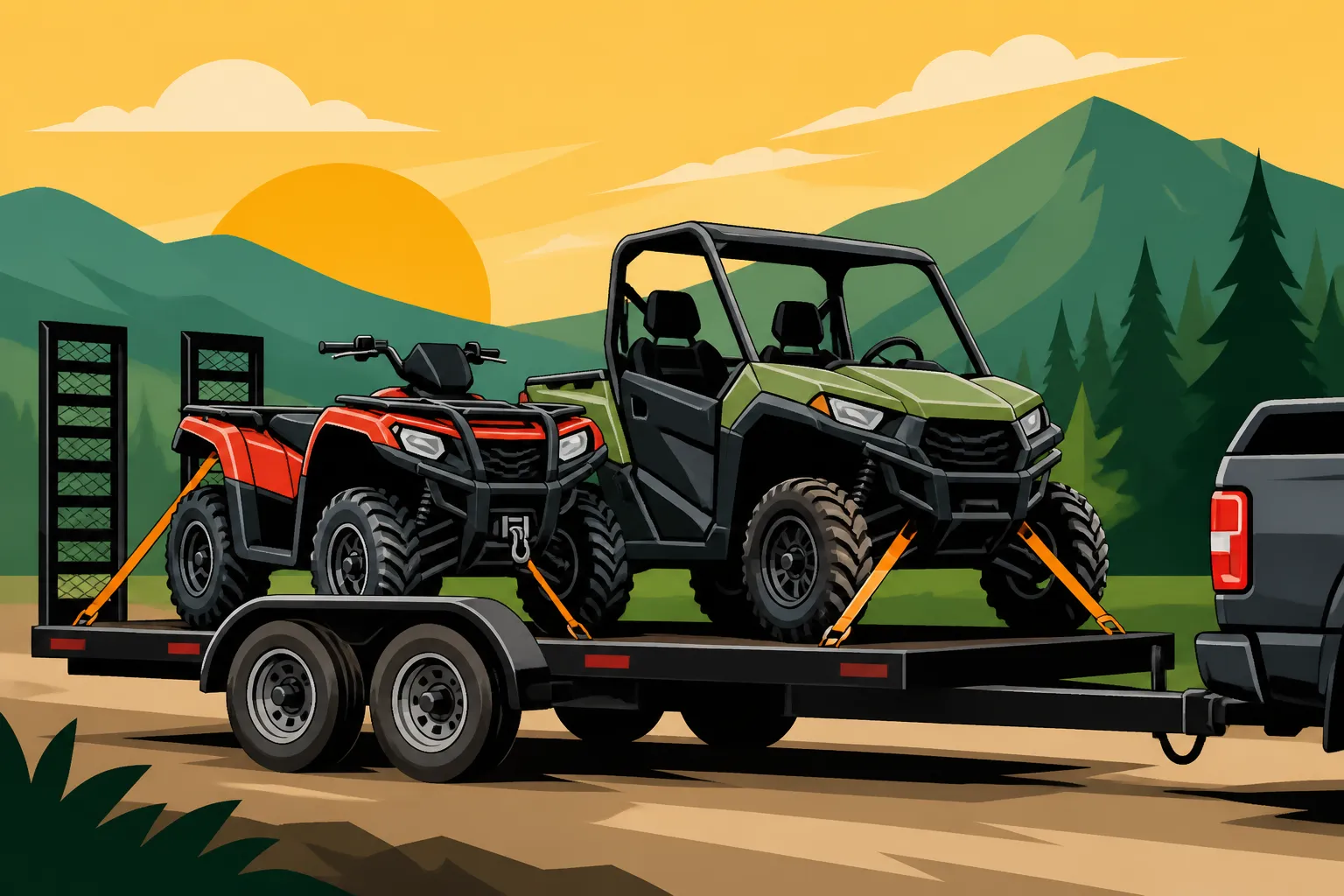
The 10-15% tongue weight rule is critical for preventing trailer sway. To achieve this when hauling two machines, you'll generally want to load the heaviest machine first, positioning it over or slightly forward of the trailer's axle(s). The second machine should then be positioned to help balance the load, making sure not to put too much weight too far back. If you have a side-by-side and an ATV, often the UTV will go first.
Experimentation might be necessary the first few times. Load your machines, connect the trailer, and visually inspect your tow vehicle. Is it sagging excessively in the rear? Does the front feel light? A tongue weight scale can be a valuable tool for confirming your distribution, but even a keen eye and a few trial-and-error adjustments can get you close. If your machines allow for it, trying different loading configurations (e.g., one forward, one backward, or one slightly off-center) might be necessary to find the optimal balance. Remember, West Virginia roads can be challenging, with steep grades and tight turns, so stability is paramount.
The Art of Strapping Down Your Machines
This is where many riders get it wrong. It's not enough to simply "strap it down"; you need to strap it down correctly and securely. For two machines, you'll need at least four quality ratchet straps per machine, perhaps more for a heavy UTV. Always use straps rated for the weight you're securing, and never use old, frayed, or cheap straps. They are a false economy.
Here’s a basic approach for [Strapping a Side-by-Side Down for the Highway], which applies generally to ATVs as well:
- Compress the Suspension: Drive or winch your machine onto the trailer and put it in park with the parking brake engaged. Gently bounce the suspension a few times to settle it. Then, secure your main straps to the suspension components (A-arms, axles, frame) rather than just the wheels or bumpers. You want to compress the suspension slightly, pulling the machine down into the trailer, which prevents it from bouncing around.
- Angle Your Straps: Don't pull straps straight down. Instead, angle them outward and forward/backward from your tie-down points on the machine to anchor points on the trailer. This creates opposing forces that prevent movement in multiple directions.
- Cross-Strapping: For maximum security, use a "cross-strapping" technique. For example, a strap from the front left of the machine goes to the front right tie-down on the trailer, and a strap from the front right of the machine goes to the front left tie-down on the trailer. Repeat for the rear. This creates a powerful X-pattern that locks the machine in place.
- Chock the Wheels: For added security, especially with heavier UTVs, consider using wheel chocks. These prevent the wheels from rolling forward or backward, adding another layer of security against movement.
- Check, Check, and Check Again: Once everything is cinched tight, give each machine a good shake. It should feel like it's part of the trailer. After driving a few miles, pull over and re-check all your straps. They often loosen slightly as the load settles. Make this a habit. If you're picking up a new ATV or UTV and need a bill of sale, especially from a private seller, resources like LawDepot can provide useful templates to ensure all details are covered, from machine description to purchase price.
West Virginia Legalities for Double ATV Hauling
Hauling two machines means you're operating a larger, heavier vehicle combination, and West Virginia has specific rules and regulations that apply to trailers and their loads. Ignoring these can lead to fines, safety hazards, and even denial of access to trails if authorities deem your setup unsafe. It's not just about the trail permit; it's about the journey to get there.
These rules cover everything from trailer registration and lighting to width limits and required safety equipment. Familiarizing yourself with these details before you leave your driveway is crucial, especially since many of West Virginia's roads are narrow, winding, and often shared with large commercial trucks.
Trailer Registration, Plates, and Titles in West Virginia
Any trailer you tow on West Virginia public roads needs to be properly registered and display a valid license plate. The requirements depend on the type and weight of the trailer. Generally, most utility and powersports trailers, especially those capable of hauling two machines, will need to be titled and registered with the Division of Motor Vehicles (DMV).
If you're buying a new trailer from a dealer, they'll typically handle the title and registration paperwork for you. For a used trailer purchased privately, you'll need to transfer the title into your name and register it yourself at a local DMV office. [West Virginia DMV Offices That Handle ATV Titles] can also assist with trailer registration. Always make sure you have the necessary documentation, including a bill of sale (which you can find templates for on sites like LawDepot) and the previous owner's signed-over title. An unregistered or improperly titled trailer is an easy target for a traffic stop, and that's the last thing you want when you're eager to hit the trails.
Lights, Brakes, and Safety Chains
Every trailer on West Virginia roads must have functional tail lights, brake lights, turn signals, and side marker lights, especially if it's wide enough to obscure your tow vehicle's lights. This is non-negotiable for safety, particularly when hauling at dawn, dusk, or night, or when visibility is reduced. Take a few minutes before each trip to ensure all trailer lights are working correctly.
For heavier loads, trailer brakes become critical. West Virginia law requires independent trailer brakes for trailers exceeding a certain weight threshold (check current DMV regulations for the exact figure, as these can change). If your loaded trailer weighs more than 3,000 pounds, it's highly recommended, if not legally required, to have brakes. These typically operate electrically and are controlled by a brake controller in your tow vehicle's cab, which allows you to adjust braking force. Finally, always use safety chains that cross under the trailer tongue and attach to your tow vehicle's frame. These are your last line of defense should the hitch connection fail. [West Virginia Rules for Divided Highways] are particularly strict, and having a safe, legal setup is paramount there.
Width, Length, and Overhang Limits
West Virginia, like other states, has limits on the maximum width, length, and height of vehicles and trailers traveling on public roads. While most ATV/UTV trailers will fit within standard width limits (typically 102 inches including fenders), if you're hauling particularly wide side-by-sides or have machines loaded with significant side overhang, you need to be aware.
The overall length of your tow vehicle and trailer combination also has limits, though for most recreational users, two machines on a typical trailer will fall within these. However, be mindful of any excessive rear overhang from your machines. If part of your machine extends more than a certain distance beyond the rearmost part of your trailer, you might be required to display a red flag during the day and red lights at night. Always check specific state regulations for these measurements to avoid unexpected fines. Getting to know what West Virginia Sheriff Patrols in Trail Towns look for can save you a lot of grief.
Disclaimer
This article is for general informational purposes only and does not constitute professional advice. Laws, prices and regulations vary by location and change over time. Consult a qualified professional for guidance on your specific situation.