Buying an ATV for a Child: Whose Name Goes On It
Navigating the world of ATV ownership for your kids in West Virginia can feel like a maze, especially when you're trying to figure out the official paperwork. Many parents find themselves scratching their heads wondering, "If I'm buying an ATV specifically for my child, whose name actually goes on the title?" It's a valid concern, as you want to ensure everything is legal and above board, but the rules for minors owning vehicles aren't always intuitive. This comprehensive guide will clear up the confusion, explaining the ins and outs of titling an ATV for a child in West Virginia, from legal necessities to practical advice, so you can focus on safe family fun.
Understanding West Virginia's ATV Titling Basics for Minors
When you're looking at that shiny new (or new-to-you) youth ATV, it's natural to think about putting your child's name on the title, especially if they're the one who will be riding it every weekend. However, the legal landscape for minors owning significant property like vehicles is a bit more complex than just jotting down their name. West Virginia, like most states, has specific rules that govern who can legally hold a title.
The Legal Reality of Minors and Property Ownership
The fundamental principle here is that a minor, generally defined as anyone under the age of 18, typically lacks the legal capacity to enter into binding contracts. A vehicle title isn't just a piece of paper; it's a legal document proving ownership, and ownership often comes with responsibilities and contractual obligations (like signing a bill of sale, or taking on liability). Because minors cannot legally form contracts, they usually cannot legally own significant titled property, such as an ATV, outright in their own name.
This isn't about whether they're responsible enough to ride it, but about their legal standing in the eyes of the law. If a child were to be listed as the sole owner on a title and then needed to sell the ATV, or if there were a legal dispute involving the machine, their lack of contractual capacity would create a significant legal mess. Imagine trying to get a minor's signature on a legally binding sales agreement — it just doesn't hold up. This protection is in place to safeguard minors from financial obligations they might not fully understand or be able to uphold.
The Role of a Parent or Legal Guardian
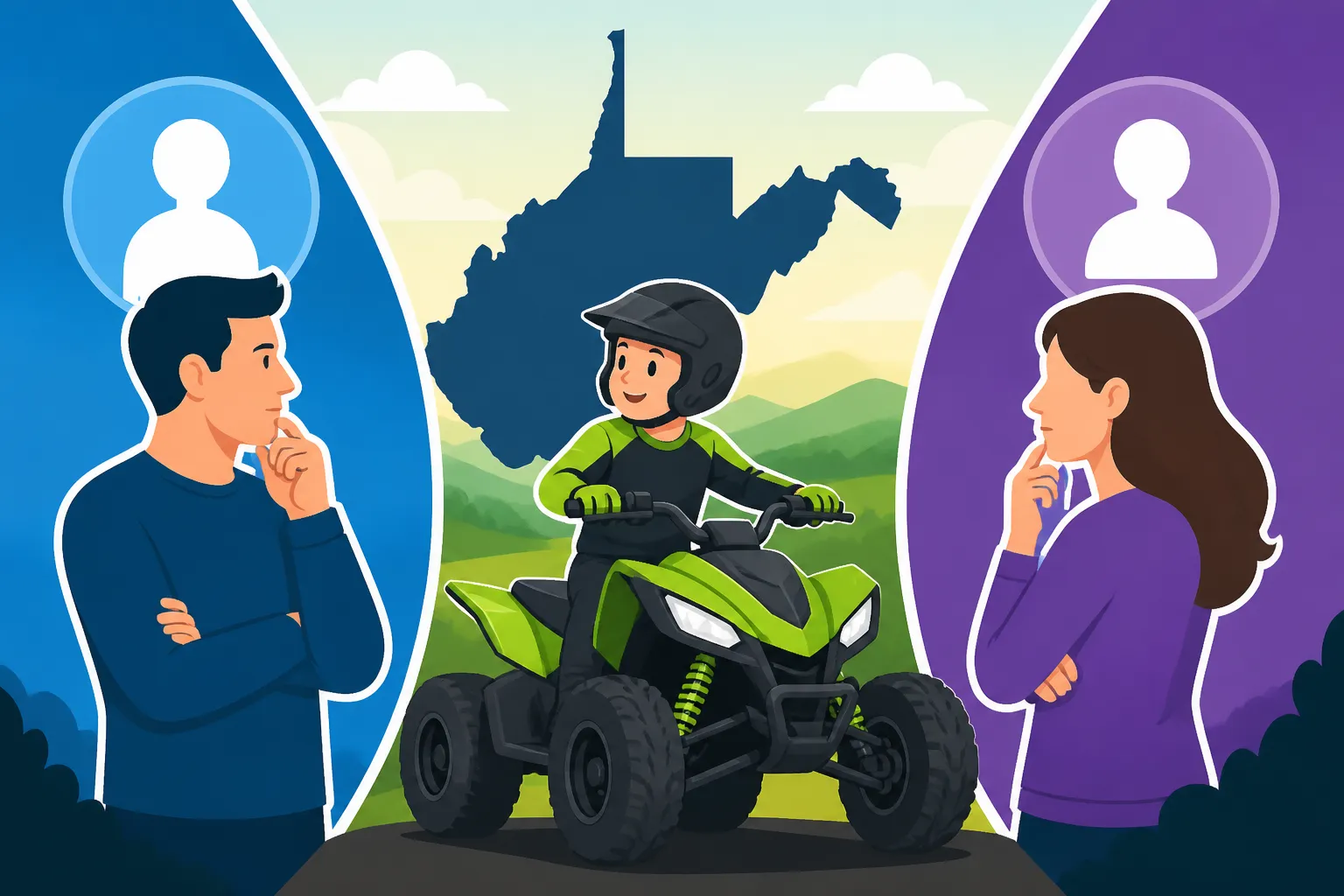
Given that a minor usually can't be the legal owner, the responsibility naturally falls to an adult. In West Virginia, when you purchase an ATV for a child, the title should almost always be in the name of a parent or legal guardian. This adult acts as the legal owner, holding the title on behalf of the child. It's a way for the state to ensure there's a legally responsible party tied to the vehicle.
While the adult holds the legal title, the child is often considered the "beneficial owner" or the primary user. This means that while the paperwork says your name, everyone in the family understands that the ATV is for your child. This distinction is important for practical reasons within the family, but legally, the adult listed on the title is the one with all the rights and responsibilities that come with ownership. This includes everything from ensuring the ATV is properly maintained and safely operated to dealing with any legal issues or eventual sale of the machine. The adult's name on the title provides a clear, legally sound chain of ownership and responsibility.
Titling Options When Buying a Youth ATV
So, with the understanding that minors typically can't hold legal title, what are your actual options when you're ready to make that purchase? The choices are usually quite clear, designed to ensure legal compliance and protect both the child and the purchasing adult.
Titling the ATV Solely in a Parent's Name
This is overwhelmingly the most common and recommended method for titling an ATV intended for a child in West Virginia. When you title the ATV solely in your name (or another legal guardian's name), you become the indisputable legal owner. This simplifies the entire process at the DMV and avoids any future legal complications related to minor ownership.
Here's why this approach is so popular:
- Ease of Process: The West Virginia DMV is accustomed to processing titles for adults. There are no special hoops to jump through regarding minor ownership, no tricky paperwork that might be rejected. You simply follow the standard procedure for [What the West Virginia DMV Needs to Title an ATV] and submit your [West Virginia ATV Title Application Form] with your adult information.
- Clear Legal Responsibility: As the titleholder, you clearly assume all legal responsibilities associated with the ATV. This includes ensuring it's operated safely, maintaining appropriate insurance coverage, and complying with all West Virginia ATV laws. This clarity can be incredibly important if there's ever an accident or a need to prove ownership.
- Insurance Simplification: Insurance companies prefer to deal with adult policyholders. When the ATV is titled in your name, it's straightforward to add it to your existing recreational vehicle policy or secure a new one. Your child can be listed as a primary operator, but the policy will be under your name, simplifying claims and coverage. You'll want to explore options for [Insuring an ATV in West Virginia] to ensure adequate protection.
- Control Over Future Transfers: When the time comes to sell the ATV or transfer ownership to your child once they become an adult, the process is straightforward. As the legal owner, you can easily sign over the title or complete a bill of sale. This avoids any legal entanglement that might arise from a minor being listed on the title.
In essence, titling the ATV in your name means you handle all the legalities, while your child gets to enjoy the riding. It's a practical and legally sound way to introduce them to the world of ATV riding.
Adding a Child's Name to the Title (And Why It's Usually Not Feasible)
While you might be thinking, "Can't I just put both our names on it, like a house deed or a car with a co-owner?" the reality for minors on West Virginia ATV titles is different. Generally, adding a minor's name to an ATV title as an owner alongside an adult is not feasible or legally permitted in West Virginia, or most other states, for the very reasons discussed above regarding contractual capacity.
Here’s why it's typically a no-go:
- Legal Age Restrictions: Vehicle titling laws are designed for adults who can legally own property and enter into contracts. Even if you tried to add a child’s name, the DMV would likely reject the application due to their minor status. The legal system isn't set up to facilitate minors as co-owners on titled assets in this way.
- Implied Contractual Obligation: Being listed as an owner on a title implies certain legal and contractual responsibilities. If an ATV is involved in an incident or needs to be sold, a minor co-owner would be unable to provide legally binding consent or fulfill contractual obligations, creating significant legal hurdles.
- Confusion with "Operator" vs. "Owner": Sometimes, parents confuse the idea of a child being an "operator" with being an "owner." Your child can absolutely be the primary operator of an ATV you own and title. Your insurance company will list them as an operator, and they can participate in [Youth ATV Size Rules for West Virginia Families] and safety courses. However, this is distinct from being a legal owner on the vehicle title.
While the concept of [Putting a West Virginia ATV Title in Two Names] is common for adult spouses or partners, it does not typically extend to adults and minors in an ownership capacity on a vehicle title in West Virginia. The legal framework simply isn't designed to accommodate minors as co-owners on titles that carry such significant legal weight. The adult remains the sole legal titleholder, responsible for all aspects of the ATV's legal status.
| Titling Option | Legal Owner(s) | Pros | Cons |
|---|---|---|---|
| Parent/Guardian Only | Adult parent/guardian | Legally straightforward; clear liability; easy insurance; simple future transfer. | Child not legally recognized as owner; full adult liability. |
| Parent & Child (Co-own) | Adult parent/guardian & Minor child | (Generally not feasible in WV) | Legal complexities; rejected at DMV; contractual issues; liability challenges. |
Important Legal & Practical Considerations
Beyond the simple act of titling, there are several crucial legal and practical considerations that every parent buying an ATV for a child in West Virginia needs to understand. These aspects touch on everything from financial protection to ensuring compliance with safety laws.
Liability and Insurance for Youth ATVs
When you title an ATV in your name for your child, you're not just taking on ownership; you're taking on significant liability. This means if your child, or anyone else riding the ATV, causes an accident or injury, you as the legal owner could be held responsible. This isn't meant to scare you, but to highlight the absolute necessity of robust insurance coverage.
West Virginia doesn't generally require insurance for ATVs ridden solely on private land or within approved trail systems like Hatfield-McCoy, but it is an incredibly smart move. If your child is riding, even carefully, accidents can happen. A collision with another rider, an injury to a passenger, or damage to property could lead to significant financial costs. Having a comprehensive [Insuring an ATV in West Virginia] policy, including adequate liability coverage, is non-negotiable. Look for policies that specifically cover youth operators and situations. The last thing you want is a joyful weekend turning into a financial nightmare because of inadequate protection. Talk to your insurance agent about specific [West Virginia ATV Liability Coverage Limits] that make sense for your family's situation, and never assume your homeowner's policy will fully cover an ATV accident off your property.
Future Transfer and Gifting
One day, your child will outgrow their youth ATV, or perhaps they'll turn 18 and you'll want to formally transfer ownership to them. Understanding this process from the outset can save you headaches down the road. Since the ATV is titled in your name, transferring it is relatively simple.
If you sell the ATV, you'll simply sign the title over to the new buyer and complete a [West Virginia ATV Bill of Sale: What Belongs in It]. If you decide to gift the ATV to your child once they're an adult (age 18 or older), you would complete a title transfer just as you would for any other vehicle. This often involves completing the title transfer section, potentially filling out an affidavit of gift to avoid sales tax if it's a true gift, and having your adult child apply for the new title in their name. Understanding the process of [Gifting an ATV in West Virginia and the Title That Follows] can help you plan for this transition smoothly, ensuring the machine remains in the family without unnecessary taxes or fees.
Age and Size Restrictions for Youth Riders
Beyond titling, ensuring your child is riding an appropriate machine in accordance with West Virginia law and manufacturer guidelines is paramount for their safety and your legal compliance. West Virginia has specific rules regarding the operation of ATVs by minors, especially concerning engine size and supervision.
For instance, the state often has [Youth ATV Size Rules for West Virginia Families] that align with manufacturer recommendations, which are based on a rider's age and weight. You cannot just put any child on any ATV. There are typically limits on [Engine Size Limits for West Virginia Riders Under 16]. Ignoring these rules not only puts your child at severe risk of injury but can also lead to legal penalties and issues with insurance claims if an accident occurs. Always ensure the ATV you purchase is age-appropriate and that your child receives proper safety training before hitting the trails. This isn't just a suggestion; it's a critical safety and legal requirement that impacts everything from insurance coverage to potential liability.
Documentation and Best Practices
Getting the title right for your child's ATV in West Virginia isn't just about whose name is on the paper; it's also about gathering and maintaining the correct documentation and following best practices to protect your investment and ensure legal compliance. Overlooking these details can lead to future complications.
Essential Paperwork for Titling
When you head to the West Virginia DMV to title the ATV in your name, you'll need a specific set of documents. Being prepared will make the process much smoother and prevent multiple trips. Here’s a rundown of what you’ll generally need:
- Original Certificate of Origin (MCO) or Previous Title: If it’s a brand-new ATV, you'll get a Manufacturer's Certificate of Origin from the dealer. If it’s a used ATV, you'll need the original, properly signed-over title from the previous owner. This is your primary [Proof of Ownership for a West Virginia ATV Title].
- Bill of Sale: Even if you have the MCO or previous title, a detailed bill of sale is crucial, especially for used ATVs. It documents the purchase price (for sales tax purposes), date, and details of both buyer and seller.
- West Virginia ATV Title Application Form (DMV-1-TR): You'll need to fill out this form completely with your information as the adult owner.
- Proof of Identity: Your valid driver's license or state-issued ID.
- Payment for Fees: Be prepared to pay the title fee and any applicable sales tax.
- Odometer Disclosure Statement (if applicable): While less common for ATVs, some older or larger UTVs might require this.
Always double-check the West Virginia DMV website or contact them directly before your visit to ensure you have the most current list of required documents.
Creating a Comprehensive Bill of Sale
A well-crafted bill of sale is one of your most important pieces of documentation, whether you’re buying from a dealer or a private seller. For private sales especially, it acts as a record of the transaction and can be a critical tool for proving ownership, purchase price, and condition at the time of sale. You can find reliable templates online through platforms like LawDepot, which help ensure all necessary legal elements are included.
A comprehensive [West Virginia ATV Bill of Sale: What Belongs in It] should include:
- Seller's Information: Full legal name, address, and contact information.
- Buyer's Information: Your full legal name, address, and contact information as the adult purchasing the ATV.
- ATV Details: Year, make, model, and crucially, the Vehicle Identification Number (VIN). The VIN is like the ATV's fingerprint.
- Purchase Price: The agreed-upon selling price.
- Date of Sale.
- Signatures: Signatures of both the buyer and seller. Some buyers and sellers choose to have this notarized for added legal weight, although it's not always required in West Virginia for a standard bill of sale.
- Condition of Sale: A statement indicating whether the ATV is sold "as-is" or with any warranties. For used machines, "as-is" is common.
Using a template from a reputable source like LawDepot can help ensure you don't miss any critical details, providing peace of mind and a clear record of the transaction. This document, alongside the title, forms the bedrock of your ATV ownership.
The Importance of Communication and Agreement
If you're co-parenting or if multiple adults are contributing to the purchase of a child's ATV, clear communication and agreement are essential. Deciding whose name will appear on the title, how expenses will be shared, and who will be responsible for insurance and maintenance should be discussed openly before the purchase.
While a minor cannot be on the title, if two parents are involved, both names could potentially be on the title if they choose (e.g., "John Doe OR Jane Doe"). However, for simplicity and clear lines of responsibility, often one parent takes primary legal ownership. It's a family decision that should be made with a full understanding of the implications. If there's any ambiguity, or if multiple parties are contributing financially, it might even be wise to draft a simple agreement outlining responsibilities, perhaps using a template from a resource like LawDepot, even if it's just for your family's records. This prevents misunderstandings down the line and ensures everyone is on the same page regarding the ATV, its use, and its legal standing.
Navigating Common Scenarios and Pitfalls
Once you've got the ATV titled in your name for your child, the journey isn't over. Life happens, and you might encounter various situations that require a clear understanding of your legal standing and best practices. Knowing how to navigate these common scenarios can save you stress and ensure continuous compliance.
When the Child Turns 18
A proud moment for both parent and child often comes when that "little rider" turns 18. At this point, they are legally considered an adult in West Virginia and can now enter into contracts and own titled property. If you wish, you can formally transfer the ATV title from your name to theirs. This isn't automatic; you'll need to initiate the process.
To transfer the title, you'll typically complete the assignment section on the back of the existing title, designating your now-adult child as the new owner. If you're "gifting" it to them, you might need to fill out a separate affidavit of gift to present to the DMV to exempt them from paying sales tax on the transfer. Your child will then take the signed title and any other required forms (like their proof of identity and potentially a new [West Virginia ATV Title Application Form]) to the DMV to apply for a new title in their name. This ensures they have full legal ownership, and all liability and responsibility will officially shift to them. It’s a good time to remind them about the importance of [Insuring an ATV in West Virginia] in their own name if they haven't already.
Dealing with Multiple Children or Shared ATVs
Many families have more than one child who enjoys riding, or perhaps a single ATV is shared among siblings. Managing titles in these situations typically follows the same principle: one adult holds the legal title for all youth machines. You wouldn't title one ATV in your name for your oldest child and another in your name for your younger child if they are both minors; you would simply title both machines in your name.
If you have multiple ATVs, each machine will have its own title, and each title will be in your name as the legal owner. When ATVs are shared, it's crucial to establish clear family rules for usage, maintenance, and safety. While the titles remain in your name, fostering a sense of responsibility among all the riding children is important. This also simplifies matters significantly, as you only have one name to manage on all legal documents, insurance policies, and for any future transfers or sales.
Avoiding Problems with Untrustworthy Sellers
Unfortunately, the used ATV market can sometimes have its share of less-than-reputable sellers. When buying an ATV for your child, especially from a private party, it’s absolutely critical to protect yourself from potential fraud or issues with un-titled or stolen machines. Remember, if there's no clear title, there's a serious red flag.
- Always Demand a Title: Never purchase an ATV from a private seller in West Virginia if they cannot provide a clear, properly assigned title. While some very old ATVs might have limited titling requirements (e.g., pre-1989), most machines sold today must have a title. No title often means a stolen machine, a machine with a lien, or a machine with other legal issues.
- Verify the Seller: Ensure the name on the title matches the seller's identification. If it doesn't, ask for a clear chain of ownership or walk away.
- Check the VIN: Cross-reference the VIN on the title with the VIN stamped on the ATV frame. If they don't match, do not buy it. Use the VIN to perform a background check. You can contact your local law enforcement or use online services to check if the ATV has been reported stolen. This is a vital step in [Checking a Used Quad Against Stolen Records] and [Running a VIN Check Before You Buy].
- Complete a Bill of Sale: Even if you have the title, always get a detailed bill of sale as discussed earlier. This provides an additional layer of protection and proof of purchase.
Taking these precautions when buying an ATV for your child safeguards your investment, ensures you're not inadvertently purchasing stolen property, and makes the titling process smoother.
Disclaimer
This article is for general informational purposes only and does not constitute professional advice. Laws, prices and regulations vary by location and change over time. Consult a qualified professional for guidance on your specific situation.