Riding an ATV on the Road in West Virginia
Riding your ATV or UTV on public roads in West Virginia can feel like navigating a maze of conflicting information and local legends. You’ve heard tales of riders getting ticketed for simply crossing a street, while others seem to cruise through trail towns with no issue. It's a frustrating dance between wanting to connect trails, grab a bite, or just get from your cabin to the trailhead, and the very real fear of breaking the law. This comprehensive guide will untangle the complexities of West Virginia's ATV and UTV road riding rules, so you can ride confidently and safely.
The Foundations of West Virginia's Road Rules for ATVs and UTVs
West Virginia recognizes the integral role ATVs and UTVs play in recreation and rural life, but it also has a clear framework for when and how these machines can interact with public roads. It's not a free-for-all, but it's also not a complete ban. The key is understanding the specific limitations and opportunities.
The 10-Mile, 25 mph Limit for Trail Connections
One of the most crucial rules to grasp is the "10-mile, 25 mph" allowance. This isn't a license to joyride on public roads, but rather a practical allowance for riders to connect trails, access services, or reach their lodging. Imagine you've just finished a fantastic ride on the [Rockhouse Trail System] and want to head into Gilbert for lunch. You can, but you need to adhere strictly to these limits.
This rule specifically allows an ATV or UTV to operate on a public road or highway for a distance not exceeding ten miles, and you absolutely cannot exceed 25 miles per hour. It’s designed for short transitions, not extended cruises. Picture this: you're leaving a small roadside restaurant, and the next trail segment is a couple of miles down a county road. This rule is what allows you to make that connection without having to trailer your machine for such a short distance. It’s a common relief for many riders who otherwise face the logistical headache of breaking down their setup for minor road sections. Ignoring this speed limit or distance can lead to fines and a quick end to your day's adventure.
Identifying Permitted Roads: The Centerline Rule and Local Ordinances
Not all roads are created equal when it comes to ATV access. West Virginia law generally restricts ATVs from riding on roads with a centerline, which typically includes most state routes, U.S. highways, and interstates – effectively all primary arteries. However, there's a significant exception for county roads that do not have a painted centerline. These are often the quieter, less-trafficked backroads and rural routes that many riders use to get around.
Beyond the state law, local ordinances play a huge role. Many towns, especially those that embrace the trail tourism economy, have passed specific ordinances to allow ATVs and UTVs on their streets. This is where you see signs proclaiming "ATV Friendly Town." For example, towns like Gilbert, Man, and Matewan have embraced their status as trail hubs, allowing riders to access businesses directly from the trails. It's vital to know if the town you're entering has such an ordinance. Don't assume; always check. A county road that connects two parts of a trail system might be perfectly legal under the 10-mile rule, but riding straight through the middle of a non-ATV-friendly town will certainly draw unwanted attention. Understanding [West Virginia's 10-Mile, 25 mph Road Rule] is key to staying legal.
The "Street-Legal Special Purpose Vehicle" (SPV) Option
While the 10-mile rule covers incidental road use, West Virginia also provides a path for your ATV or UTV to become a "Street-Legal Special Purpose Vehicle" (SPV). This is a completely different classification and set of rules from simply jumping on a road for a short connection. An SPV is essentially an off-road machine that has been modified and inspected to meet specific on-road safety standards, allowing it much greater freedom on public roads.
Think of it as upgrading your machine to be more like a traditional vehicle, albeit with some unique limitations. This isn't just about adding turn signals; it involves a more rigorous conversion, a state inspection, and specific titling and registration. Owners who want to regularly use their side-by-sides to commute short distances, run errands in trail towns, or simply avoid trailering on every single trip often pursue the SPV designation. It's a commitment, but it unlocks significantly more road access than the basic 10-mile allowance. We'll delve deeper into the SPV later, but it's important to differentiate it from the more restrictive casual road riding rules from the outset. You can learn more about [West Virginia's Street-Legal Special Purpose Vehicle Law] if this sounds like an option for you.
Essential Equipment for Safe and Legal Road Riding
Whether you're making a quick 10-mile connection or operating a fully converted SPV, certain equipment is non-negotiable for road use. These aren't just suggestions; they're legal requirements designed to ensure your safety and the safety of others sharing the road.
Lights, Horns, and Mirrors: Seeing and Being Seen
When you're sharing the road with cars and trucks, visibility is paramount. Your machine must be equipped with working headlights and taillights. This isn't just for nighttime riding; it's about being seen in all conditions, especially at dusk, dawn, or in inclement weather. Imagine a dusty country road – your lights help cut through the haze for oncoming traffic. Brake lights are equally critical, clearly signaling your intentions to anyone behind you. Many stock ATVs and UTVs come with basic lighting, but for road use, brighter, more robust systems might be a good upgrade.
A functional horn is also required. This isn't just a novelty; it's a vital communication tool, allowing you to alert other drivers or pedestrians to your presence. A quick beep can prevent an accident. Finally, mirrors are a must. You need at least one rearview mirror, typically mounted on the left side, to see traffic approaching from behind. Many riders opt for a full set, including side mirrors, for better situational awareness. Companies like SuperATV offer a range of aftermarket mirrors and lighting kits that can help ensure your machine meets these safety standards for road use, allowing you to be both seen and aware of your surroundings.
Tires and Spark Arrestors: Pavement Readiness and Noise Control
Your tires, while fantastic for gripping mud and rocks, might not be ideal for pavement. For any road riding, even the short 10-mile stretches, your tires need to be in good condition. While DOT (Department of Transportation) approved tires aren't strictly mandated for the casual 10-mile road sections, they are absolutely required for an SPV. However, even for temporary road use, tires with a more road-friendly tread pattern will handle better, wear less quickly, and provide better traction on hard surfaces. Aggressive knobby tires designed purely for off-road can be squirrely and wear out fast on asphalt.
Beyond tires, consider your exhaust system. A working spark arrester is legally required for any off-road vehicle operating on public lands or trails in West Virginia, and this extends to road use as well. This prevents sparks from escaping your exhaust and potentially starting wildfires. Additionally, while West Virginia doesn't have extremely strict noise ordinances for ATVs on public roads, excessive noise can draw negative attention and lead to complaints. A properly functioning muffler is essential. Loud, aftermarket exhausts might be thrilling on the trail, but they can quickly become a nuisance—and potentially a violation—when you're passing through a quiet residential area or sharing the road with other motorists. Keep your exhaust system in good repair to minimize noise and stay compliant.
Helmets and Eye Protection: Non-Negotiable Safety Gear
When it comes to personal protective equipment, West Virginia is clear: helmets are required for all ATV and UTV operators and passengers under the age of 18, regardless of where they are riding – trails or roads. While adults (18 and over) are not legally mandated to wear a helmet when riding an ATV/UTV on roads not part of a managed trail system (like Hatfield-McCoy), it is strongly recommended for everyone. The potential for serious head injury in an accident is too high to risk. If you're riding in a trail town that has specific ordinances, sometimes those local rules will extend helmet requirements to adults as well, so always check.
For those under 18, the helmet must meet certain safety standards, such as those set by the Department of Transportation (DOT), Snell, or ANSI. This isn't just any old bike helmet; it needs to be certified for motorized vehicle use. Alongside helmets, eye protection is also mandatory for all riders and passengers, regardless of age, when operating on public roads. This can be a face shield attached to your helmet or a separate pair of goggles. Think about it: a pebble kicked up by a car or a bug hitting your eye at 25 mph can cause a serious accident. Even in an enclosed UTV, debris can still enter the cab, so appropriate eye protection is a wise choice for everyone. Investing in quality gear is investing in your own safety and peace of mind.
Operator and Passenger Requirements for Road Riding
Just as there are rules for your machine, there are rules for the people operating and riding in it. These regulations are in place to ensure that those who operate ATVs and UTVs on public roads have the necessary skills, age, and sobriety to do so responsibly.
Driver's License and Age Minimums
To operate an ATV or UTV on a public road in West Virginia, including those short 10-mile connections, you must possess a valid driver's license. This isn't like riding on private land or a dedicated trail system where a license might not be required. When you hit the pavement, you're interacting with licensed drivers and adhering to the rules of the road, which means you need to be a licensed driver yourself.
Additionally, there are age minimums for operating these machines on public roads. Generally, the age for operating an ATV or UTV on public roads aligns with the minimum age to obtain a driver's license, meaning you typically need to be 16 years old. This requirement is in place because road riding demands a higher level of judgment and experience than solely off-road operation. For younger riders, the rules about [Youth ATV Size Rules for West Virginia Families] and where they can ride are very strict, and public roads are generally off-limits for unsupervised minors. Always ensure that the operator is legally able to drive on a public road.
Passengers and Carrying Children
The rules for carrying passengers on an ATV or UTV on public roads are also very specific. Many ATVs are designed for a single rider and are not equipped or safe for carrying a passenger. If your ATV is designed only for one person, you absolutely cannot carry a passenger on a public road. Doing so is not only illegal but extremely dangerous, as it can throw off the machine's balance and handling characteristics, especially on paved surfaces.
For UTVs, which are often designed to carry multiple passengers, the rules are more accommodating, provided the machine has factory-installed seats and seatbelts for each occupant. All passengers must use the provided seatbelts. When it comes to children, specific rules apply. If you're carrying a child, they must be able to sit upright with their feet flat on the floorboards and grasp the handholds. Remember the helmet and eye protection rules for those under 18 – they are mandatory for children as well. Never overload your machine beyond its manufacturer's recommended capacity, and ensure all occupants are properly secured, especially when traversing road sections.
Alcohol and Impaired Driving: Zero Tolerance
This is perhaps the most critical rule for safety and legality: operating an ATV or UTV on public roads while under the influence of alcohol or drugs is strictly prohibited and carries the same severe penalties as driving a car under the influence. West Virginia has a zero-tolerance policy for impaired operation. This means no open containers of alcohol in the machine and absolutely no riding if you've been drinking.
The scenic beauty of West Virginia's trail towns and the camaraderie of a group ride can sometimes lead to a relaxed atmosphere, but that relaxation must stop before you put the key in the ignition on any public road. Getting a [A DUI on an ATV in West Virginia] means risking not only hefty fines, loss of driving privileges, and even jail time, but also potentially causing serious injury or death to yourself or others. Law enforcement patrols in trail towns are keenly aware of this issue, and they will enforce these laws. Plan ahead: if you're going to consume alcohol, ensure your machines are parked for the night and you have a designated, sober driver or other transportation. Safety and responsible riding are paramount.
Navigating West Virginia's ATV-Friendly Towns
The concept of an "ATV-Friendly Town" is a game-changer for riders in West Virginia, offering a unique blend of adventure and convenience. Understanding how these towns operate is key to maximizing your riding experience.
How Towns Become ATV-Friendly
West Virginia's legislature has provided the framework for towns to adopt ordinances that permit ATV and UTV use on certain municipal roads. This isn't a state-mandated allowance for every town; rather, it's a decision made at the local level. Typically, a town will pass an ordinance that designates specific streets or a whole network of streets where off-road vehicles are welcome. This is usually driven by economic development, as these towns recognize the immense tourism dollars that ATV and UTV riders bring.
When a town becomes ATV-friendly, it means riders can directly access businesses like restaurants, gas stations, and lodging right from the trails. It transforms the riding experience from a remote wilderness adventure to one where amenities are just a short ride away. These towns often put up clear signage indicating where ATVs are permitted and sometimes even have designated ATV parking areas. Always look for these signs, as they are your official notice of what's allowed. If a town isn't explicitly marked as ATV-friendly, assume that municipal road riding is restricted to the state's 10-mile, 25 mph rule on non-centerline roads only, or for properly registered SPVs. Learning [How a West Virginia Town Becomes ATV-Friendly] can help you understand the local dynamic.
Parking, Fueling, and Local Etiquette
Once you're in an ATV-friendly town, practical considerations come into play. Parking is often the biggest question. Many businesses cater specifically to riders and have designated parking spots wide enough for UTVs, or even areas where you can pull your machine right up to the storefront. Some towns also have public parking lots specifically for ATVs and UTVs. It’s crucial to park respectfully and not block traffic, sidewalks, or emergency access. Remember, you're a guest in their community.
Fueling up is usually straightforward; most gas stations in trail towns are accustomed to ATVs and UTVs. Just pull up to the pump like any other vehicle. Be mindful of dust control in gas station lots – nobody wants a cloud of dust blowing into their convenience store. When you're interacting with locals, maintain a friendly and courteous attitude. Your behavior reflects on the entire riding community. Excessive noise, reckless driving, or disrespect can quickly sour local sentiment and potentially jeopardize the very ordinances that allow you to ride there. Always operate your machine quietly and safely, especially in residential areas, and be considerate of pedestrians and other vehicles.
Specific Examples of Trail Towns
West Virginia boasts several fantastic trail towns that have fully embraced ATV and UTV riders, making them prime destinations for your adventures.
-
Gilbert: Known as the "ATV Friendly Town," Gilbert is a bustling hub for the [Riding the Rockhouse Trail System] and [Braveheart Trail System]. You can ride your machine directly from the trails into town to grab a bite, fuel up, or visit a local shop. The main streets are usually open to ATVs and UTVs, making it incredibly convenient. Many businesses have ample parking for off-road vehicles.
-
Man and Logan: These towns are gateways to the [Bearwallow Trail System] and offer numerous services. In Man, you can often ride right to restaurants and stores. Logan also sees significant ATV traffic, especially connecting to and from the trails. These areas are used to seeing a steady stream of side-by-sides.
-
Williamson and Matewan: Serving the [Buffalo Mountain Trail System], Williamson offers a range of lodging and dining options accessible by ATV. Matewan, with its rich history, also welcomes riders. You can explore the historic streets and easily find places to eat or resupply before heading back to the trails.
-
Mullens and Pineville: These towns are ideal for those riding the [Pinnacle Creek Trail System]. Mullens, in particular, has become very rider-friendly, with businesses catering to the ATV crowd. You can often ride directly from your lodging to the trails and into town for supplies.
When visiting any of these towns, always keep an eye out for local signage and adhere to posted speed limits. While the state's 25 mph limit applies to non-SPV road connections, towns might have their own lower speed limits that you must follow. Being informed and respectful ensures a positive experience for everyone.
Safety Best Practices and Avoiding Penalties on West Virginia Roads
Riding on pavement presents a different set of challenges than tackling rugged trails. The dynamics of traffic, road surfaces, and potential hazards require heightened awareness and adherence to specific safety practices to avoid accidents and costly citations.
Situational Awareness on Pavement
When you transition from dirt to asphalt, your mindset needs to shift. ATVs and UTVs handle differently on pavement than cars. They have a higher center of gravity, which can make them more prone to rollovers if you take turns too fast, especially in a UTV. The braking distance can also be different, particularly with knobby off-road tires that have less contact patch on hard surfaces. Always reduce your speed significantly when approaching turns or intersections.
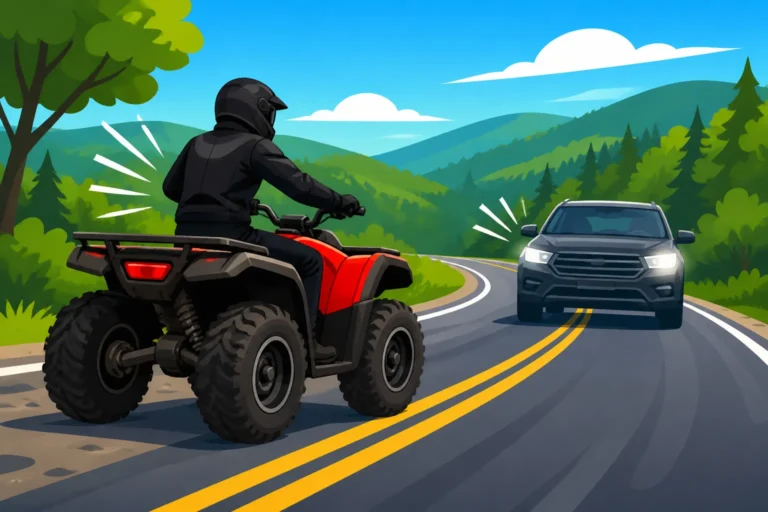
Sharing the road means being constantly aware of other vehicles. Cars and trucks are faster, heavier, and drivers might not be expecting an ATV or UTV to be on the road, particularly on less-trafficked county routes. Use your mirrors frequently, signal your turns (if your machine has turn signals, or use hand signals), and maintain a safe following distance. Blind curves on winding mountain roads are particularly dangerous; approach them cautiously and be prepared for oncoming traffic. Don't assume other drivers see you. Consider adding reflective tape to your machine, especially if riding in low light conditions, to enhance your visibility. [Riding a Narrow West Virginia Hollow Road on an ATV] requires extra caution due to limited sightlines and shared space.
Common Mistakes and Citations
Many riders find themselves on the wrong side of the law not out of malice, but from a misunderstanding of the rules or a momentary lapse in judgment. The most frequent citations on West Virginia roads for ATV/UTV riders include:
- Exceeding the 25 mph limit: This is an easy one to slip up on, especially if you're used to higher speeds on trails. Deputies are aware of this limit and enforce it.
- Riding on restricted roads: Veering onto a state route with a centerline or through a town that doesn't permit ATVs is a common mistake. Always double-check your route.
- Operating without a valid driver's license: As mentioned, this is non-negotiable for road riding.
- Lack of required equipment: Missing lights, mirrors, or eye protection can quickly lead to a stop and a ticket.
- Underage operators or passengers without helmets/eye protection: These are serious safety violations that law enforcement takes very seriously.
- Noise violations: While less common than speeding, excessive noise, particularly in residential areas, can lead to complaints and citations.
The penalties for these infractions can range from monetary fines to having your machine impounded. It's simply not worth the risk. Understanding [West Virginia ATV Ticket Costs] can give you an idea of the financial impact of such violations. Adhering to the rules protects your wallet and your riding privileges.
What to Do After an Accident on the Road
Despite all precautions, accidents can happen. If you're involved in an ATV or UTV accident on a public road in West Virginia, it's crucial to know what steps to take:
- Ensure Safety: First, check yourself and any passengers for injuries. If possible and safe to do so, move your machine to the side of the road to prevent further accidents.
- Call for Help: Immediately call 911 (or local emergency services) to report the accident. Provide your location and describe any injuries.
- Exchange Information: If another vehicle is involved, exchange insurance and contact information with the other driver. Get their name, address, phone number, vehicle information (make, model, license plate), and insurance details.
- Document the Scene: Take photos of the accident scene, including damage to all vehicles, road conditions, and any relevant signage. This documentation can be vital for insurance claims.
- Do Not Admit Fault: Stick to the facts when talking to law enforcement and other parties. Do not admit fault or speculate on who was to blame.
- Report to Your Insurance: Contact your insurance company as soon as possible to report the accident. While ATVs and UTVs aren't always covered by standard auto policies, if you have specific [West Virginia ATV Liability Coverage Limits] or comprehensive off-road insurance, this is when it comes into play. If your machine is an SPV, it would carry traditional vehicle insurance.
Understanding these steps can help you navigate a stressful situation more effectively. Being prepared mentally for such an event is part of responsible road riding.
The West Virginia Street-Legal Special Purpose Vehicle (SPV)
For riders who want more freedom than the limited 10-mile rule allows, the West Virginia Street-Legal Special Purpose Vehicle (SPV) offers a compelling solution. This classification allows UTVs, and sometimes ATVs, to operate much like a traditional vehicle on many public roads.
What Qualifies as an SPV? Conversion Requirements
Turning your off-road machine into an SPV isn't as simple as slapping on a license plate. It involves specific modifications and an inspection to ensure it meets safety standards for road use. The primary focus of these conversions is to make the vehicle visible and controllable in traffic. Key requirements typically include:
- Headlights and Taillights: These must be fully functional, meeting specific brightness and visibility standards, including brake lights.
- Turn Signals: Front and rear turn signals are mandatory to indicate your intentions to other drivers. Many companies, including SuperATV, offer complete street-legal conversion kits that include turn signals, horn, and mirrors.
- Horn: A working horn for signaling.
- Mirrors: At least one rearview mirror, typically on the left side, but usually, riders install side mirrors for better visibility.
- Windshield: A safety glass windshield is often required, similar to cars, to protect occupants from road debris. Goggles or a face shield might be acceptable in some cases, but a proper windshield is often preferred for comfort and safety on pavement.
- DOT-Approved Tires: Your tires must be specifically designed and approved for highway use, indicated by a DOT stamp. Aggressive knobby tires won't pass this requirement.
- Seatbelts: If your machine has multiple seating positions, each must be equipped with a functional seatbelt.
- Brakes: A fully operational braking system, including a parking brake.
- VIN Inspection: The vehicle identification number (VIN) must be clearly visible and match the title documents.
These modifications require an investment in parts and potentially professional installation. The goal is to make your machine a safer, more predictable presence on the road. Understanding the full [West Virginia SPV Plate Requirements List] is essential before you begin your conversion.
Registration, Titling, and Insurance for an SPV
Once your machine has been properly equipped to SPV standards, you'll need to go through the official registration and titling process with the West Virginia DMV. This involves several steps:
- Inspection: Your newly converted SPV will likely need to undergo a state inspection by a certified mechanic to verify that all the required equipment is installed and functioning correctly. This inspection confirms it's road-worthy.
- Application: You'll complete a special application for an SPV title and registration, providing proof of ownership (your existing ATV/UTV title), the inspection certificate, and any other necessary paperwork. You can find forms for [West Virginia ATV Title Application Form] at your local DMV.
- Fees: There will be fees associated with the title, registration, and license plate for your SPV. These costs are similar to those for other motor vehicles.
- Insurance: Just like a car, an SPV must carry proof of liability insurance. This is mandatory for legal road operation. The [Insurance Required for a West Virginia SPV Plate] will be similar to minimum auto insurance requirements, covering bodily injury and property damage. Do not assume your standard off-road ATV policy covers your SPV for street use; you'll need a specific policy for this.
- License Plate: Upon successful registration, you'll be issued a unique West Virginia SPV license plate, which must be clearly displayed on your machine.
This process ensures that your machine is officially recognized and legal for extended road use. It's a more involved process than simply paying for a trail permit, but it grants significantly more freedom.
SPV Road Privileges and Limitations
With an SPV plate, your machine gains considerable road access, but it's not unlimited. The key difference from casual 10-mile road use is that an SPV can generally be operated on any public road where the posted speed limit is 55 mph or less. This includes many state routes, county roads, and municipal streets. However, SPVs are still prohibited from interstates and controlled-access highways.
Another important rule to remember is the [West Virginia's 20-Mile Centerline Rule for Street-Legal Machines]. This means you can ride on roads with a painted centerline, provided the speed limit doesn't exceed 55 mph, and you adhere to all standard traffic laws. This greatly expands your options compared to the non-centerline restriction for non-SPV machines. While SPVs offer more freedom, they still come with responsibilities. You must obey all traffic laws, including speed limits, traffic signals, and signs. Regular vehicle inspections may also be required, similar to cars. The SPV designation is a fantastic way to blend off-road adventure with the convenience of road access, allowing you to truly experience more of West Virginia.
Out-of-State Riders and Unique Scenarios
West Virginia's diverse landscape and trail systems attract riders from all over, and it's common to encounter specific situations that require a nuanced understanding of the rules.
Rules for Non-Resident ATVs and UTVs
If you're an out-of-state rider bringing your ATV or UTV to West Virginia, the road rules still apply. Your machine must meet the equipment requirements (lights, horn, mirrors, eye protection, helmet for minors) for any road use. If you plan to utilize the 10-mile, 25 mph connector rule, your vehicle must adhere to those limits. Your home state's registration and title will be recognized, but West Virginia's operating laws take precedence when you're on their roads.
For example, if you're [Bringing an Ohio Machine to Hatfield-McCoy] or a [Bringing a Kentucky Machine to the Trails], you still need to ensure you meet West Virginia's requirements for road-legal equipment. If you intend to convert your machine to a West Virginia SPV, that would require titling and registering it in West Virginia, which isn't typically practical for visitors. For most visitors, sticking to the 10-mile, 25 mph rule for necessary road crossings or trail town access is the primary method of road interaction. Always carry your proof of ownership, registration, and insurance, as you would in your home state.
Farming and Utility Exemptions
West Virginia law does provide some exemptions for ATVs and UTVs used for agricultural purposes or utility work. These machines may be allowed to operate on public roads for limited distances and specific purposes related to farming or utility maintenance without necessarily meeting all the standard road-legal equipment requirements. For instance, a farmer might use a UTV to cross a public road to access another field, or a utility worker might use an ATV to patrol power lines that run along a road.
However, these exemptions are very specific and narrow. They are not a blanket allowance for recreational riding. If you're using your machine for [West Virginia Title Rules for Farm ATVs], you might have different considerations regarding titles, but for road use, the exemption generally pertains to the purpose of the travel, not a general waiver of safety equipment. These machines are still expected to be operated safely and responsibly. It’s important not to confuse these work-related allowances with general recreational road riding. If you fall into this category, it’s always best to check with local authorities or the DMV for precise guidance on your specific use case.
Hauling Your Machine on Public Roads
While the focus of this guide is riding on roads, it's also important to touch on the proper way to transport your machine to the trails. For any significant distance, especially on major highways, you'll be trailering your ATV or UTV. West Virginia requires all trailers to be properly registered and display a license plate. If your trailer has a gross vehicle weight rating (GVWR) of 3,000 pounds or more, it also needs a title. Understanding [Do You Need a Trailer Title in West Virginia?] is essential.
Crucially, your machine needs to be securely strapped down to the trailer. Loose machines on a trailer are a significant highway hazard. Use appropriate tie-downs at multiple points to prevent shifting or bouncing, which could lead to an accident. Ensure that your trailer's lights (tail lights, brake lights, turn signals) are all functioning correctly and visible. When you're towing, remember that your overall length and weight are increased, affecting braking distance and maneuverability. Drive defensively and be mindful of your load. Proper hauling ensures you and your machines arrive safely at your West Virginia riding destination.
| Feature / Rule | Casual Road Riding (10-mile, 25 mph rule) | Street-Legal Special Purpose Vehicle (SPV) |
|---|---|---|
| Road Access | Max 10 miles, 25 mph limit. Generally, roads without a painted centerline. | Most roads with speed limit 55 mph or less (including centerline roads). No interstates. |
| Speed Limit | Strictly 25 mph maximum. | Posted speed limits (up to 55 mph). |
| Driver's License | Required. | Required. |
| Helmet (Under 18) | Required. | Required. |
| Eye Protection (All) | Required. | Required. |
| Headlights/Taillights | Required. | Required (must meet specific standards). |
| Brake Lights | Required. | Required. |
| Horn | Required. | Required. |
| Mirrors | At least one rearview mirror (left side). | At least one rearview mirror (left side), often two side mirrors. |
| Turn Signals | Not strictly required by state law for 10-mile rule, but recommended. | Required (front and rear). |
| Windshield | Not required for 10-mile rule. | Often required (safety glass), or specific eye protection. |
| DOT Tires | Not strictly required for 10-mile rule, but recommended for safety. | Required. |
| Seatbelts (UTV) | Required if equipped. | Required for all occupants. |
| Registration/Plate | Not required for vehicle itself (rely on home state if out-of-state). | Required (WV SPV plate). |
| Title | Your existing ATV/UTV title is sufficient. | WV SPV title required. |
| Insurance | ATV/UTV insurance recommended. | Mandatory liability insurance (like a car). |
| Inspection | Not required for 10-mile rule. | Required by state. |
| Primary Purpose | Trail connection, accessing services. | General road use (within limits), commuting, broader access. |
Disclaimer
This article is for general informational purposes only and does not constitute professional advice. Laws, prices and regulations vary by location and change over time. Consult a qualified professional for guidance on your specific situation.