West Virginia’s 10-Mile, 25 mph Road Rule
It's incredibly frustrating when you're out enjoying the beautiful West Virginia trails, needing to hop from one section to another, or just want to run into a nearby trail town for a bite to eat or some gas, only to feel uncertain about the rules of riding on paved roads. Many riders get caught up in the details, wondering if they're even allowed to touch asphalt with their ATV or UTV. This comprehensive guide is here to clear up the confusion surrounding West Virginia's crucial "10-mile, 25 mph" road riding rule, explaining exactly what it means for your machine and how you can stay compliant while still maximizing your riding adventures.
Understanding West Virginia's Core Road Riding Rule
For many ATV and UTV enthusiasts in West Virginia, the idea of legally riding on public roads can feel like a riddle wrapped in an enigma. There's so much chatter and so many different interpretations out there. But when it comes to briefly traversing public roads, West Virginia has a very specific, limited allowance designed to help riders connect trail systems or access essential services. This isn't about making your quad fully street legal—that's a whole other ball game—but rather about these short, specific bursts of road use.
The "Why" Behind the Rule
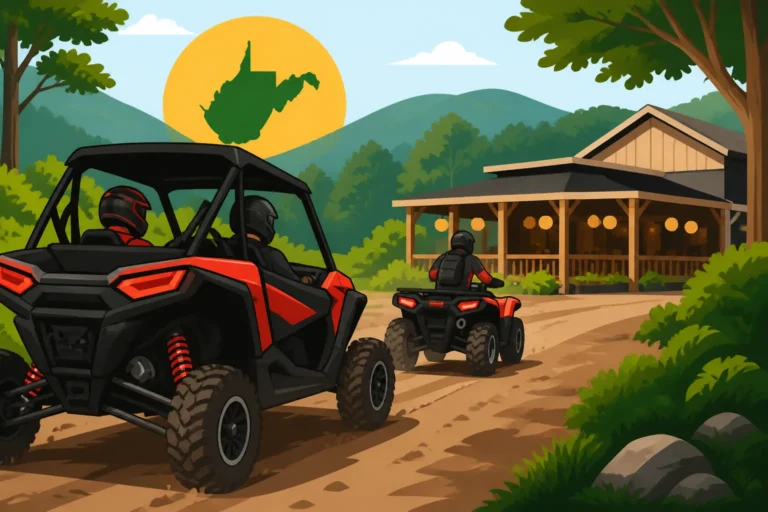
Let's be real, no one wants to see a massive side-by-side ripping through a residential street at highway speeds. The main goal behind West Virginia's limited road access rule is public safety and coexistence. Our state recognizes the immense economic and recreational value of ATV and UTV tourism, especially with world-class trail systems like the Hatfield-McCoy Trails. To support this, they needed a way for riders to move efficiently between trailheads, lodging, restaurants, and gas stations without requiring a full, expensive, and often impractical street-legal conversion for every machine. It’s a compromise, a bridge if you will, between off-road adventure and the practicalities of a public road network. Without this rule, many trail systems would be isolated, and the vibrant trail towns we all love simply wouldn't thrive as they do. It’s about utility, not joyriding down Main Street.
The Specifics: 10 Miles and 25 MPH
This rule is pretty straightforward in its limits, but sometimes clarity gets lost in translation. Essentially, a non-street-legal ATV or UTV can operate on a public road in West Virginia under two very strict conditions: it must be for a distance of no more than 10 miles, and it must maintain a speed of no more than 25 miles per hour. Think of it as a temporary passage. You're not meant to embark on a scenic road trip with these parameters. The 10-mile limit implies a singular journey from point A to point B, like getting from your cabin to a trailhead, or from one trail section across a road to another. It's not cumulative for the day, meaning you can't ride 10 miles, then another 10, then another. It's intended for a specific, necessary segment of travel. The 25 mph speed limit is equally critical. It acknowledges that ATVs and UTVs handle differently on pavement than cars, have different braking characteristics, and often lack some safety features of road vehicles. Keeping speeds low mitigates risks and gives other motorists more time to react. This rule is designed for situations like connecting sections of the [Hatfield-McCoy Trails, West Virginia's 1,200-Mile Network] or simply going into town for supplies.
What Kinds of Roads This Applies To
Here's where it gets a little more nuanced, and where many riders get confused. This 10-mile, 25 mph rule generally applies to public roads that do not have a centerline. This often means secondary roads, county routes, and some smaller town streets. The absence of a centerline is a key indicator that the road is likely under the jurisdiction or designation that allows for this limited ATV/UTV access. You absolutely cannot use this rule to cruise down major state highways, interstates, or any divided highway. These are typically high-speed routes with heavy traffic, making ATV/UTV operation incredibly dangerous and highly illegal. Even on eligible roads, local ordinances can sometimes supersede or further restrict access, especially within city limits that haven't embraced the "trail friendly" designation. It’s always smart to double-check local signage or inquire with local authorities if you're unsure about a specific road. Understanding [West Virginia's Rule for Roads Without Center Lines] is crucial here.
Navigating the 10-Mile Limit on Public Roads
The 10-mile limit isn't just a suggestion; it's a hard boundary. For many riders, especially those new to West Virginia's rules or just visiting, understanding how to adhere to this limit can be tricky. It requires a bit of planning and an honest assessment of your travel needs.
Measuring the Distance: How Far is Too Far?
Let's talk practical application. How do you actually know if you're hitting that 10-mile mark? Most modern ATVs and UTVs have odometers, and it's wise to zero out your trip odometer when you begin a road section. This allows you to track your distance accurately. For example, if you're staying at a cabin that's 3 miles from the trailhead, and you ride that 3 miles, you've used 3 of your 10 allowable miles for that specific leg of your journey. If you then need to cross a highway to get to another section of trail 2 miles away, you're still well within the limit. However, repeatedly making 5-mile trips back and forth all day long for recreational cruising is not the intent and could draw unwanted attention from law enforcement. The rule is explicitly designed for connecting discrete points, not for continuous, repeated short-distance road riding as an activity in itself. Many riders use GPS apps on their phones or dedicated trail GPS devices, which often have trip distance tracking features, making it easier to monitor.
The "Connecting Trail to Trail" Exception
While not an "exception" in the legal sense, the spirit of this rule is deeply tied to the ability to connect trail systems. Imagine you're riding the [Rockhouse Trail System] and want to jump over to the Devil Anse trails, but there's a short stretch of county road in between. This 10-mile, 25 mph rule is exactly for that scenario. It allows you to legally bridge that gap. The goal is to facilitate seamless off-road adventures, preventing riders from having to load their machines onto a trailer for a short road move. This connectivity is vital for the experience of multi-day rides, enabling you to journey through different trail systems without major logistical hurdles. It's a key reason why West Virginia's trail networks are so popular, as it enhances the overall flow and accessibility for riders.
What Happens If You Exceed the Limit?
Exceeding the 10-mile limit or staying on a road for too long, especially if you're clearly using it for recreational travel rather than utility, can lead to trouble. Deputies and local law enforcement in trail towns are generally very familiar with these rules, and they're there to ensure everyone's safety and compliance. If you're pulled over and found to be significantly past the 10-mile mark without a valid reason (like a genuine emergency), you could face a citation for illegal operation of an ATV/UTV on a public highway. The penalties vary, but they often involve fines and could potentially escalate depending on the circumstances, such as if you're riding recklessly or are involved in an incident. It's not worth the risk, financially or legally. It's far better to stick to the rules, plan your routes carefully, and if your journey is truly longer than 10 miles on pavement, consider trailing your machine or looking into a [West Virginia's Street-Legal Special Purpose Vehicle Plate] for full road legality. Understanding [West Virginia Penalties for an Untitled ATV] can give you an idea of the seriousness of these infractions.
Adhering to the 25 MPH Speed Cap
Just as vital as the distance limit is the speed restriction. Twenty-five miles per hour might feel painstakingly slow on a wide-open road when your machine is capable of much more, but it’s a non-negotiable part of the privilege of riding on West Virginia's public roads.
Why the Speed Limit is Crucial
The 25 mph speed limit isn't arbitrary. It's a critical safety measure. ATVs and UTVs are designed primarily for off-road conditions. Their suspensions, tires, and steering are optimized for dirt, rocks, and mud, not smooth, hard pavement. At higher speeds on asphalt, they can become unstable, less predictable, and require much longer braking distances. This is especially true if you're on knobby tires, which have less grip on pavement. Furthermore, visibility is a huge factor. Other vehicles on public roads are often moving at significantly higher speeds. A slow-moving ATV or UTV is easier for car drivers to spot and react to, reducing the risk of a collision. It also helps with public perception; a slow, controlled machine appears more responsible and respectful of shared road space, fostering better relations between riders and local communities. This low speed also helps to minimize noise, which can be a point of contention in residential areas.
Practical Tips for Staying Under 25 MPH
Maintaining 25 mph might sound easy, but it requires conscious effort. For many machines, especially utility UTVs, 25 mph might be around mid-range RPMs in a higher gear. It's not about flooring it; it's about a steady, controlled pace. Here are some tips:
- Know Your Machine: Spend some time on a safe, private road learning what 25 mph feels like in different gears. Pay attention to your tachometer or speed display.
- Use GPS/Speedometer: Rely on your machine's speedometer, or if you have a GPS unit or phone app, use that for accurate speed readings. Don't just "feel" the speed.
- Gentle Throttle Control: Avoid aggressive acceleration and braking. Smooth inputs make for a safer, more compliant ride.
- Focus on the Road: When on pavement, treat your machine like any other slow-moving vehicle. Stay to the right, signal turns, and be acutely aware of traffic around you.
- Group Discipline: If riding in a group, appoint a lead rider to maintain the speed, and ensure everyone in the group understands and adheres to the limit. Peer pressure to speed up can be strong, but safety and legality come first.
Consequences of Speeding
Just like exceeding the 10-mile limit, exceeding the 25 mph speed cap on public roads can lead to tickets and other legal issues. Speeding fines in West Virginia can vary depending on how fast you were going over the limit. Beyond the monetary penalties, a speeding ticket can add points to your driver's license (even if you're on an ATV/UTV, as you're operating a motor vehicle on a public road). More severely, if you're involved in an accident while speeding, you could be held liable for damages and injuries, which can have significant financial and legal repercussions. Insurance companies might also look unfavorably on claims if you were violating the law. Law enforcement officers, especially those patrolling popular riding areas, are vigilant about speed limits. They know that a few bad apples can ruin access for everyone, so they tend to enforce these rules strictly. Understanding [West Virginia ATV Ticket Costs] can help put the potential financial impact into perspective.
Equipment Requirements for Road Riding Under This Rule
While you're not going for a full street-legal conversion under the 10-mile/25 mph rule, your machine still needs to meet certain basic equipment standards for safety and visibility when operating on public roads. This isn't just about avoiding a ticket; it's about protecting yourself and others.
Essential Safety Gear
First and foremost, personal safety gear is paramount. While West Virginia has varying helmet laws depending on age and road type, when you're on any public road, it's always best practice to wear a DOT-approved helmet. For riders under 18, it's generally a requirement on public roads, even for these short distances. [West Virginia Helmet Rules for Riders Under 18] are very clear on this. Eye protection is also non-negotiable. Whether it's goggles or a face shield on your helmet, you need something to protect your eyes from debris, bugs, and wind, which can impair your vision and ability to control the machine. Sturdy boots, gloves, and long sleeves/pants are also highly recommended to provide protection in the event of a fall or collision. Think of it as dressing for the crash, not just the ride.
Machine-Specific Requirements
Even for limited road use, your ATV or UTV needs to have certain functional equipment to be safe and legal.
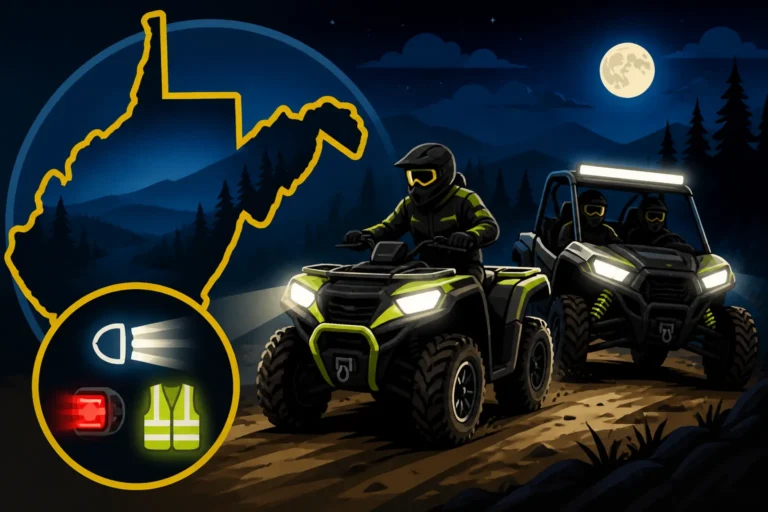
- Headlights and Taillights: Your machine must have working headlights and taillights. If you're riding at dusk, dawn, or in adverse weather, these are absolutely essential for you to see and be seen by other drivers. Make sure they're clean and bright.
- Brake Lights: Functioning brake lights are crucial to alert vehicles behind you when you're slowing down or stopping. Test them regularly.
- Mirrors: You need at least one rearview mirror to see traffic approaching from behind. Many riders opt for two mirrors for better visibility, and companies like SuperATV offer a wide range of robust and easy-to-install mirrors specifically designed for UTVs and ATVs, which can be a great upgrade for road sections.
- Horn: A working horn is required to alert pedestrians or other drivers to your presence.
- Spark Arrestor and Muffler: Your machine must be equipped with a muffler and a U.S. Forest Service-approved spark arrestor. This isn't just a road rule; it's generally required for most public lands and trails to prevent wildfires and control noise. [Spark Arrester and Muffler Requirements in West Virginia] are important for all types of riding.
- Tires: While knobby off-road tires are fine for this limited road use, ensure they are in good condition with adequate tread. Extremely worn tires will reduce traction on pavement.
What You Don't Need
This is an important distinction. Under the 10-mile, 25 mph rule, you typically do not need to undergo a full street-legal conversion. This means you don't necessarily need:
- DOT-approved tires (unless your off-road tires are so worn they're unsafe).
- Windshield wipers (unless you're seeking a specific SPV designation).
- Turn signals (though hand signals are always a good idea and are legally recognized).
- A formal safety inspection like a vehicle would for a registration sticker.
- A special SPV license plate. This rule is distinct from [West Virginia's Street-Legal Special Purpose Vehicle Plate] and doesn't require the same level of modification or registration.
The key is functional safety equipment for visibility and basic operation, not necessarily full road-vehicle compliance.
Who Can Ride Under This Rule and Where
Understanding who can ride and where on West Virginia's roads under this limited rule is just as important as knowing the speed and distance limits. Age, licensing, and specific road types all play a role in whether your brief road journey is legal.
Driver's License and Age Requirements
To operate an ATV or UTV on any public road in West Virginia, even under the 10-mile, 25 mph rule, you must possess a valid driver's license. This isn't just a recommendation; it's a legal requirement because you are operating a motor vehicle on a public roadway. This typically means you must be at least 16 years old. [Driver's License Rules for West Virginia Road Riding] are pretty clear: if you don't have a license, you shouldn't be on the pavement.
For younger riders, the rules are even stricter. West Virginia has specific age limits for operating ATVs and UTVs, and these limits are often tied to engine size and whether they're on managed trails versus public roads. Generally, riders under the age of 16 are not permitted to operate an ATV or UTV on public roads, regardless of the 10-mile/25 mph rule, even if accompanied by an adult. The intent of this rule is for licensed operators to connect trails, not for youth recreation on pavement. Always check the [Youth ATV Size Rules for West Virginia Families] and the state's ATV safety course requirements for minors, as they might apply even if you're not on a public road.
Permitted Road Types
As mentioned earlier, the rule primarily applies to public roads that do not have a centerline. This is your biggest clue. Think of it as those winding, often unnumbered, county routes, forest service roads, or small town streets that lead to trailheads.
- No Divided Highways or Interstates: Absolutely, unequivocally, no ATVs or UTVs on these roads under this rule. They are dangerous, and the fines are steep.
- Crossing Major Highways: While you can't ride along a major highway, you are generally permitted to cross a multi-lane highway or intersection at a right angle, provided it's the most direct and safest route to continue your journey. This is for quick traversals, not parallel travel. [Crossing a West Virginia Highway on an ATV] requires extreme caution.
- Posted Restrictions: Always, always look for posted signage. Some municipalities or counties might have additional restrictions or outright prohibitions on ATV/UTV use on certain roads, even those without centerlines. These signs override the general state rule for that specific stretch of road.
- Private Roads: If a road is privately owned and maintained (e.g., within a private campground or a large private property), then West Virginia's public road rules typically don't apply, but you'd need the landowner's permission.
Riding Through Trail Towns vs. Unfriendly Areas
West Virginia has numerous "trail towns" that have embraced ATV/UTV tourism. Towns like Gilbert, Man, Logan, and Mullens often have local ordinances that expand road access beyond the general state rule, sometimes allowing for more extensive travel on specific town streets, or even removing the 10-mile limit within town boundaries. These towns recognize the economic benefit riders bring and have adapted their local laws to accommodate them. For example, [Riding Through Gilbert on an ATV] is a common and celebrated activity.
However, not all towns are "trail friendly." In areas without specific local ordinances, the state's 10-mile, 25 mph rule is the default, and it should be strictly adhered to. Riding your ATV or UTV through a non-trail-friendly town might be met with confusion from residents and stricter enforcement from local police who aren't accustomed to seeing off-road vehicles on their streets. Always do your homework or stick to the clearly designated trail-friendly areas to avoid unpleasant encounters. [How a West Virginia Town Becomes ATV-Friendly] involves local decisions and planning.
Common Misconceptions and Mistakes
Even with the rule laid out, there are still some common pitfalls and misunderstandings that riders encounter. Clearing these up can save you a lot of grief and ensure you stay on the right side of the law.
Confusing This Rule with the SPV Plate
This is perhaps the biggest area of confusion for riders. The 10-mile, 25 mph rule for non-street-legal ATVs and UTVs is not the same as obtaining a [West Virginia's Street-Legal Special Purpose Vehicle Plate]. They are distinct pathways for road access with very different requirements and limitations.
-
10-Mile/25 MPH Rule:
- Purpose: To connect trails or access immediate services for short, utility-based trips.
- Machine: Standard ATV/UTV, as long as it has basic functional safety equipment (lights, mirror, horn, spark arrestor). No inspection required.
- Limitations: Strictly 10 miles and 25 mph. Primarily on roads without centerlines. Not for general road use.
- Paperwork: Requires a valid driver's license. No special registration beyond your standard ATV title.
-
SPV Plate:
- Purpose: To make your UTV (and some ATVs) fully street-legal for broader road use.
- Machine: Requires significant modifications (DOT tires, windshield, wipers, turn signals, specific lighting, often a roll cage for UTVs), and passing a detailed inspection.
- Limitations: Can ride on most public roads (excluding interstates and divided highways, and some limited-access roads), subject to standard vehicle traffic laws. Speed limits are typically the posted road limits, not capped at 25 mph.
- Paperwork: Requires valid driver's license, specific SPV registration, and proof of [Insurance Required for a West Virginia SPV Plate].
Confusing the two can lead to severe penalties. If you believe your machine is street-legal because you adhered to the 10/25 rule for a short jaunt, you're mistaken. A machine with an SPV plate has a much broader range of legal road access, but comes with more stringent requirements and modifications.
Assuming All Roads Are Fair Game
Another common mistake is thinking that if a road looks like a county road or doesn't have a centerline, it's automatically open to ATVs/UTVs under this rule. This isn't always the case.
- Local Ordinances: As mentioned, some towns or counties might have ordinances that specifically prohibit ATV/UTV use on all their roads, or on specific ones. These local rules can override the general state guidelines. Always look for "No ATV" or similar signs.
- Private Property: Sometimes roads that appear public are actually private, especially in coalfield areas or large rural properties. Riding on these without permission is trespassing.
- State Parks and Forests: While some state forests might have designated OHV trails, riding ATVs on paved roads within state parks or general forest service roads that aren't specifically marked for OHV use can also be prohibited. Always verify the rules for specific areas. The [Monongahela National Forest Motorized Access] rules, for example, are quite specific.
Ignoring the "Intent" of the Rule
The core intent of the 10-mile, 25 mph rule is practical utility and connectivity for off-road riding, not general recreation. When law enforcement officers observe riders, they often assess the "spirit" of the law. If you're seen repeatedly riding circles in a neighborhood, or cruising aimlessly on a road for hours, it clearly goes against the utility-based intent. This can invite scrutiny, even if you technically stay under the 10-mile/25 mph limits for each short segment. Ride with purpose, keep your road sections brief, and maintain a respectful presence. This approach helps preserve the limited road access we do have.
Staying Safe and Respectful on Public Roads
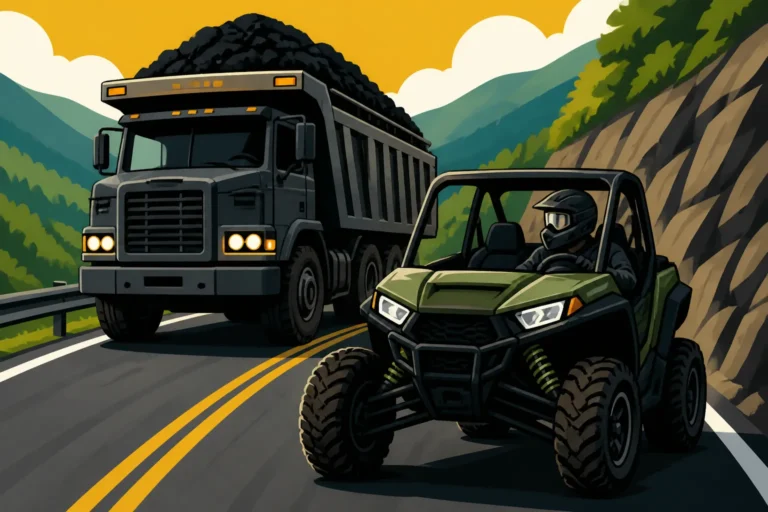
Riding an ATV or UTV on a public road, even for short distances, carries inherent risks. Unlike off-road trails where you're primarily concerned with terrain and other riders, on paved roads, you're sharing space with cars, trucks, and sometimes even commercial vehicles. Safety and respect are paramount.
Sharing the Road with Other Vehicles
This is probably the most critical aspect of riding on public roads. Your ATV or UTV is smaller, slower, and less visible than most cars.
- Stay to the Right: Always ride as far to the right side of the road as safely possible. Give larger vehicles ample room to pass.
- Signal Your Intentions: Use hand signals for turns and stops, especially if your machine doesn't have turn signals. Make them clear and unambiguous.
- Maintain Awareness: Constantly check your mirrors and be aware of your surroundings. Expect that car drivers might not see you, especially if they're not accustomed to ATVs on the road.
- Avoid Distractions: No headphones, no cell phones. Your full attention needs to be on the road, traffic, and your machine.
- Respect Speed Differentials: When a car approaches from behind, they'll be closing the gap quickly if you're only going 25 mph. Don't swerve or make sudden movements. Hold your line and let them pass safely.
- Intersections: Be extra cautious at intersections. Look left, right, and left again. Make eye contact with other drivers if possible before proceeding.
The Importance of Visibility
Because ATVs and UTVs are smaller, making yourself as visible as possible is crucial.
- Bright Clothing: Wear brightly colored clothing or a high-visibility vest, especially if you're riding at dawn, dusk, or in cloudy weather. Blaze orange is great if you're also hunting.
- Lights On: Always ride with your headlights and taillights on, even during the day. This significantly increases your visibility to other drivers.
- Reflective Tape: Consider adding reflective tape to your machine or helmet, especially on the rear, to make yourself more noticeable in low light conditions.
- Whips/Flags: While more common on dunes, a visibility flag or whip can also help make your UTV taller and more visible over the tops of cars or around curves, especially on those narrow, winding [Riding a Narrow West Virginia Hollow Road on an ATV].
- Clean Lights: Keep your headlights and taillights clean. Mud and dust can drastically reduce their effectiveness. SuperATV offers various aftermarket lighting solutions that are often brighter and more durable than stock options, which could be a worthwhile investment for road use.
Community Relations and Preserving Access
The privilege of riding on West Virginia's roads for limited stretches is a hard-won one, thanks to years of advocacy from riders and the recognition of the economic benefits by local communities. It's a delicate balance, and reckless behavior can jeopardize it for everyone.
- Control Noise: Keep your exhaust system in good working order. Excessive noise is a primary complaint from residents and can lead to local restrictions.
- Avoid Dust and Mud: Try to minimize kicking up dust or tracking excessive mud onto paved roads, especially in residential areas. If your machine is caked in mud, consider hosing it off before hitting the pavement.
- Respect Private Property: Stay off private lawns, driveways, and unposted private property.
- Be Courteous: Wave to residents, yield to pedestrians, and generally be a good ambassador for the sport. A positive image helps ensure continued access.
- Report Issues: If you see others riding dangerously or illegally, consider respectfully educating them or reporting severe infractions to the authorities. Preserving access means holding ourselves and each other accountable. [West Virginia Noise Complaints About ATVs] are a real issue and can lead to stricter rules.
West Virginia Road Rule Comparison
To help clarify the differences, here's a comparison table between the limited 10-mile/25 mph road rule and the Special Purpose Vehicle (SPV) plate for West Virginia.
| Feature | 10-Mile, 25 mph Road Rule (Non-SPV) | West Virginia Special Purpose Vehicle (SPV) Plate |
|---|---|---|
| Purpose | Short-distance utility; connecting trails, accessing local services. | Full street-legal status for UTVs (and some ATVs) on most public roads. |
| Distance Limit | Maximum 10 continuous miles per leg of journey. | No specific mileage limit; can operate like a car on designated roads. |
| Speed Limit | Maximum 25 mph. | Posted road speed limits (usually up to 55 mph). |
| Applicable Roads | Primarily public roads without a centerline, county routes, some town streets. | Most public roads (excluding interstates, divided highways, some limited access). |
| Required Equipment | Headlights, taillights, brake lights, at least one rearview mirror, horn, spark arrestor. | Extensive modifications: DOT tires, windshield (with wiper), turn signals, specific lighting, horn, mirrors, seat belts, speedometer, odometer, SPV plate. |
| Driver's License | Required. | Required. |
| Age Requirement (Driver) | Generally 16+ with valid driver's license. | Generally 16+ with valid driver's license. |
| Inspection | No formal state inspection required for this specific rule. | Required to pass an inspection for SPV designation. |
| Registration/Plate | Standard ATV/UTV title. No special road plate. | Special "SPV" license plate. [West Virginia SPV Registration Cost] applies. |
| Insurance | ATV/UTV insurance recommended, but not explicitly mandated for this rule segment. | Mandatory liability insurance for street use. [Insurance Minimums for a West Virginia SPV] required. |
| Primary Machine Type | ATVs and UTVs. | Primarily UTVs, some modified ATVs. |
This table should help illustrate why it's so important not to confuse these two distinct methods of legal road operation in West Virginia. Each serves a different purpose and comes with its own set of rules and responsibilities.
Navigating West Virginia's roads with your ATV or UTV under the 10-mile, 25 mph rule is a privilege that allows riders to connect with the incredible trail systems and vibrant communities our state has to offer. By understanding and strictly adhering to these limits, ensuring your machine is properly equipped, and always prioritizing safety and respect for others, you can confidently enjoy the vast network of riding opportunities. This isn't about finding loopholes; it's about responsible riding that helps preserve access for everyone.
Disclaimer
This article is for general informational purposes only and does not constitute professional advice. Laws, prices and regulations vary by location and change over time. Consult a qualified professional for guidance on your specific situation.