Do Adults Need Helmets in West Virginia?
Ah, the age-old question that often pops up around the campfire after a long day of hitting the trails or before heading out on a quick road run: "Do I really need to wear a helmet if I'm an adult riding an ATV or UTV in West Virginia?" It's a common point of confusion, and frankly, a frustration for many who feel like they're responsible enough to make their own choices. But the truth is, while personal freedom is cherished, West Virginia's laws and the inherent risks of off-road riding make understanding helmet requirements absolutely crucial, not just for avoiding a ticket, but for your own safety and peace of mind. This guide is here to untangle those rules and help you ride smart and legally in the Mountain State.
The Core Question: Are Helmets Mandatory for Adults on West Virginia ATVs?
Let's cut right to it, because there's a good deal of misunderstanding out there. When it comes to riding an ATV or UTV in West Virginia, the short answer for adults is often "yes, especially in the places you'll want to ride most." While some states might have nuances for private land, West Virginia generally takes a protective stance, particularly when you're on designated trails or any public road. This isn't just about what's legal; it's about minimizing the catastrophic risks that come with a tumble from an open-air machine. Think about it: whether you're navigating a rocky climb or cruising a smooth gravel road, a sudden stop or impact can turn a fun day into a life-altering event in a heartbeat.
Helmet Requirements for West Virginia Trail Riding
If you're planning on hitting West Virginia's incredible trail systems, like the sprawling Hatfield-McCoy Trails, Burning Rock Offroad Park, or any other managed trail network, the rules are very clear: everyone, regardless of age, must wear a DOT-compliant helmet. There are no exceptions for adults on these trails. This is a non-negotiable safety standard set by the Hatfield-McCoy Trail Authority and other park operators. They are incredibly serious about rider safety, and for good reason. These trails can be challenging, with unexpected dips, rocks, mud, and other obstacles that can easily throw a rider. Imagine a beautiful, but gnarly, section of the [Rockhouse Trail System] – one wrong line, and you could be picking yourself up off the ground, grateful for that helmet.
Trail rangers are on patrol, and they absolutely will check for proper helmets, along with your trail permit and other necessary safety gear. Skipping the helmet on these trails isn't just a risk to your head; it's a guaranteed way to get a citation, potentially lose your riding privileges, and ruin your trip. It's not about being overprotective; it's about acknowledging the dynamic and unpredictable nature of off-road riding, where even experienced riders can encounter unforeseen hazards. Wearing a helmet becomes second nature for most regular trail riders, an essential part of the pre-ride checklist right alongside checking tire pressure and fuel levels. It's simply part of the deal when you want to enjoy the vast beauty and thrill of West Virginia's dedicated ATV trails.
Helmet Laws for Road-Legal ATV/UTV Use
Now, this is where the waters can get a little murky for some. West Virginia has specific rules for riding ATVs and UTVs on public roads, and these rules also typically mandate helmets for adults. Whether you're making your side-by-side [Street-Legal Conversion Kit Prices] to get a [West Virginia's Street-Legal Special Purpose Vehicle Law] plate, or you're riding a standard ATV under the state's limited road access rules (like the 10-mile, 25 mph rule on roads without centerlines), helmets are generally required.
The nuances can depend slightly on the specific law being applied (e.g., general motorcycle helmet laws often apply to SPVs, and specific ATV road statutes include helmet provisions). For instance, if you've gone through all the trouble of making your UTV street-legal and obtained an SPV plate, you're essentially operating it as a motor vehicle on public roads. In West Virginia, the law generally requires helmets for operators and passengers of motorcycles and similar open-air vehicles, which often includes street-legal ATVs and UTVs. The same goes for those brief stretches of pavement you might use to connect trails or access a gas station under the [West Virginia's 10-Mile, 25 mph Road Rule]. The moment you hit that asphalt, even for a short distance, the state's safety regulations kick in. It's a critical detail often overlooked by riders who are used to off-road freedom. The rationale is simple: the speeds, potential for interaction with other traffic, and hard surfaces of roads present their own unique and severe risks, making head protection just as, if not more, vital than on dirt trails.
Understanding Helmet Standards and Eye Protection
It's not enough to just wear any helmet; it has to be the right helmet. West Virginia's laws and trail system rules are quite specific about the type of head protection required. This means understanding what "DOT compliant" really entails and why it's so important. Beyond the helmet itself, proper eye protection is also a must, often overlooked but equally critical for safety and comfort on the trail.
DOT Versus Snell Helmet Approval
When you're looking for a helmet, you'll commonly see "DOT approved" or "Snell certified." Both relate to safety standards, but they're not exactly the same.
- DOT (Department of Transportation) Approval: This is the minimum legal standard for helmets intended for highway use in the United States, and by extension, for most ATV/UTV riding requirements in West Virginia. A DOT-approved helmet means it has met specific federal standards for impact absorption, penetration resistance, and retention system effectiveness. The manufacturer self-certifies that their helmets meet these standards, and the DOT conducts spot checks. You'll find a DOT sticker on the back of any compliant helmet. For all practical purposes and legal compliance in West Virginia, a DOT-approved helmet is what you need.
- Snell Certification: The Snell Memorial Foundation is a non-profit organization that develops more stringent and rigorous helmet safety standards. Snell testing is voluntary and goes above and beyond DOT requirements. A Snell-certified helmet undergoes more intense impact tests, multiple impacts in the same spot, and more aggressive penetration tests. Many high-performance helmets carry both DOT and Snell ratings. If a helmet is Snell certified, it's almost certainly DOT compliant, but not every DOT helmet is Snell certified. While Snell certification isn't legally required in West Virginia, choosing a Snell-certified helmet offers an even higher level of protection, which can be invaluable when riding aggressively or in highly technical terrain. It's an investment in your brain, plain and simple.
Think of it this way: DOT is the baseline that ensures a certain level of protection, while Snell aims for the absolute maximum. For adult riders, understanding [West Virginia Helmet Standards: DOT, Snell and ANSI] is key to making an informed choice that balances compliance with personal safety preferences. When you're picking out that new lid, don't just grab the cheapest one. Consider its rating, how it fits, and the level of protection it offers. A quality helmet, like those you might find recommendations for through a reputable outfitter or parts provider like SuperATV, is designed to absorb and distribute impact forces, protecting your most vital asset.
Eye Protection Requirements on West Virginia Trails
While the helmet often gets all the attention, proper eye protection is equally mandated and crucial for safe riding in West Virginia. Whether you're on public roads or tearing up the [Buffalo Mountain Trail System], you'll need to protect your eyes. Why? Because the trail environment is full of hazards: dust, dirt, mud slinging off tires, low-hanging branches, insects, and even small rocks kicked up by other riders. Hitting any of these at speed can cause serious injury, impair your vision, and lead to an accident.
West Virginia law and trail rules generally require either goggles or a face shield on your helmet. Sunglasses alone are typically not sufficient because they don't offer full perimeter protection against debris.
- Goggles: These are a very popular choice, especially with open-face helmets. They fit snugly around your eyes, creating a seal that keeps out dust and debris. They also allow for good airflow, reducing fogging. Look for goggles with good ventilation and an anti-fog coating, which is especially helpful when working hard on the trail.
- Face Shield: Many full-face helmets come with an integrated face shield. These offer excellent protection and convenience. Just make sure your shield is clear and scratch-free for optimal visibility. Some riders prefer a tinted shield for sunny days but carry a clear one for low-light conditions or night riding (if permitted in specific areas).
The key is to have something that provides a barrier against flying objects and keeps your vision clear. Nothing ruins a good ride faster than getting grit in your eyes or a branch smacking you in the face. Always ensure your [Eye Protection That Meets West Virginia Rules] is clean and in good condition before you head out. Riding without proper eye protection is not only dangerous but can also lead to a ticket from a trail ranger or law enforcement officer, who are always looking out for rider safety.
Additional Safety Gear to Consider
While helmets and eye protection are the legal minimums and absolute must-haves, savvy riders know that a little extra gear can go a long way in preventing injuries and improving the overall riding experience. Think of it as investing in your comfort and longevity on the trails.
- Gloves: More than just keeping your hands warm, good riding gloves protect your hands from blisters, abrasions, and impacts. They also improve grip on the handlebars, especially when things get wet or muddy. There are lightweight, breathable options for summer and insulated gloves for cooler weather.
- Riding Boots: Forget sneakers or casual shoes. Proper riding boots, ideally over-the-ankle motocross or ATV-specific boots, offer crucial support and protection for your feet and ankles. They guard against impacts from rocks, provide grip on footpegs, and can prevent sprains or breaks if your foot gets caught or crushed. You'd be surprised how often a foot injury can sideline a rider.
- Chest Protector/Roost Guard: For more aggressive riding or in group settings where roost (dirt and rocks kicked up by other machines) is common, a chest protector or roost guard is a wise investment. These protect your torso from flying debris and can mitigate impact in a fall. While not legally required, they're common sense additions, especially for those venturing onto black diamond trails or riding with a spirited group.
- Long Sleeves and Pants: Even in hot weather, wearing long sleeves and pants (preferably durable riding pants or jeans) is highly recommended. They offer a layer of protection against scrapes, cuts, sunburn, and insect bites. Lightweight, breathable riding jerseys are designed for this purpose, providing protection without overheating.
Remember, the goal is to have fun and ride again another day. Companies like SuperATV offer a huge range of accessories and gear that can enhance both your machine's performance and your personal safety. Considering [What to Wear on a West Virginia Trail Ride] beyond the basics can drastically reduce the risk of minor injuries and ensure you stay comfortable and focused on the ride.
Real-World Scenarios and Enforcement
Knowing the rules is one thing, but understanding the consequences of not following them in real-world scenarios, and how enforcement works, is just as important. West Virginia takes ATV/UTV safety seriously, and fines, loss of privileges, and most importantly, personal injury, are very real possibilities for those who disregard the regulations.
What Happens If You Ride Without a Helmet in West Virginia
Riding without a helmet in West Virginia, especially when and where it's required, carries significant risks and penalties. It's not just a minor infraction; it can quickly escalate.
- Legal Penalties: If you're caught by law enforcement or a trail ranger without a required helmet on public roads or designated trail systems, you're looking at a citation. These tickets come with fines, which can vary but are never cheap. Beyond the immediate financial hit, repeated offenses or severe infractions could potentially lead to more serious consequences, including the impoundment of your machine in some cases or the revocation of your trail permit. For instance, the Hatfield-McCoy Trail Authority has strict rules, and their rangers are empowered to issue citations. Ignoring [Hatfield-McCoy Trail Rules Every West Virginia Rider Signs Up To] can quickly turn your adventure into a costly headache.
- Insurance Complications: In the unfortunate event of an accident, if you weren't wearing a helmet when one was required, your insurance claim could be significantly impacted. Insurance companies may argue that you were negligent by not following safety laws, potentially reducing or denying payouts for medical expenses or vehicle damage. This adds a huge layer of financial risk to any injury you sustain.
- Catastrophic Injury Risk: This is, by far, the most critical consequence. ATVs and UTVs are inherently risky. Falls, rollovers, and collisions can happen in an instant, even to experienced riders on familiar terrain. A helmet is designed to absorb impact, reducing the severity of head injuries, which can range from concussions to traumatic brain injuries or worse. Riding without a helmet is a gamble with your brain, your independence, and your future. No thrill is worth that risk. West Virginia's rugged terrain and dynamic riding conditions mean that even a seemingly minor mishap can result in serious injury without proper head protection.
Remember, [West Virginia Sheriff Patrols in Trail Towns] and park rangers are not just there to collect fees; they're there to ensure everyone's safety, and that includes enforcing helmet laws. They know the terrain, they know the risks, and they've likely seen firsthand what happens when riders make poor choices.
Helmet Rules for Passengers and Young Riders
The helmet rules in West Virginia extend beyond just the operator; they apply to passengers and, even more stringently, to young riders. If you're riding with others, you're responsible for ensuring they are also compliant.
- Passengers: If a helmet is required for the operator in a specific riding scenario (e.g., on Hatfield-McCoy Trails or public roads), it is also required for all passengers, regardless of their age. So, if you're taking a friend or family member for a ride on your UTV, ensure they have a properly fitted, DOT-compliant helmet. This isn't just a legal requirement; it's a moral one. You're responsible for the safety of those riding with you.
- Young Riders: West Virginia has some of the most comprehensive youth ATV safety laws in the country. For riders under the age of 18, helmets are mandatory across the board, whether on public land, private land, trails, or roads. This is a crucial element of the state's ATV safety program, often tied into requirements like completing an ATV safety awareness course. Parents and guardians must ensure their children are properly equipped. There are also specific rules about youth machine engine size limits and direct supervision that factor into overall safety, but helmet use is foundational.
Understanding these passenger and youth rider rules is vital for any adult planning a group or family ride. It reflects the state's overarching commitment to safety for all participants in ATV and UTV recreation, particularly those who may be more vulnerable.
Riding Responsibly: Beyond the Legal Minimum
While adhering to West Virginia's helmet laws is non-negotiable for safety and legality, true responsible riding goes beyond simply meeting the minimum requirements. It involves a holistic approach to preparation, awareness, and respect for the rules and fellow riders.
- Pre-Ride Checks: Before every ride, take a few minutes to inspect your machine. Check tire pressure, fluid levels, brakes, lights, and ensure all controls are functioning correctly. This simple habit can prevent mechanical failures that could lead to an accident.
- Know Your Limits (and Your Machine's): Don't attempt trails or maneuvers that are beyond your skill level or your machine's capabilities. West Virginia trails are often rated by difficulty, so pay attention to those markings. Pushing too hard is a recipe for disaster. [West Virginia Trail Difficulty and How It Is Marked] is there for a reason – use it!
- Stay Hydrated and Rested: Riding an ATV or UTV, especially on challenging terrain, is physically demanding. Dehydration and fatigue can impair judgment and reaction time. Carry plenty of water and take breaks as needed.
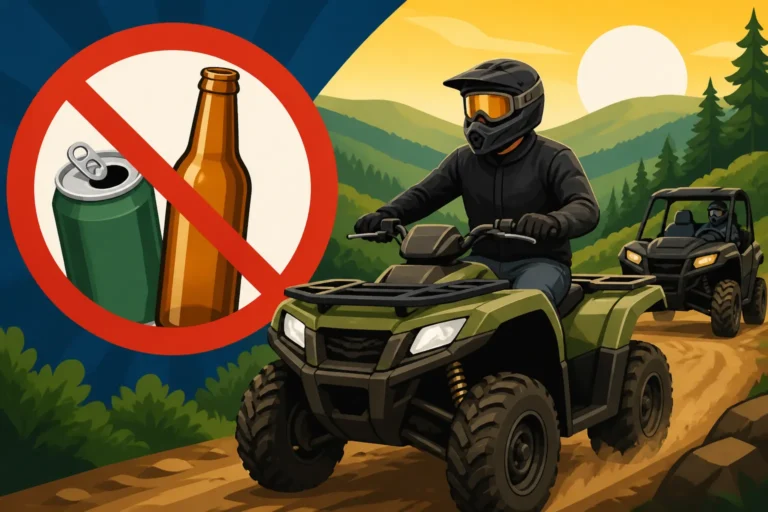
- Ride Sober: Alcohol and ATV riding simply do not mix. West Virginia has strict laws against operating an ATV under the influence, similar to DUI laws for cars. [Alcohol Limits for West Virginia ATV Operators] are enforced, and for good reason—impaired judgment is a leading cause of accidents.
- Respect the Trails and Environment: Stay on marked trails, respect private property, and pack out everything you pack in. The beauty of West Virginia's natural landscape is a privilege to enjoy, and it's our collective responsibility to preserve it.
- Carry Essential Gear: Beyond your personal safety gear, carry a small tool kit, a first-aid kit, a phone (though cell service can be spotty in some remote areas), and a map. Consider a GPS device or an app like onX Offroad for navigation, especially if you're exploring new territory.
By embracing these responsible riding practices, you're not just avoiding fines; you're ensuring a safer, more enjoyable experience for yourself and everyone else sharing the trails and roads of West Virginia. The Mountain State offers some of the best riding in the country, and by being prepared and respectful, we can keep it that way for years to come.
Here's a quick summary of helmet considerations:
| Scenario | Helmet Requirement (Adult) | Type of Helmet Needed | Key Considerations |
|---|---|---|---|
| Hatfield-McCoy Trails | Mandatory | DOT-Compliant | No exceptions, strictly enforced by rangers. |
| Other Managed Trail Systems | Mandatory | DOT-Compliant | Check park-specific rules, generally consistent with H-M. |
| Public Roads (SPV Plate) | Mandatory | DOT-Compliant | Often falls under motorcycle/open-air vehicle laws. |
| Public Roads (Limited Use) | Mandatory | DOT-Compliant | Applies to short connectors, 10-mile rule, etc. |
| Private Land (General) | Not always legally mandated, but highly recommended | DOT-Compliant | Personal safety paramount; laws vary for youth. |
| Passengers | Mandatory (where operator must wear one) | DOT-Compliant | Responsibility of the operator to ensure compliance. |
Disclaimer
This article is for general informational purposes only and does not constitute professional advice. Laws, prices and regulations vary by location and change over time. Consult a qualified professional for guidance on your specific situation.