Sharing a West Virginia Road With Coal Trucks
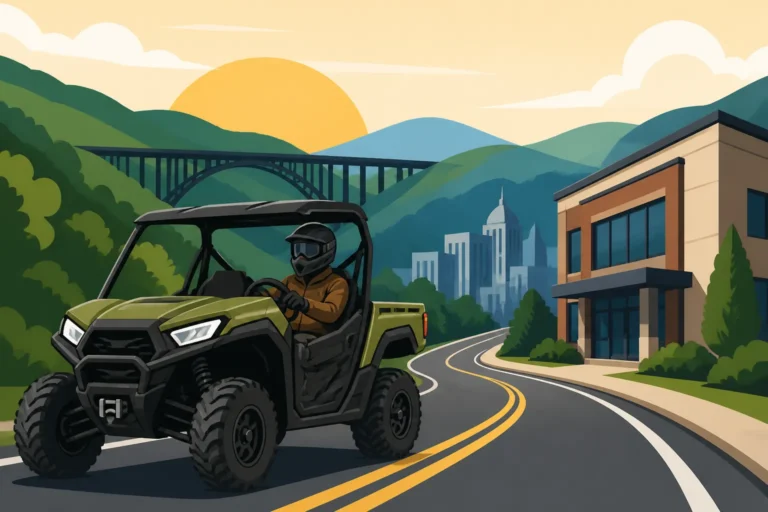
Riding the stunning trails and backroads of West Virginia on your ATV or UTV is an unparalleled experience, offering breathtaking scenery and endless adventure. However, for those moments when your route requires you to use public roads, especially in the heart of our coal-producing regions, you'll inevitably encounter the giants of our highways: coal trucks. The sheer size and speed of these commercial vehicles can be incredibly intimidating, and navigating safely alongside them demands a thoughtful approach. This guide is here to help you understand the dynamics of sharing West Virginia's roads with these powerful machines, ensuring your ride is as safe and stress-free as possible.
Understanding the Landscape: West Virginia's Roads and Coal Country Realities
When you're out exploring West Virginia, particularly in areas like Logan, Mingo, or Wyoming counties, you're in active coal country. This means the roads you might use to connect trails or access amenities are often shared with heavy industrial traffic. These aren't your typical suburban streets; they are working arteries crucial to our state's economy, and they come with unique challenges for ATV and UTV riders.
The Sheer Size and Momentum of a Coal Truck
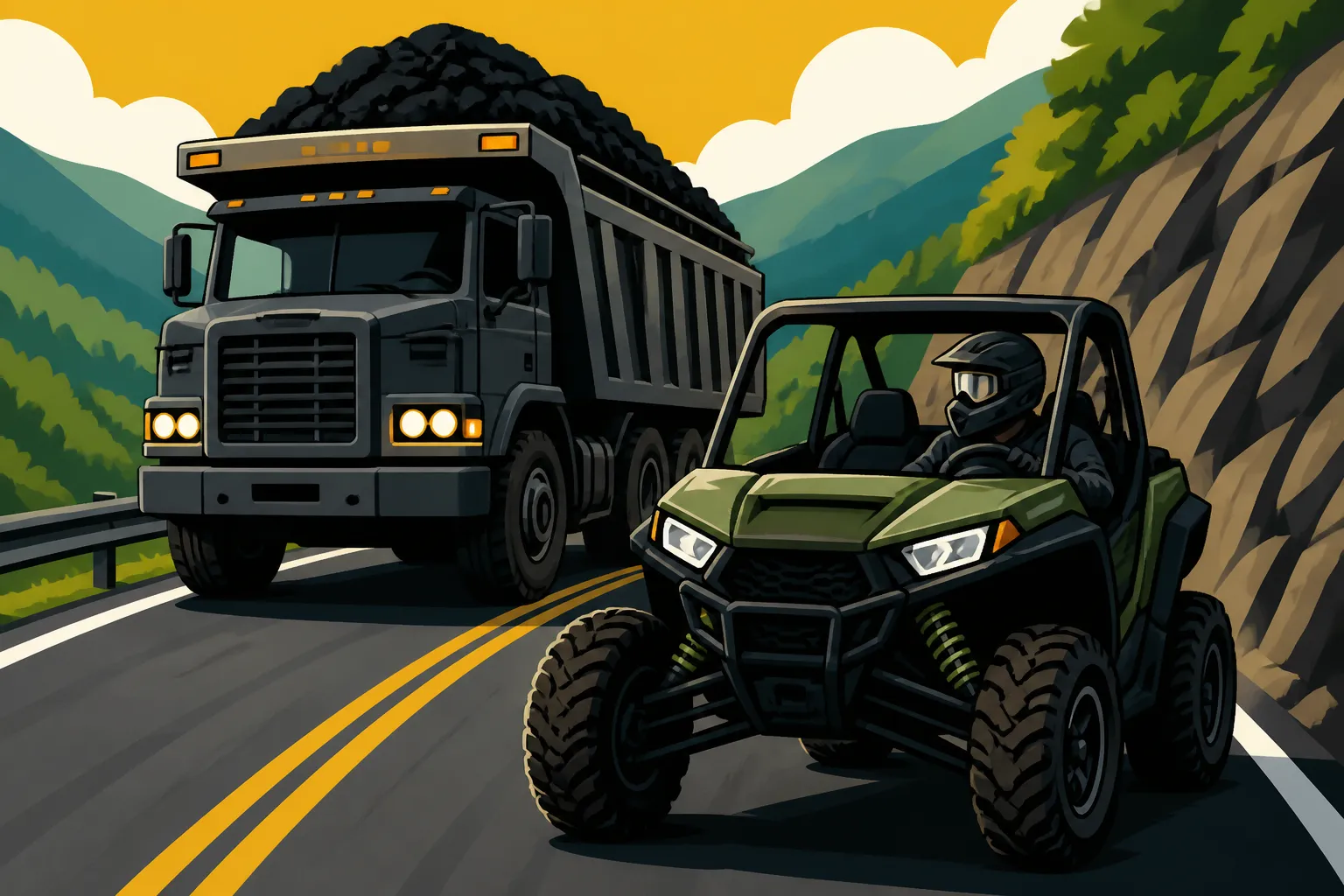
Let's be realistic: a fully loaded coal truck is an absolute behemoth. We're talking about tens of thousands of pounds of steel, coal, and pure momentum. When you're on a smaller ATV or UTV, even a large side-by-side, you are dwarfed by these machines. It's not just their physical size that's imposing; it's the physics involved. A truck that heavy takes a significantly longer distance to stop than any passenger car, let alone your nimble off-road machine. Their drivers, while skilled, also have massive blind spots, particularly along the sides and directly behind their trailers.
Many new riders or visitors to our state often underestimate the impact these trucks have on road dynamics. You might think you can zip around them, but that's a dangerous misconception. The wind sheer alone as one passes can be enough to destabilize a lighter ATV. Their large tires can kick up rocks and debris, and the sheer force they command demands respect. Trying to "win" a lane against a coal truck is a battle you absolutely do not want to fight. Always assume they need more space, more time, and that the driver might not see you immediately.
Narrow Roads and Blind Curves: A Recipe for Stress
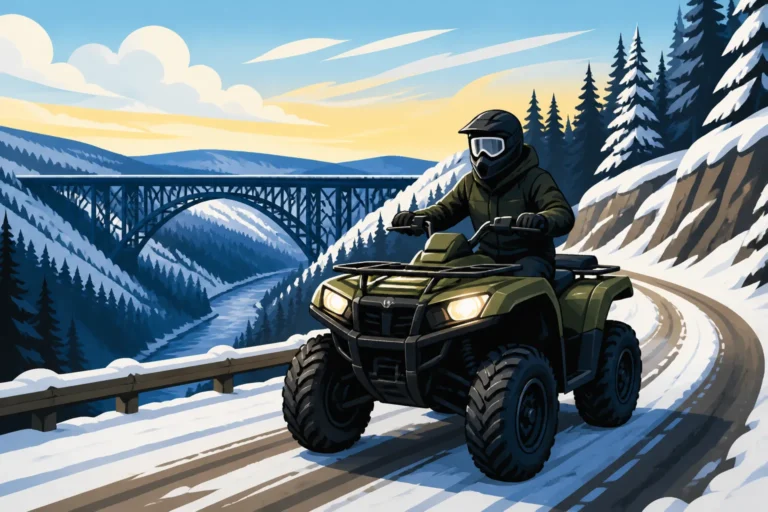
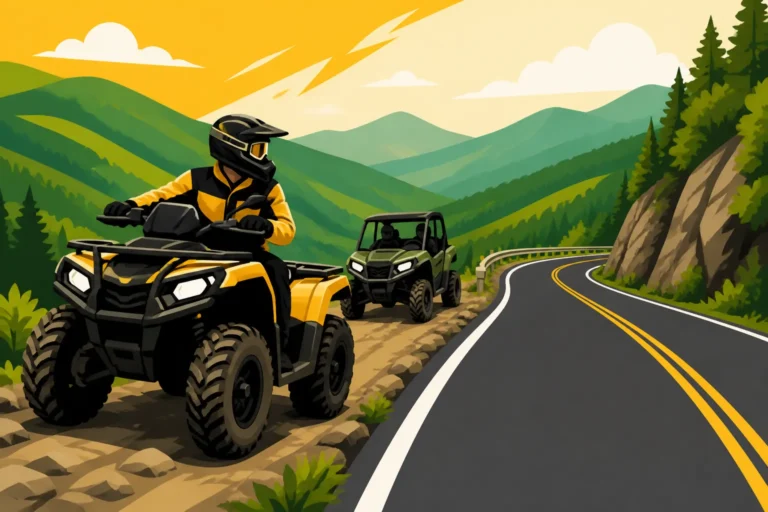
West Virginia's topography is gorgeous, but it often translates into challenging road design. Many of the roads connecting our smaller towns and rural areas are narrow, winding, and sometimes lack shoulders. You'll encounter sharp turns, blind curves where you can't see oncoming traffic until it's right on top of you, and steep ascents and descents that test even the most powerful engines. Add to this mix a speeding coal truck, and the situation can become tense very quickly.
Imagine navigating a tight, tree-lined road with a cliff on one side and a rock face on the other. Now picture a coal truck, wide and long, barreling around the bend. There simply isn't much room for error, or for sharing. These roads were often built generations ago and weren't designed with today's heavy truck traffic and the increasing popularity of ATVs and UTVs in mind. Riders often feel a squeeze, being forced to the very edge of the pavement, sometimes even having to partially drop a tire off the road to give an oncoming truck enough clearance. It’s a common frustration, and it's why understanding defensive riding is so critical here.
Essential Strategies for Safe ATV/UTV Riding Around Big Rigs
Successfully sharing the road with coal trucks isn't about hoping for the best; it's about active, defensive riding and making smart choices. You have to be proactive in these situations, anticipating potential conflicts and positioning yourself for safety.
Maximizing Your Visibility: Be Seen, Be Safe
One of the most fundamental rules of riding on any public road, especially when big trucks are involved, is to make yourself as visible as possible. Your ATV or UTV is much smaller than other vehicles, and it's easy to get lost in a truck driver's peripheral vision, or worse, their blind spot. [Equipment West Virginia Requires on a Road Ride] includes things like headlights and taillights, but you need to go beyond the minimum. Always have your headlights on, even in broad daylight. Consider adding auxiliary lights, especially if you have a larger side-by-side. Brighter LED lights from companies like SuperATV can cut through dust and glare, making you more noticeable.
Wear bright, reflective clothing. Fluorescent yellows, oranges, and greens are your friends. If you're riding in a group, consider using brightly colored whip flags. While these are primarily for trail visibility, they can also add a few extra feet of vertical presence on the road, making you stand out over crests or in dips. Think of it this way: if you can do anything to catch a truck driver's eye even a split second sooner, it could be a lifesaver. Ensure your brake lights are functioning perfectly, as they are a critical signal to anyone behind you, especially another large vehicle with a long stopping distance.
Defensive Riding Techniques When Coal Trucks are Present
When you spot a coal truck, whether it's coming towards you or you're approaching one from behind, your immediate mindset should shift to defensive riding. This means anticipating hazards and giving yourself ample room.
- Anticipate and Pull Over: If you see an oncoming coal truck, and there's a safe place to pull off the road—even slightly—do it. Don't wait until the last second. Look for wider sections, driveways, or even firm shoulders. Slow down, signal your intention, and get as far to the right as safely possible, or completely off the pavement if feasible. This gives the truck maximum room in its lane and reduces the chances of a close call.
- Maintain Distance: If you're behind a coal truck, keep a significant following distance. Remember their extended stopping times and the debris they can kick up. If you're planning to pass (and only do so where it's explicitly safe and legal), ensure you have a long, clear stretch of road with plenty of visibility. Never pass on a blind curve or uphill. If a truck passes you, be prepared for significant wind blast and potential debris.
- Approach Blind Curves Cautiously: West Virginia's roads are famous for their curves. When approaching a blind curve, significantly reduce your speed. Stay as far to the right of your lane as possible. If you're riding in a group, ride single file to minimize your footprint on the road. You might consider giving a quick, polite honk with your [Horn Placement on a Side-by-Side] before entering a truly blind curve to alert any unseen oncoming traffic, though for a coal truck, the sound may not carry far enough.
- Utilize Pull-Offs: Always be looking for opportunities to move out of the travel lane. Many mountain roads have informal pull-offs or wider spots where locals know to yield to larger vehicles. If you're not moving at the flow of traffic (which is likely if you're respecting the lower speed limits for ATVs on roads), these spots are your best friend.
Communication and Courtesy: What to Expect and How to Respond
There's an unwritten code of courtesy on our mountain roads, especially between locals and those who share the road with industrial traffic. Truck drivers are often on tight schedules and know these roads intimately.
- Acknowledge and Yield: If a truck driver flashes their lights at you, it might be a warning of an upcoming hazard, a signal that they see you, or sometimes, a request for you to yield space. The safest response is usually to acknowledge, slow down, and provide as much room as possible. A simple nod or wave can go a long way in showing you're aware and respectful.
- Don't Challenge for Space: Never, ever try to squeeze into a space a coal truck needs. If you're approaching a narrow bridge or a tight section where you both can't easily fit, the smaller vehicle (you) should yield. It's not about who has the right-of-way; it's about who can yield safely.
- Group Riding Etiquette: If you're riding with a group, communicate clearly. Ensure everyone understands the plan for when a truck approaches. Single file is usually best. If you pull over, ensure everyone in your group can pull over safely and that no one is left hanging in a precarious position. Your lead rider should communicate the hazard to those behind.
Legal Considerations and Best Practices for Off-Roaders
While safety is paramount, it’s also important to remember that riding your ATV or UTV on public roads in West Virginia comes with specific legal responsibilities. Adhering to these rules not only keeps you compliant but often enhances your safety, especially when sharing the road with heavy machinery.
Understanding West Virginia's Road Riding Rules for ATVs/UTVs
West Virginia has specific rules about where and how ATVs and UTVs can operate on public roads. Most notably, unless you have a street-legal Special Purpose Vehicle (SPV) plate, your road use is generally limited to crossing roads or traveling short distances to connect trails or access services. [West Virginia's 10-Mile, 25 mph Road Rule] is a common limit for non-SPV machines on non-designated roads without centerlines. However, this rule does not mean you can simply cruise down any highway for 10 miles. It's crucial to understand your local ordinances and state laws.
If you're riding an SPV, you're expected to comply with all traffic laws that apply to other motor vehicles, including speed limits, signaling, and yielding. Even with an SPV plate, exercising extreme caution around coal trucks is still essential. The presence of a title or plate doesn't magically make your machine impervious to the laws of physics. Always know your route, adhere to local regulations, and be aware of any roads specifically prohibited for ATV/UTV use, as these are often major truck routes. For more on making your machine fully compliant, check out [West Virginia's Street-Legal Special Purpose Vehicle Law].
Equipment That Can Make a Difference
Beyond the legal requirements, certain equipment choices can significantly improve your safety margin when interacting with coal trucks. These aren't necessarily about speed or power, but about visibility, control, and awareness.
- Quality Mirrors: Good side mirrors are non-negotiable. They allow you to monitor traffic approaching from behind, including fast-moving trucks. Some riders find that a panoramic rearview mirror in a UTV offers an even better field of view. SuperATV, for instance, offers a range of durable mirrors designed for off-road vehicles that can withstand the vibrations and bumps of trail riding while providing clear visibility on the road.
- Audible Horn: While a horn might not halt a coal truck, a loud, clear horn can alert pedestrians, other smaller vehicles, or even a truck driver who might be distracted. Make sure your horn is functional and easily accessible. [Horn Placement on a Side-by-Side] is important for quick access.
- DOT-Approved Tires: If you're spending any significant time on pavement, even short connector roads, DOT-approved tires offer better grip and handling than pure off-road treads. They are designed for road speeds and conditions, which can give you more control if you need to brake suddenly or maneuver to avoid a hazard.
- Reflective Tape and Lights: We touched on this, but it bears repeating. High-quality reflective tape on the front, sides, and rear of your machine, combined with bright LED headlights and taillights, creates a much larger visual footprint, especially during dawn, dusk, or in bad weather. Some riders even add amber strobes on the rear for added visibility.
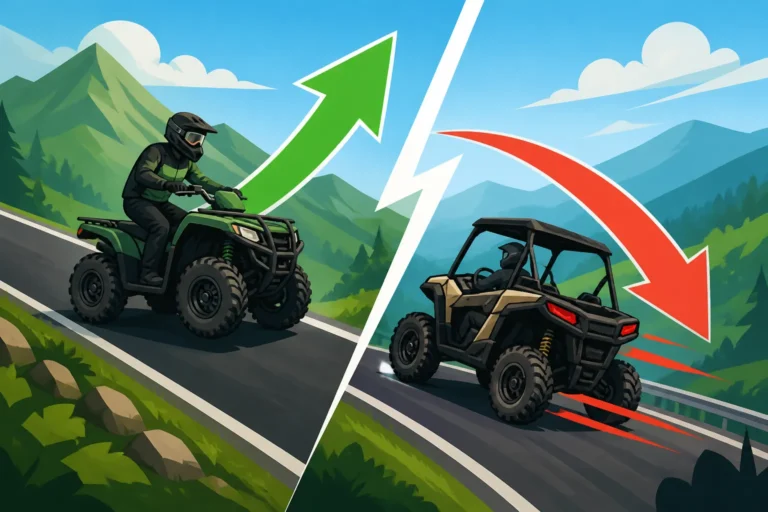
Here’s a quick comparison of safe vs. unsafe practices when encountering coal trucks:
| Practice | Safe Approach | Unsafe Approach |
|---|---|---|
| Visibility | Always use headlights, wear bright colors, add reflective tape. | Ride without lights, wear dark clothing, assume you are seen. |
| Approach to Curves | Slow down significantly, stay far right, be prepared to stop. | Maintain speed, cut corners, assume the road is clear. |
| Oncoming Truck | Pull over safely if possible, slow down, ride single file. | Stay in your lane, try to maintain speed, challenge for space. |
| Following a Truck | Maintain significant distance, watch for debris, plan passes. | Tailgate, attempt risky passes on hills or curves. |
| Communication | Acknowledge truck drivers, yield space courteously. | Ignore signals, become aggressive or frustrated. |
| Equipment | Ensure good mirrors, loud horn, DOT tires if on pavement. | Neglect maintenance, use purely off-road tires on roads. |
| Legal Compliance | Understand and follow road riding rules and speed limits. | Disregard speed limits, ride on prohibited roads, ignore laws. |
By understanding the unique challenges of West Virginia's coal country roads and adopting these defensive riding strategies, you can minimize risks and continue to enjoy all the incredible experiences our beautiful state has to offer, even when sharing the pavement with its biggest workhorses. Stay alert, stay visible, and ride smart!
Disclaimer
This article is for general informational purposes only and does not constitute professional advice. Laws, prices and regulations vary by location and change over time. Consult a qualified professional for guidance on your specific situation.