West Virginia Trespass Rules Along Roads
One of the trickiest parts about riding your ATV or UTV in West Virginia is understanding exactly where you can go, especially when you're trying to connect trails or access services using public roads. It's a common frustration: you see a tempting shortcut, or you're just trying to get from Point A to Point B, and suddenly you're wondering if you're actually breaking the law. The line between legal road access and accidentally trespassing can feel incredibly blurry, often leading to confusion, fines, and potentially jeopardizing future riding opportunities. This guide is here to untangle the complexities of West Virginia's trespass rules along roads for ATV and UTV riders, helping you navigate the system with confidence and ensure every ride stays on the right side of the law.
The Complex Landscape of West Virginia ATV Road Access
West Virginia is renowned for its incredible off-road riding opportunities, particularly with the vast Hatfield-McCoy Trail system. However, connecting these trails, getting gas, or reaching local businesses often involves riding on or near public roads. This is where the rules can get confusing, and misunderstandings about legal access can quickly lead to an unintended trespass situation.
Permitted Road Riding: More Exceptions Than Rules
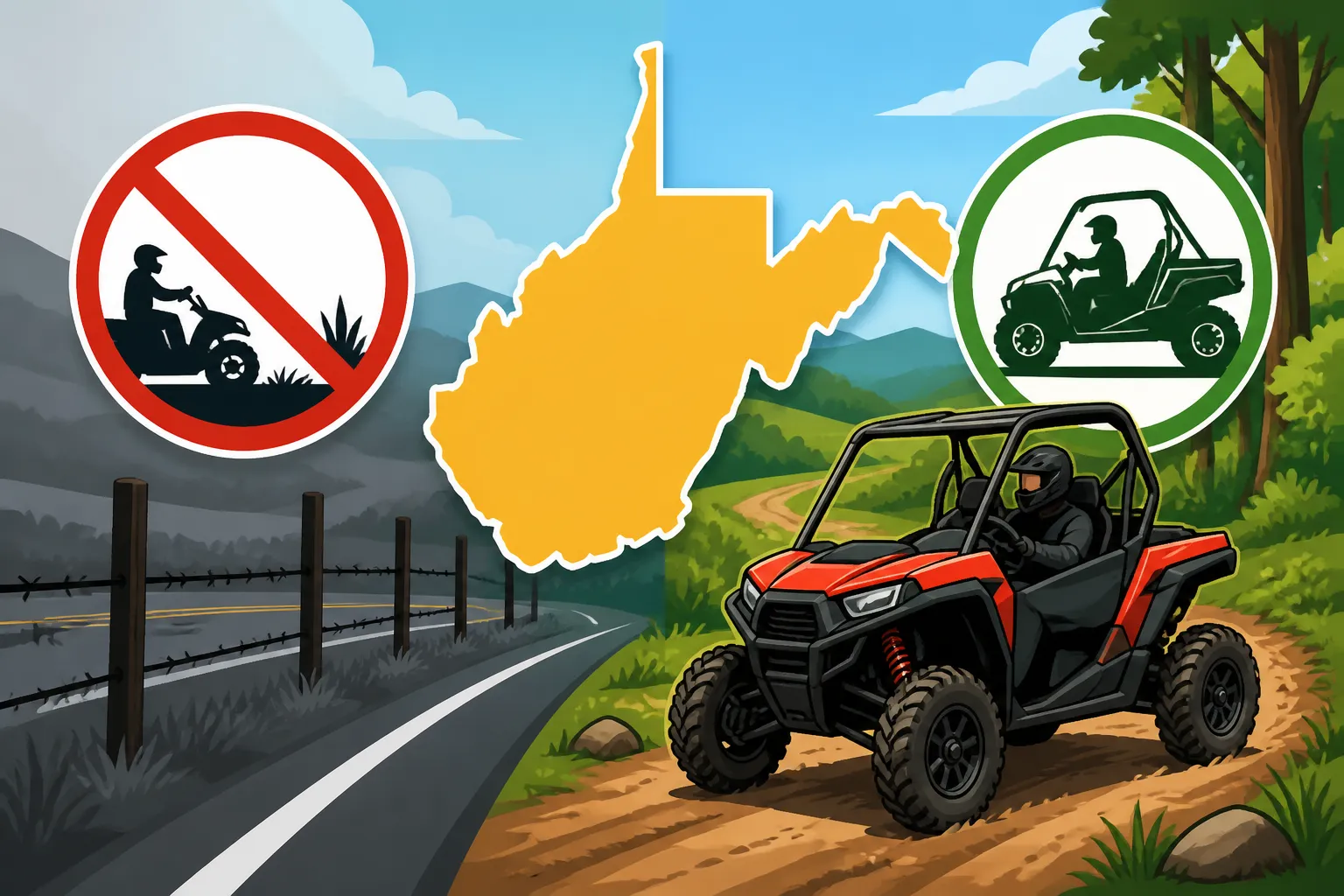
Generally speaking, ATVs and UTVs are not street-legal vehicles in West Virginia and are prohibited from being operated on public roads and highways. This is the overarching rule, and it's essential to start there. If you assume you can't ride on a paved road unless explicitly told otherwise, you're usually on the safer side.
However, West Virginia law does carve out some specific exceptions to this general prohibition, primarily to support the state's burgeoning ATV tourism industry and provide necessary utility access. One key exception allows ATVs and UTVs to operate on secondary (county) roads, and sometimes certain municipal roads, for limited distances to connect trails or access essential services. This is often referred to as [West Virginia's 10-Mile, 25 mph Road Rule]. This rule comes with strict conditions, including speed limits, distance limitations, and specific equipment requirements, like working headlights and taillights. It's not a free pass to cruise down any road you like; it's a very specific, limited allowance. Another important exception is for machines that have been converted to a [West Virginia's Street-Legal Special Purpose Vehicle Plate]. These vehicles undergo a more rigorous conversion process to meet specific equipment standards and can generally use public roads more extensively, though even they have restrictions, particularly on interstates and certain primary highways.
What Defines a "Public Road" in West Virginia?
Understanding what constitutes a "public road" is absolutely critical. In West Virginia, roads fall into several categories: state routes (like US highways and interstates), county roads, and municipal streets (within cities and towns). Each of these can have different rules regarding ATV and UTV access. For instance, while some county roads may fall under the 10-mile, 25 mph rule, major state routes and interstates are typically off-limits to all but fully street-legal SPVs.
Many smaller, rural roads in West Virginia are indeed public county routes, but not every dirt or gravel path is. Some are private drives, dedicated to specific landowners. The presence of a "No Thru Traffic" sign, or even just the lack of a visible road name, can be a clue. The problem is, sometimes these distinctions aren't clear until you're already on the path. You might think you're on a legal connector, only to find out you've veered onto a private lane. Always be aware of local ordinances, as some municipalities in [West Virginia's ATV-Friendly Towns and What You Can Ride] have adopted specific rules that differ slightly from state law, allowing more or less access on their streets.
Understanding Trespass in the Context of Road-Adjacent Riding
The word "trespass" often conjures images of explicit "No Trespassing" signs and fences. However, in the context of ATV and UTV riding along roads, trespass can be far more subtle and easily committed without malicious intent. It's about respecting property lines, even when those lines aren't clearly marked.
The Legal Definition of Trespass for ATV Riders
In West Virginia, trespass generally means entering or remaining on someone else's property without their express or implied permission. For ATV riders, this extends beyond just riding deep into a private field. It can include riding on the grassy shoulder of a road, cutting through a vacant lot, or using an unpaved lane that appears to be a public road but is, in fact, private property. The law doesn't care if you knew it was private; if you were there without permission, it's trespass.
While "No Trespassing" signs certainly help clarify property boundaries, their absence doesn't automatically grant permission. Land can be considered "posted" through common fencing, cultivated fields, or even obvious property lines. Even if a property isn't explicitly marked, entering it without permission is generally a violation. Familiarizing yourself with [Riding on Posted Land in West Virginia] can help you understand the nuances.
The Unseen Boundaries: Shoulders, Ditches, and Rights-of-Way
This is where a lot of riders get into trouble. Many assume that the shoulder, ditch, or grassy area immediately adjacent to a public road is part of the "public" right-of-way and therefore fair game for riding. This assumption is often incorrect. While the state or county maintains a "right-of-way" for road infrastructure (like power lines, drainage, and road maintenance), this doesn't typically extend public riding privileges to ATVs or UTVs on those areas.
In many cases, the adjacent property owner owns the land right up to the edge of the paved or gravel road surface, even if there's no fence. The ditch or grassy strip might technically be private property, or at the very least, not an area designated for ATV travel. Riding here can cause erosion, damage drainage systems, or simply be an unwanted intrusion onto a landowner's property. Always assume that unless you are on the actual road surface in a legally permitted area, or on a clearly marked and designated trail, you are on private property.
Common Trespass Scenarios and How to Avoid Them
It’s easy to inadvertently trespass, especially when you’re unfamiliar with an area or trying to navigate around an unexpected obstacle. Let's look at some common situations that lead to trespass and how to steer clear of them.
Riding Off the Pavement to Bypass Obstacles or Traffic
Imagine you're legally riding a designated section of a county road, following the 10-mile, 25 mph rule, and suddenly you encounter a slow-moving farm vehicle, a broken-down car, or even an unexpected traffic jam. Your instinct might be to momentarily veer off the paved road onto the grassy shoulder or into the ditch to get around the obstruction. This is a classic trespass scenario.
Even if it's just for a few feet, riding off the established road surface onto the adjacent ground can be considered trespassing on private property. The grassy verge or ditch, while appearing to be part of the road infrastructure, is often private land. It's a quick, seemingly harmless action, but it can lead to complaints from landowners, especially if it happens repeatedly or causes any damage. The safest bet is to wait patiently, just as any other vehicle would, or find an alternative, legal route if available. Your patience will save you a potential headache.
Accessing Gas Stations, Restaurants, or Stores from the Road
You're out enjoying a ride, legally using a road connector, and you spot a gas station or a local restaurant that looks inviting. Instead of staying on the road and pulling into the designated parking lot entrance, you might be tempted to cut across a patch of grass or an unpaved area to get there quicker. Again, this is a very common way to trespass.
Businesses, like private residences, own their property. The lawn beside the parking lot, the vacant lot next door, or even a gravel area that doesn't look like part of the main access are likely private. Riding over these areas without explicit permission constitutes trespass. Always use the established driveways and parking lots. When you're in an ATV-friendly town, businesses are usually welcoming to riders, but that welcome assumes you respect their property boundaries. For advice on these situations, check out [Fueling Up in a West Virginia ATV-Friendly Town]. A sturdy winch from SuperATV might help if you get stuck deep in an unfamiliar, potentially private, area trying to turn around after realizing you’ve veered off course, saving you from a bigger issue.
Exploring "Abandoned" Roads or Unmarked Paths Off the Main Route
West Virginia is full of old logging roads, forgotten farm tracks, and unmarked dirt paths that branch off main public roads. It's incredibly tempting to explore these, especially if they look like they might lead to a scenic overlook or connect to another trail. However, many of these are private drives, old coal company roads, or simply private property, not public access routes.
Assuming that an unmarked dirt road is public just because it's unpaved is a risky gamble. Landowners, coal companies, or timber operations often use these roads for their own purposes and do not appreciate recreational riders. These areas are frequently patrolled, and citations for trespass are common. Always verify land ownership and public access before venturing onto any unmarked path. Understanding rules like those detailed in [West Virginia Rules on Private Mine Roads] can prevent you from accidentally entering restricted areas.
Identifying Legal Riding Zones and Verifying Land Ownership
The key to avoiding trespass and ensuring a stress-free ride is proactive planning and knowing how to identify legal riding areas. Don't rely on assumptions; rely on solid information.
The Importance of Trail Maps and Digital Resources
In today's world, there's no excuse for getting lost or accidentally trespassing due to a lack of information. Official trail maps, like those for the Hatfield-McCoy Trails, are invaluable. These maps clearly delineate the approved trails, trailheads, and often show connections to ATV-friendly towns. They are designed to guide you safely and legally through the riding network.
Beyond physical maps, digital mapping applications have revolutionized how we navigate. Apps like onX Offroad (and similar platforms) allow you to view detailed topographic maps, overlay property boundaries, and even identify land ownership. These tools are incredibly powerful for determining whether a particular stretch of road or an inviting side path is public or private. Before you head out, especially if you plan to use road connectors, take the time to plan your route using these resources. You can often find information on [Downloading Hatfield-McCoy Trail Maps] directly from the trail system's official website or through apps like [onX Offroad for West Virginia Trails].
When in Doubt: Assume Private and Seek Permission
This is the golden rule of responsible off-road riding: if you are not absolutely certain that an area is a legal public road, a designated trail, or property for which you have explicit permission, assume it is private property. This mindset will prevent the vast majority of accidental trespass incidents.
If you find yourself questioning whether a path is legal, turn back. Do not proceed unless you can verify its public status. For specific private properties, if you genuinely need to cross or access something, the only legal way is to seek explicit permission from the landowner. This might involve knocking on a door (if safe and appropriate), or contacting a local land management office for larger parcels. Always remember that maintaining good relationships with landowners is crucial for the future of ATV riding in West Virginia. Before venturing out, ensure your machine is equipped for varied terrain, perhaps with a SuperATV lift kit for extra clearance, allowing you to stay confidently on marked, legal paths and avoid straying into questionable territory.
Penalties and Enforcement for Trespassing
While accidental trespass is common, it doesn't mean the consequences are minor. West Virginia takes trespass seriously, and the penalties can range from costly fines to losing your machine, and even more severe legal repercussions.
Legal Repercussions of ATV Trespass in West Virginia
In West Virginia, trespass is typically classified as a misdemeanor. However, the exact penalties can vary depending on the specific circumstances, such as whether the land was clearly posted, if damage was done, or if it's a repeat offense. Generally, a first-time offense can result in significant fines. Beyond the immediate fine, you could also face court costs and potentially be liable for any damages caused to the property.
Law enforcement, including local sheriffs and state police, actively patrol areas known for ATV riding, especially those adjacent to public roads and trail systems. They are often quick to respond to landowner complaints. If your machine is found on private property without permission, it could be impounded, adding towing and storage fees to your financial burden. In some cases, repeated trespass or malicious intent could escalate charges to a higher misdemeanor or even a felony, particularly if coupled with vandalism or theft. It's not just a slap on the wrist; it's a serious legal matter. For a broader understanding of penalties, you can review information on [West Virginia Penalties for an Untitled Machine], which shows how seriously the state treats off-road vehicle infractions. When a landowner reports an ATV trespass in West Virginia, authorities generally respond promptly, taking the complaint seriously.
Losing Riding Privileges and Access to Managed Trails
Beyond legal fines and court appearances, perhaps one of the most significant consequences for an avid rider is the potential loss of access to the very trails you love. Managed trail systems, such as the Hatfield-McCoy Trails, operate under strict rules, and one of the core tenets is respecting private property and public lands.
If you are cited for trespassing, especially in an area near one of the managed trail systems, the Hatfield-McCoy Trail Authority or other land managers may ban you from their trails. This means your trail permit could be revoked, and you could be prohibited from purchasing future permits. This consequence is not limited to trespass committed on the actual trail system. If you trespass while trying to access the trail, or while using a road connector to reach a trail town, it can still impact your ability to ride on the official system. The integrity of these trail networks depends on riders respecting the law and private property, and agencies will protect those relationships. To help avoid these serious consequences, always ensure your machine is visible and equipped with proper lighting, like LED light bars from SuperATV, especially when connecting trail sections on public roads, where visibility can be critical and help you adhere to safety regulations.
Proactive Strategies for Responsible Road Riding
The best way to avoid trespass issues is to be proactive, informed, and ride responsibly. It's about more than just following the law; it's about being a good ambassador for the entire riding community.
Plan Your Route Meticulously Before You Ride
Never head out for a ride, especially if you plan to incorporate road sections, without a clear, pre-planned route. This means sitting down with maps – both physical and digital – and identifying every turn, every road connector, and every access point. Verify that any road you intend to use for connection is actually designated for ATV or UTV use under the 10-mile, 25 mph rule or is part of a street-legal SPV route.
Pay close attention to local ordinances in any towns you plan to ride through. While many towns in West Virginia have embraced ATV tourism, their specific rules for municipal streets can vary. Some might have designated routes, specific hours, or areas where ATVs are still prohibited. A little planning goes a long way in preventing an accidental wrong turn onto private land or a prohibited street. Consulting resources like [West Virginia's ATV-Friendly Towns and What You Can Ride] can give you a head start.
Respecting Private Property and Landowner Relations
At the heart of trespass rules is the fundamental principle of respecting private property. Every time a rider trespasses, it erodes trust between landowners and the riding community. One bad incident can lead to a landowner closing off an important trail access point, erecting "No Trespassing" signs where there were none, or even lobbying for stricter regulations against ATV use.
Responsible riding isn't just about your own enjoyment; it's about protecting access for everyone. Always stay on marked trails and approved road sections. Avoid littering, control your noise, and be courteous to anyone you encounter, whether they are landowners, residents, or other recreationalists. Our collective actions directly influence the future of ATV and UTV riding in West Virginia. For a deeper understanding of landowner rights, review [West Virginia Trespass Law for ATV Riders]. Equipping your UTV with SuperATV's high-quality skid plates can help protect your machine on designated trails, but remember, no accessory can protect you from the legal ramifications of trespassing, nor does it excuse irresponsible riding that damages private property.
Educating Yourself and Your Riding Group
Ignorance of the law is never an excuse. It's your responsibility as a rider to understand West Virginia's ATV and UTV laws, including trespass rules. This includes the nuances of road riding, equipment requirements, and trail etiquette. But it doesn't stop with you. If you ride in a group, make sure everyone understands and adheres to these rules.
Before a group ride that includes road sections, have a clear briefing. Discuss the planned route, highlight any tricky sections where trespass is a risk, and reinforce the importance of staying on the legal path. Appoint a leader who knows the route and can guide the group responsibly. A group that rides respectfully is far less likely to encounter problems and helps foster a positive image for all riders. For more on general conduct, consider the [Trail Rules Every West Virginia Rider Signs Up To].
Here's a quick summary of common road-adjacent scenarios and their typical legal status:
| Scenario | Legal Status | Action to Take | Potential Consequences |
|---|---|---|---|
| Riding on marked Hatfield-McCoy Trail | Legal (with permit) | Enjoy the ride, stay on trail | None (if following all trail rules) |
| Riding a public county road (10-mile, 25 mph rule) | Legal (conditional) | Follow speed, distance, equipment rules. Stay on paved/gravel surface. | Fine for non-compliance, trespass if off surface |
| Riding on grassy shoulder of public road | Generally Illegal | Stay on the hard road surface if permitted; avoid shoulders. | Trespass, fine, landowner confrontation |
| Cutting across private lawn to gas station | Illegal | Use designated access/parking lot. | Trespass, fine, landowner confrontation, bad reputation |
| Riding unmarked dirt road off county route | Generally Illegal (trespass likely) | Verify with map/landowner, turn back if unsure. | Trespass, fines, impoundment of machine |
| Riding a fully equipped Street Legal SPV on a state route (non-interstate) | Legal (conditional) | Follow all traffic laws, speed limits, stay on road. | Traffic citations for non-compliance |
Disclaimer
This article is for general informational purposes only and does not constitute professional advice. Laws, prices and regulations vary by location and change over time. Consult a qualified professional for guidance on your specific situation.