Low-Speed Vehicle Registration in West Virginia
It can feel like a maze trying to figure out what kind of vehicle you're driving and what rules apply when you want to take it on a public road in West Virginia. Is it a golf cart? An ATV? A UTV? And what exactly is a Low-Speed Vehicle, and how in the world do you register one here in the Mountain State? This guide is here to untangle all that confusion, breaking down the specific requirements and steps for registering a Low-Speed Vehicle, ensuring you can hit certain public roads legally and without worry.
Understanding Low-Speed Vehicles in West Virginia
One of the biggest headaches for folks who want to use their small, nimble vehicles for more than just off-road fun or a quick trip around the campground is understanding the nuances of what's allowed on public roads. It's not as simple as "if it has four wheels, it's good to go." West Virginia, like many states, has specific definitions for different types of vehicles, and a Low-Speed Vehicle (LSV) is a category all its own, distinct from your typical ATV, UTV, or even a basic golf cart. The key is its design for road use, albeit at slower speeds, and the stringent safety features it must incorporate.
What Defines a Low-Speed Vehicle?
In West Virginia, a Low-Speed Vehicle isn't just any golf cart or utility vehicle you've souped up. It's a precisely defined class. Think of it as a small, four-wheeled electric vehicle (though some gas models might qualify if they meet all other specs) that's designed to operate at speeds greater than 20 miles per hour but not exceeding 25 miles per hour. That 25 mph cap is critical. If your vehicle can go faster than that and isn't a full-blown car, truck, or motorcycle, it's likely not an LSV. It also can't weigh more than 3,000 pounds. These aren't machines built for high-speed highway travel; they're meant for local errands, neighborhood commutes, and getting around smaller communities where speed limits are lower. This definition really sets them apart from the more robust, off-road focused UTVs that many riders enjoy on the trails.
Differentiating LSVs from Golf Carts and ATVs/UTVs
This is where a lot of confusion comes in, and frankly, it's easy to see why. Many people look at an LSV and think "that's just a fancy golf cart!" Or they might assume their side-by-side, if it's slow enough, could qualify. But there are crucial differences, particularly when it comes to road legality.
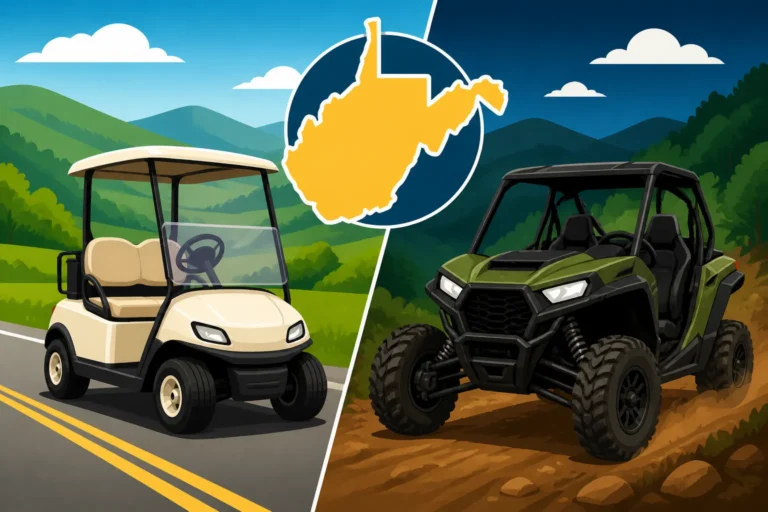
- Golf Carts: Generally, golf carts are designed to go no more than 20 mph. They often lack many of the safety features required for an LSV, such as DOT-approved tires, windshields, seatbelts, and specific lighting. While some towns might have local ordinances allowing golf carts on certain streets, these are typically exceptions, not the rule statewide. For most of West Virginia, a standard golf cart is not street-legal without significant, often cost-prohibitive, modifications to become an LSV or a specific type of [West Virginia's Street-Legal Special Purpose Vehicle Plate].
- ATVs and UTVs: These machines are built primarily for off-road use. While some UTVs can be converted into a Street-Legal Special Purpose Vehicle (SPV) in West Virginia, they operate under a different set of rules and often have higher speed capabilities than an LSV. An ATV, with its saddle-style seating, is even further removed from the LSV definition. The requirements for an SPV are usually more extensive and allow for higher speeds on public roads (up to 25 mph on certain roads, or up to 55 mph if fully street-legal), making them distinct from the strictly limited LSV. If you're pondering taking your side-by-side on public roads, you're almost certainly looking at an SPV conversion, not trying to fit it into the LSV category. The rules for [Golf Carts and West Virginia Title Rules] are entirely different from an LSV, and this is a common trap for new owners.
The Essential Equipment for a West Virginia Low-Speed Vehicle
Converting any standard golf cart or utility vehicle into a street-legal Low-Speed Vehicle in West Virginia isn't just about adding a turn signal. It involves a comprehensive list of safety equipment, all designed to ensure the vehicle is reasonably safe for limited road use. It's a real commitment, and cutting corners here can lead to fines, accidents, or outright denial of registration. Many riders find themselves frustrated by the sheer volume of upgrades required, feeling like they're rebuilding the entire machine.
Safety Features Required by Law
To qualify as a Low-Speed Vehicle (LSV) in West Virginia, your machine must be equipped with several key safety features. These aren't suggestions; they are non-negotiable legal requirements.
- Headlamps and Tail Lamps: Just like any other road-going vehicle, your LSV needs working headlights and taillights. These must be visible from specific distances, ensuring you can see and be seen, especially during dawn, dusk, or in inclement weather. These aren't just decorative lights; they need to be robust and properly installed.
- Turn Signal Lamps: Your LSV must have working turn signals, both front and rear. This allows you to clearly communicate your intentions to other drivers on the road. Many golf carts don't come standard with these, so it's often an aftermarket addition.
- Stop Lamps (Brake Lights): When you hit the brakes, lights must illuminate at the rear of your LSV, signaling to following vehicles that you are slowing down or stopping.
- Reflex Reflectors: Strategically placed reflectors can further enhance visibility, especially from the sides and rear, even if the vehicle's electrical system isn't active.
- Exterior Mirror: You need at least one exterior mirror mounted on the driver's side. For better visibility and safety, many owners opt for both driver and passenger side mirrors, and a rear-view mirror is often a wise addition as well.
- A Parking Brake: Essential for securing the vehicle when stopped, particularly on West Virginia's hilly terrain. It needs to be effective and reliable.
- A Windshield: This isn't just for comfort; it's a safety device. The windshield must be made of safety glass or a similar material approved by the state. It needs to provide clear visibility and offer protection from debris. Companies like SuperATV offer robust, DOT-approved windshields specifically designed for various utility vehicles that could be converted to LSVs.
- Seat Belts: All designated seating positions in the LSV must be equipped with working seat belts. This is a critical safety feature to keep occupants secure in case of a sudden stop or collision.
- Vehicle Identification Number (VIN): Every LSV must have a manufacturer-issued VIN. This is how the vehicle is uniquely identified and titled. If you're converting a vehicle that doesn't have a standard VIN, such as some older homemade golf carts, you might face significant hurdles or it might not even be possible. This is a primary reason why [Fixing a Wrong VIN on a West Virginia Title] or obtaining one for a machine without one is so important for registration.
Tires and Other Road-Ready Components
Beyond the basic safety features, certain components need to meet specific standards to handle the rigors of road use, even at low speeds.
- DOT-Approved Tires: Your tires must be approved by the Department of Transportation (DOT) for road use. This means they are designed to withstand road hazards and provide adequate traction and stability on paved surfaces. Off-road specific tires might not meet these standards, and swapping them out is often a necessary upgrade. Many aftermarket suppliers, including brands like SuperATV, offer a wide selection of DOT-compliant tires that can fit various LSV platforms.
- Braking System: The LSV must have a braking system that can effectively stop the vehicle within a certain distance at its maximum speed. This isn't just about having brakes; it's about having effective brakes that meet performance standards.
- Steering Mechanism: The steering must be reliable and responsive, allowing the driver to maintain control of the vehicle easily. Loose or faulty steering components are an immediate red flag for safety and won't pass inspection.
- Homologation or Certification: While not a component itself, many commercially produced LSVs come with a manufacturer's certification that they meet federal motor vehicle safety standards (FMVSS) for low-speed vehicles. If you're building or converting a vehicle, proving it meets all these standards can be a complex undertaking. This is why many people opt for purpose-built LSVs rather than trying to heavily modify an existing golf cart.
The Process of Registering a Low-Speed Vehicle in West Virginia
Once you've ensured your Low-Speed Vehicle meets all the necessary equipment requirements, the next step is navigating the West Virginia Division of Motor Vehicles (DMV) process to get it legally titled and registered. This can be a bit of a bureaucratic journey, but knowing what to expect can save you a lot of time and frustration. It's often helpful to gather all your paperwork and even call your local [West Virginia DMV Offices That Handle ATV Titles] ahead of time to confirm specific requirements.
Required Documentation and Forms
Getting your LSV registered starts with presenting the correct paperwork. Missing even one document can send you home to start over.
- Certificate of Origin or Previous Title: This is your proof of ownership. If the LSV is new, you'll have a Manufacturer's Certificate of Origin (MCO). If it's a used vehicle, you'll need the properly assigned title from the previous owner. Ensure all signatures are correct and legible. For vehicles that may have started life as something else (like a heavily modified golf cart), this step can be particularly challenging. Sometimes, people even look into a [Bonded Title for an ATV in West Virginia] if ownership documents are completely missing, though this is a more complex route.
- Proof of Identity: You'll need a valid form of identification, such as a driver's license or state-issued ID card.
- Proof of West Virginia Residency: If your ID doesn't show your current West Virginia address, you'll need additional documents like a utility bill, lease agreement, or bank statement.
- Odometer Disclosure Statement: For most titled vehicles, an odometer reading is required.
- Application for Certificate of Title and Registration (Form DMV-1-TR): This is the main form you'll fill out to apply for your title and registration. Be meticulous in filling out every section, ensuring it matches your other documents perfectly.
- Bill of Sale: If you purchased the LSV from a private seller, a detailed bill of sale is crucial. It helps establish the purchase price for sales tax calculations and provides a clear chain of ownership. While a notary isn't always required, it's often a good idea for private sales.
- Proof of Insurance: West Virginia law requires all registered vehicles to carry liability insurance. You'll need to show proof of a valid insurance policy specifically for your LSV. The minimums for an LSV are often similar to those for a regular car. This is similar to the [Insurance Required for a West Virginia SPV Plate].
Fees and Taxes
There are several financial components involved in registering an LSV in West Virginia. These costs are subject to change, so always check the latest figures on the DMV website or by calling ahead.
- Title Fee: There is a fee to process and issue your vehicle's title. This is typically a flat fee. You can expect this to be similar to the [West Virginia ATV Title Fee].
- Registration Fee: This is the annual fee you pay to keep your LSV registered for road use. It covers the cost of your license plate and registration card. This is separate from the title fee.
- Sales Tax: If you purchased the LSV, you'll owe West Virginia sales tax on the purchase price, unless an exemption applies (such as gifting between immediate family members, though specific rules apply). The [West Virginia Sales Tax on an ATV Purchase] is typically applied to LSVs as well. Make sure you have your bill of sale reflecting the purchase price.
- Property Tax (Personal Property Tax): In West Virginia, vehicles are considered personal property and are subject to annual property taxes, which are assessed by your county. You typically need to pay these property taxes before you can renew your annual registration. The DMV often checks for proof of payment of these taxes before issuing renewal decals.
- Potential Inspection Fee: While not always required for LSVs at a state level, some counties or local municipalities might have specific inspection requirements. Always verify with your local authorities.
It’s worth noting that once your LSV is registered, you’ll receive a West Virginia license plate and a registration card. The [What a West Virginia SPV Registration Card Shows] can give you an idea of the type of information you'll see on your LSV's registration card, as they are similar in nature.
Where You Can Legally Operate a Low-Speed Vehicle in West Virginia
So, you've gone through all the hoops, got your LSV properly equipped, titled, and registered. Fantastic! Now comes the crucial question: where can you actually drive it? This is another area where West Virginia has specific rules that differ from those for other off-road vehicles or even street-legal SPVs. It's not a free-for-all on every road, and understanding these limitations is key to enjoying your LSV responsibly and avoiding citations.
Public Road Restrictions and Speed Limits
The "low-speed" part of Low-Speed Vehicle isn't just a suggestion; it's a legal limit that dictates where these vehicles can operate.
- Maximum Speed Limit of Roadways: In West Virginia, LSVs are generally restricted to roads where the posted speed limit is 35 miles per hour or less. This means you absolutely cannot take your LSV on major highways, interstates, or even most primary state routes where speeds exceed this limit. These vehicles are simply not designed for the speed differential and inherent dangers of faster traffic. Stick to residential streets, secondary roads, and local routes where traffic moves at a slower pace.
- Crossing Higher Speed Roadways: You might be able to cross a road with a speed limit greater than 35 mph if it's the most direct route to get from one permissible street to another. However, this crossing must be done safely and as quickly as possible, giving due regard to all other traffic. This is a very limited allowance and should not be confused with sustained travel on such roads.
- Local Ordinances: While state law sets the baseline, individual cities, towns, and even counties in West Virginia often have their own specific ordinances regarding LSVs. Some municipalities might restrict them even further, while others might designate specific routes or areas where they are permitted. Always check with your local city hall or police department for any unique local rules before you ride. This is especially true for [Golf Cart Ordinances in West Virginia Towns], which often apply to LSVs by extension or have similar restrictions.
Areas Where LSVs Are Generally Not Allowed
To avoid trouble, it's just as important to know where you cannot ride your LSV.
- Interstates and Controlled-Access Highways: Absolutely forbidden. The design and speed limitations of an LSV make these roadways extremely dangerous for them.
- Roads with Speed Limits Above 35 MPH: As mentioned, this is a firm line in the sand. Any road posted above 35 mph is off-limits for continuous travel.
- Off-Road Trails and Unpaved Surfaces (Unless Explicitly Permitted): While some LSVs might have a rugged appearance, they are registered for road use. This means they are generally not permitted on off-road ATV or UTV trails unless those trails specifically allow registered street-legal vehicles and you have the appropriate trail permit (like a Hatfield-McCoy permit). Don't assume your LSV can double as a trail machine without verification.
- Private Property Without Permission: This goes without saying, but always respect private property. An LSV registration doesn't give you free rein to ride anywhere.
It's a delicate balance, and riders often struggle with where [Riding an ATV on the Road in West Virginia] is truly allowed, with LSVs having even more stringent rules than a full-fledged SPV. When in doubt, err on the side of caution and keep your LSV to explicitly permitted roads.
Operating Your Low-Speed Vehicle Safely and Legally
Getting your LSV registered is a significant step, but maintaining its legal status and ensuring safe operation on West Virginia's roads requires ongoing diligence. It's not just about what's on the vehicle, but how you operate it, and who's behind the wheel. The consequences of improper operation can range from traffic citations to serious accidents.
Driver Requirements and Age Restrictions
Just because an LSV is "low speed" doesn't mean anyone can drive it. West Virginia has specific requirements for operators.
- Valid Driver's License: Any person operating a registered Low-Speed Vehicle on public roads in West Virginia must possess a valid driver's license. This is critical. A learner's permit, or simply being "old enough" isn't sufficient. You must be a licensed driver, just as you would for a car or truck. This is a major difference from some off-road scenarios where a license isn't always required. For instance, the [West Virginia ATV Road Riding Age Minimum] applies to other classes of vehicles as well.
- Age Restrictions: Because a driver's license is required, the de facto age restriction for operating an LSV on public roads is the minimum age to obtain a driver's license in West Virginia. There aren't special exceptions for younger drivers with LSVs, unlike some specific provisions for off-road vehicles or certain agricultural uses.
- Passenger Rules: Just like with any vehicle, ensure that all passengers have a designated seating position and are using their seatbelts. Overloading the vehicle or allowing passengers to ride in unsafe manners (e.g., standing up, on laps) is illegal and extremely dangerous.
Road Rules and Responsibilities
When you take your LSV on public roads, you are generally expected to follow all the same traffic laws as any other motor vehicle. This includes, but isn't limited to:
- Obeying Traffic Signals and Signs: Stop at stop signs and red lights. Yield right-of-way. Follow all posted speed limits (even if your LSV can't reach them, you must still be aware of them).
- Signaling Turns: Use your turn signals to indicate your intentions well in advance.
- Maintaining a Safe Distance: Keep adequate space between your LSV and other vehicles, both in front and behind.
- Lane Position: Generally, you should drive on the right side of the road, as close to the curb or edge of the roadway as is safely practical. Be mindful that other vehicles might be moving significantly faster than you.
- No Impaired Driving: Operating an LSV under the influence of alcohol or drugs carries the same severe penalties as doing so in any other motor vehicle. [A DUI on an ATV in West Virginia] applies equally to an LSV.
- Helmet and Eye Protection (If Applicable): While LSVs generally have windshields and seatbelts, if your specific LSV design means you are exposed to the elements in a way similar to a motorcycle or open-cab UTV, you should seriously consider helmet and eye protection, even if not explicitly mandated by LSV law. Better safe than sorry, especially when you consider [Helmet Requirements on West Virginia Trails] and how important that protection is.
Operating an LSV is a privilege, not a right. By adhering to these rules, you help ensure your own safety, the safety of your passengers, and the safety of everyone else on the road. It also helps maintain a positive perception of these unique vehicles in West Virginia communities.
LSVs vs. Street-Legal SPVs: A Crucial Comparison for West Virginia Riders
For many West Virginia enthusiasts looking to take their off-road machines to the pavement, the distinction between a Low-Speed Vehicle (LSV) and a Street-Legal Special Purpose Vehicle (SPV) is paramount. While both allow some degree of road use, they are regulated under different sections of West Virginia law, come with distinct requirements, and offer different operational capabilities. It's easy to confuse the two, but doing so can lead to an expensive ticket or, worse, an unsafe situation. This is a common point of frustration for riders who want to understand [Making a UTV Street Legal in West Virginia] but aren't sure which path applies to them.
Key Differences in Purpose and Capabilities
The fundamental difference lies in what each vehicle category is designed to do and how much freedom it offers on public roads.
- Low-Speed Vehicles (LSVs):
- Purpose: Primarily designed for neighborhood use, short commutes, and local errands in areas with lower speed limits. They're often modified golf carts or purpose-built small electric vehicles.
- Speed Limit: Cannot exceed 25 mph.
- Road Access: Limited to roads with posted speed limits of 35 mph or less.
- Equipment: Must have specific safety features like a VIN, headlamps, taillamps, turn signals, stop lamps, reflectors, mirrors, a parking brake, a windshield, and seatbelts. The focus is on meeting federal low-speed vehicle safety standards.
- Origin: Can be modified golf carts, or factory-produced LSVs.
- Street-Legal Special Purpose Vehicles (SPVs):
- Purpose: Allows modified ATVs or UTVs to be used on certain public roads, often connecting trail systems or accessing trail towns. These are typically more robust machines originally designed for off-road adventure.
- Speed Limit: A street-legal SPV can travel at higher speeds, often limited by its manufacturer's design, but its use on certain public roads might still be capped. For example, [West Virginia's 10-Mile, 25 mph Road Rule] applies to non-SPV machines and some limited SPV uses. Full SPVs, meeting all requirements, can travel on roads up to 55 mph.
- Road Access: Can access a wider range of roads than an LSV, including county and secondary roads with higher speed limits, though still generally excluded from interstates and freeways. There are often specific rules about [West Virginia's 20-Mile Centerline Limit for an SPV] for certain road types.
- Equipment: Requires a more extensive list of equipment to be considered truly street-legal, often mimicking a car or motorcycle. This includes DOT-approved tires, mirrors, turn signals, brake lights, horn, headlights, tail lights, windshield, seatbelts, and sometimes even a specific exhaust system. The level of required [Equipment a West Virginia SPV Must Carry] is typically more stringent and comprehensive than an LSV.
- Origin: Almost exclusively converted ATVs or UTVs.
When to Choose Which Path
Deciding whether to pursue LSV registration or an SPV conversion depends entirely on your intended use and the base vehicle you own.
- Choose LSV if:
- You primarily want to drive your vehicle in a residential neighborhood, on local streets, or within a small town.
- Your vehicle is a golf cart that you want to upgrade for road use, and its top speed is naturally capped at 25 mph.
- You are looking for a relatively simple, electric-powered solution for short, low-speed trips.
- Choose SPV if:
- You own an ATV or UTV (side-by-side) and want to use it to connect between trail systems, access fuel/food in trail towns, or use specific county roads.
- You need the ability to travel at speeds greater than 25 mph on permissible roads.
- Your machine is built for rugged off-road use and you want to maintain that capability while gaining limited street access.
- You are willing to invest in a more comprehensive set of modifications to meet the higher safety standards of a street-legal SPV.
Many riders initially think about taking their UTV, like a Polaris RZR or Can-Am Defender, and registering it as an LSV. However, these machines are usually capable of speeds far exceeding 25 mph, making them ineligible for LSV classification. Instead, they would fall under the [West Virginia's Street-Legal Special Purpose Vehicle Law] and require a more extensive conversion to become a street-legal SPV. It's a critical distinction that can save you a lot of time and money in the long run.
Here's a quick comparison to help visualize the differences:
| Feature | Low-Speed Vehicle (LSV) | Street-Legal Special Purpose Vehicle (SPV) |
|---|---|---|
| Max Speed | Up to 25 mph | Varies by machine, up to 55 mph on certain roads |
| Road Access | Roads 35 mph or less | Wider range of roads, often up to 55 mph speed limits |
| Primary Use | Neighborhoods, local errands | Trail connectors, access to trail towns, some county roads |
| Typical Base Vehicle | Modified Golf Cart, purpose-built electric LSV | ATV, UTV (side-by-side) |
| Key Equipment | Windshield, seatbelts, DOT tires, lights, mirrors | More comprehensive: DOT tires, windshield, mirrors, horn, turn signals, all lights, often a Roll Over Protective Structure (ROPS) |
| Driver's License Req. | Yes | Yes |
| Insurance Req. | Yes | Yes |
Remember, the goal is to operate legally and safely. Choosing the right classification for your vehicle and adhering to its specific rules is the best way to enjoy your ride in West Virginia.
Disclaimer
This article is for general informational purposes only and does not constitute professional advice. Laws, prices and regulations vary by location and change over time. Consult a qualified professional for guidance on your specific situation.